
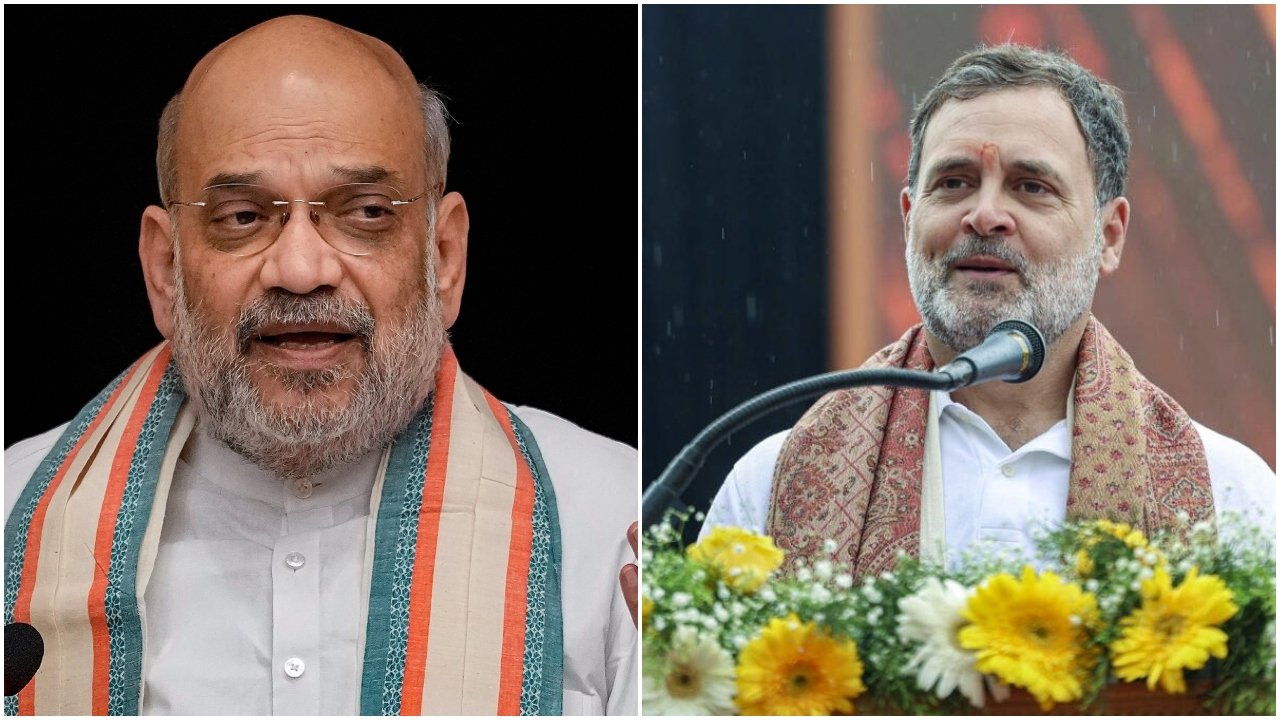
Leader of Opposition in the Lok Sabha Rahul Gandhi has intensified his criticism of the Centre over alleged police action against student protesters in Delhi, demanding that Union Home Minister Amit Shah directly clarify whether he authorised the action. Rahul Gandhi said the Opposition was not interested in what he described as “fantasy conversations” and wanted a specific answer on responsibility for the alleged use of force during the July 20 protest at Jantar Mantar.
The confrontation has added to tensions during Parliament’s Monsoon Session, with the Opposition pressing for a discussion and accountability over the treatment of students. The government, meanwhile, has said it is ready for a discussion on student-related issues and that the Home Minister will respond to points raised by the Opposition.
The dispute has also unfolded against the backdrop of wider student protests over examination-related concerns, including allegations of irregularities and paper leaks. Recent demonstrations in Jharkhand have further brought student grievances, recruitment examinations and the use of force during protests into the national political debate.
Table of Contents
Rahul Gandhi Seeks a Direct Answer From Amit Shah
Rahul Gandhi’s central demand is straightforward: he wants Amit Shah to clarify who authorised the alleged police action against students during the Delhi protest.
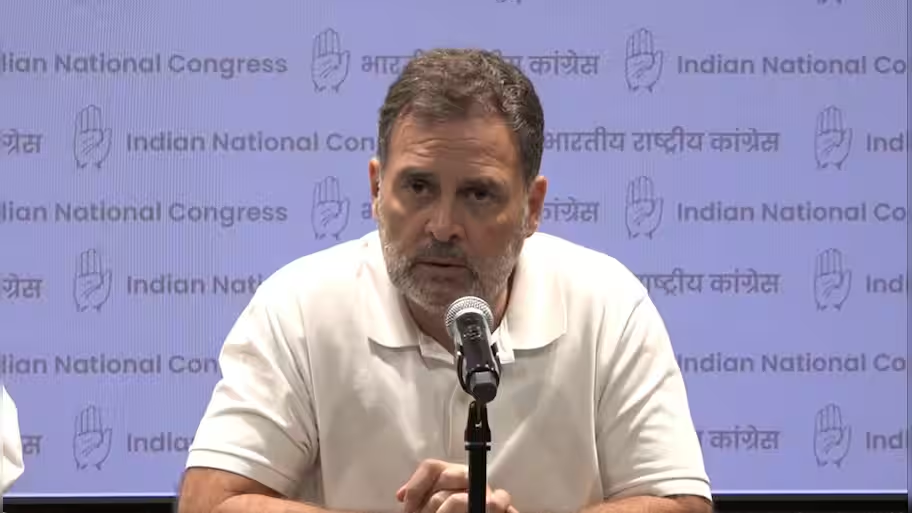
Speaking on Monday, Rahul Gandhi rejected the idea that the issue could be addressed through a general parliamentary speech. He argued that the Opposition wanted the Home Minister to answer specifically whether he had authorised the action and, if not, identify who was responsible.
Rahul Gandhi framed the issue as one of political and administrative accountability. According to his argument, if the Home Minister authorised the action, he should accept responsibility; if he did not know about it, Rahul Gandhi questioned whether that indicated a failure of oversight.
The Congress leader has therefore sought a clear explanation rather than a broader discussion on student issues.
What Happened During the July 20 Protest?
The controversy centres on a student protest held at Jantar Mantar in New Delhi on July 20.
Opposition leaders have alleged that excessive force was used against demonstrators during the protest. Their claims include allegations of lathi-charge, tear gas and the use of pellet guns. These allegations have become the subject of political demands for an explanation and inquiry.
It is important to distinguish between allegations made by political leaders and independently established findings. The reports available at the time of Rahul Gandhi’s latest remarks document the Opposition’s claims and the government’s position that it is prepared to discuss student-related issues, but they do not establish Rahul Gandhi’s allegations as proven facts.
The dispute has consequently moved beyond the original protest and into a wider parliamentary debate about policing, accountability and the right to peaceful protest.
Opposition Lists Three Key Demands
Rahul Gandhi said the Opposition’s position had remained unchanged for around 15 days and identified three principal demands.
The first is an explanation from Amit Shah concerning the alleged police action against the students. Rahul Gandhi wants the Home Minister to clarify whether he authorised the action and, if he did not, who did.
The second demand is an apology from Prime Minister Narendra Modi over what the Opposition describes as the treatment of protesting students.
The third concerns allegations of financial irregularities involving the Ram Mandir trust. Rahul Gandhi and Congress president Mallikarjun Kharge have raised allegations concerning funds associated with the trust and demanded answers from the government.
These issues have become central to the Opposition’s parliamentary strategy, with Congress indicating that it intends to continue raising them during the remaining part of the Monsoon Session.
Government Says It Is Ready for Discussion
The government has responded by saying it is willing to discuss issues concerning students.
Parliamentary Affairs Minister Kiren Rijiju said the government was ready for a detailed discussion and that Amit Shah would respond to the points raised by the Opposition.
This creates a significant difference in approach between the two sides.
While the government has presented the matter as one that can be addressed through parliamentary discussion, Rahul Gandhi has insisted that the Opposition’s immediate priority is a direct answer regarding the alleged police action.
The disagreement over the format and focus of the discussion has contributed to continued political confrontation in Parliament.
Rahul Gandhi’s ‘Fantasy Conversations’ Remark
Rahul Gandhi’s phrase “fantasy conversations” became one of the most prominent elements of his latest statement.
He used the expression to argue that the Opposition was not seeking a general political exchange. Instead, he said it wanted a specific answer about the alleged police action against students.
His remarks were directed at what he described as an attempt to shift the discussion away from the central question of responsibility.
The statement reflects the increasingly confrontational tone surrounding the issue, with both sides seeking to frame the parliamentary debate around different priorities.
Why Student Protests Have Become a Major Political Issue
The controversy comes amid a wider wave of student and youth protests linked to examination systems, recruitment and alleged irregularities.
In Delhi, student demonstrations have been associated with concerns over examination-related issues and the future prospects of young people. Reuters reported that earlier protests in the capital drew tens of thousands of young people and were connected to anger over alleged corruption in education, unemployment and limited opportunities.
The political importance of these protests extends beyond the immediate demands of demonstrators because examination results and recruitment processes directly affect students seeking higher education and employment.
For opposition parties, the protests provide an opportunity to question the government’s handling of youth concerns. For the government, maintaining order while responding to legitimate grievances presents a competing challenge.
Jharkhand Protests Add to the Debate
The controversy has also expanded beyond Delhi.
On August 10, thousands of young protesters in Jharkhand marched towards the state legislature in Ranchi over alleged irregularities in civil service examinations, according to Reuters. Police used tear gas, batons and water cannon to disperse protesters after some demonstrators pushed against barricades and clashes were reported.
Police said limited force was used after some protesters became violent, while the state government said it had already accepted a majority of the protesters’ demands and remained open to further discussions.
Rahul Gandhi separately said that violence against peaceful student protesters was wrong and called for dialogue to address their grievances.
The developments in Jharkhand have therefore added another dimension to the national discussion over student protests and the government’s response to them.
The Larger Question of Peaceful Protest
At the heart of the political dispute is a broader question about how authorities should respond when students take to the streets.
Peaceful protest is an important form of democratic expression, but authorities also have responsibilities relating to public safety and law and order. The challenge is to maintain public order while ensuring that legitimate grievances can be expressed without unnecessary confrontation.
Rahul Gandhi has emphasised the right of students to protest peacefully, while the government and police have to balance protest rights with security considerations.
The precise circumstances surrounding individual incidents therefore matter greatly. Any investigation into allegations of excessive force would need to establish what happened, what instructions were issued, who issued them and whether the response was proportionate to the circumstances.
Congress Calls for Accountability
The Congress has continued to demand accountability from the Centre.
Kharge, who appeared alongside Rahul Gandhi, said the Opposition wanted Amit Shah to explain in Parliament why force was allegedly used against students. He also referred to allegations concerning the use of pellet guns, tear gas and lathi-charge.
Rahul Gandhi has gone further by calling for an inquiry monitored by the Supreme Court, according to reporting by The Times of India.
Such a demand represents an escalation in the Opposition’s response, although whether any such inquiry is ordered would depend on the relevant constitutional and legal processes.
Parliament Faces Continued Disruption
The dispute is also affecting the functioning of Parliament.
Rahul Gandhi has warned that the Opposition will continue pressing its demands during the Monsoon Session and suggested that proceedings could remain disrupted if the government does not change its position.
For Parliament, the challenge is to provide space for serious discussion while ensuring that legislative business continues.
Repeated disruptions can limit the amount of time available for debates on legislation and other public policy matters. At the same time, Opposition parties argue that protests and disruptions are sometimes necessary when they believe the government is avoiding answers on major public concerns.
The student protest issue has therefore become both a substantive policy dispute and a procedural parliamentary confrontation.
Amit Shah’s Role Under Scrutiny
As Union Home Minister, Amit Shah oversees the Ministry of Home Affairs, while policing in Delhi falls under the Union government’s administrative structure.
This has made his role a particular focus of the Opposition’s criticism.
Rahul Gandhi has argued that because the forces involved come under the Union Home Ministry’s administrative framework, the Home Minister must explain what happened. The Times of India reported that Rahul Gandhi specifically referred to the Delhi Police and Rapid Action Force deployment during the protest.
However, establishing ministerial responsibility for an individual operational decision requires evidence about the chain of command and the instructions actually issued. Political allegations alone do not establish that a particular minister personally authorised a specific action.
That distinction will remain important as the debate develops.
What Could Happen Next?
The next major development is likely to come through Parliament.
The government has indicated that it is prepared to discuss student-related issues and that Amit Shah will respond to the Opposition.
If the Home Minister addresses the matter in Parliament, the response could provide greater clarity about the government’s account of the July 20 incident and the administrative chain of responsibility.
The Opposition, meanwhile, is expected to continue seeking a direct answer and accountability.
Any independent inquiry, if ordered, could potentially provide further clarity about the allegations, the conduct of the protest and the actions taken by authorities.
Student Concerns Remain at the Centre
Beyond the political confrontation, the controversy highlights genuine concerns among young people over examinations, employment and educational opportunities.
The recent protests in Delhi and Jharkhand show that examination-related grievances can quickly develop into large public demonstrations when students believe their future prospects are at stake. Reuters reported that the Jharkhand protests included demands for changes to the examination system, cancellation of certain tests and an investigation into alleged irregularities.
For policymakers, addressing these concerns requires more than managing demonstrations. It also involves ensuring credible examination systems, transparent recruitment processes, effective grievance mechanisms and timely communication with students.
Rahul Gandhi’s latest remarks have intensified the political confrontation between the Opposition and the Centre over the alleged police action against student protesters in Delhi.
Rahul Gandhi has demanded that Amit Shah directly answer whether he authorised the action and has rejected a general discussion that does not address that specific question. The Opposition has also called for an apology from Prime Minister Narendra Modi and raised separate allegations concerning the Ram Mandir trust.
The government, for its part, has said it is ready for a discussion on student issues and that the Home Minister will respond to the Opposition’s points.
As the Monsoon Session continues, the dispute is likely to remain a major political issue. The central questions now concern accountability, the handling of student protests and whether Parliament can provide a forum for the competing claims to be examined.
For students and young people, however, the larger issue goes beyond the political contest. Their concerns about examinations, education, recruitment and future opportunities remain at the heart of the protests. How governments respond to those concerns—and how responsibly authorities handle peaceful demonstrations—will ultimately determine whether the current confrontation produces meaningful answers or simply another prolonged parliamentary standoff.