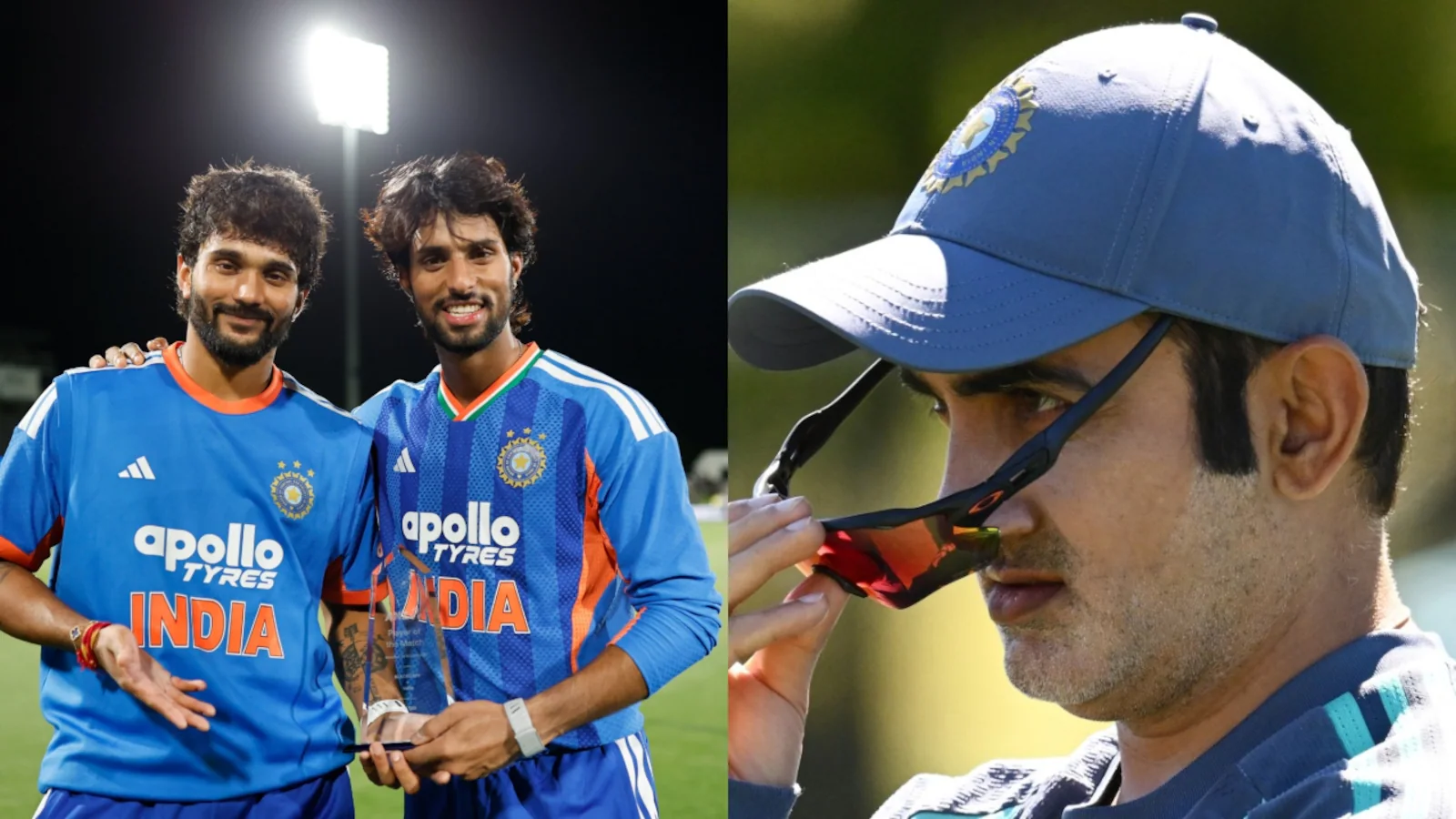
Tilak Varma’s unbeaten 51 and Nitish Kumar Reddy’s crucial contribution helped India recover from 70/5 to chase down 181 against New Zealand in the second T20I, prompting head coach Gautam Gambhir to praise the team’s growing maturity.
Gautam Gambhir celebrated his team’s remarkable fightback against New Zealand with a three-word message, “Boys becoming men,” after India pulled off a memorable chase in the second T20I. The victory was built on an impressive late-innings performance from Tilak Varma, who remained unbeaten on 51, and valuable support from Nitish Kumar Reddy as India overcame a difficult position to chase a target of 181.
The match, played in Christchurch on Saturday, produced a tense contest that tested India’s batting depth and composure under pressure. At one stage, India were struggling at 70/5, with the chase threatening to slip away. However, Tilak and his teammates refused to surrender, combining patience with an aggressive finish to turn the match around.
Tilak’s performance stood out for the timing of his acceleration. After making 10 runs from his first nine deliveries, the left-hander shifted gears dramatically during the closing overs, scoring 41 runs from just 17 balls between the 16th and final overs. His unbeaten 51 off 26 deliveries helped India reach the target and demonstrated his ability to deliver when the pressure was at its highest.
For Gambhir, the victory represented more than a successful run chase. His brief message appeared to recognise the players’ growing confidence, resilience and ability to handle difficult match situations. The contributions of Tilak, Nitish and Naman Dhir also highlighted the importance of partnerships when a team loses wickets early.
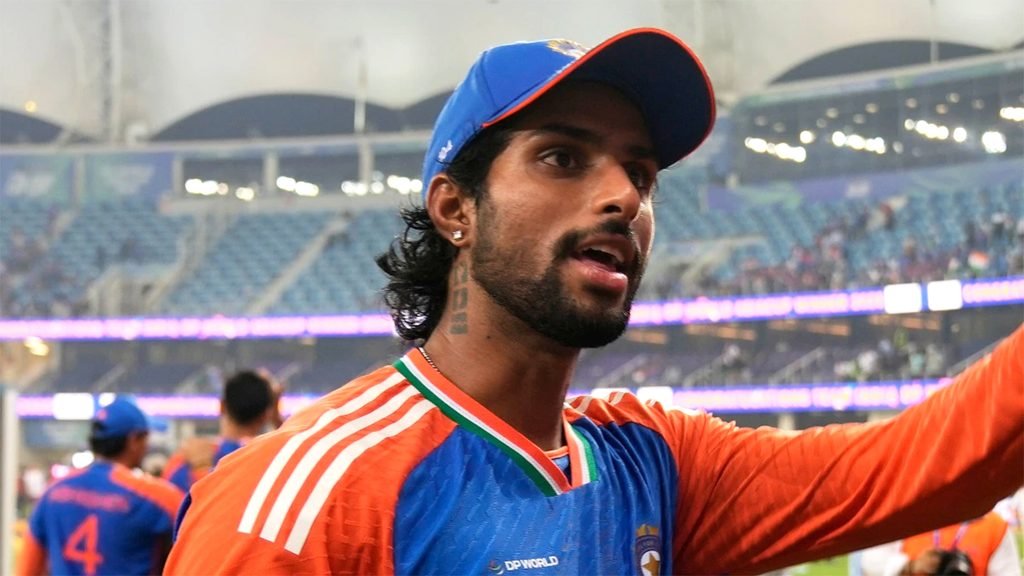
Table of Contents
Gautam Gambhir’s Three-Word Message After India’s Fightback
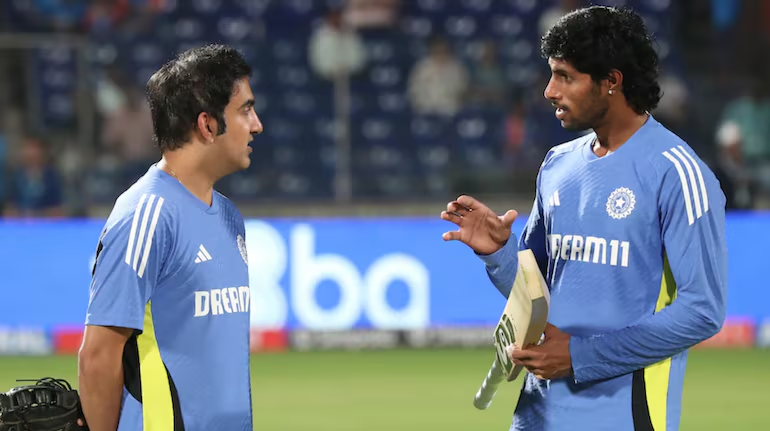
Gautam Gambhir’s reaction to the victory quickly became a talking point after the match. The India head coach wrote, “Boys becoming men,” a short statement that reflected his appreciation for the team’s response under pressure.
The message came after India found themselves in a precarious position during the pursuit of New Zealand’s 180-plus total. Losing five wickets for 70 runs had placed the batting side under considerable pressure, leaving little room for another significant collapse.
Rather than allowing the situation to dictate the outcome, the remaining batters focused on rebuilding the innings and keeping the required scoring rate within reach. Tilak played a central role in that recovery, while the contributions from Naman Dhir and Nitish Kumar Reddy gave India the partnerships needed to remain in contention.
Gautam Gambhir’s words can be understood as praise for the players’ ability to respond to adversity. In T20 cricket, a team can find itself under pressure within a handful of overs, and recovering from the loss of five wickets requires both technical skill and mental composure.
The victory also underlined the importance of finishing matches effectively. India needed more than a promising partnership; they required a batter capable of converting the opportunity into a successful chase. Tilak supplied that finishing power, ensuring that the work done by his teammates translated into a result.
India Recover From 70/5 in a Challenging 181-Run Chase
Chasing 181 is a demanding task in T20 cricket, particularly when a team loses half its wickets before reaching the halfway stage of the innings. India’s position at 70/5 left the side needing a substantial recovery, with the lower-middle order facing the responsibility of keeping the chase alive.
The early wickets increased the pressure on the remaining batters. With fewer established players available, India had to balance the need for quick runs against the risk of losing additional wickets. An aggressive approach was necessary, but reckless shot selection could have ended the chase prematurely.
Tilak and Naman Dhir began rebuilding the innings through a 42-run partnership. The stand helped India regain some momentum and provided a platform for the next phase of the chase.
Dhir’s contribution was important because it allowed Tilak to settle into his role without carrying the entire burden of the recovery from the outset. Partnerships in such situations can change the atmosphere of a match, particularly when the fielding side has gained control through successive dismissals.
After that stand, Tilak joined Nitish Kumar Reddy, and the pair added another 69 runs for the seventh wicket. Their partnership became the defining phase of India’s chase, combining the stability needed to avoid another collapse with the acceleration required to close the gap.
The recovery demonstrated why lower-middle-order partnerships are so valuable in modern T20 cricket. A team does not necessarily need a dominant opening stand to win, provided its middle and lower-middle order can respond effectively when early plans fail.
Tilak Varma’s Unbeaten 51 Powers India’s Late Surge
Tilak’s unbeaten 51 from 26 balls was the standout individual performance of the chase. His innings was particularly impressive because of the way he changed his scoring rate as the match entered its final overs.
The left-hander had scored only 10 runs from his first nine deliveries, suggesting that he initially focused on assessing the situation and building his innings. As the chase progressed, however, he began finding boundaries more regularly and placed pressure on New Zealand’s bowlers.
From the 16th over to the final over, Tilak scored 41 runs from just 17 balls. That late burst transformed his innings and helped India move from a difficult position to the brink of victory.
The 18th over provided a significant boost when Tilak struck two fours off Jacob Duffy. He continued his attack in the following over against Nathan Smith, hitting three fours and a six as India collected 18 runs.
Those boundaries were especially valuable because they reduced the pressure heading into the final over. Instead of requiring a large number of runs from the last six deliveries, India entered the closing stage with the target within reach.
With 11 runs needed in the final over, Tilak began with a boundary, setting the tone for the finish. His ability to identify scoring opportunities and execute shots under pressure ensured that India maintained control during the decisive moments.
The innings also illustrated the value of a batter who can change gears without losing sight of the match situation. Tilak did not need to attack every delivery from the beginning. Instead, he built his contribution and accelerated when the chase demanded it.
Nitish Kumar Reddy and Naman Dhir Provide Crucial Support
Although Tilak received much of the attention for his unbeaten half-century, the supporting partnerships played an equally important role in India’s recovery.
Naman Dhir partnered Tilak for a 42-run stand after India had slipped to 70/5. The partnership helped prevent New Zealand from tightening its grip on the match and gave India a chance to rebuild.
Nitish Kumar Reddy then joined Tilak for the decisive 69-run seventh-wicket partnership. The stand was particularly significant because it came after India had lost five wickets, leaving the batting side with limited room for error.
Reddy’s presence allowed India to continue the chase while Tilak took increasing responsibility for the scoring. The partnership showed how a successful run chase can depend on complementary roles: one batter can provide the bulk of the late acceleration, while the other helps maintain stability and keeps the innings moving.
For India, the recovery also demonstrated the value of contributions from players lower down the batting order. When the top order fails to provide a strong foundation, the middle and lower-middle order must be capable of absorbing pressure and creating new opportunities.
The combined efforts of Tilak, Dhir and Reddy prevented the early collapse from becoming decisive. Their partnerships shifted the contest back towards India, while Gautam Gambhir’s message captured the confidence and maturity the team showed during the fightback.
Tilak Varma’s Exceptional Record in the Death Overs
Tilak Varma’s performance against New Zealand was consistent with his impressive numbers during the closing overs of T20 matches in 2026, strengthening the discussion around India’s batting depth under Gautam Gambhir.
According to the figures provided, Tilak Varma has scored 470 runs from 203 balls during overs 16 to 20 in T20 cricket this year. His strike rate in this phase stands at 231.52, highlighting his ability to score rapidly when innings approach their conclusion. Gautam Gambhir will value this kind of finishing ability in pressure situations.
During this period, Tilak Varma has struck 32 fours and 37 sixes, with a boundary percentage of 33.99. He has been dismissed 10 times in the phase, providing useful context for assessing his attacking approach.
These figures underline his effectiveness in a part of the innings where every delivery can have a significant influence on the final total. Under Gautam Gambhir, India’s T20 setup can benefit from batters who assess the field, anticipate bowling variations and select shots that offer a high scoring return without exposing the team to unnecessary risk.
Tilak Varma’s numbers suggest that he has been particularly effective at converting opportunities into boundaries. His ability to hit both fours and sixes also gives India different ways to accelerate, depending on the field placement and the bowler’s approach, something Gautam Gambhir will want to see consistently.
The innings against New Zealand offered a practical example of that ability. Tilak Varma moved from a relatively cautious start to an explosive finish, showing that his scoring power is not limited to one particular stage of an innings.
For India, a batter capable of delivering such acceleration can be a major asset in close matches. Even when the top order struggles, an effective death-overs performer like Tilak Varma can help keep a chase alive until the final deliveries, giving Gautam Gambhir another reason to trust the team’s lower-middle order.
Tilak’s Strong Numbers in Successful T20 Run Chases
Tilak Varma has also developed an impressive record when batting teams successfully pursue targets in T20 cricket, adding another dimension to India’s options under Gautam Gambhir.
The supplied statistics show that Tilak Varma has scored 533 runs in 21 matches and 19 innings during successful run chases. His average stands at 76.14, while his strike rate is 130. He has recorded four half-centuries, with a highest score of 72 not out.
The average is particularly notable because it indicates that Tilak Varma has frequently remained a significant contributor in matches his team has won while chasing. His strike rate also reflects his ability to score at a useful pace rather than simply accumulating runs, a balance Gautam Gambhir’s team can benefit from.
Successful chases require batters to manage several competing demands. They must keep track of the target, preserve wickets, respond to changes in the required run rate and identify the right moments to attack. A batter’s value in these situations often depends on decision-making as much as shot-making.
Tilak Varma’s performance against New Zealand reflected those demands. His initial restraint allowed the innings to continue after early wickets, while his late acceleration ensured that India could finish the job, producing the kind of response Gautam Gambhir praised through his message.
The figures provided cover Tilak Varma’s record in successful run chases and should be understood in that context rather than as a measure of every innings he has played. Nevertheless, they point to a strong contribution when his team has been able to complete the pursuit of a target.
Middle-Order Role Has Strengthened Tilak’s Value
Tilak Varma’s development as a middle-order batter has been another important feature of his recent performances. According to the supplied information, he has taken on a role between Nos. 5 and 7 after previously favouring the No. 3 position, offering Gautam Gambhir more flexibility in India’s batting order.
The adjustment became part of Tilak Varma’s responsibilities during this year’s T20 World Cup. While he has experienced inconsistent performances, including at his preferred No. 3 spot, his middle-order contributions have provided India with additional power and flexibility.
Batting at Nos. 5 to 7 this year, Tilak Varma has scored 600 runs across 25 matches and 24 innings. His average in that role is 50.00, and his strike rate is 166.66. He has also recorded five half-centuries, numbers that underline his effectiveness in the role.
Those numbers suggest that Tilak Varma has adapted effectively to a position that frequently demands immediate impact. Unlike a top-order batter, a middle-order player may arrive at the crease with only a few overs remaining or after several wickets have fallen, requiring quick decisions under pressure.
Such situations require a different approach. The batter must quickly assess the conditions, understand the target and decide whether the innings needs stabilising or accelerating. Tilak Varma’s performance against New Zealand showed how he can fulfil both responsibilities within the same innings, giving Gautam Gambhir a practical example of his adaptability.
His partnership with Dhir helped India recover, while the stand with Reddy and the late burst against the bowlers demonstrated Tilak Varma’s ability to finish strongly.
For the team management, having a player who can contribute at different positions offers greater flexibility when selecting the batting order. Tilak Varma’s recent figures provide evidence of his effectiveness in the middle order, an option Gautam Gambhir and the coaching staff can consider as India’s T20 plans develop.
Tilak Varma’s Overall T20I Numbers in 2026
Tilak Varma’s contribution against New Zealand came during a productive year in T20 internationals. The supplied figures show that he has scored 715 runs in 32 matches and 31 innings in T20Is during 2026, making him an important contributor to India’s campaign.
His average stands at 37.63, while his strike rate is above 153. Tilak Varma has registered five half-centuries, with a highest score of 60 not out in the period covered by the figures.
These statistics highlight the scale of Tilak Varma’s contribution across the year. His role has involved more than producing occasional explosive finishes; he has also been required to provide consistency and adapt to different positions in the batting order, something Gautam Gambhir’s team needs from its versatile players.
The distinction is important because T20 cricket increasingly rewards players who can fulfil more than one function. A middle-order batter may need to rebuild after early wickets in one match and accelerate from the first ball in another.
Tilak Varma’s unbeaten 51 against New Zealand combined both responsibilities. He helped India recover from a collapse and then shifted into an attacking mode that brought the target within reach, turning a difficult chase into a successful fightback.
While individual statistics cannot fully capture a player’s influence in every match, they offer useful context for understanding his performance. Tilak Varma’s numbers in 2026 point to a batter who has made a substantial contribution to India’s T20I campaign, with his latest innings providing another encouraging sign for Gautam Gambhir and the Indian team.
What India’s Comeback Means for the Team
India’s successful chase against New Zealand highlighted the importance of composure, partnerships and finishing ability in T20 cricket. The side had been placed under severe pressure at 70/5, but the recovery showed that the match was not decided by the early wickets alone.
The 42-run stand between Tilak and Dhir gave India a chance to recover, while the 69-run partnership between Tilak and Reddy created the platform for the final push. Tilak’s late acceleration then converted that recovery into a successful chase of 181.
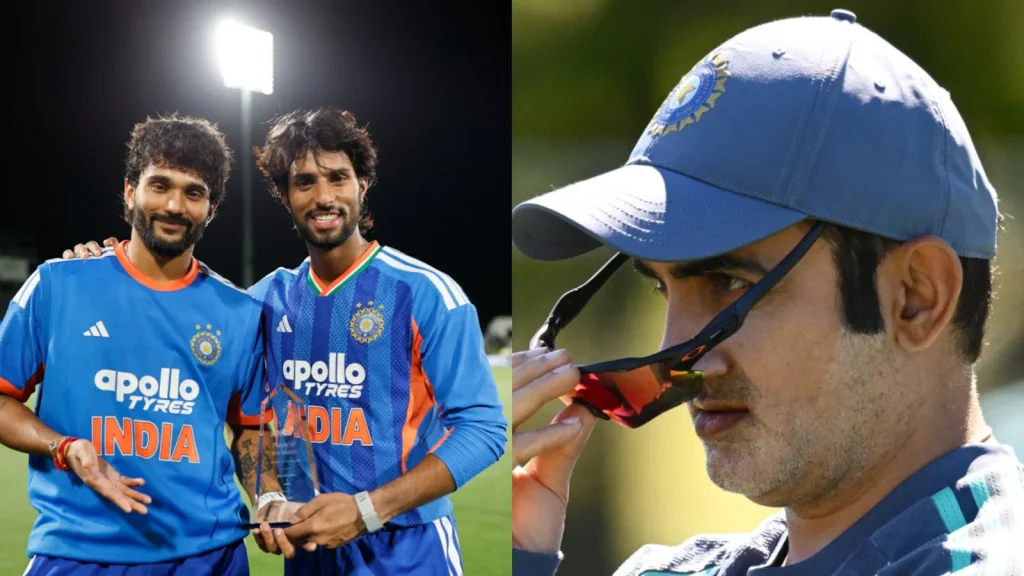
Gambhir’s three-word message captured the significance of the response from the players. His comment, “Boys becoming men,” praised a performance in which the team managed a difficult situation rather than allowing the pressure to dictate the outcome.
The victory also offered a reminder that T20 matches can change rapidly. A team that appears to be in control after taking early wickets can lose its advantage if the opposition finds a productive partnership. Equally, a batting side that appears close to defeat can recover if its remaining players combine smart decision-making with timely aggression.
For Tilak, the innings further strengthened the case for his importance in India’s middle order and during the death overs. For Dhir and Reddy, their contributions demonstrated the value of supporting partnerships in high-pressure situations.
Ultimately, India’s fightback was a collective effort, with Tilak’s unbeaten 51 serving as the defining performance. The recovery from 70/5 and the successful pursuit of 181 provided the context for Gambhir’s celebratory message and underlined the team’s ability to respond when the match appeared to be slipping away.