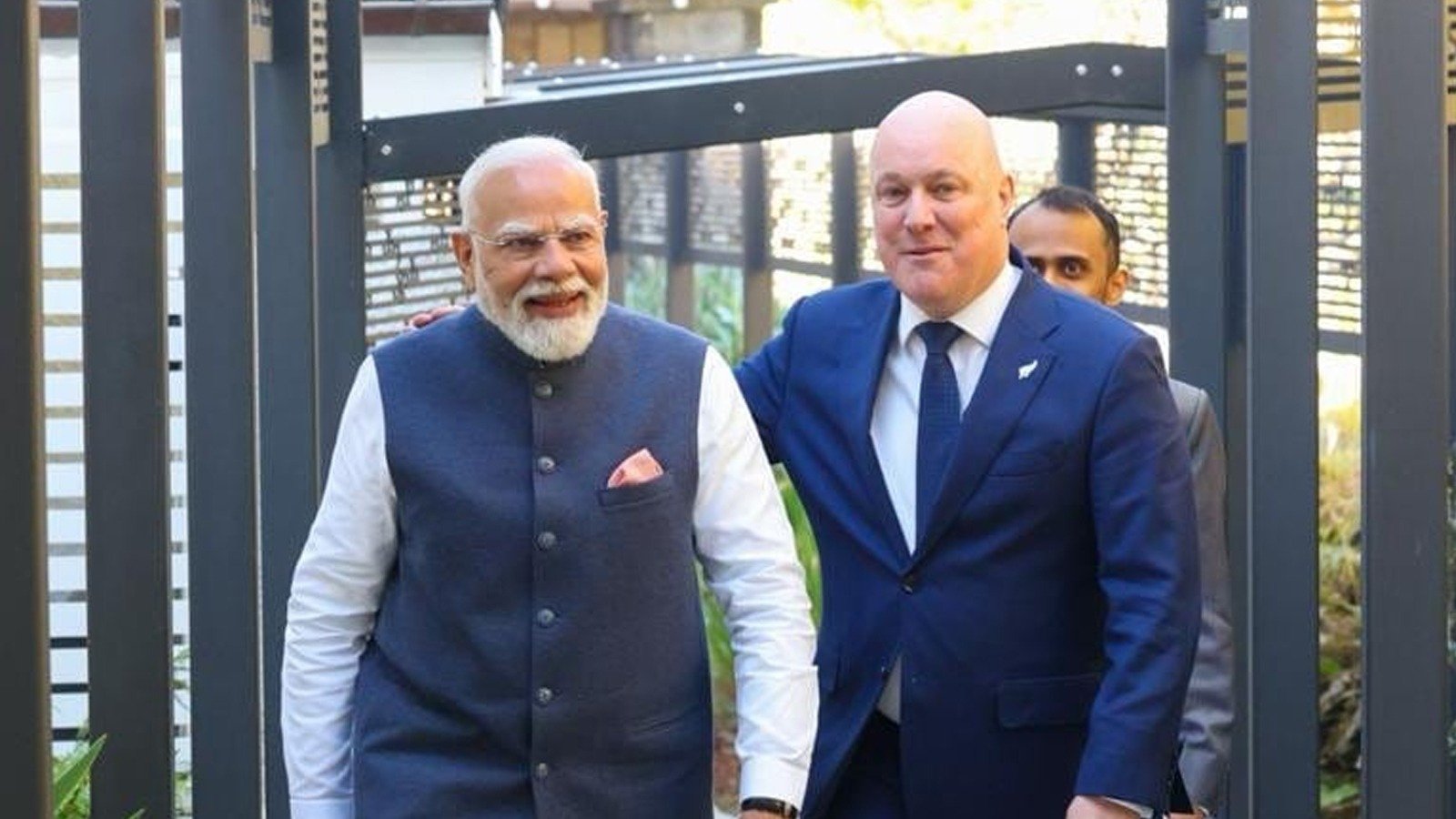
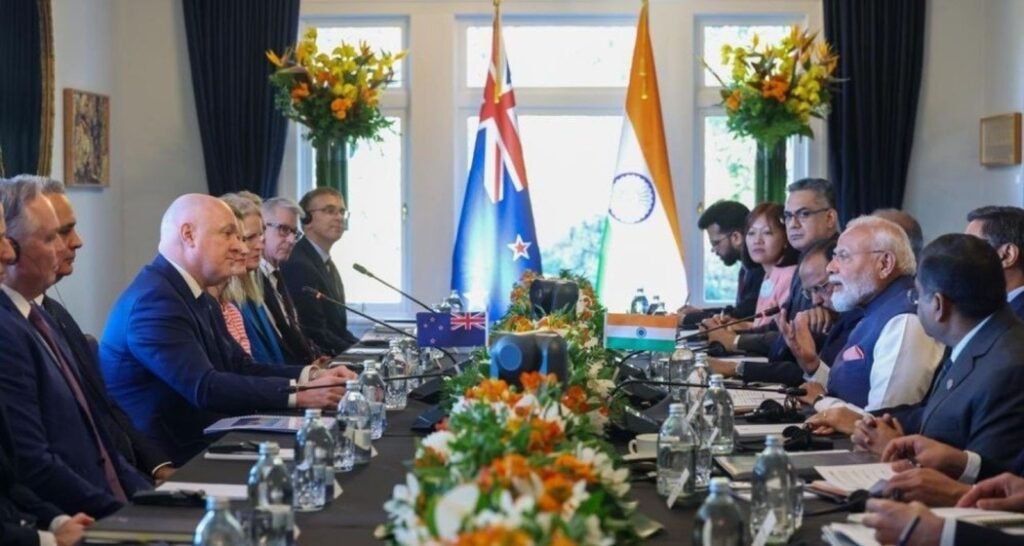
India and New Zealand have taken one of the biggest steps in their bilateral relationship by unveiling a wide-ranging agreement package that significantly expands cooperation across defence, maritime security, trade, disaster management, agriculture, tourism, sports, culture and scientific research. During Prime Minister Narendra Modi’s official visit, the two nations formally elevated their relationship to a Strategic Partnership and adopted the Roadmap to 2030, setting ambitious goals for deeper engagement over the coming years.
The comprehensive agreement framework reflects a shared vision of stronger economic growth, regional stability and greater collaboration in the Indo-Pacific. Rather than focusing on a single sector, the new partnership spans multiple strategic areas, demonstrating how both countries intend to build a long-term relationship that extends beyond traditional diplomacy.
Table of Contents
Strategic Partnership Marks a New Chapter
The decision to upgrade bilateral ties to a Strategic Partnership is among the most significant outcomes of the visit. Such partnerships generally indicate a higher level of political trust and institutional cooperation, with countries committing to regular engagement on strategic, economic and security matters.
Supporting this new relationship is the Roadmap to 2030, a long-term plan that outlines priorities in defence, trade, maritime security, tourism, culture, sports, agriculture, innovation and multilateral cooperation. The roadmap is expected to provide direction for government agencies, businesses, universities and research institutions in both countries.
The agreement package also reflects changing geopolitical realities, particularly in the Indo-Pacific region, where maritime security, resilient supply chains and regional cooperation have become increasingly important.
Defence Agreement Strengthens Security Cooperation
Among the most notable developments is the strengthening of defence cooperation through multiple agreement initiatives.
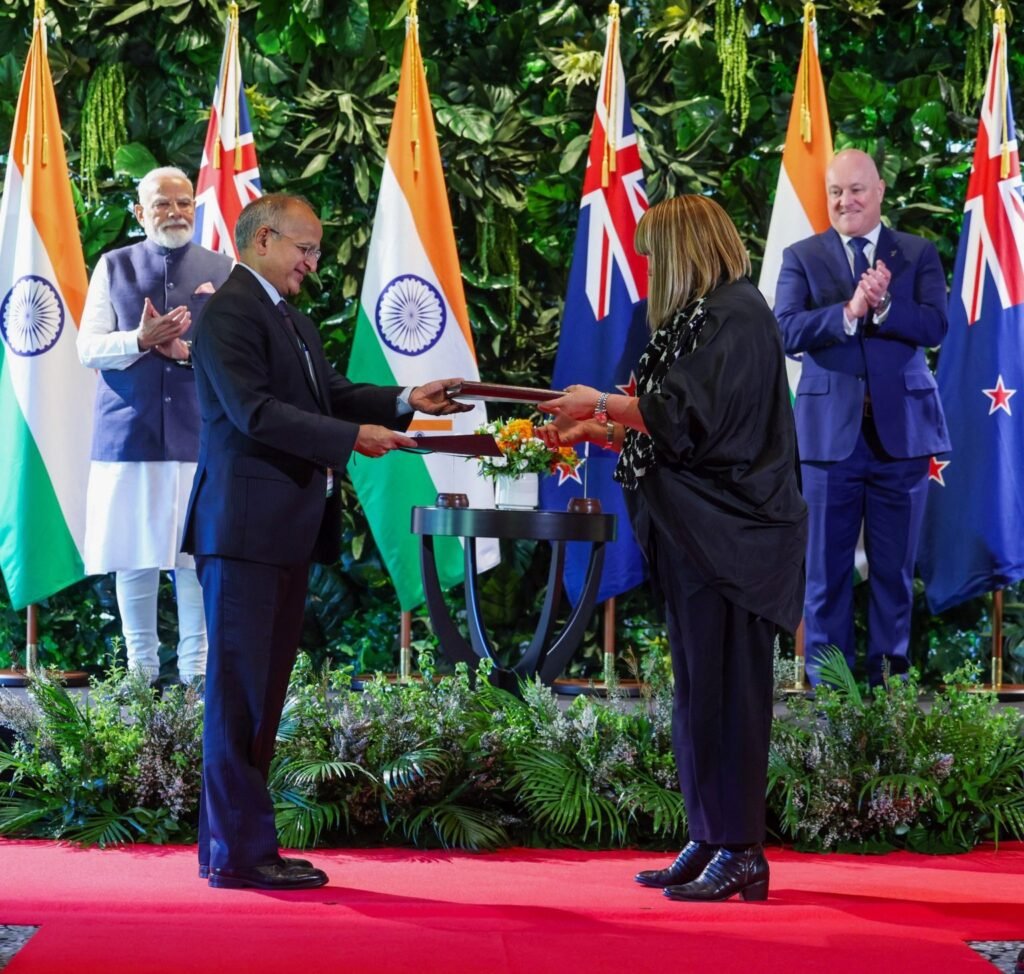
India and New Zealand signed a Memorandum of Arrangement on Maritime Cooperation, aimed at improving coordination between the two countries’ naval and maritime agencies. The agreement promotes regular dialogue, information sharing, joint activities and closer operational coordination across the Indo-Pacific.
Another important agreement covers hydrography and nautical cartography. Hydrographic surveys play a vital role in ensuring safe navigation by mapping oceans, coastlines and underwater terrain. Under this arrangement, both countries will jointly produce navigational charts, exchange hydrographic data and undertake capacity-building programmes.
A Mutual Logistics Support Arrangement was also signed, allowing the Indian Navy and the New Zealand Defence Force to provide reciprocal logistical assistance during exercises, port visits, humanitarian missions and other approved operations. Such agreements improve operational efficiency and strengthen defence preparedness without requiring permanent military deployments.
The two governments further agreed to establish a Joint Working Group on Counter-Terrorism. The new mechanism will facilitate intelligence sharing, policy coordination and cooperation against evolving security threats, including transnational terrorism.
Maritime Security Emerges as a Key Priority
Maritime cooperation forms a major pillar of the new agreement package.
Both countries announced the creation of a Maritime Security Dialogue, providing an institutional platform for regular discussions on regional maritime challenges. The dialogue is expected to address issues including freedom of navigation, maritime safety, illegal activities at sea and regional stability.
New Zealand also announced that Maritime Security would become its priority pillar under the Indo-Pacific Oceans Initiative (IPOI). As part of this commitment, both countries will work together to combat Illegal, Unreported and Unregulated (IUU) fishing, a growing global challenge that threatens marine ecosystems, coastal economies and food security.
The expanded maritime agreement demonstrates the increasing importance both nations place on maintaining an open, secure and rules-based Indo-Pacific.
Trade Agreement Targets Significant Economic Growth
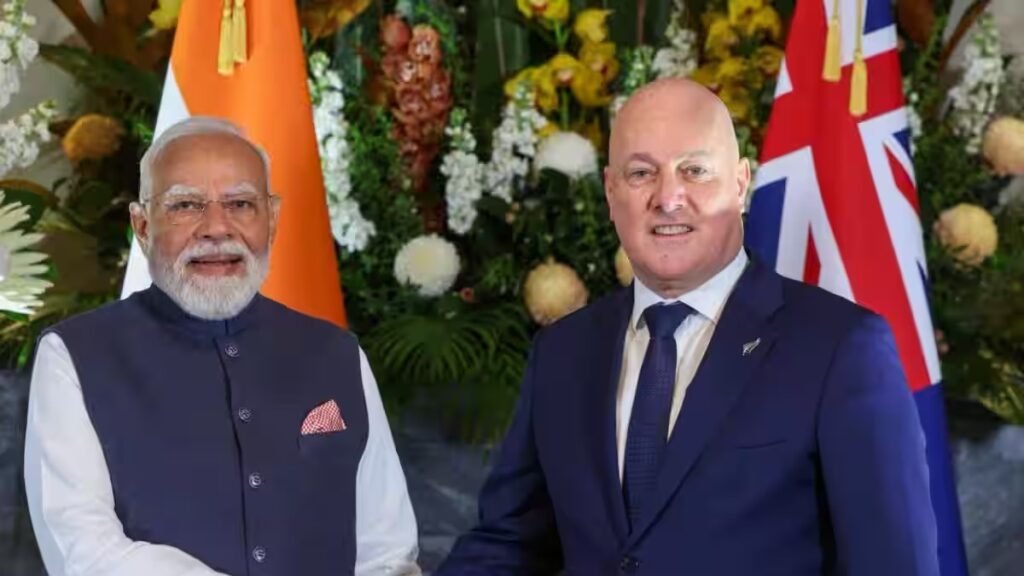
Economic cooperation has also received a major boost through the recently concluded India-New Zealand Free Trade Agreement, which is expected to support greater market access, stronger business partnerships and increased investment.
Building on this agreement, both governments have set an ambitious target of doubling bilateral trade to NZ$7 billion—approximately ₹35,000 crore—by 2030.
Trade between India and New Zealand has historically remained below its potential despite complementary economies. India offers a vast consumer market, advanced manufacturing capabilities and a rapidly growing digital economy, while New Zealand is internationally recognised for agriculture, dairy, food processing, education and clean technologies.
The new agreement framework is expected to encourage businesses in both countries to explore fresh investment opportunities while reducing barriers to trade.
Disaster Management Agreement Focuses on Climate Resilience
Climate-related disasters have become increasingly frequent across the Asia-Pacific region, making disaster preparedness an important area of international cooperation.
India’s National Disaster Management Authority (NDMA) and New Zealand’s National Emergency Management Agency (NEMA) signed a Memorandum of Cooperation focused on improving disaster resilience.
The agreement covers earthquake preparedness, tsunami response, coastal hazard mitigation, policy dialogue, knowledge sharing and institutional capacity building.
New Zealand possesses considerable expertise in earthquake management due to its location along the Pacific Ring of Fire, while India has developed extensive disaster response capabilities through agencies such as the NDMA and National Disaster Response Force (NDRF). Combining these strengths is expected to improve preparedness in both countries.
Agriculture Agreement Promotes Innovation
Agriculture remains another major focus of the bilateral agreement package.
The two governments signed a Memorandum of Cooperation on Animal Husbandry and Dairying, aimed at expanding technical collaboration, research partnerships and knowledge exchange.
Given New Zealand’s global reputation for efficient dairy farming and livestock management, the agreement creates opportunities for sharing modern farming practices, productivity enhancement techniques and sustainable agricultural technologies.
An additional Kiwifruit Action Plan was launched under the Agricultural Productivity Partnership to promote horticultural development in India.
As part of this initiative, two Centres of Excellence for Kiwifruit will be established in Nagaland and Uttarakhand. These centres are expected to focus on advanced cultivation methods, farmer training, research, productivity improvement and value-chain development.
The initiative reflects growing efforts to diversify agricultural production while improving farmer incomes through high-value horticulture.
Tourism and Cultural Agreement Strengthen People-to-People Links
People-to-people engagement forms another important component of the expanded relationship.
A new tourism agreement aims to encourage greater tourist exchanges by promoting travel, improving cooperation between tourism authorities and strengthening cultural understanding.
Tourism contributes significantly to employment and economic activity in both countries. Improved cooperation could also encourage educational travel, business tourism and adventure tourism.
Cultural cooperation has similarly been expanded through new agreement initiatives that promote artistic exchanges, heritage conservation and institutional partnerships.
One particularly notable collaboration involves the National Maritime Heritage Complex (NMHC) in Lothal, Gujarat, and the New Zealand Maritime Museum.
This agreement supports knowledge sharing, museum development, preservation of maritime history and collaborative exhibitions that celebrate centuries of maritime traditions connecting different parts of the world.
Sports Agreement Expands Athletic Cooperation
Sports diplomacy also received considerable attention during the visit.
The two countries adopted the India-New Zealand Joint Action Plan on Sport, creating a structured framework for cooperation in athlete development, sports science, sports medicine and high-performance training.
The agreement is expected to facilitate exchanges between coaches, athletes, sports administrators and researchers while encouraging the sharing of best practices in sports management.
Given New Zealand’s international success across multiple sporting disciplines, including rugby, cricket and Olympic sports, the collaboration could provide valuable learning opportunities for Indian athletes and sporting institutions.
Scientific and Academic Agreement Encourages Innovation
Research and higher education form another major area of cooperation.
India’s National Centre for Polar and Ocean Research (NCPOR), Goa, signed an agreement with the University of Canterbury to strengthen collaboration in Antarctic research.
Scientific cooperation in Antarctica contributes to better understanding of climate change, ocean systems, biodiversity and environmental sustainability.
Another thing was concluded between NIFTEM-Kundli and Massey University to promote academic exchanges, collaborative research and student mobility.
The partnership is expected to encourage joint research projects, faculty cooperation, innovation in food technology and greater educational collaboration between Indian and New Zealand institutions.
Clean Energy Cooperation Gains Momentum
The agreement package also advances cooperation in sustainable development.
New Zealand announced its decision to join the Global Biofuels Alliance, reinforcing international efforts to promote cleaner energy alternatives and reduce dependence on conventional fossil fuels.
The alliance seeks to encourage production, research and adoption of sustainable biofuels while supporting global climate goals and energy transition efforts.
With India emerging as one of the leading advocates of renewable energy partnerships, New Zealand’s participation adds further momentum to international cooperation on clean fuel technologies.
Overall, the extensive package demonstrates a clear commitment by both governments to build a broader and more strategic relationship that combines security cooperation, economic growth, scientific innovation, agricultural development, cultural engagement and sustainable development under a shared long-term vision.