External Affairs Minister Defends Mumbai Meeting With US Secretary of State, Cites Shimla Agreement and Jaipur Diplomatic Engagements as India-US Trade Deal Nears Final Stage
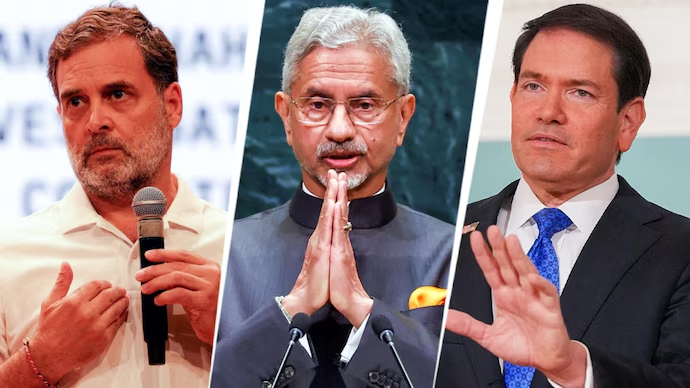
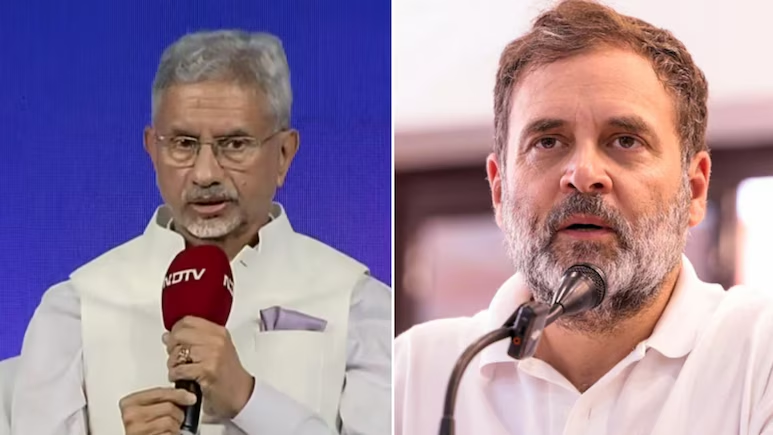
S Jaishankar has hit back at Rahul Gandhi’s description of his meeting with US Secretary of State Marco Rubio in Mumbai as a “summoning”, citing historical examples of Indian leaders travelling outside New Delhi to meet foreign counterparts, including former Prime Minister Indira Gandhi’s 1972 meeting with Pakistan’s Zulfikar Ali Bhutto in Shimla. Jaishankar questioned the criticism of the Mumbai meeting and argued that diplomatic engagements outside the national capital were neither unusual nor grounds for political controversy.
The minister’s remarks came amid renewed political debate over the nature of India’s diplomatic engagement with the United States and the progress of negotiations on a proposed bilateral trade agreement. Jaishankar also indicated that the trade deal was approaching its final stage, while cautioning that important challenges remained before an agreement could be concluded.
The exchange has brought together two significant issues in India’s foreign policy discourse: the political interpretation of diplomatic meetings and the economic implications of the ongoing India-US trade negotiations.
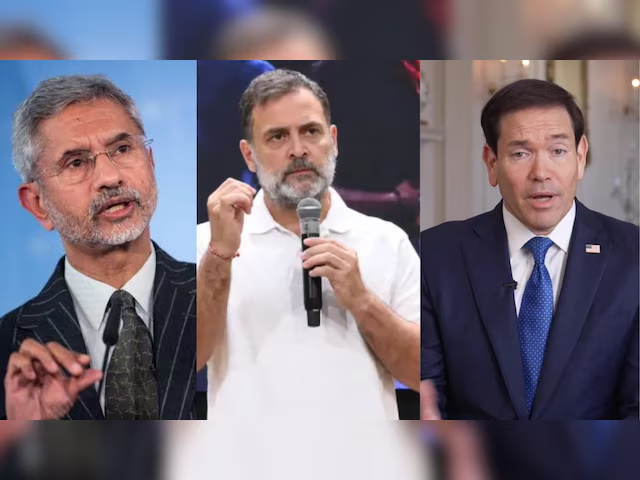
Table of Contents
Jaishankar Questions Rahul Gandhi’s ‘Summoning’ Remark
S Jaishankar said he failed to understand the controversy surrounding his visit to Mumbai to meet US Secretary of State Marco Rubio. Responding to the criticism, S Jaishankar questioned why a meeting held in India’s financial capital had become a subject of political objection.
“They don’t like Mumbai. They have something against Mumbai. It’s our financial capital. It’s our Bollywood capital. It has got so much going for it,” S Jaishankar said, adding that he had no idea why there was such a reservation about the city.
S Jaishankar’s remarks were directed at the political criticism surrounding the meeting, which Rahul Gandhi had described as a “summoning”. The term suggested that S Jaishankar had been called to meet the American official rather than participating in a meeting arranged as part of normal diplomatic engagement.
S Jaishankar rejected the implication that travelling outside Delhi to meet a foreign leader or counterpart should be interpreted in that manner. He argued that diplomatic meetings frequently take place in locations other than the national capital and that such arrangements should not automatically be viewed as a sign of subordination.
The response from S Jaishankar was aimed at challenging the premise of the criticism rather than treating the geographical location of the meeting as evidence of India’s diplomatic standing. His argument was that the venue of a meeting, by itself, does not establish the nature of the relationship between the officials involved.
The exchange also highlighted how routine diplomatic engagements can become subjects of domestic political debate, particularly when relations with major international partners are involved. S Jaishankar used the opportunity to emphasise the importance of considering the broader context of diplomatic meetings.
Indira Gandhi’s 1972 Shimla Meeting Becomes a Key Example
To support his argument, S Jaishankar referred to the 1972 meeting between former Prime Minister Indira Gandhi and Pakistan’s then president, Zulfikar Ali Bhutto, in Shimla.
The meeting resulted in the Shimla Agreement, signed on July 2, 1972, following the 1971 India-Pakistan war. The agreement established principles for the two countries to address their differences through peaceful means and bilateral negotiations. It also formalised the Line of Control in Jammu and Kashmir in the context of the post-war settlement.
By invoking this historical episode, S Jaishankar pointed out that Indian leaders have long travelled beyond New Delhi to conduct important diplomatic discussions. He questioned whether Indira Gandhi’s decision to meet Bhutto in Shimla should similarly be interpreted as a case of a foreign leader summoning an Indian prime minister.
“If going out of Delhi to meet a foreign leader or a foreign counterpart is summoning, I can give you a lot of examples. Mrs Gandhi went to Shimla to meet Bhutto. Was she summoned?” S Jaishankar asked.
The example was relevant to S Jaishankar’s argument because the Shimla meeting was a major diplomatic engagement between two neighbouring countries with a long history of conflict. Its significance was determined by the negotiations and the resulting agreement, not simply by the fact that the meeting took place outside the capital.
S Jaishankar’s reference to Indira Gandhi also brought a historical dimension to the political disagreement. Rather than limiting his response to the immediate meeting with Rubio, he used an earlier Congress-led government’s diplomatic record to question the logic of the criticism.
The comparison does not mean that the circumstances of the Shimla Agreement and the Mumbai meeting were identical. The two engagements took place in different historical and diplomatic contexts. However, S Jaishankar used the example to make a narrower point: travelling outside Delhi to meet a foreign counterpart is not, in itself, evidence that an Indian leader or official has been summoned.
Salman Khurshid’s Jaipur Meeting With Pakistani Prime Minister
S Jaishankar also cited a more recent example from the Congress-led United Progressive Alliance government.
He referred to Salman Khurshid, who served as External Affairs Minister under Prime Minister Manmohan Singh, hosting a lunch for Pakistan’s then Prime Minister Raja Pervez Ashraf in Jaipur in 2013.
The meeting was another example of diplomatic engagement taking place outside New Delhi. By including it alongside the Indira Gandhi-Bhutto meeting, S Jaishankar sought to demonstrate that such arrangements have occurred under governments led by different political parties.
“Salman Khurshid went to Jaipur to meet a Pakistan PM. Was he summoned?” S Jaishankar asked.
His argument was that the location of a diplomatic meeting should not be interpreted through a political lens without considering its purpose and context. Meetings between Indian and foreign officials can take place in different cities depending on schedules, official visits, events and other diplomatic considerations.
S Jaishankar then urged political leaders to approach the matter more maturely.
“We are adults, let’s have an adult conversation. Let’s leave, you know,” he said, drawing applause from the audience.
The remark underscored S Jaishankar’s frustration with what he viewed as an unnecessary controversy over the venue of the meeting. It also turned the discussion into a broader exchange over political rhetoric and the way India’s diplomatic engagements are presented to the public.
For S Jaishankar, the historical examples served as a reminder that diplomatic protocol cannot be judged solely by geography. The central questions, in his view, should concern the purpose of the meeting, the issues discussed and the outcomes being pursued.
Why Marco Rubio Visited Mumbai and Jamnagar
The US Mission in India provided an official explanation for Rubio’s visit to Mumbai and Jamnagar from October 20 to October 22.
According to a statement issued on Thursday, the visit was intended to advance the US-India strategic partnership, strengthen commercial and investment ties, and reaffirm Washington’s commitment to a prosperous and secure Indo-Pacific.
Rubio also participated in a Freedom 250 reception as the guest of honour. The event commemorated the 250th anniversary of American independence and celebrated the longstanding connections between the American and Indian people.
The visit therefore involved both diplomatic and broader engagement objectives. In addition to meetings with Indian officials, the programme included an event focused on the historical and people-to-people relationship between the two countries.
The US Mission’s statement placed the visit within the wider framework of bilateral cooperation rather than presenting it as a meeting confined to a single issue.
India and the United States maintain a multifaceted relationship covering trade, investment, defence, technology, energy, education and regional security. High-level visits provide opportunities to review ongoing initiatives, discuss areas of disagreement and identify ways to strengthen cooperation.
Against this background, Rubio’s meeting with S Jaishankar in Mumbai formed part of a wider diplomatic engagement between the two countries. The location of the meeting became a political talking point, but the official agenda also included substantive discussions on bilateral relations and economic cooperation.
S Jaishankar Says India-US Trade Deal Is in Its ‘Last Mile’
Alongside the political exchange over the Mumbai meeting, S Jaishankar provided an update on the proposed India-US trade agreement, describing the negotiations as being in their “last mile”.
The minister’s assessment indicated that discussions were moving towards a conclusion, although S Jaishankar cautioned against assuming that an agreement was already complete.
“What you’ve heard not just from Secretary Rubio, but from Minister Piyush Goyal, from others, from me, is that we are moving towards it,” S Jaishankar said.
He explained that the final stages of negotiations could still present difficulties, even when the negotiating teams had made substantial progress.
“But, as I said, often the last mile or the penultimate miles do pose their challenges. I think the [negotiating] teams are working through them now,” he added.
Jaishankar declined to disclose the specific issues that remained unresolved, saying that these were matters for the negotiating teams to address.
“If you’re asking me to tell you what exactly those challenges are, I’m sorry I won’t. That’s for the negotiators to sort out,” he said.
His remarks reflected cautious optimism about the proposed agreement. While the negotiations appear to have advanced, the minister’s comments made clear that the remaining issues would need to be resolved before the deal could be formally concluded.
The distinction is important because trade agreements involve more than reaching a broad political understanding. Negotiators must settle the detailed terms, reconcile differences between the two sides and ensure that the final text accurately reflects the commitments made.
Consequently, describing a deal as being in its final stages does not necessarily mean that all outstanding matters have been settled or that implementation can begin immediately.
What Is at Stake in the India-US Trade Agreement?
India and the United States have been negotiating a proposed bilateral trade pact since early 2025. The discussions are intended to address tariff-related tensions, reduce non-tariff barriers and improve market access for businesses in both countries.
The negotiations have attracted considerable attention because the United States is an important market for Indian exporters, while India offers American companies opportunities across a large and expanding economy.
A trade agreement could establish clearer terms for commercial exchanges, potentially improve conditions for exporters and create additional opportunities for investment. However, the final benefits would depend on the specific provisions agreed upon by both governments.
Tariffs are among the key issues in international trade negotiations. These duties can affect the final price of imported goods, influencing their competitiveness in overseas markets. Differences in tariff treatment can also affect how exporters from one country compete against businesses from other countries.
India is seeking more favourable tariff terms for its goods in the US market compared with those available to competing countries. Such an advantage could help Indian exporters remain competitive in sectors where price differences play a significant role in purchasing decisions.
Non-tariff barriers are another important element of the negotiations. These can include regulatory requirements, technical standards, certification procedures and other rules that influence the movement of goods across borders.
Reducing unnecessary obstacles while preserving legitimate regulatory requirements can make trade more predictable and efficient. For businesses, greater clarity over market access conditions can support decisions on production, investment and long-term commercial planning.
At the same time, bilateral trade negotiations require compromises. Each country must consider the interests of its domestic industries, exporters, consumers and policymakers. Differences over sensitive sectors and the precise terms of market access can therefore complicate the final stages of an agreement.
Jaishankar’s caution about the “last mile” reflects this broader challenge. Even after negotiators have reached substantial agreement, the final details can determine how a trade pact operates in practice.
Piyush Goyal Says First Phase Has Been Finalised
Commerce Minister Piyush Goyal has also indicated progress in the negotiations, stating earlier this month that the first phase of the India-US bilateral trade agreement had been finalised and was undergoing legal drafting.
Addressing the SRCC Centenary Conclave in Delhi, Goyal said the first tranche had been finalised and that the two countries were working towards completing the process.
“The US bilateral trade agreement first tranche has been finalised. It’s going through final contours, the legal drafting, and we hope to be able to finalise that soon and operationalise that once we get comparable advantage or competitive advantage over our peer countries,” Goyal said.
His remarks suggested that the first phase had moved beyond broad negotiations towards the preparation of formal legal text. However, the process still required the completion of the remaining details and the necessary steps before the agreement could become operational.
Legal drafting is a crucial stage in trade negotiations because it translates negotiated commitments into precise language. The wording of individual provisions can determine how tariff concessions, market access arrangements and other obligations will be applied.
The emphasis on securing a competitive advantage over peer countries also highlights India’s priorities. The government is seeking terms that allow Indian businesses to compete effectively in the US market rather than simply securing an agreement for its own sake.
Jaishankar’s comments about the negotiations being in their final stretch and Goyal’s update about the first tranche indicate progress on the diplomatic and commercial fronts. Nevertheless, neither statement removes the need to complete the remaining procedures and establish the final terms.
The exact challenges that continue to occupy the negotiating teams have not been publicly detailed in Jaishankar’s remarks.
How Trade and Diplomacy Are Linked
The proposed trade agreement illustrates why the India-US relationship extends beyond diplomatic meetings and political exchanges.
Trade discussions require sustained coordination among foreign affairs officials, commerce negotiators and other government representatives. Diplomatic engagement can help maintain communication at the highest levels, while specialised negotiating teams work through technical questions involving tariffs, regulations and market access.
Rubio’s meeting with Jaishankar therefore took place against the backdrop of a wider bilateral agenda. According to the US Mission, the visit was intended to strengthen the strategic partnership and deepen commercial and investment ties. The discussion on the proposed trade deal was one component of that broader relationship.
The two countries also cooperate in areas such as defence, technology, energy and regional security. Progress in one area can contribute to the overall momentum of bilateral engagement, although individual negotiations may continue to face their own challenges.
For India, the trade agreement could offer opportunities to expand exports and strengthen commercial links with one of its major international partners. For the United States, closer economic engagement with India could support American businesses seeking opportunities in the Indian market.
However, the scale of those opportunities will depend on the final terms. Tariff arrangements, regulatory provisions and implementation schedules will ultimately determine how the agreement affects companies and consumers.
This is also why both governments have reasons to approach the final stages carefully. A deal that is announced before the details are settled may create expectations that are difficult to meet. Completing the text and clarifying the obligations of both sides are essential steps towards a workable agreement.
Political Criticism and the Importance of Diplomatic Protocol
The dispute over Jaishankar’s Mumbai meeting with Rubio reflects a familiar feature of Indian politics: foreign policy engagements can become subjects of domestic political contestation.
The choice of words used to describe a meeting can influence how the public perceives it. Describing an engagement as a routine diplomatic meeting conveys a different impression from calling it a “summoning”, a term that can suggest an imbalance in authority or status.
Jaishankar challenged that interpretation by pointing to previous examples involving Congress leaders. His references to Indira Gandhi’s meeting with Bhutto in Shimla and Khurshid’s engagement with Ashraf in Jaipur were intended to demonstrate that meetings outside Delhi have historical precedents across governments.
However, the location of a meeting alone does not establish whether either side has gained a diplomatic advantage. A meaningful assessment would also consider the agenda, the nature of the discussions, the commitments made and the results achieved.
In the case of Rubio’s visit, the US Mission publicly identified strategic cooperation, commercial ties, investment and the Indo-Pacific as central objectives. Jaishankar also discussed the progress of trade negotiations following his meeting with the US secretary of state.
These details provide a broader context for understanding the engagement beyond the political disagreement over its venue.
At the same time, scrutiny of foreign policy remains a legitimate part of democratic debate. Government officials are expected to explain major diplomatic decisions and communicate how international engagements serve the country’s interests. The disagreement is therefore not simply about whether a meeting can be criticised, but about the basis on which its significance should be assessed.
Jaishankar’s response sought to shift the focus from the location of the meeting to the wider diplomatic context, using historical examples to challenge what he considered an unreasonable interpretation.
The immediate focus will remain on the progress of the India-US trade negotiations and whether the two governments can resolve the outstanding issues in the coming stages.
Jaishankar has expressed confidence that the negotiating teams are working through the remaining challenges, while also warning that the final stage of a deal can be difficult. Goyal’s statement that the first tranche has been finalised and is undergoing legal drafting provides a further indication of the process’s advancement.
The next significant steps will involve completing the legal text, resolving outstanding differences and undertaking the procedures required before the agreement can be operationalised. The timing and practical effects will depend on the final terms and the steps agreed upon by both sides.
For now, Jaishankar’s remarks offer two distinct messages. On the political front, he has rejected the suggestion that travelling to Mumbai to meet Rubio should be interpreted as a sign of being summoned, citing examples from India’s diplomatic history. On the economic front, he has indicated that the trade deal is nearing its final stage, while making clear that negotiations remain incomplete.
The meeting controversy may continue to generate political debate, but the substantive outcome of the India-US engagement will ultimately be judged by the progress achieved on shared priorities, the resolution of outstanding differences and the terms of any agreement that the two governments eventually conclude.