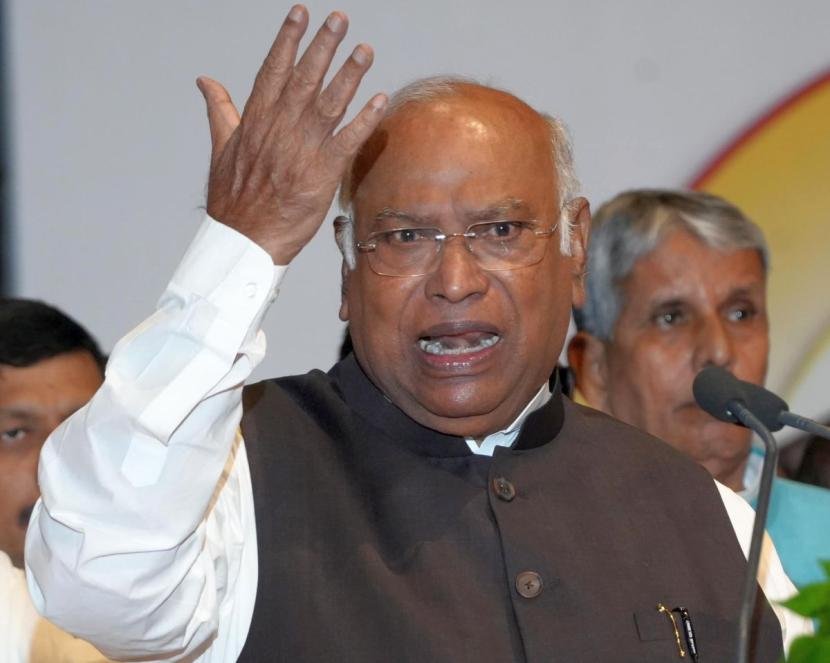
Congress president Mallikarjun Kharge triggered a fresh political controversy on Sunday after making a sharp remark about Prime Minister Narendra Modi during a public event in Patna, Bihar. The comment, “Modi ka baap bhi jayega” (Even Modi’s father will go), drew strong criticism from the Bharatiya Janata Party (BJP), with leaders accusing the Congress chief of crossing the boundaries of political decorum. One BJP leader also compared Kharge to Duryodhana, the antagonist of the Hindu epic Mahabharata.
The incident occurred while Kharge was addressing a gathering marking the 139th birth anniversary of Dr Shri Krishna Singh, Bihar’s first Chief Minister, popularly known as Shri Babu. An exchange with a person in the audience interrupted the speech and quickly became the centre of a political dispute.
The controversy has also revived attention on previous remarks made by Kharge about Modi. Over the years, comments involving the Prime Minister have repeatedly drawn criticism from the BJP, while Kharge has, on some occasions, offered explanations or clarifications about the context of his statements.
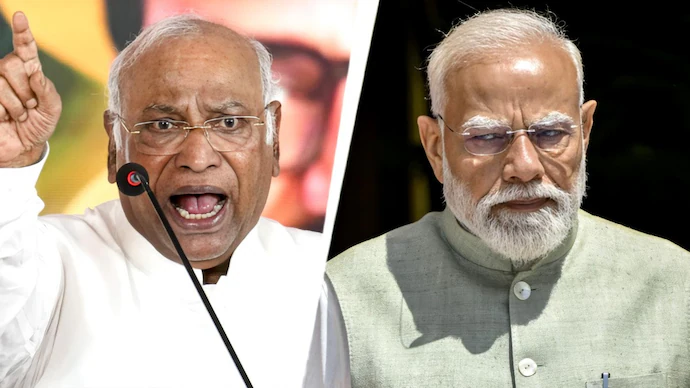
Table of Contents
What Happened at Mallikarjun Kharge’s Patna Event?
The latest controversy began when Mallikarjun Kharge was speaking at the Patna event and a man in the audience was heard making a remark suggesting that Prime Minister Narendra Modi would not leave office.
Mallikarjun Kharge responded, “Modi ka baap bhi jayega,” which can be translated as “Even Modi’s father will go.” The exchange created a commotion at the venue and attracted attention after footage of the incident circulated publicly.
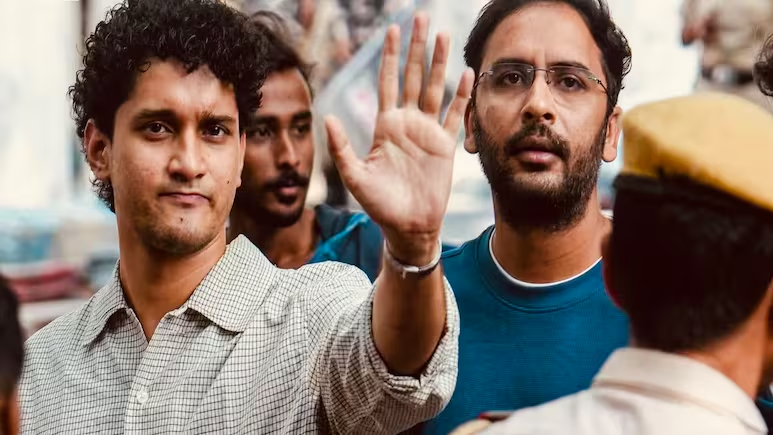
The context of the exchange subsequently became more complicated. The man, identified in reports as Santosh Kumar, said after being removed from the venue that his original statement had been misunderstood. He claimed that he had been saying Modi would not leave unless there was a public revolt, rather than simply asserting that the Prime Minister would remain in office.
According to Kumar’s account, only part of his sentence had been heard. He also said that his words were intended to express opposition to Modi’s government. His explanation added another dimension to the incident, although it did not prevent the BJP from criticising Mallikarjun Kharge’s response.
The episode illustrates how a brief exchange at a political gathering can become a larger controversy when remarks are interpreted differently by those present. It also highlights the importance of considering the context surrounding a statement rather than relying solely on a short clip.
BJP Condemns Kharge’s Remark, Invokes Mahabharata Character
The BJP strongly criticised Mallikarjun Kharge following the incident, arguing that his language was inappropriate for the president of a major national political party. The party said the remark crossed the boundaries of acceptable political discourse because it brought the Prime Minister’s family into an exchange over political power.
One BJP leader compared Mallikarjun Kharge to Duryodhana, a central antagonist in the Mahabharata, using the epic’s character as a political criticism. The comparison intensified the rhetoric surrounding the incident and turned the exchange into a broader argument about the language used by political leaders.
BJP leaders also accused the Congress of allowing personal attacks to overshadow substantive political debate. Their criticism focused on the idea that opposition to a prime minister’s policies should be expressed through arguments about governance, public accountability and electoral performance rather than remarks involving family members.
The BJP’s response was part of a wider political dispute between the ruling party and the Congress. Both parties have frequently accused each other of weakening democratic standards, using inflammatory language and diverting public attention from policy issues.
The latest exchange is likely to add to those tensions, particularly because it occurred at a public event where Mallikarjun Kharge was also discussing electoral processes, the Constitution and the role of political institutions.
BJP Leaders Question Political Decorum
Several BJP figures criticised Mallikarjun Kharge’s statement after it became public. Union Home Minister Amit Shah accused the Congress president of crossing the limits of political decency and alleged that Congress leaders had repeatedly used objectionable language about Modi and his family.
BJP president Nitin Nabin also described the remark as a reflection of what he called the Congress’s ideological bankruptcy. Party spokesperson Tuhin A Sinha criticised Mallikarjun Kharge’s behaviour, while other BJP leaders portrayed the incident as evidence of frustration within the opposition. These were political assessments made by BJP leaders, rather than independently established explanations for Mallikarjun Kharge’s remarks.
The BJP’s criticism centred on the responsibilities that accompany senior political office. Leaders of national parties frequently address large gatherings and communicate their positions to voters through speeches, interviews and public statements. Their language can influence the tone of political debate well beyond the immediate event.
At the same time, political controversies often involve competing interpretations. Supporters of a speaker may focus on the broader political argument, while opponents may highlight a particular phrase and argue that it crosses an acceptable boundary.
In this case, the BJP treated Mallikarjun Kharge’s remark as an unacceptable personal attack, while the circumstances described by the audience member introduced a dispute over how the exchange began. Both the original statement and the subsequent clarification form part of the reported sequence of events.
Kharge’s Speech Also Targeted Modi, BJP and RSS
The exchange over Modi’s political future was not the only contentious part of Mallikarjun Kharge’s address in Patna. During the speech, the Congress president criticised the Prime Minister over his promise to bring back black money and questioned what had happened to the money that was supposed to be recovered.
Mallikarjun Kharge accused Modi of repeatedly making false claims and referred to the promise of recovering black money within the first 100 days of the government. His comments were part of a broader political attack on the BJP-led government.
Mallikarjun Kharge also criticised the Rashtriya Swayamsevak Sangh (RSS), arguing that its ideology contributed to divisions in society. He called for an end to the influence of that ideology and accused the organisation of engaging in communal activities. These claims reflected the Congress leader’s political position and were contested as part of the wider BJP-Congress confrontation.
The Congress president also raised concerns about the electoral process, including the Special Intensive Revision (SIR) of electoral rolls. Mallikarjun Kharge alleged that the exercise could result in the deletion of names belonging to opposition supporters and accused the BJP of benefiting from electoral manipulation. These allegations were presented as part of his argument for protecting voting rights and democratic institutions.
Mallikarjun Kharge called for opposition unity and described the struggle to protect voting rights and the Constitution as a “second freedom struggle”. He also demanded changes to the way elections are conducted and called for greater scrutiny of the electoral process.
The wider context matters because the disputed remark occurred during a politically charged speech that included criticism of the central government, the RSS and the Election Commission. However, the broader themes of Mallikarjun Kharge’s address do not remove the controversy surrounding the wording of his response to the audience member.
A Pattern of Controversial Remarks About PM Modi
The latest episode has brought renewed attention to earlier statements by Mallikarjun Kharge that prompted criticism from the BJP. Several of those controversies involved strong language, comparisons and accusations directed at Modi or the political organisations associated with him.
The ‘Terrorist’ Remark
During campaigning in Chennai ahead of the Tamil Nadu Assembly elections in 2026, Mallikarjun Kharge faced criticism after remarks about Modi were interpreted as calling the Prime Minister a terrorist.
Mallikarjun Kharge later rejected that interpretation and said he had been referring to what he described as “tax terrorism”, citing raids by the Enforcement Directorate, the Income Tax Department and the Central Bureau of Investigation. His explanation was that the criticism concerned the use of investigative agencies, rather than a personal description of Modi.
A similar controversy arose in October 2024, when Mallikarjun Kharge criticised the BJP in Karnataka and used the term “terrorist party” while discussing allegations of violence and the conduct of people associated with the ruling party. BJP leaders condemned those remarks as well.
These episodes demonstrate how wording can become a central political issue, particularly when a statement is interpreted as a personal accusation against a national leader.
The ‘Poisonous Snake’ Comparison
Mallikarjun Kharge also attracted criticism during the 2023 Karnataka Assembly election campaign after comparing Modi to a poisonous snake. The comment drew a sharp response from the BJP.
Mallikarjun Kharge subsequently said his statement was not directed at Modi personally and maintained that the political dispute was about the Prime Minister’s policies and the BJP. He expressed regret over the remark.
In April 2026, Mallikarjun Kharge used a poisonous-snake metaphor while addressing an election rally in Assam, this time referring to the RSS and BJP. The statement prompted complaints from BJP leaders, while his son and Karnataka minister Priyank Kharge defended it as a metaphorical criticism of ideologies that, in their view, promote hatred.
The ‘Ravana’ Reference
During a political event in Ahmedabad in 2022, Mallikarjun Kharge questioned the BJP’s practice of seeking votes in Modi’s name. He referred to Ravana, the antagonist in the Ramayana, while asking how many times voters would have to see the Prime Minister’s face.
Modi subsequently described the remark as an insult to Gujarat and its people. The episode became another example of the way mythological references can be drawn into political campaigning and then interpreted as either rhetorical criticism or a personal attack.
These past controversies provide context for the latest dispute, but each statement had its own circumstances and subsequent explanations. They should not automatically be treated as identical incidents.
Political Rhetoric and the Debate Over Public Accountability
The controversy involving Mallikarjun Kharge raises a broader question about the language used by political leaders in public life. India has a long tradition of sharp political debate, with opposition parties challenging governments over economic performance, public policy, social issues and the conduct of institutions.
Strong criticism is a central part of democratic politics. Leaders must be able to question those in power, challenge official claims and demand accountability. However, political exchanges can become less substantive when personal insults or references to family members take centre stage.
For voters, the distinction between criticism of a leader’s policies and attacks directed at the individual can be important. Policy-based arguments allow the public to assess competing claims, compare records and evaluate proposals. Personal exchanges, by contrast, can shift attention away from those questions.
The latest Patna incident also demonstrates the importance of context in reporting political statements. The audience member’s subsequent explanation introduced a different account of what he intended to say, making the exchange more complicated than the initial clip suggested. Reporting both the original remark and the later clarification provides a fuller picture of the incident.
Political parties may use such controversies to reinforce their existing arguments about their opponents. The BJP has portrayed Mallikarjun Kharge’s remark as evidence of declining political standards within the Congress, while his speech focused on allegations concerning the government, electoral processes and the RSS. The two sides’ positions reflect the larger political contest between the ruling party and the opposition.
What Happens Next?
The immediate controversy centres on the wording of Kharge’s response and the BJP’s condemnation of it. The incident has also brought earlier disputes over Kharge’s remarks about Modi back into public discussion.
The exchange took place at an event commemorating Shri Krishna Singh, but it quickly became part of the ongoing political confrontation between the Congress and the BJP. The competing accounts surrounding the audience member’s initial remark have added context to the episode without ending the dispute over Kharge’s response.
For both parties, the incident offers another opportunity to argue about political conduct, public accountability and the standards expected from senior leaders. Whether the controversy has a lasting effect on public opinion will depend on how political parties and voters respond in the days ahead.
For now, Kharge’s “baap” remark has become the latest flashpoint in the Congress-BJP rivalry, with the BJP condemning his language and invoking the Mahabharata’s Duryodhana as part of its criticism. The episode underlines how a brief exchange at a public gathering can quickly overshadow the wider issues being discussed and become a national political talking point.