The PM AJAY Scheme is emerging as one of the Centre’s key initiatives for improving the socio-economic conditions of Scheduled Caste (SC) communities across India. Designed to reduce poverty, improve rural infrastructure, expand educational opportunities, and promote sustainable livelihoods, the scheme has delivered measurable results in thousands of villages while encouraging inclusive development through community participation and digital governance.
According to the Ministry of Social Justice and Empowerment, the PM AJAY Scheme has already benefited more than 47.59 lakh people through its Adarsh Gram component. The programme has reached 47,316 villages across the country, where thousands of development projects have been completed to improve living conditions and strengthen local infrastructure.
The latest achievements underline the government’s continued focus on ensuring that development reaches historically disadvantaged communities through targeted interventions and long-term planning.
Table of Contents
More Than 47.59 Lakh Citizens Receive Benefits
The most significant achievement under the PM AJAY Scheme has been its wide outreach across Scheduled Caste-majority villages. Official figures show that 47,59,399 citizens have directly benefited from various development initiatives carried out under the Adarsh Gram component.
These benefits include improved access to essential infrastructure, better public facilities, enhanced village planning, and community-driven development projects designed to address local needs. Rather than implementing identical projects across every village, the scheme allows development priorities to be identified based on specific local requirements.
This flexible approach enables each village to focus on areas that require immediate attention, whether it involves roads, drinking water facilities, sanitation, community assets, educational infrastructure, or other basic services that improve everyday life.
Over 46,000 Development Projects Completed
Infrastructure development remains one of the strongest pillars of the PM AJAY Scheme. The Ministry has reported that 46,782 development works have already been completed under the programme.
These projects represent practical improvements that directly affect rural communities. Better roads improve connectivity, upgraded public infrastructure supports economic activity, and improved civic amenities contribute to healthier and safer living conditions.
Such development works also create a foundation for future growth by making villages better equipped to attract investment, strengthen local markets, and improve access to government services.
Instead of focusing solely on short-term welfare measures, the PM AJAY Scheme combines infrastructure creation with long-term community development, allowing villages to become more self-reliant over time.
Village Development Plans Strengthen Local Participation
A distinguishing feature of the PM AJAY Scheme is its emphasis on planning development from the grassroots level. Under the programme, 24,133 Village Development Plans (VDPs) have been prepared.
These plans serve as detailed roadmaps for village development by identifying existing challenges, available resources, and future priorities. Local communities participate in preparing these plans, ensuring that development reflects actual needs rather than a one-size-fits-all approach.
Village Development Plans also improve accountability by clearly outlining proposed projects and helping authorities monitor implementation in a structured manner.
This planning process strengthens coordination between local administrations, state governments, and the central government while encouraging greater community ownership of development initiatives.
16,759 Villages Declared Adarsh Grams
One of the most notable milestones achieved under the PM AJAY Scheme is the declaration of 16,759 villages as Adarsh Grams.
The designation reflects substantial improvements in infrastructure, access to essential services, and overall quality of life within Scheduled Caste-majority villages.
An Adarsh Gram is envisioned as a village that provides better living conditions through improved public infrastructure, stronger community participation, cleaner surroundings, enhanced civic amenities, and more effective delivery of government services.
The recognition also demonstrates how sustained investment and coordinated planning can transform rural communities over time.
Education Receives Major Push Through Hostel Projects
Apart from rural development, education continues to remain an important focus area under the PM AJAY Scheme.
For the financial year 2026-27, the Ministry has approved Central assistance worth ₹22.50 crore for the construction of three hostel projects.
Out of these, two hostels will be dedicated exclusively to girls, reflecting the government’s emphasis on improving educational access and promoting gender inclusion.
Together, these hostel projects will provide accommodation for 750 students.
For many students from economically weaker Scheduled Caste families, especially those living in remote or rural areas, access to safe accommodation often becomes a major challenge while pursuing higher education.
Hostel facilities reduce this barrier by providing secure residential support, allowing students to continue their studies without the burden of long-distance travel or housing expenses.
Improving educational infrastructure is widely recognised as an essential step towards increasing literacy, expanding employment opportunities, and supporting long-term social mobility.

Three Core Components Drive the PM AJAY Scheme
The PM AJAY Scheme has been designed around three major components that address different aspects of socio-economic development.
The first component is the Adarsh Gram initiative, which focuses on integrated village development. It seeks to improve infrastructure, strengthen public services, and encourage community-led planning in villages with substantial Scheduled Caste populations.
The second component provides Grants-in-Aid that support livelihood generation, skill development, entrepreneurship, and income-enhancing activities. This helps individuals and community organisations create sustainable sources of income instead of relying solely on financial assistance.
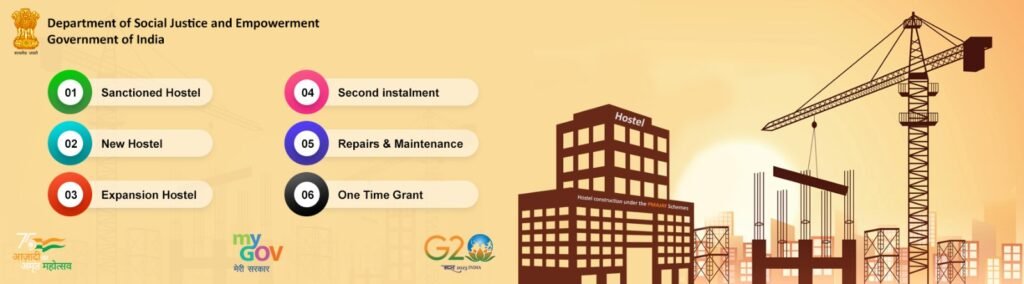
The third component focuses on hostels, providing financial support for constructing and repairing student accommodation facilities to improve educational access for Scheduled Caste students across the country.
Together, these three pillars create a comprehensive framework that addresses infrastructure, livelihoods, and education simultaneously.
Technology Improves Transparency and Monitoring
Digital governance has become another major strength of the PM AJAY Scheme.
The Ministry has developed the PM-AJAY Portal along with the AJAY Mobile Application to manage the programme through an end-to-end online system.
The digital platform allows authorities to prepare Village Development Plans, evaluate project proposals, approve funding, monitor beneficiaries, track financial progress, and generate geo-tagged reports from project locations.
Such technology-driven monitoring reduces delays, improves transparency, and allows better tracking of public expenditure.
The availability of real-time information also enables quicker decision-making and strengthens accountability throughout the implementation process.
Digital governance has increasingly become an important feature of government welfare programmes, ensuring that benefits reach intended beneficiaries while improving efficiency in project execution.
Government Highlights Inclusive Growth
Union Minister for Social Justice and Empowerment Dr. Virendra Kumar said the PM AJAY Scheme is playing an important role in reducing socio-economic inequalities faced by Scheduled Caste communities.
According to the Minister, the programme combines focused interventions with collaboration between the Centre, States, Union Territories, implementing agencies, and local communities.
He noted that the initiative promotes inclusive growth by empowering communities, strengthening grassroots institutions, and encouraging public participation in development activities.
The Ministry continues to work closely with state governments and implementing agencies to ensure timely execution of projects while expanding investments in infrastructure, education, livelihood generation, and digital governance.
With thousands of completed development works, millions of beneficiaries, and continued investment in educational infrastructure and community development, the PM AJAY Scheme remains an important initiative aimed at improving living standards and creating greater socio-economic opportunities for Scheduled Caste communities across India.