Nepal Flood Crisis: Balen Shah Acknowledges Timely Support From India and China
Nepal Prime Minister Balendra Shah has thanked India and China for their timely assistance following devastating flash floods that have caused widespread destruction across the Himalayan nation. Shah’s remarks came amid an emerging diplomatic debate over whether international support for disaster-hit Nepal should go beyond conventional humanitarian aid and include climate-related compensation from major greenhouse-gas-emitting countries.
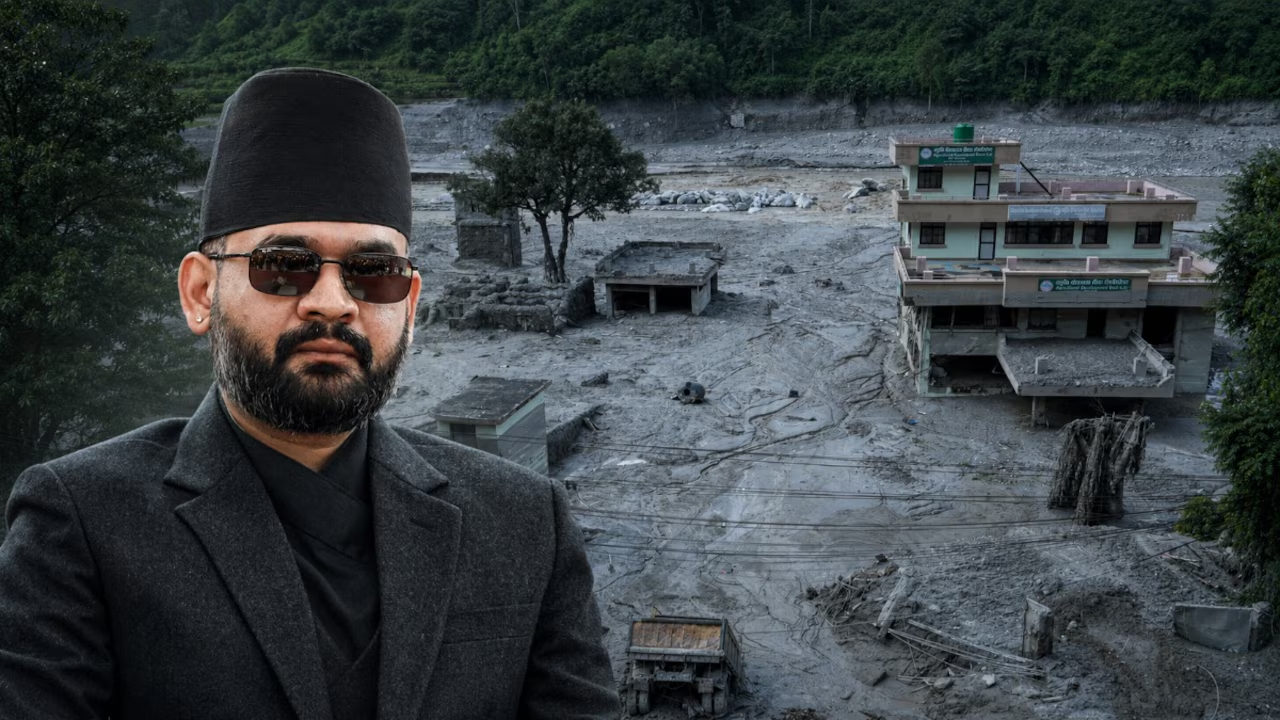
The disaster has resulted in a massive loss of life and left thousands of people missing, while homes, roads, bridges, hydropower facilities and other critical infrastructure have suffered extensive damage. The scale of the catastrophe has intensified concerns over Nepal’s vulnerability to climate-related disasters in the Himalayan region.
India and China were among the countries that responded quickly with relief materials, technical assistance and specialised support. Prime Minister Shah acknowledged their contribution as Nepal continues rescue, relief and recovery operations in affected areas.
The appreciation from the Nepalese prime minister came shortly after Foreign Minister Shishir Khanal called for a broader international response, arguing that countries responsible for a significant share of global greenhouse-gas emissions should bear responsibility for climate-related losses suffered by vulnerable nations.
Deadly Floods Leave Nepal Facing a Major Humanitarian Crisis
The flash floods have emerged as one of Nepal’s most serious recent natural disasters. Reports indicate that more than 1,100 people have died, while thousands remain missing as authorities continue search, rescue and recovery operations. The disaster has affected communities, transport links and economic activity in several areas.
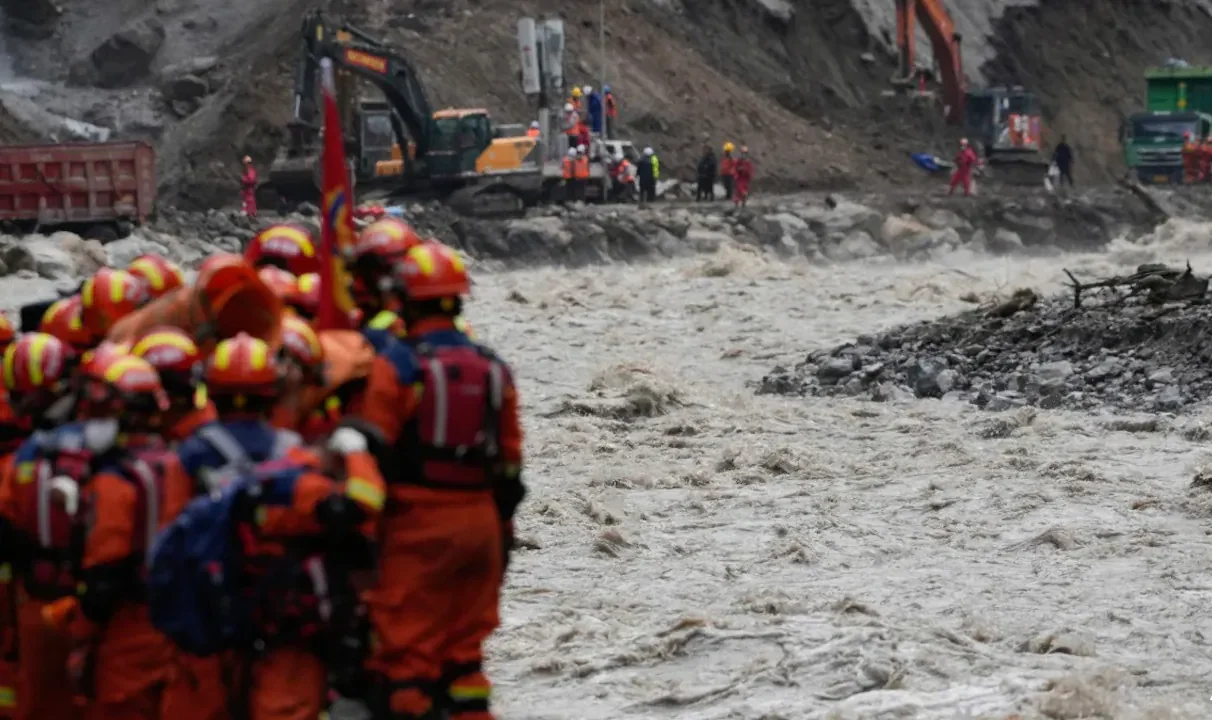 The Bhotekoshi River and surrounding areas were particularly affected by the catastrophic flooding. The Rasuwa district, near Nepal’s northern border with China, became one of the major centres of destruction.
The extreme event has been linked to a glacier- and landslide-related disaster that sent enormous quantities of water, debris and rock through downstream areas. The resulting flood overwhelmed communities and infrastructure, leaving authorities struggling to reach affected populations.
The destruction has also raised concerns about the resilience of Nepal’s infrastructure in mountainous terrain. Roads and bridges are essential for transporting food, medicine and rescue equipment, but damage to transportation networks can isolate communities precisely when emergency assistance is most urgently needed.
Reuters reported that Nepal is also considering improvements to its early-warning capabilities along the border with China after the disaster. Plans include stronger monitoring systems and technology intended to provide alerts to downstream communities when dangerous geological or glacial events occur.
India and China Among First to Respond With Assistance
Against the backdrop of the devastation, Nepal has received assistance from neighbouring India and China.
Prime Minister Shah specifically acknowledged the support provided by the two countries, highlighting the importance of timely international cooperation during a major disaster.
India has supplied relief materials and technical assistance, while specialised personnel have contributed to response efforts. Reports have also highlighted assistance involving rescue and technical teams, medical support and essential supplies.
China has likewise provided support following the disaster, reflecting the importance of regional cooperation in responding to emergencies in the Himalayan region.
For Nepal, the assistance has immediate humanitarian significance. Mountainous terrain, damaged infrastructure and difficult weather conditions can make rescue operations particularly challenging. International support can therefore help supplement Nepal’s own emergency-response capabilities.
Shah’s acknowledgement also carries diplomatic significance. Nepal shares long and strategically important borders with both India and China, making cooperation with the two neighbours particularly important in areas such as disaster management, infrastructure, connectivity and climate resilience.
Why Nepal Is Seeking Climate Compensation
While thanking India and China for their immediate assistance, Nepal has simultaneously raised a broader question about responsibility for climate-related disasters.
Foreign Minister Shishir Khanal has argued that Nepal should not be viewed merely as a recipient of humanitarian charity. Instead, he has called for climate justice and compensation for losses associated with climate change.
Khanal has pointed to the enormous difference between Nepal’s contribution to global greenhouse-gas emissions and the consequences it faces from a changing climate.
Nepal is a relatively small emitter of greenhouse gases, yet its mountainous geography makes it highly vulnerable to rising temperatures, glacier retreat, landslides, floods and other climate-related hazards.
The foreign minister has therefore argued that major emitters, including India, China and the United States, should contribute to addressing the losses suffered by vulnerable countries.
The demand represents a significant shift in the way Nepal is framing international disaster assistance. Rather than limiting the discussion to emergency relief, Kathmandu is attempting to connect the immediate destruction caused by the floods with the wider global debate surrounding climate change, responsibility and loss and damage.
‘Aid’ Versus ‘Climate Justice’
At the centre of Nepal’s diplomatic position is the distinction between humanitarian aid and climate compensation.
Humanitarian assistance generally refers to emergency support provided after a disaster, including food, medicines, rescue equipment, temporary shelter and technical assistance.
Climate compensation, by contrast, is connected to the broader international debate over loss and damage. Vulnerable developing countries have argued for mechanisms through which they can receive financial support for climate-related destruction that they have contributed relatively little to causing.
Nepal’s position reflects the concerns of many mountainous and developing countries. The country’s dependence on fragile mountain ecosystems means that changes in temperature and precipitation patterns can have serious consequences.
The latest floods have consequently become more than an immediate disaster-response challenge. They have also become part of Nepal’s wider argument for greater international attention to climate vulnerability.
Khanal has described international responsibility in moral and legal terms, seeking to move the conversation away from charity and towards fairness and accountability.
PM Balendra Shah’s Response
Prime Minister Balendra Shah’s response has focused on acknowledging the assistance Nepal has already received.
His gratitude towards India and China comes at a sensitive moment in Nepal’s diplomatic discussions over climate compensation. The two positions, however, do not necessarily have to be viewed as contradictory.
Nepal can appreciate immediate humanitarian assistance while simultaneously arguing that long-term climate-related losses require a separate international response.
Shah’s acknowledgement underlines the practical importance of cooperation during emergencies. Meanwhile, Khanal’s position highlights the government’s broader diplomatic effort to secure additional resources for reconstruction and climate resilience.
Together, the statements demonstrate two dimensions of Nepal’s response: immediate disaster management and longer-term efforts to address the underlying risks associated with climate change.
India-Nepal Cooperation Gains Importance
India’s role in the disaster response is particularly significant because of its geographical proximity and longstanding relationship with Nepal.
The two countries share an open border and extensive people-to-people, economic and cultural connections. Natural disasters in Nepal can have consequences beyond its borders, particularly when they affect transportation networks, rivers, border trade and communities with links to India.
India has previously provided assistance to Nepal during major emergencies, including natural disasters. The latest response adds another example of regional cooperation during a crisis.
The speed with which neighbouring countries can deploy relief supplies and technical teams can be crucial in mountainous disasters, where access to affected areas may be difficult.
For Nepal, stronger disaster-response cooperation with India could therefore play an important role in future preparedness, early-warning systems, emergency logistics and infrastructure resilience.
 China’s Role in Himalayan Disaster Management
China also has an important role because the latest disaster occurred in an area close to Nepal’s northern border.
The Himalayan region does not follow political boundaries when it comes to environmental risks. Glacier movement, landslides, river systems and extreme weather can have consequences across national borders.
Nepal has therefore sought greater cooperation and information-sharing with China, particularly regarding conditions upstream and potential hazards originating in mountainous areas.
Reports indicate that Nepal is looking to strengthen early-warning mechanisms along its border with China. Proposed improvements include monitoring equipment, cameras, seismic sensors and satellite-based communication systems that could continue operating when conventional communication networks fail.
Such systems could provide communities with precious warning time during future emergencies, although the complex Himalayan terrain can make forecasting and rapid communication extremely difficult.
Economic Damage Adds to Nepal’s Challenges
The human cost of the floods has been accompanied by significant economic damage.
The destruction of bridges, roads, hydropower facilities, homes and commercial infrastructure could create long-term challenges for Nepal’s economy. Mountain communities often depend heavily on transportation networks for access to markets, healthcare, education and employment.
Damage to hydropower infrastructure is especially significant because electricity generation is an important component of Nepal’s economic development strategy.
The disaster has also disrupted trade and transportation routes connecting Nepal with neighbouring countries. Recovery will therefore require not only emergency relief but also extensive reconstruction.
Earlier reports estimated that Nepal could require billions of dollars for rebuilding damaged infrastructure. The scale of the financial requirement is one reason Kathmandu is seeking greater international assistance.
Climate Change and the Himalayan Risk
The disaster has once again highlighted the vulnerability of the Himalayan region to climate change.
The Himalayas contain some of the world’s most important freshwater reserves, but warming temperatures are affecting glaciers, snow patterns and mountain ecosystems.
Scientists and climate experts have warned that glacier retreat, unstable slopes and changing weather patterns can increase the risk of floods and other hazards in vulnerable mountain regions.
For countries such as Nepal, the consequences can be particularly severe because settlements, roads and infrastructure are often concentrated in narrow valleys and along rivers.
The latest disaster has consequently strengthened calls for better early-warning systems, improved infrastructure standards, scientific monitoring and stronger regional coordination.
Climate resilience is increasingly becoming a national-security and development issue for Himalayan countries rather than solely an environmental concern.
Nepal Seeks a Long-Term Disaster Response Framework
The immediate priority for Nepal remains rescuing survivors, locating missing people, providing essential supplies and restoring basic services.
However, the scale of the disaster has made clear that recovery will extend well beyond the emergency phase.
Nepal will need to rebuild damaged infrastructure while simultaneously reducing the risk of future disasters. This could involve stronger bridges, safer roads, improved flood management, upgraded warning systems and better monitoring of glaciers and unstable mountain slopes.
International cooperation could play a major role in each of these areas.
India and China, because of their proximity and technical capabilities, are particularly important partners. International organisations and other countries can also contribute financing, technology and expertise.
A Delicate Diplomatic Moment
Prime Minister Shah’s expression of gratitude and Foreign Minister Khanal’s compensation demand have together created an important diplomatic moment for Nepal.
On one side, Kathmandu recognises the practical value of immediate assistance from its neighbours. On the other, the government wants the international community to acknowledge that vulnerable countries face disproportionate consequences from climate change.
The distinction is important because emergency relief addresses immediate needs, while climate financing and loss-and-damage mechanisms are intended to help countries cope with longer-term consequences.
Nepal’s position could therefore become part of a wider international discussion about how climate-vulnerable countries should be supported after increasingly severe natural disasters.
 What Happens Next
For Nepal, the coming weeks will focus heavily on rescue, relief and reconstruction.
Authorities must continue locating missing people, supporting displaced families and restoring damaged infrastructure. At the same time, the government faces the challenge of securing financial resources for reconstruction.
The diplomatic campaign for climate-related assistance could also become more prominent in international forums.
Nepal’s experience may strengthen its case for greater global investment in Himalayan disaster preparedness. Improved early-warning systems, cross-border data sharing and regional emergency-response mechanisms could help reduce casualties during future disasters.
For India and China, continued support could also strengthen regional cooperation on disaster management while helping address the wider environmental risks affecting the Himalayas.
Nepal Prime Minister Balendra Shah’s thanks to India and China highlight the importance of regional solidarity following one of the country’s most devastating recent flood disasters. The timely assistance from the two neighbouring countries has provided crucial support as Nepal deals with a massive humanitarian and infrastructure crisis.
At the same time, Foreign Minister Shishir Khanal’s demand for climate compensation has opened a broader debate over responsibility for climate-related disasters. Nepal argues that a country with relatively low greenhouse-gas emissions should not have to shoulder the full financial burden of increasingly severe climate impacts.
The contrasting but complementary messages from Nepal’s leadership underline the country’s immediate and long-term priorities: securing urgent humanitarian assistance while pushing for greater international responsibility on climate change.
As recovery begins, the disaster is likely to reinforce calls for stronger Himalayan early-warning systems, better infrastructure, cross-border cooperation and sustainable climate financing. For Nepal, the floods are not only a national tragedy but also a powerful reminder of the growing challenges facing climate-vulnerable countries around the world.