Centre Prepares Stronger Legal Framework Against Examination Paper Leaks
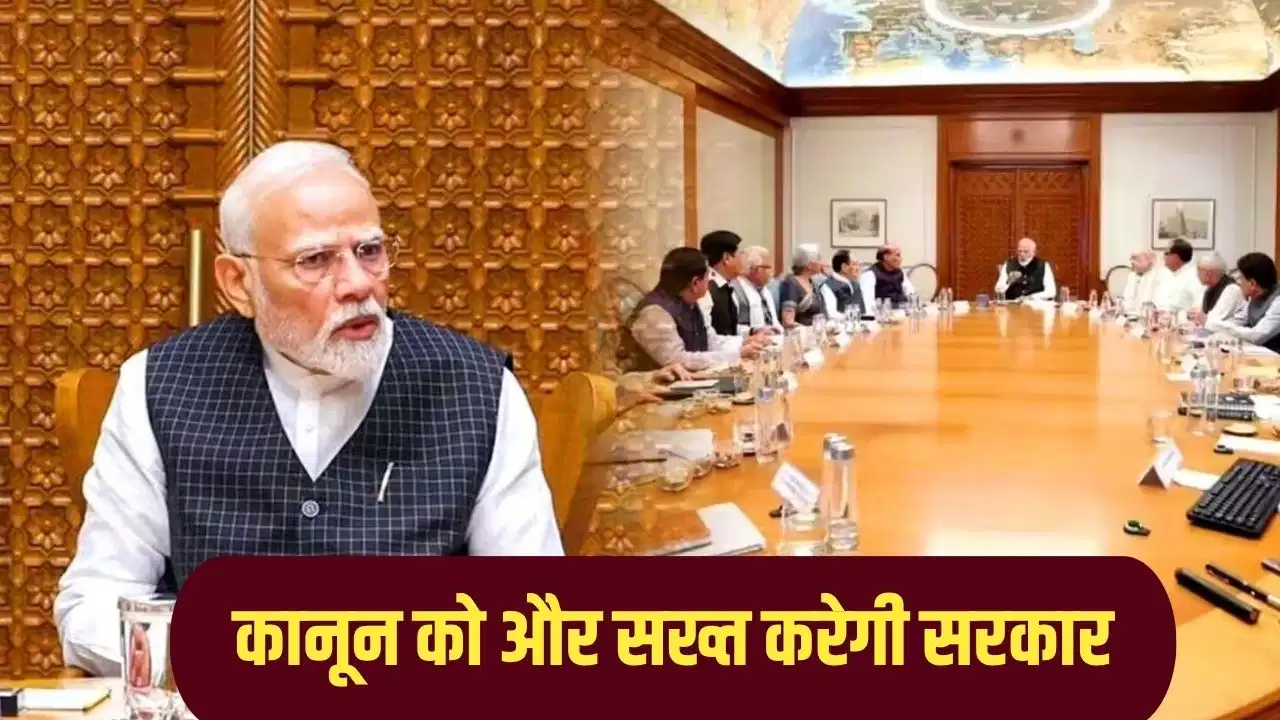
PM Modi, In a major move aimed at restoring public confidence in India’s competitive examination system, the Central Government is preparing to introduce a strengthened legal framework to crack down on examination paper leaks. Prime Minister Narendra Modi has announced that the Union Cabinet will consider amendments to the existing Public Examinations (Prevention of Unfair Means) Act, 2024, with stricter punishments, enhanced enforcement mechanisms, and the establishment of fast-track courts for speedy trials.
The proposed reforms come amid nationwide concern over alleged paper leak incidents, particularly the controversy surrounding the NEET examination, which has triggered student protests, political debates, and calls for comprehensive reforms in the country’s examination system.
According to the PM Modi, the government intends to introduce the proposed legislation during the ongoing Monsoon Session of Parliament, signalling its determination to address examination-related fraud through stronger legal measures and institutional accountability.
Table of Contents
PM Modi Government to Introduce Tougher Anti-Paper Leak Bill
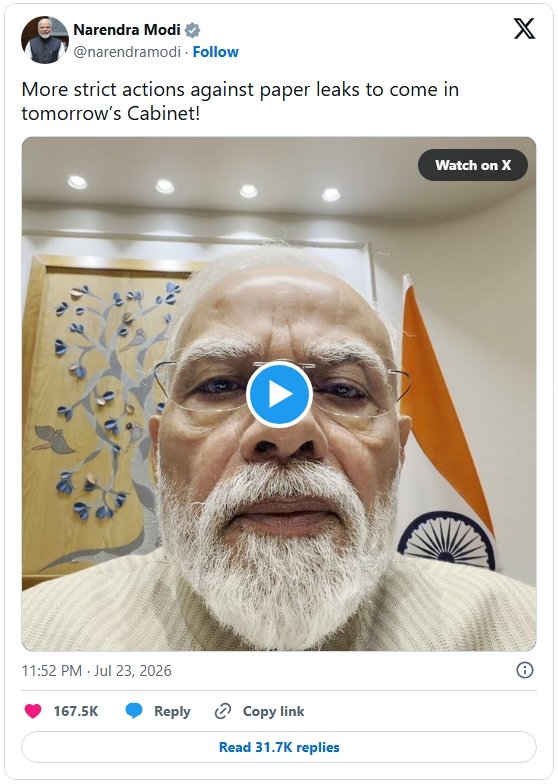
Prime Minister Narendra Modi announced that the government will place a new bill before Parliament containing stricter provisions against examination paper leaks.
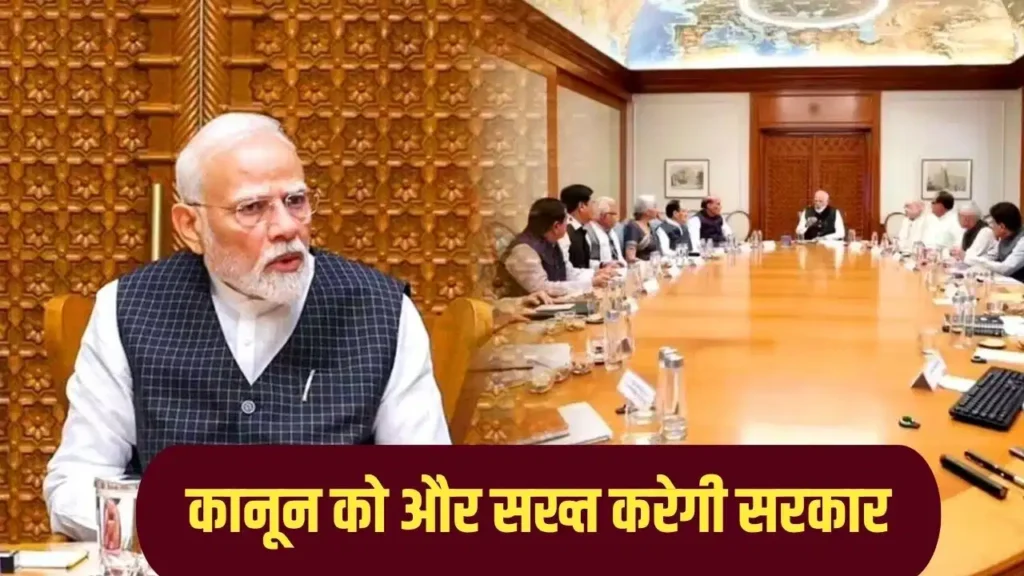
According to the Prime Minister, the draft legislation will first be discussed during the meeting of the Union Cabinet, where the proposed amendments will be finalised before being introduced in Parliament.
The government has indicated that it intends to move the legislation quickly, reflecting the urgency attached to the issue.
Officials believe that strengthening the existing legal framework is necessary to protect the interests of millions of students who depend on transparent and fair competitive examinations.
Existing Law May Be Strengthened Further
The proposed legislation is expected to amend the Public Examinations (Prevention of Unfair Means) Act, 2024, which came into effect on June 21, 2024.
While the current law already prescribes punishment for those involved in examination fraud, the government believes stronger provisions are required to deal with organised paper leak networks and repeat offenders.
According to sources, the amendments may include:
- Harsher prison sentences.
- Higher financial penalties.
- Expanded powers for investigating agencies.
- Faster judicial proceedings.
- Enhanced accountability for service providers involved in examination processes.
The amendments aim to create stronger deterrence against organised examination fraud across the country.
Fast-Track Courts Proposed for Speedy Justice
One of the most significant proposals under consideration is the establishment of fast-track courts dedicated to hearing paper leak cases.
The government believes that prolonged investigations and delayed trials weaken public confidence in the justice system.
Under the proposed framework, fast-track courts would:
- Conduct quicker trials.
- Ensure timely convictions.
- Reduce procedural delays.
- Deliver swift punishment to guilty individuals.
- Improve accountability in examination-related offences.
The proposal follows Prime Minister Modi’s earlier announcement that the interests and future of India’s youth remain the government’s highest priority.
Punishments and Fines Likely to Become More Severe
The government is also considering increasing both imprisonment terms and monetary penalties under the existing law.
Currently, the Public Examinations (Prevention of Unfair Means) Act provides:
Individual Offenders
- Imprisonment ranging from three to five years.
- Fine of up to ₹10 lakh.
Service Providers
- Financial penalty of up to ₹1 crore.
Organised Crime
- Imprisonment ranging from five to ten years.
- Minimum fine of ₹1 crore.
Officials indicate that these provisions could become even stricter once the proposed amendments are approved.
The objective is to ensure that examination fraud becomes a high-risk crime with severe legal consequences.
PM Modi Calls Paper Leak a Serious National Concern
In his public address, Prime Minister Narendra Modi described examination paper leaks as a serious issue affecting the future of millions of young Indians.
He stated that paper leaks are not isolated incidents but challenges capable of damaging students’ confidence in the country’s education system.
According to the Prime Minister, every student deserves a fair opportunity to compete based on merit rather than manipulation.
He acknowledged the emotional stress experienced by students and their families whenever examination irregularities occur.
The Prime Minister emphasised that the government has already initiated multiple measures since allegations relating to the NEET paper leak surfaced.
Government Focuses on Protecting Students’ Academic Future
The Prime Minister stressed that the government’s primary responsibility is to safeguard students from unnecessary academic losses.
Referring to the recent examination controversy, he said authorities acted quickly to ensure eligible candidates could reappear for examinations without losing an academic year.
According to the government, approximately 22 lakh students were provided another opportunity to take the examination through rapid administrative action.
Officials maintain that while legal action against offenders remains essential, protecting honest students is equally important.
PM Modi Announces Fast-Track Courts Through Social Media
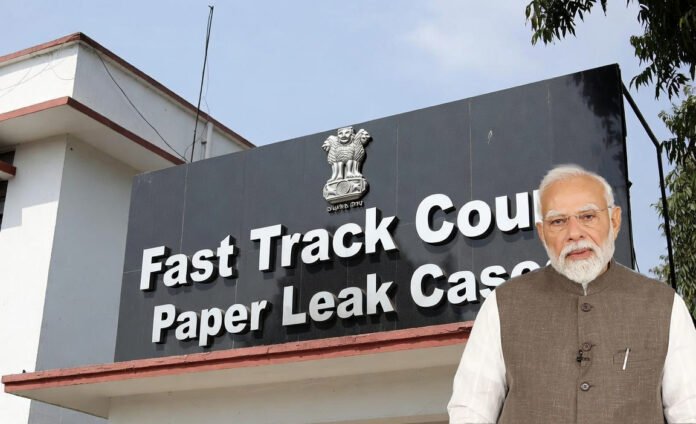
Earlier, Prime Minister Modi had also announced on social media that the government would establish fast-track courts specifically for paper leak cases.
He wrote that protecting the interests and future of India’s youth remains the government’s highest priority.
According to the Prime Minister, necessary directions have already been issued to the concerned authorities to implement the proposed judicial reforms.
He further warned that individuals attempting to destroy students’ futures through examination fraud would face strict legal consequences.
Student Protests Continue Across the Country
The government’s announcement comes against the backdrop of continued student protests demanding stronger action against paper leaks.
Demonstrations have been organised at:
- Jantar Mantar, New Delhi.
- Various educational institutions.
- Several states across India.
Students have demanded:
- Transparent investigations.
- Strict punishment for offenders.
- Examination reforms.
- Greater accountability.
- Improved security during competitive examinations.
The protests have also attracted support from education activists, civil society groups, and several political leaders.
Sonam Wangchuk Ends Hunger Strike Following Government Assurance
Education reform activist Sonam Wangchuk, who had been observing a 26-day hunger strike, recently ended his protest after receiving written assurances from the Central Government.
According to Wangchuk, Union Ministers J.P. Nadda and Jitendra Singh assured him that issues concerning examination reforms, paper leak investigations, and accountability would be discussed in Parliament.
The government also indicated that it is positively considering compensation for families affected by recent examination-related tragedies and would take a sympathetic approach toward peaceful student protesters.
Prime Minister Modi later extended his wishes for Wangchuk’s recovery, urging him to regain his health by following medical advice.
Need for Stronger Examination Reforms
Education experts believe that legal reforms alone may not completely eliminate paper leaks unless accompanied by broader institutional improvements.
Several recommendations frequently suggested include:
- Digital encryption of question papers.
- Secure transportation systems.
- Real-time surveillance.
- Independent monitoring authorities.
- Improved cybersecurity.
- Better coordination among examination agencies.
- Strong internal auditing mechanisms.
Experts argue that combining technological safeguards with strict legal punishment offers the most effective long-term solution.
Importance of Public Confidence
Competitive examinations determine admission into higher education institutions and government employment for millions of candidates every year.
Any compromise in examination integrity can:
- Reduce public trust.
- Affect deserving students.
- Increase legal disputes.
- Delay recruitment.
- Create psychological stress among aspirants.
Strengthening the legal framework is therefore viewed as an important step toward rebuilding confidence in India’s examination system.
Political Consensus Emerging on Examination Reforms
Although political parties continue to disagree on various aspects of the paper leak controversy, there appears to be broader agreement that examination reforms are necessary.
Both the government and opposition have supported discussions on improving examination security and strengthening accountability.
The forthcoming parliamentary debate is expected to examine:
- Existing legal provisions.
- Institutional weaknesses.
- Investigation mechanisms.
- Student protection measures.
- Long-term examination reforms.
The debate could potentially shape future policy relating to competitive examinations nationwide.
The Modi government’s decision to strengthen the Public Examinations (Prevention of Unfair Means) Act, 2024, marks one of the most significant legal initiatives aimed at combating examination paper leaks in recent years.
With proposals for tougher punishments, fast-track courts, stronger enforcement mechanisms, and enhanced accountability, the government seeks to reassure millions of students that examination integrity remains a national priority.
Prime Minister Narendra Modi’s repeated emphasis on protecting the future of India’s youth, combined with the proposed legislative amendments and ongoing parliamentary discussions, reflects growing recognition that examination transparency is essential for maintaining public trust.
As Parliament prepares to consider the proposed reforms, students, parents, educators, and policymakers across the country will closely watch whether these measures lead to lasting improvements in examination security and help prevent future paper leak controversies.