
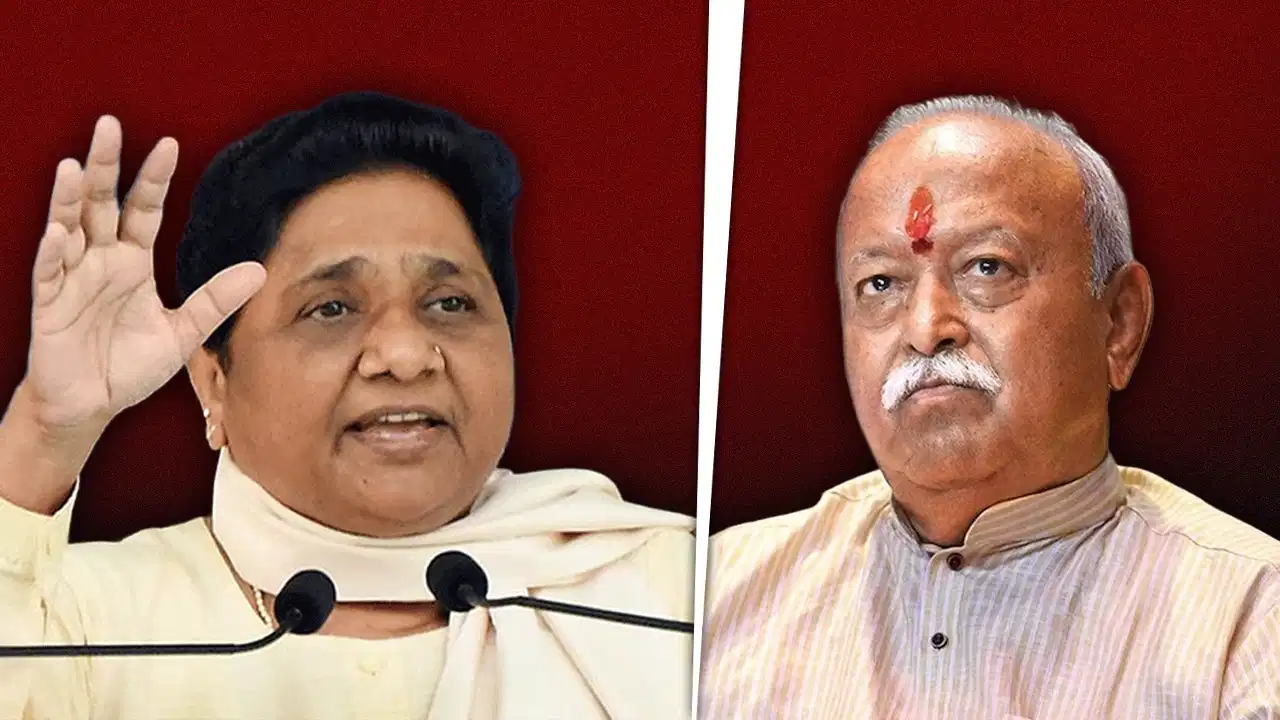
Bahujan Samaj Party (BSP) supremo Mayawati has strongly opposed the idea of introducing a “creamy layer” for Scheduled Caste (SC) and Scheduled Tribe (ST) reservations, while sharply criticising Rashtriya Swayamsevak Sangh (RSS) chief Mohan Bhagwat’s recent remarks on the reservation system.
The latest political exchange has once again brought reservation, caste discrimination, social justice and constitutional safeguards into the national debate. Mayawati argued that reservation for historically disadvantaged communities cannot be assessed only through income or economic progress because caste-based discrimination continues to affect social life in ways that cannot simply be measured financially.
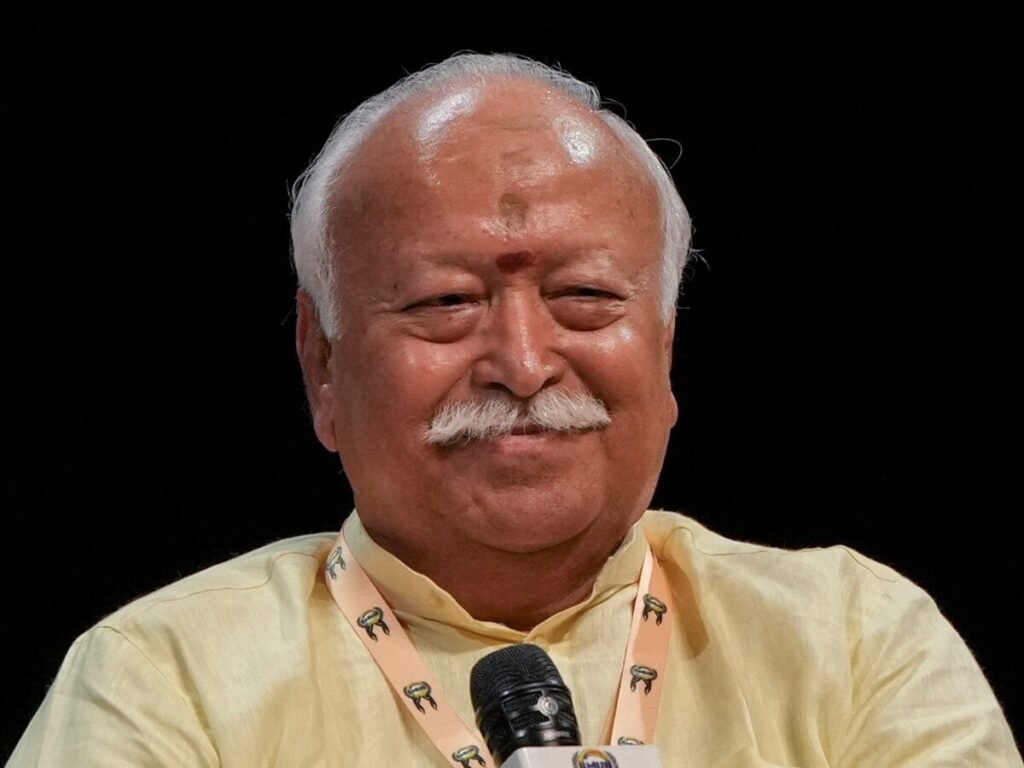
Her comments came after Bhagwat said that reservation should continue but also suggested that those who have benefited sufficiently should voluntarily give up the benefits. He also criticised the politicisation of the reservation issue.
Table of Contents
Mayawati Rejects ‘Creamy Layer’ Concept for SCs and STs
Mayawati has described reservation as a constitutional mechanism intended to address centuries of discrimination, exploitation and exclusion faced by SC and ST communities.
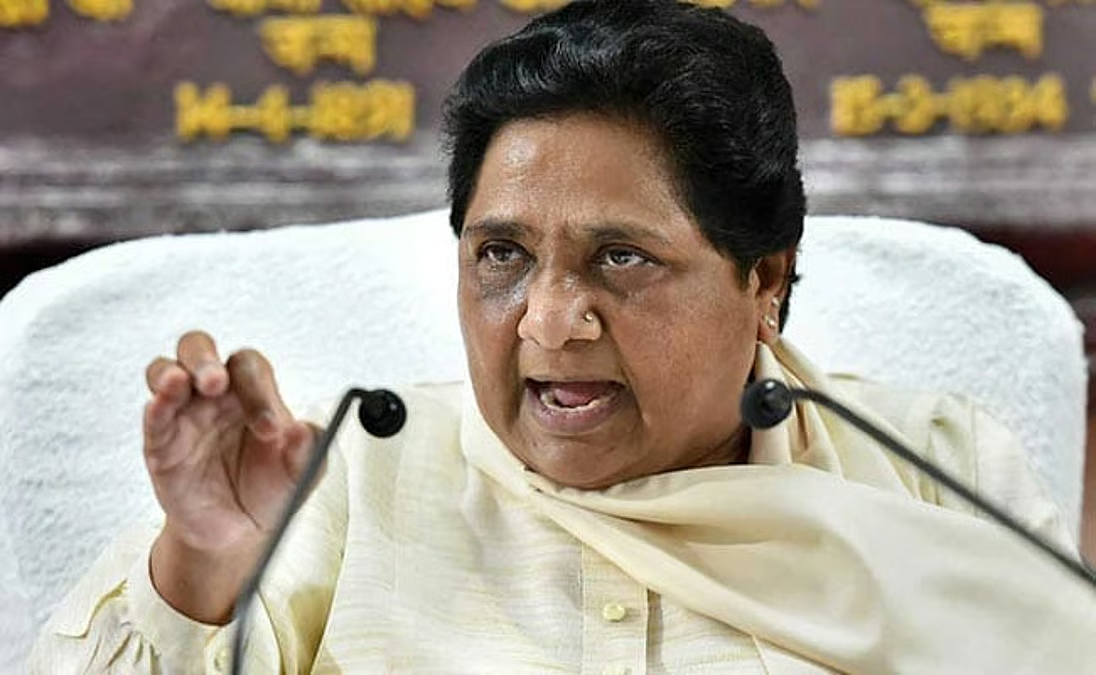
In a social-media post, she argued that applying the concept of a “creamy layer” to SC and ST reservations would be inappropriate because the purpose of affirmative action goes beyond economic assistance. According to her argument, reservation is connected to social transformation, economic empowerment and self-respect.
The BSP leader maintained that economic improvement does not necessarily eliminate caste-based discrimination. Her argument is that a person from a historically disadvantaged community may achieve financial progress while still facing discrimination because of their social identity.
This distinction forms the core of her opposition to extending a creamy-layer framework to SC and ST reservations.
Mayawati Targets Mohan Bhagwat’s Reservation Remarks
The immediate political controversy centres on comments attributed to RSS chief Mohan Bhagwat regarding reservation.
According to reports, Bhagwat said reservation would continue but suggested that beneficiaries who had achieved sufficient upliftment should voluntarily surrender the benefits. He also argued that reservation had become politicised and contributed to bitterness in society.
Mayawati strongly rejected this position.
She criticised what she described as a “casteist mindset” behind arguments that could weaken existing reservation protections. She also urged the RSS to respect the Constitution and avoid advocating changes to the reservation system.
The disagreement is significant because reservation has remained one of India’s most sensitive public-policy issues, involving questions of equality, representation, historical disadvantage and access to education and employment.
Why Caste Discrimination Is Central to Mayawati’s Argument
Mayawati’s response is built around the argument that reservation cannot be viewed simply as an income-based welfare measure.
Her position is that caste discrimination has historically operated across multiple areas of life, including education, employment, social status and access to opportunities. Consequently, she argues that economic advancement alone should not automatically be treated as evidence that the social disadvantage addressed by reservation has disappeared.
This argument has long been part of debates surrounding affirmative action in India.
The broader question is whether reservation should primarily address economic disadvantage, historical social exclusion, or a combination of factors. Different political parties, social organisations and legal arguments have approached that question differently.
For Mayawati, the historical and social dimensions remain essential.
Reservation and the Constitution
The reservation system in India is closely connected with constitutional provisions aimed at promoting equality and addressing historical disadvantage.
Mayawati invoked the constitutional vision associated with Dr B.R. Ambedkar, arguing that reservation should be viewed within the broader framework of social justice and equality.
Her latest comments emphasised that reservation is not simply a political concession but a constitutional mechanism intended to provide greater representation and opportunity to communities that have experienced long-standing discrimination.
The debate therefore extends beyond the question of who receives a quota. It also concerns how India understands equality itself — whether equality means treating everyone identically or taking historical disadvantages into account when designing public policy.
What Is the ‘Creamy Layer’ Debate?
The term “creamy layer” generally refers to relatively better-off sections within certain socially disadvantaged communities who may be excluded from reservation benefits under applicable rules.
The concept has been particularly associated with Other Backward Classes (OBCs), where income and other criteria have been used in determining eligibility for certain reservation benefits.
The question of whether a similar principle should apply to SC and ST communities has generated significant debate.
Mayawati’s latest intervention firmly opposes such an approach for SCs and STs. She argues that economic advancement does not necessarily remove caste-based disadvantage and therefore should not automatically determine access to constitutional reservation benefits.
Mayawati Calls for Stronger Government Representation Before Courts
Mayawati also addressed the legal dimension of the issue.
She said that if the government wants SC and ST communities to remain outside the scope of a creamy-layer framework, it should present strong arguments before the courts and effectively defend its position.
Her comments reflect the increasingly important role played by the judiciary in determining how reservation policies should operate.
Reservation-related questions have repeatedly reached the courts because they involve constitutional provisions, equality principles and the rights of different social groups.
Mayawati argued that governments need to provide effective legal representation when matters concerning social transformation and constitutional protections are considered by courts.
BSP’s Long-Standing Position on Reservation
The latest statement is consistent with Mayawati’s broader political emphasis on the rights of Dalits, backward classes and other disadvantaged communities.
The BSP has traditionally placed social justice and representation at the centre of its political messaging. Mayawati has also previously spoken on reservation-related questions involving SCs, STs and OBCs.
In April 2026, for example, she reiterated her demand for separate reservation for SC, ST and OBC women within the proposed 33% women’s reservation framework.
Her recent intervention therefore comes within a larger pattern of political advocacy around representation and affirmative action.
Reservation Debate Extends Beyond Politics
Although the current controversy involves Mayawati and Bhagwat, the issue has implications beyond the political arena.
Reservation affects debates around access to higher education, government employment and political representation. It also intersects with wider discussions about social mobility and equality.
At the same time, debates over reservation can become highly contentious because different communities have different experiences and perspectives regarding affirmative action.
The challenge for policymakers is therefore to balance constitutional objectives with evolving social and economic realities while ensuring that public discussion remains grounded in evidence and constitutional principles.
Caste Discrimination Remains a Wider Social Issue
Mayawati’s central argument is that economic progress should not be treated as proof that caste discrimination has disappeared.
This distinction is important because social disadvantage can involve factors that are not captured by income alone.
Educational opportunities, employment access, social acceptance and representation can all influence an individual’s experience. Mayawati argues that these broader factors must be considered when discussing reservation for SC and ST communities.
Her statement has therefore reframed the debate from simply asking who is economically better off to asking whether the underlying social inequalities that reservation was designed to address have actually disappeared.
Political Significance of the Mayawati-Bhagwat Clash
The exchange has political significance because both Mayawati and Bhagwat represent influential voices in India’s public discourse.
Mayawati leads the BSP, a party whose political identity is strongly associated with Dalit representation and social justice.
Bhagwat, as RSS chief, is a prominent figure in India’s ideological and social landscape.
Their differing positions on reservation are therefore likely to attract attention from political parties, social organisations and communities affected by affirmative-action policies.
Mayawati’s criticism also places pressure on governments to clearly articulate their position on any proposed changes to reservation policies.
What Happens Next?
The future of the creamy-layer debate for SC and ST communities will depend on the legal, political and policy processes surrounding the issue.
For now, Mayawati has made her position clear: she opposes extending the creamy-layer concept to SC and ST reservations and believes the focus should remain on eliminating caste-based discrimination and protecting constitutional safeguards.
She has also called for the government to present strong legal arguments if it wants SC and ST communities to remain outside such a framework.
The wider debate is likely to continue because reservation remains deeply connected with questions of equality, representation and social justice in India.
Mayawati’s latest remarks have reignited the debate over reservation and caste discrimination, following Mohan Bhagwat’s comments on the continuation and use of reservation benefits.
The BSP chief has rejected the idea of applying a creamy-layer framework to SC and ST communities, arguing that economic progress alone cannot erase the effects of caste-based discrimination. She has also urged the RSS to respect the Constitution and refrain from advocating changes to the reservation system.
The controversy highlights a much broader question facing Indian policymakers: how should affirmative action evolve while continuing to address historical and continuing social inequalities?
For Mayawati, the answer begins with confronting caste discrimination itself. Her latest intervention ensures that reservation, constitutional safeguards and social justice will remain prominent issues in India’s political debate.