
The Delhi High Court has raised important questions over the continued use of Jantar Mantar as a designated protest venue, particularly in relation to the disruption that demonstrations in the heart of the national capital can cause to residents, commuters and everyday city life.
During a hearing, the court questioned why protests should be permitted at a location where demonstrations can affect the functioning of the wider city. The observation came amid an ongoing legal and public debate over how authorities should balance the constitutional right to peaceful protest with the need to maintain public order and minimise inconvenience to other citizens.
The court’s remarks do not amount to a blanket declaration that protests at Jantar Mantar are prohibited. Rather, they bring renewed attention to a difficult question: How can Delhi protect the right to dissent while ensuring that the activities of a protest do not disproportionately affect the rest of the city?
Table of Contents
Delhi High Court Questions Jantar Mantar’s Suitability
Jantar Mantar has traditionally served as one of Delhi’s most prominent locations for public demonstrations. Its central location makes it accessible to protesters, journalists and political groups, but that same location can create challenges for traffic, public transport, businesses and residents.
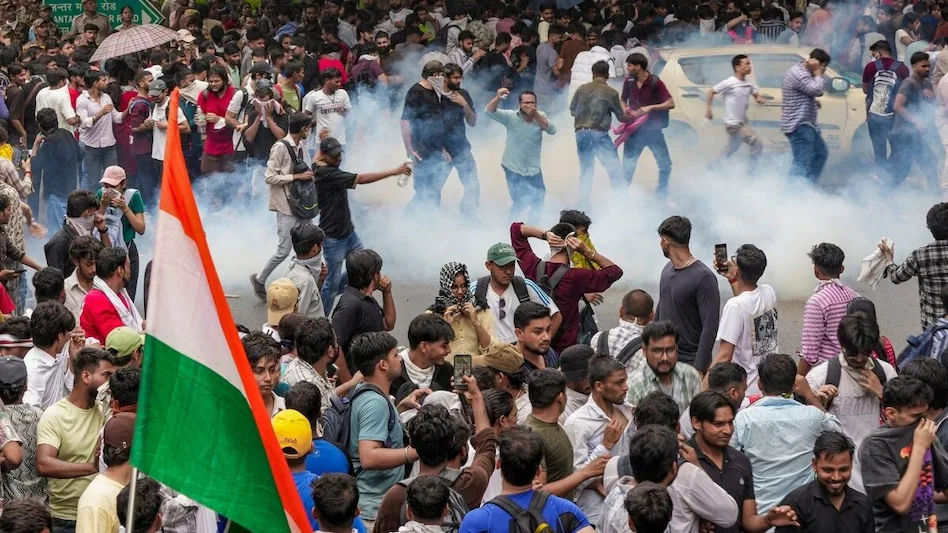
The Delhi High Court recently questioned the rationale behind continuing to use such a central location for demonstrations when large gatherings can disrupt normal activity across the capital. The court’s observation focused on the broader impact of protests rather than simply the legitimacy of peaceful demonstrations themselves.
The issue has become particularly relevant after a series of demonstrations in and around central Delhi in recent months. The protests have generated questions about crowd management, police arrangements, public access and the suitability of Jantar Mantar as the principal venue for large gatherings.
What Did the Court Say?
The court questioned why the entire city should face inconvenience because of demonstrations taking place at a central protest site. The observation reflects the judiciary’s concern about finding an appropriate balance between competing public interests.
On one side is the right to peaceful assembly and expression, which forms an important part of democratic participation. On the other is the responsibility of authorities to ensure that public roads, transportation networks and essential civic activity remain functional.
The court’s remarks therefore place the focus on proportionality: protests should have space to take place, but their organisation and location must also take into account the rights and safety of people who are not participating.
This distinction is important because a protest site is not merely a physical location. Its position within a densely populated capital can influence traffic movement, public transportation, security deployment and access to surrounding areas.
Jantar Mantar’s Long Association With Protests
Jantar Mantar has for decades been associated with public demonstrations in Delhi.
Located near Parliament and several important government and commercial areas, it has become a recognisable symbol of democratic protest. Political parties, civil-society organisations, students, workers and other groups have used the site to raise public issues.
Its importance comes partly from its visibility. A demonstration held in central Delhi can attract media attention and bring an issue closer to the country’s political institutions.
At the same time, its central location creates a practical challenge. Large gatherings can affect surrounding roads and public spaces, particularly when protests continue for extended periods.
The current debate is therefore not simply about whether people should be allowed to protest. It also concerns where, when and under what conditions demonstrations should take place.
The Constitutional Right to Peaceful Protest
India’s constitutional framework protects freedom of speech and peaceful assembly, subject to reasonable restrictions.
That means citizens have an important democratic right to express disagreement with government policies, demand action from authorities and organise peaceful demonstrations.
However, this right is not unlimited. Public-order requirements, safety considerations and restrictions imposed under law can affect how demonstrations are conducted.
The recent debate surrounding Jantar Mantar illustrates this balance.
A peaceful protest can be constitutionally protected, while authorities may still regulate its location, size, timing and other logistical aspects when necessary to protect public safety and public order.
Recent proceedings concerning protests at Jantar Mantar have also included judicial scrutiny of police conduct and surveillance. In July, the Delhi High Court heard petitions concerning alleged police excesses against protesters, while another proceeding examined questions surrounding the recording and monitoring of demonstrations.
Why Location Matters in a City Like Delhi
Delhi is a densely populated metropolitan region with an enormous daily movement of commuters.
Central Delhi contains important government offices, commercial areas, transport connections and public institutions. Consequently, large gatherings in the area can have effects beyond the immediate protest site.
The challenge becomes more pronounced when a demonstration continues for several days or attracts a large crowd.
Recent reporting has highlighted disruptions around Jantar Mantar during prolonged protests, including restrictions affecting mobile internet services in surrounding parts of central Delhi. The Indian Express reported that internet services had been suspended in areas around Jantar Mantar during the student protests, with the impact extending towards Mandi House.
These developments demonstrate why authorities and courts are examining the wider consequences of demonstrations at the location.
Debate Over Alternative Protest Sites
The question of whether Jantar Mantar remains the most appropriate location has also reached the Supreme Court.
A petition before the Supreme Court has sought consideration of alternative protest venues in the National Capital Region, arguing that Jantar Mantar may not adequately meet the safety and logistical needs of demonstrators. The Supreme Court has sought responses from the Centre, the Delhi government and the Delhi Police Commissioner.
This development adds another layer to the debate.
If alternative locations are considered, authorities would need to ensure that such sites provide adequate facilities while remaining accessible enough for peaceful demonstrations to be meaningful.
Simply moving protests away from central areas would not automatically resolve the constitutional and practical questions involved.
Protesters Also Need Safe and Suitable Facilities
A protest site must serve protesters as well as the broader public.
Large demonstrations can involve people remaining at a location for extended periods. Basic requirements such as sanitation, drinking water, medical assistance, security arrangements and transportation access therefore become important.
The recent Supreme Court proceedings specifically involve arguments that Jantar Mantar may lack adequate facilities for demonstrators.
This means the discussion is not simply about inconvenience to commuters.
A properly designed protest venue could potentially address several concerns simultaneously by providing protesters with a dedicated space while reducing the impact on major roads and densely populated areas.
Police Responsibilities and Public Order
The Delhi Police also faces a difficult responsibility during large demonstrations.
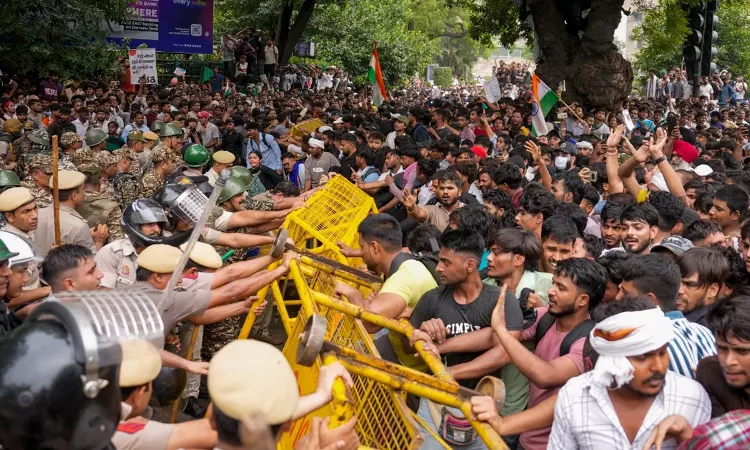
Officers must facilitate peaceful assembly while preventing violence, protecting public property and maintaining access for emergency services and ordinary commuters.
Recent protests around Jantar Mantar have resulted in legal proceedings concerning allegations of excessive police action. The Delhi High Court has issued notices in petitions seeking investigation into alleged police excesses and observed that the incident under consideration was not necessarily isolated.
At the same time, authorities have defended measures such as videography at protest sites as being intended for safety and law-and-order purposes. The Centre told the Delhi High Court that recording at Jantar Mantar was undertaken for security and public-order reasons rather than for “snooping.”
The competing concerns show the complexity of managing demonstrations in a modern capital.
Surveillance and Privacy Questions
Another issue connected with the Jantar Mantar debate is the monitoring of protesters.
The Delhi High Court has previously questioned whether applicable Supreme Court guidelines are being followed when demonstrations are recorded or monitored.
The issue is particularly significant because peaceful protesters may have legitimate concerns about how recordings are collected, stored and used.
At the same time, police authorities argue that monitoring can assist with identifying individuals involved in criminal activity and maintaining security.
The debate therefore extends beyond the physical location of protests to questions of privacy, policing and technology.
The Importance of Peaceful Demonstrations
Despite the concerns over disruption, the democratic importance of peaceful protest remains central to the debate.
Public demonstrations can provide citizens with a visible way to communicate grievances when they believe that conventional channels have not produced adequate responses.
Jantar Mantar’s historical role reflects this function. Its identity as a protest venue is closely connected with India’s democratic culture.
Any changes to the existing system would therefore need to preserve meaningful access to public protest rather than merely relocating demonstrations to places where they are less visible.
The challenge for policymakers is to develop a system that protects both democratic expression and public convenience.
What Could Happen Next?
The latest judicial observations could contribute to a wider discussion about Delhi’s protest-management framework.
Possible areas of consideration include:
- Reviewing designated protest locations
- Identifying additional venues in the National Capital Region
- Improving facilities at protest sites
- Establishing clearer crowd-management rules
- Protecting access for emergency services
- Ensuring peaceful protesters can assemble safely
- Creating transparent procedures for granting permissions
- Balancing surveillance with privacy safeguards
The Supreme Court’s request for responses from the Centre, Delhi government and Delhi Police could also contribute to a broader assessment of whether alternative venues are required.
Meanwhile, the Delhi Police has begun scrutinising applications for demonstrations following the conclusion of a month-long protest at Jantar Mantar, according to Hindustan Times.
A Delicate Balance Between Rights and Responsibilities
The Delhi High Court’s remarks underline a broader principle relevant to democratic societies: rights and public responsibilities must coexist.
Protesters have a right to express their views peacefully. Other residents have a right to move through the city, access workplaces and public services, and go about their daily lives without unnecessary disruption.
The responsibility of government authorities is to create conditions in which these interests can coexist as far as reasonably possible.
That could mean better planning rather than simply imposing stricter restrictions.
A dedicated protest location with adequate facilities, clear rules and appropriate access could potentially help reduce conflict between protesters and the wider public.
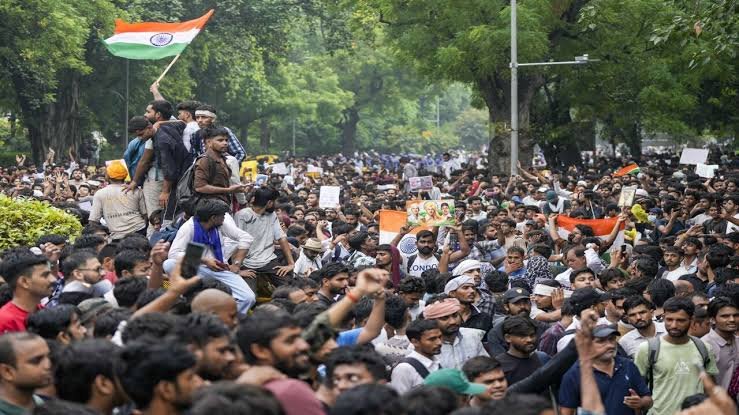
The Delhi High Court’s latest observations on Jantar Mantar protests have reopened an important debate about the future of public demonstrations in the national capital.
The court questioned the impact that protests at a highly central location can have on the wider city, while the broader legal proceedings make clear that the issue involves more than traffic or inconvenience. It encompasses the constitutional right to peaceful assembly, public order, police responsibilities, surveillance, privacy and the availability of suitable protest venues.
At the same time, proceedings before the Supreme Court concerning alternative protest sites indicate that the question of Jantar Mantar’s suitability is part of a larger national-capital debate.
The central challenge now is to find a framework that does not undermine peaceful democratic expression while ensuring that the functioning of Delhi is not disproportionately affected by prolonged or large-scale demonstrations. The discussion over Jantar Mantar could ultimately shape how the capital manages protests in the years ahead.