
Masoud Pezeshkian Dismisses Rift Rumours, Calls Supreme Leader a Key Source of Strength During One of the Country’s Most Challenging Periods
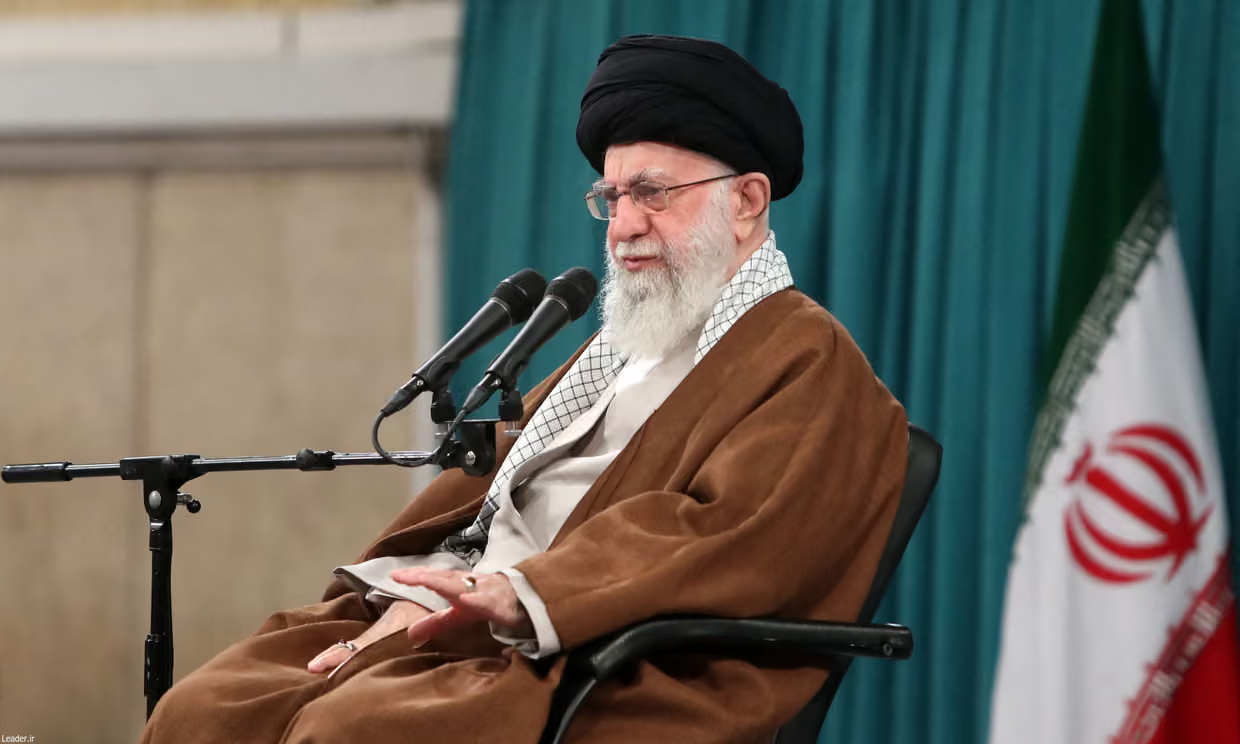
Tehran: Iranian President Masoud Pezeshkian has made a rare public admission regarding the country’s highest leadership, revealing that communication with Supreme Leader Mojtaba Khamenei has become “very difficult” amid heightened regional tensions. Despite acknowledging the communication challenges, Pezeshkian firmly rejected speculation of any disagreement within the country’s leadership and described the Supreme Leader as an indispensable source of strength during a period marked by political, economic, and geopolitical uncertainty.
The remarks, delivered during an interview broadcast on Iranian state television, have drawn international attention as questions continue to surround the country’s leadership structure following months of escalating regional conflict involving Iran, Israel, and the United States. Pezeshkian’s comments represent one of the clearest acknowledgements by a senior Iranian official regarding the limited accessibility of the Supreme Leader while simultaneously attempting to reassure both domestic and international audiences that the country’s leadership remains united.
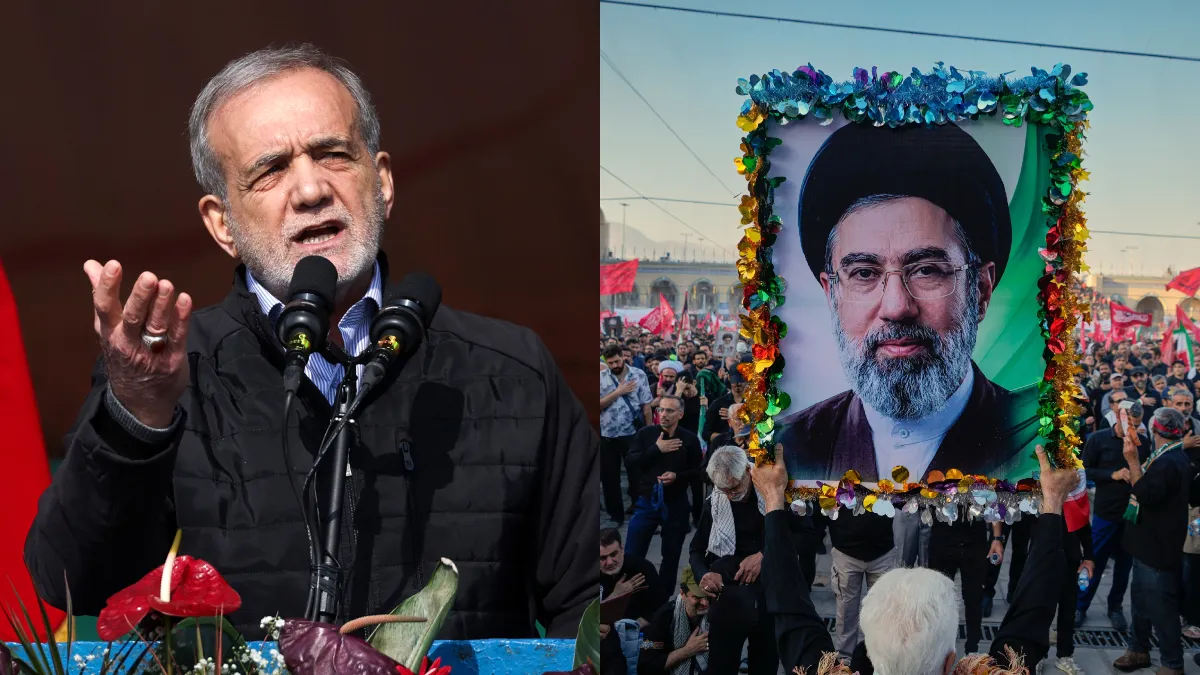
Table of Contents
President Acknowledges Communication Challenges
Speaking during the televised interview, Pezeshkian admitted that maintaining regular communication with Supreme Leader Mojtaba Khamenei has become increasingly difficult under the current circumstances.
“It is very difficult to communicate with him at the moment, but his presence is a very great source of strength for us so that we can continue,” the Iranian President said.
Although Pezeshkian did not elaborate on the specific reasons behind the communication difficulties, his statement suggested that extraordinary circumstances currently affecting the country have also influenced access to the nation’s highest political and religious authority.
Despite those challenges, the President emphasized that Khamenei continues to provide guidance and reassurance to the country’s leadership at a time of mounting domestic and international pressures.
Supreme Leader Remains Central to National Decision-Making
Addressing growing speculation over the functioning of the country’s leadership, Pezeshkian strongly rejected suggestions that reduced communication reflects any division within the governing establishment.
According to the President, meetings with the Supreme Leader continue whenever possible and remain constructive, focused on logical discussions concerning matters of national importance.
He stressed that Khamenei remains actively involved in major policy decisions despite his limited public visibility and the reported challenges surrounding direct communication.
Pezeshkian’s remarks appear intended to reassure the public that the country’s highest leadership continues to function cohesively despite the extraordinary circumstances confronting the nation.
Limited Public Appearances Fuel Speculation
The President’s comments come amid increasing international scrutiny over Mojtaba Khamenei’s limited public appearances since assuming the position of Supreme Leader earlier this year.
Unlike previous periods in which senior Iranian leaders regularly appeared before the public, Khamenei has largely remained out of public view, choosing instead to issue written statements and official messages.
His reduced public visibility has generated widespread speculation among political observers regarding his accessibility and the broader functioning of the country’s political leadership during a period of heightened regional instability.
Pezeshkian’s interview represents one of the most direct official responses to those questions, seeking to clarify that limited public appearances should not be interpreted as diminished leadership.
Iran Faces Multiple Challenges
During the interview, Pezeshkian acknowledged that Iran is currently navigating one of the most difficult phases in its recent history.
He cited several factors contributing to the country’s challenges, including continued economic pressure, international sanctions, restrictions affecting financial transactions, and broader geopolitical tensions.
According to the President, these combined pressures have created an exceptionally demanding environment for policymakers responsible for maintaining economic stability while responding to rapidly changing regional developments.
His remarks underscore the complex domestic and international environment as the government continues to balance economic management, national security, and diplomatic engagement.
Regional Tensions Continue to Shape National Priorities
Pezeshkian’s comments arrive against the backdrop of continuing regional uncertainty involving Iran, Israel, and the United States.
Recent months have witnessed heightened diplomatic and security tensions across the Middle East, increasing international attention on the country’s political decision-making and leadership structure.
Although the President did not directly discuss military developments during the interview, his references to difficult national circumstances reflected the broader security environment currently influencing internal governance.
The leadership’s emphasis on unity and institutional stability appears aimed at reinforcing confidence during a period of sustained geopolitical pressure.
Rejecting Rumours of Internal Divisions
One of the central themes of Pezeshkian’s interview was his effort to dismiss reports suggesting disagreements between the elected government and the Supreme Leader.
The President maintained that discussions with Khamenei remain constructive and based on mutual understanding, describing the relationship as one focused on addressing national priorities rather than political differences.
By rejecting claims of internal discord, Pezeshkian sought to project continuity and stability within the country’s governing institutions at a time when external scrutiny remains intense.
His remarks also highlighted the importance that Iranian officials place on presenting a unified leadership during periods of heightened regional and international attention.
Economic Pressure Remains a Major Concern
Beyond leadership issues, Pezeshkian devoted part of his remarks to the economic challenges confronting the country.
He referred to ongoing sanctions, financial restrictions, and broader economic pressures that continue to affect the economy and everyday governance.
These issues remain among the government’s most significant domestic priorities as officials seek to manage inflation, financial stability, and broader economic resilience while operating under continued international restrictions.
The President suggested that overcoming these challenges requires coordinated national leadership and sustained institutional stability.
Leadership Stability Amid Uncertainty
Political analysts have frequently noted that periods of heightened regional tension often increase attention on leadership structures within Middle Eastern governments.
Pezeshkian’s interview appeared designed to address those concerns by emphasizing that communication challenges do not undermine the Supreme Leader’s authority or influence over national decision-making.
Instead, he portrayed Khamenei as continuing to provide strategic guidance despite his reduced public visibility.
The President’s repeated emphasis on unity reflected broader efforts to reinforce confidence in the country’s leadership during uncertain times.
International Attention Remains Focused on Tehran
Iran’s political leadership continues to attract close international attention as regional developments evolve.
Governments, analysts, and diplomatic observers remain focused on Tehran’s decision-making, particularly regarding regional security, economic policy, and diplomatic engagement.
Statements from senior Iranian officials therefore carry significant international importance, especially when they address questions surrounding leadership, governance, and national stability.
Pezeshkian’s interview contributes to that ongoing discussion by offering an official perspective on the functioning of the country’s highest leadership.
President Masoud Pezeshkian’s acknowledgment that communication with Supreme Leader Mojtaba Khamenei has become “very difficult” provides a rare glimpse into the challenges facing the country’s leadership during a period of considerable regional and domestic pressure. At the same time, his insistence that the Supreme Leader remains an essential source of strength and continues to participate in major national decisions reflects the government’s broader effort to project stability and unity.
As Iran continues to confront economic difficulties, international sanctions, and heightened geopolitical tensions, the country’s leadership structure is likely to remain under close global observation. Pezeshkian’s remarks ultimately reinforce the official message that, despite communication challenges and increased scrutiny, the country’s governing institutions remain united in addressing current challenges.