
Centre Rejects Reports of Ethanol Import Concessions, Says Domestic Policy Will Continue to Guide India’s Fuel Blending Programme
Ethanol imports have become the centre of fresh discussion after the Government of India categorically denied reports claiming it had made any commitment to import ethanol from the United States for fuel blending under the ongoing India-US trade negotiations. In an official clarification issued on Thursday, the Ministry of Commerce and Industry stated that India’s ethanol procurement policy continues to be guided entirely by domestic requirements and that no concessions have been offered regarding ethanol imports during the trade talks.
The clarification comes amid growing public debate following media reports claiming that India could import significant quantities of ethanol from the US as part of a broader bilateral trade agreement. The government dismissed those reports as “baseless and factually incorrect,” reiterating that the country’s fuel blending programme continues to be guided by national energy security objectives, domestic production capacity, and existing policy frameworks.
The issue gained further attention after separate claims regarding the use of ethanol in aviation fuel triggered political reactions and prompted another clarification from the Ministry of Civil Aviation.
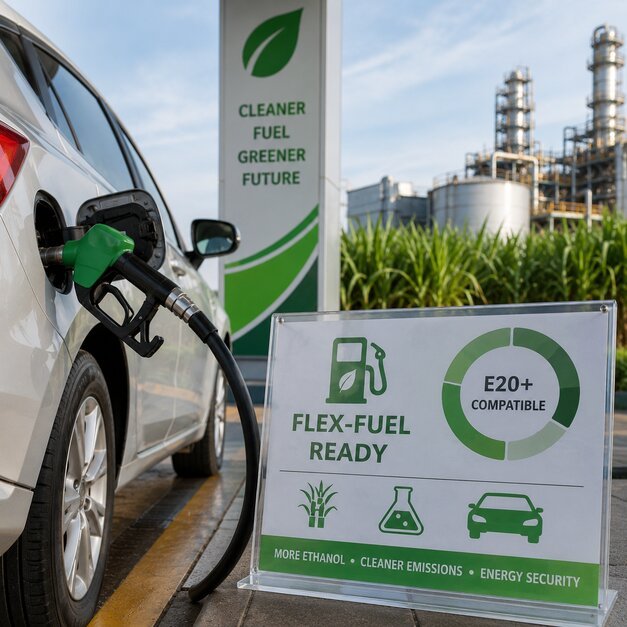
Table of Contents
Government Rejects Reports on US Ethanol Imports
In its official statement, the Ministry of Commerce and Industry emphasized that India’s ethanol blending programme has not undergone any policy change in connection with the ongoing trade discussions with the United States.
According to the ministry, there has been no agreement, concession, or commitment to import fuel-grade biofuel from the US specifically for blending with petrol.
Officials stressed that procurement decisions continue to depend on domestic policy priorities rather than trade negotiations.
The ministry further rejected reports suggesting that India was preparing to import large volumes of biofuel from the United States, describing such claims as factually incorrect and unsupported by official policy.
The clarification seeks to reassure stakeholders that India’s long-term fuel blending strategy remains focused on domestic production and national requirements.
Ethanol Blending Programme Continues Under Existing Policy
India’s Ethanol Blended Petrol (EBP) Programme has become one of the government’s flagship clean energy initiatives over the past several years.
The programme aims to increase the proportion of biofuel mixed with petrol in order to reduce dependence on imported crude oil, lower greenhouse gas emissions, improve energy security, and generate additional income opportunities for farmers through increased demand for agricultural feedstocks used in biofuel production.
The government has consistently maintained that fuel procurement is carried out according to domestic production availability and policy objectives.
Officials reiterated that this approach remains unchanged despite ongoing trade discussions with international partners.
India-US Trade Talks Continue
The clarification arrives at a time when India and the United States are engaged in negotiations aimed at expanding bilateral trade and strengthening economic cooperation.
The discussions cover multiple sectors, including manufacturing, agriculture, technology, digital trade, investment, and market access.
However, the Commerce Ministry clarified that speculation linking the trade negotiations to mandatory fuel imports is inaccurate.
According to officials, India’s fuel blending decisions continue to remain separate from the ongoing trade dialogue.
The government stated that no commitments have been made that would alter the country’s existing procurement policy.
Civil Aviation Minister Rejects Claims on Aviation Fuel
The public debate intensified after claims circulated on social media suggesting that the government intended to blend ethanol with Aviation Turbine Fuel (ATF).
Responding to those reports, Civil Aviation Minister Ram Mohan Naidu Kinjarapu categorically denied the allegations.
In a statement issued on social media, the minister described the claims as “completely false and irresponsible.”
He clarified that there is currently no government proposal to blend ethanol with aviation turbine fuel.
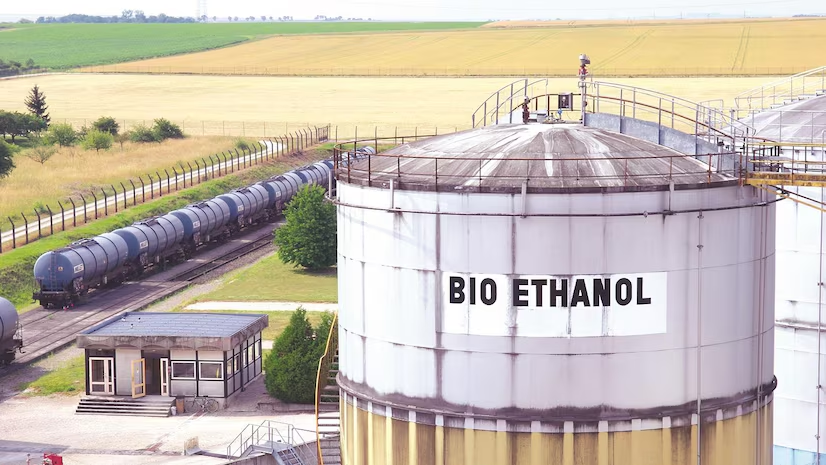
The minister also emphasized that ethanol and Sustainable Aviation Fuel (SAF) are entirely different products and should not be confused.
Ethanol and Sustainable Aviation Fuel Are Different
Addressing public concerns, Kinjarapu explained that Sustainable Aviation Fuel is an internationally recognised aviation fuel that differs fundamentally from ethanol.
According to the minister, SAF undergoes extensive certification and testing procedures before being approved for aviation use.
He noted that SAF complies with internationally accepted safety standards established by the International Civil Aviation Organisation (ICAO) and has already been adopted in several countries as part of efforts to reduce aviation-sector emissions.
The minister cautioned that conflating ethanol with SAF creates unnecessary confusion among the public and misrepresents existing aviation fuel policies.
He reiterated that no proposal exists to mix ethanol directly into conventional aviation turbine fuel.
Passenger Safety Remains Top Priority
The Civil Aviation Minister also warned against the spread of misinformation relating to aviation safety.
According to him, inaccurate claims regarding aircraft fuel have the potential to generate unnecessary anxiety among passengers.
He emphasized that aviation safety remains the government’s highest priority and that all aviation fuels used in commercial operations are subject to strict technical standards and regulatory oversight.
The minister assured the public that any future policy involving alternative aviation fuels would follow internationally recognised certification procedures before implementation.
Political Debate Intensifies
The clarification followed comments made by former Delhi Chief Minister Arvind Kejriwal, who shared a media report on social media questioning the reported proposal.
Referring to the report, Kejriwal raised concerns regarding aviation safety and questioned whether passengers would be comfortable flying if aircraft operated on what he described as “adulterated aviation fuel.”
His remarks quickly attracted widespread attention on social media, prompting the Civil Aviation Ministry to issue a detailed clarification rejecting the underlying claim.
Government officials subsequently reiterated that the reports cited in the political exchange did not reflect official policy.
Growing Focus on Misinformation
The episode illustrates the increasing challenges governments face in responding to rapidly circulating information on digital platforms.
Officials emphasized that inaccurate reports concerning fuel policy, aviation safety, or international trade can create confusion among citizens and industry stakeholders alike.
The government has repeatedly encouraged the public to rely on official statements and verified information before accepting claims circulating on social media.
The latest clarification reflects broader efforts to counter misinformation relating to public policy and technical subjects.
India’s Ethanol Strategy
India’s ethanol blending programme forms part of the country’s larger strategy to diversify energy sources and reduce dependence on imported fossil fuels.
The initiative has also been designed to benefit the agricultural sector by creating additional demand for crops such as sugarcane and maize used in ethanol production.
Over recent years, India has steadily increased ethanol blending levels through domestic procurement supported by government incentives and industry participation.
Officials maintain that the programme remains guided by domestic production capacity, environmental objectives, and long-term energy security considerations.
The latest clarification indicates that these priorities remain unchanged despite ongoing international trade discussions.
Why the Clarification Matters
Government officials believe the clarification is necessary because speculation surrounding trade negotiations and aviation fuel policies has the potential to generate misunderstanding among consumers, investors, and industry participants.
By clearly separating India’s domestic ethanol policy from trade negotiations and distinguishing ethanol from Sustainable Aviation Fuel, authorities aim to prevent misinformation from influencing public perception.
The statements also reinforce the government’s position that any significant policy change involving fuel standards would be announced through official channels rather than media speculation.
The Government of India has firmly rejected reports claiming that it has committed to importing ethanol from the United States for fuel blending under the ongoing India-US trade negotiations. According to the Ministry of Commerce and Industry, India’s ethanol procurement policy continues to be determined exclusively by domestic requirements and existing national policy.
Separately, Civil Aviation Minister Ram Mohan Naidu Kinjarapu has dismissed claims regarding ethanol blending in Aviation Turbine Fuel, clarifying that no such proposal exists and stressing that Sustainable Aviation Fuel is a distinct, internationally certified aviation fuel.
As discussions surrounding clean energy, ethanol blending, aviation fuels, and India-US trade continue, government officials have urged the public to rely on verified information and official announcements rather than speculative reports. The clarifications underscore the government’s broader efforts to ensure transparency while maintaining confidence in India’s energy, aviation, and trade policies.