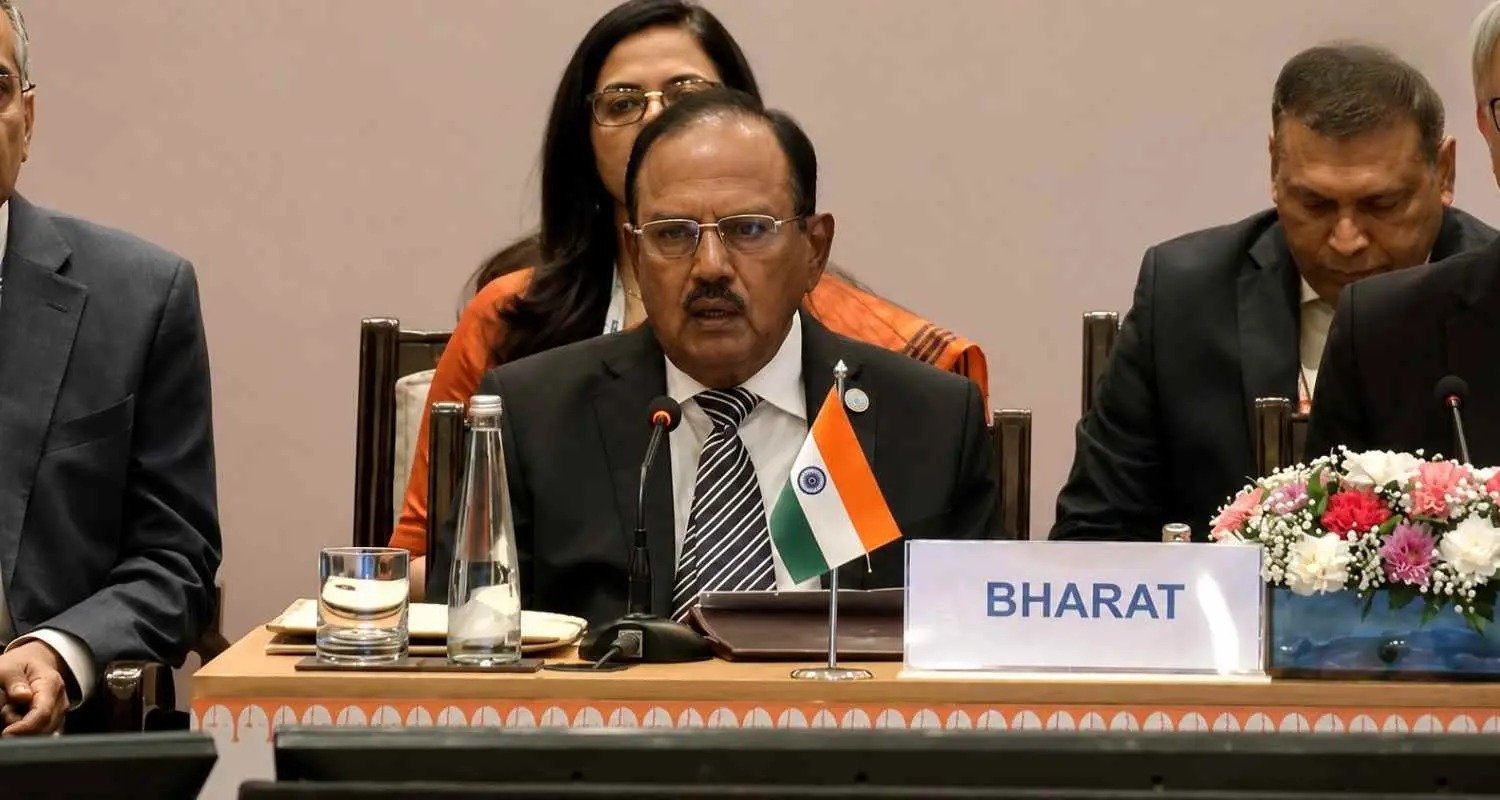
BIMSTEC took center stage in New Delhi as National Security Adviser Ajit Doval urged member countries to deepen regional cooperation in response to a rapidly changing global security environment. Addressing the fifth National Security Advisers’ Meeting of the Bay of Bengal Initiative for Multi-Sectoral Technical and Economic Cooperation (BIMSTEC), Doval emphasized that rising geopolitical conflicts, technology-driven threats, cyber risks, and supply chain disruptions require collective action rather than isolated responses.
His remarks came at a time when countries across Asia are dealing with increasingly complex security challenges that go far beyond traditional military concerns. Cyberattacks, maritime security risks, organised crime, terrorism, energy security, and disaster management have become interconnected issues, making regional cooperation more important than ever before.
The meeting concluded with member nations agreeing on several practical initiatives designed to strengthen coordination and improve preparedness against both conventional and emerging threats.
Table of Contents
BIMSTEC’s Growing Strategic Importance
BIMSTEC has steadily evolved into one of the most significant regional organisations in South and Southeast Asia. The grouping consists of Bangladesh, Bhutan, India, Myanmar, Nepal, Sri Lanka, and Thailand, connecting countries around the Bay of Bengal through economic, strategic, and security partnerships.
During his address, Ajit Doval highlighted that BIMSTEC today represents nearly 1.7 billion people, making it one of the world’s largest regional groupings by population. Collectively, these countries contribute approximately $5 trillion to the global economy, underlining the bloc’s increasing economic and strategic relevance.
Unlike many regional organisations that focus primarily on trade, BIMSTEC has expanded its agenda to include security, disaster response, energy cooperation, digital connectivity, maritime governance, and infrastructure development. This broader approach reflects the changing nature of regional challenges where economic stability and national security often go hand in hand.
For India, BIMSTEC has become an important platform for strengthening partnerships with neighbouring countries while promoting stability throughout the Bay of Bengal region.

Ajit Doval Warns of a Changing Global Security Landscape
One of the strongest messages delivered during the meeting focused on the changing nature of global security.
According to Doval, the international environment is currently marked by growing geopolitical uncertainty, ongoing regional conflicts, rapid technological transformation, and disruptions to global supply chains. These developments are creating new vulnerabilities that affect countries regardless of their size or economic strength.
He stressed that security can no longer be viewed only through the lens of military defence. Modern threats now extend into cyberspace, financial systems, digital infrastructure, maritime routes, energy networks, and communication technologies.
The National Security Adviser noted that technological advancements have brought tremendous opportunities for development but have simultaneously created sophisticated challenges that require coordinated regional responses.
His remarks reflected a broader global concern where artificial intelligence, cyber warfare, misinformation campaigns, digital espionage, and attacks on critical infrastructure have become significant national security issues.

Strong Push for Regional Cooperation
A central theme of the meeting was the need for stronger cooperation among BIMSTEC member countries.
Rather than dealing with security threats individually, participating nations agreed that collaborative action would produce more effective and sustainable outcomes. The discussions focused on developing practical mechanisms that encourage regular coordination, information sharing, intelligence exchange, and institutional cooperation.
Regional collaboration has become increasingly important because many modern security threats easily cross national borders. Terrorist networks, organised crime syndicates, cybercriminals, and trafficking groups often operate across multiple jurisdictions, making unilateral action less effective.
The meeting therefore emphasized building stronger partnerships among security agencies while improving communication channels between member governments.

Countering Terrorism and Organised Crime
One of the key outcomes of the BIMSTEC meeting was the commitment to strengthen cooperation against terrorism and transnational organised crime.
Member countries agreed to adopt practical and result-oriented measures aimed at improving intelligence sharing and enhancing coordinated operations against criminal networks.
Transnational organised crime has become a growing challenge throughout the Bay of Bengal region. Criminal groups are increasingly involved in activities such as human trafficking, drug smuggling, financial crimes, illegal migration, arms trafficking, wildlife crimes, and cyber-enabled fraud.
Because these networks frequently operate across borders, coordinated regional responses have become essential.
Similarly, terrorism continues to pose serious security concerns for many countries in the region. Intelligence cooperation, capacity building, and coordinated investigations remain among the most effective tools for preventing terrorist activities before they occur.
The renewed commitment under BIMSTEC seeks to create stronger institutional frameworks that enable faster cooperation whenever security threats emerge.
Cyber Security Takes Centre Stage
Cyber security received significant attention during the discussions as governments continue to confront rapidly evolving digital threats.
Across the world, cyberattacks targeting government institutions, financial systems, healthcare networks, transportation infrastructure, and communication services have increased dramatically over the past decade.
Countries are also witnessing a rise in ransomware attacks, identity theft, financial fraud, data breaches, and attacks on critical infrastructure.
Recognising these challenges, BIMSTEC member states agreed to strengthen cooperation in cyber security by improving coordination among relevant agencies and encouraging greater exchange of technical expertise.
As digital economies continue expanding throughout South and Southeast Asia, protecting cyberspace has become an essential element of national security.
Maritime Security Becomes a Key Priority
Given that all BIMSTEC nations are closely connected through the Bay of Bengal, maritime security formed another major area of discussion.
Safe sea routes are vital for regional trade, energy transportation, fisheries, disaster response, and economic development.
The meeting adopted guidelines for the maritime component of Humanitarian Assistance and Disaster Relief (HADR). These guidelines are intended to ensure quicker, more organised, and better-coordinated responses during natural disasters affecting countries across the Bay of Bengal.
The region frequently experiences cyclones, floods, tsunamis, and other natural disasters that require immediate international assistance.
By standardising procedures for maritime disaster relief operations, BIMSTEC hopes to improve response times and enhance cooperation among naval forces and emergency agencies.
Maritime Law Enforcement Framework Approved
Another significant outcome was the endorsement of guiding principles for maritime law enforcement agencies during interactions at sea.
These principles aim to improve predictability, reduce misunderstandings, and encourage safer maritime engagements between member countries.
Such frameworks are particularly valuable because maritime security often involves multiple agencies responsible for coast guard operations, fisheries protection, anti-smuggling missions, environmental monitoring, and border security.
Clear operational guidelines can help reduce unnecessary tensions while ensuring that legitimate law enforcement activities continue smoothly.
For a region that depends heavily on maritime trade, strengthening trust and coordination at sea remains an important strategic objective.
Focus on Energy Security and Critical Infrastructure
Energy security also featured prominently during the discussions.
Modern economies depend heavily on stable energy supplies, reliable infrastructure, and uninterrupted transportation networks. However, geopolitical conflicts and global supply chain disruptions have exposed vulnerabilities in energy markets around the world.
The recent international experience has demonstrated how quickly disruptions in one region can affect fuel availability, electricity generation, manufacturing, and transportation elsewhere.
Recognising these risks, BIMSTEC member countries discussed ways to strengthen cooperation in protecting energy infrastructure while improving resilience against future disruptions.
Energy cooperation is expected to remain an increasingly important pillar of BIMSTEC as demand continues to rise across South and Southeast Asia.
Improving Regional Connectivity
The meeting also highlighted the importance of stronger regional connectivity.
Improved transport links, digital infrastructure, trade corridors, and communication networks are viewed as essential for promoting economic growth while supporting regional security cooperation.
Better connectivity enables faster disaster response, smoother movement of humanitarian assistance, improved border management, and greater economic integration.
As infrastructure projects continue expanding throughout the Bay of Bengal region, stronger connectivity is expected to benefit businesses, governments, and local communities alike.
Disaster Management Remains a Shared Priority
Natural disasters continue to affect several BIMSTEC countries every year.
Cyclones in the Bay of Bengal, earthquakes, floods, landslides, and extreme weather events frequently require coordinated humanitarian responses involving multiple governments.
The newly adopted maritime disaster relief guidelines are expected to improve emergency preparedness while enabling faster deployment of rescue teams, medical assistance, relief materials, and logistical support.
Disaster management has increasingly become a shared regional responsibility because large-scale emergencies often overwhelm the resources of individual countries.
By strengthening preparedness before disasters occur, BIMSTEC aims to reduce response times and improve humanitarian outcomes.
BIMSTEC and India’s Regional Vision
Ajit Doval reaffirmed that BIMSTEC occupies a central place in India’s broader regional strategy.
He noted that the grouping supports India’s “Neighbourhood First” policy, strengthens its “Act East” initiative, and complements the country’s MAHASAGAR vision for greater regional cooperation.
These policy frameworks focus on building stronger partnerships with neighbouring countries, expanding connectivity, encouraging economic development, and promoting collective security across the Indo-Pacific region.
As BIMSTEC approaches its 30th anniversary next year, India has called for greater institutional cooperation and stronger implementation of regional initiatives already agreed upon by member nations.
The latest National Security Advisers’ Meeting reflects the growing recognition that future security challenges will increasingly require coordinated regional action. From cyber threats and maritime safety to counterterrorism, disaster management, energy resilience, and organised crime, BIMSTEC continues to broaden its role as an important platform for practical cooperation among countries connected by the Bay of Bengal.