Tesla Model Y Sales Surge After Major Price Cut
Tesla Model Y has recorded its strongest monthly sales performance in India since entering the market, with 115 units delivered in July 2026, according to Vahan data. The latest figures mark a sharp improvement for the American electric vehicle manufacturer and come shortly after a major price reduction for its electric SUV.
Tesla‘s July performance marks a sharp increase from the 38 units sold in June, translating into a month-on-month growth of around 203 percent. The jump follows Tesla’s decision to reduce the starting price of the Model Y by Rs 9 lakh in June.
Following the price revision, the Tesla Model Y is now available in India from Rs 50.89 lakh ex-showroom, making the electric SUV more competitive in India’s growing luxury EV market.
The strong July performance also helped Tesla establish itself as one of the country’s leading luxury electric vehicle brands during the month.
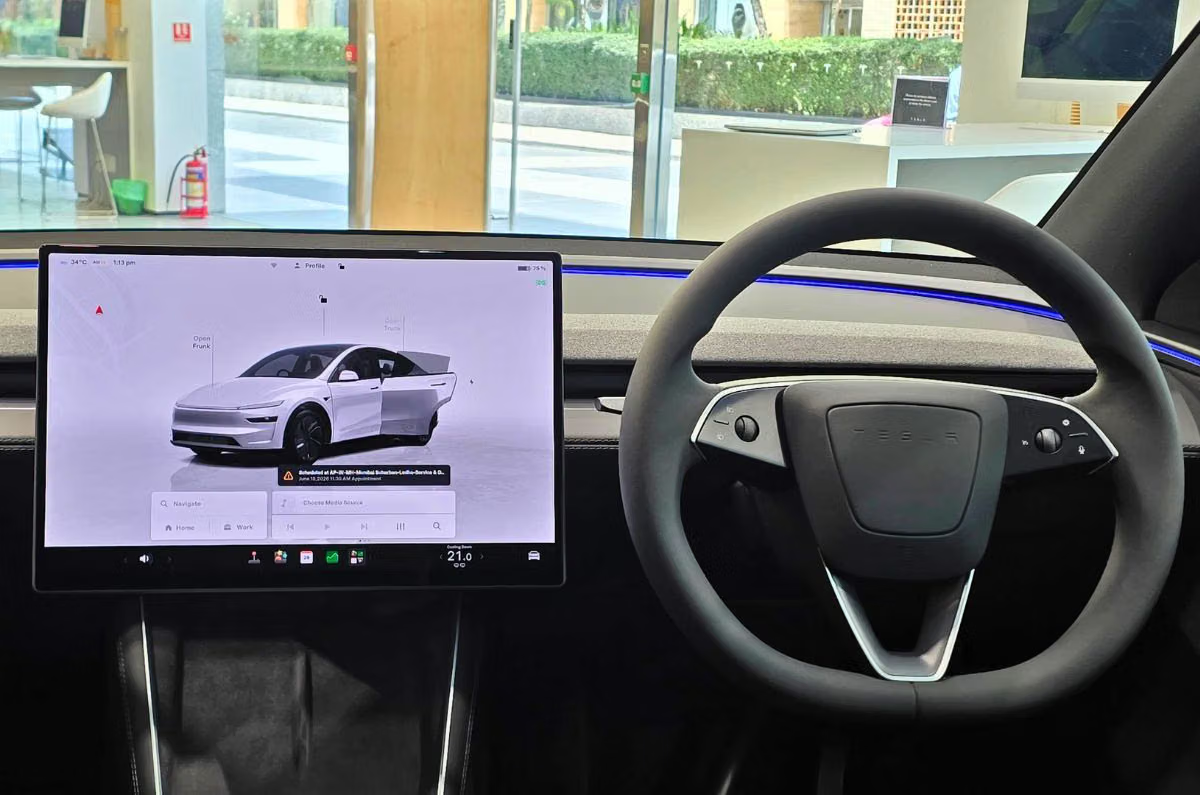
Table of Contents
Tesla Model Y Becomes Third-Best-Selling Luxury EV Brand in July
Tesla’s 115-unit July sales figure gave the company a 16 percent share of India’s luxury electric passenger vehicle market during the month.
A total of 736 luxury electric passenger vehicles were retailed in India in July, with Tesla ranking third among luxury EV brands.
BMW India remained ahead with 390 units, while Mercedes-Benz India recorded 174 units during the month. Tesla’s 115-unit tally placed it ahead of Volvo Auto India, which registered 51 units.
The result represents an important milestone for Tesla because the company is still relatively new to India’s automotive market.
Tesla began deliveries in India in September 2025, and its sales performance during the initial months remained comparatively modest. The July surge suggests that pricing can play a significant role in determining demand for premium electric vehicles in the country.
Rs 9 Lakh Price Cut Gives Model Y a Major Boost
The most significant factor behind Tesla’s improved sales appears to be the Model Y’s revised pricing.
Before the price adjustment, the electric SUV had a substantially higher entry price, which limited its accessibility even within the premium EV segment.
Tesla subsequently reduced the starting price by Rs 9 lakh, bringing the Model Y’s entry point down to Rs 50.89 lakh.
The price reduction appears to have had an immediate impact. Tesla’s monthly sales increased from 38 units in June to 115 units in July.
While a single month’s performance does not necessarily establish a long-term sales trend, the increase indicates that pricing remains a crucial consideration for Indian buyers evaluating premium electric vehicles.
The revised pricing could also make the Model Y more attractive to customers who are comparing it with other luxury electric SUVs and premium EV offerings.
Tesla India Sales Cross 600 Units
Tesla’s July performance also pushed its cumulative Indian sales closer to a major milestone.
The company had sold 578 Model Y units in India between the start of deliveries in September 2025 and the end of July 2026.
Tesla then retailed another 60 vehicles during the first 16 days of August, taking its cumulative sales beyond the 600-unit mark.
The milestone comes less than a year after Tesla began customer deliveries in India.
Although Tesla’s overall volumes remain small compared with mass-market car manufacturers, crossing 600 units represents a notable early achievement for a brand operating exclusively in the premium EV space.
The company accounted for approximately 8 percent of India’s luxury EV sales during the period in which its vehicles have been available.
Model Y’s Role in Tesla’s India Strategy
The Model Y is currently the central product of Tesla’s Indian portfolio.
The company offers the electric SUV in multiple configurations, including five-seat versions and the six-seat Model Y L.
Prices currently range from Rs 50.89 lakh to Rs 61.99 lakh ex-showroom, depending on the variant.
The positioning allows Tesla to target customers looking for premium electric SUVs while offering different combinations of battery capacity, range, seating configuration and drivetrain technology.
The five-seat Premium RWD version uses a 64kWh battery pack and has a claimed 500km WLTP range.
The Premium Long Range RWD variant gets a larger 84.2kWh battery and offers a claimed 661km WLTP range under the WLTP testing cycle.
At the top of the current lineup is the six-seat Model Y L, which features a dual-motor all-wheel-drive setup and has a claimed range of 681km.
These specifications give Tesla a broad range of configurations within a single model family.
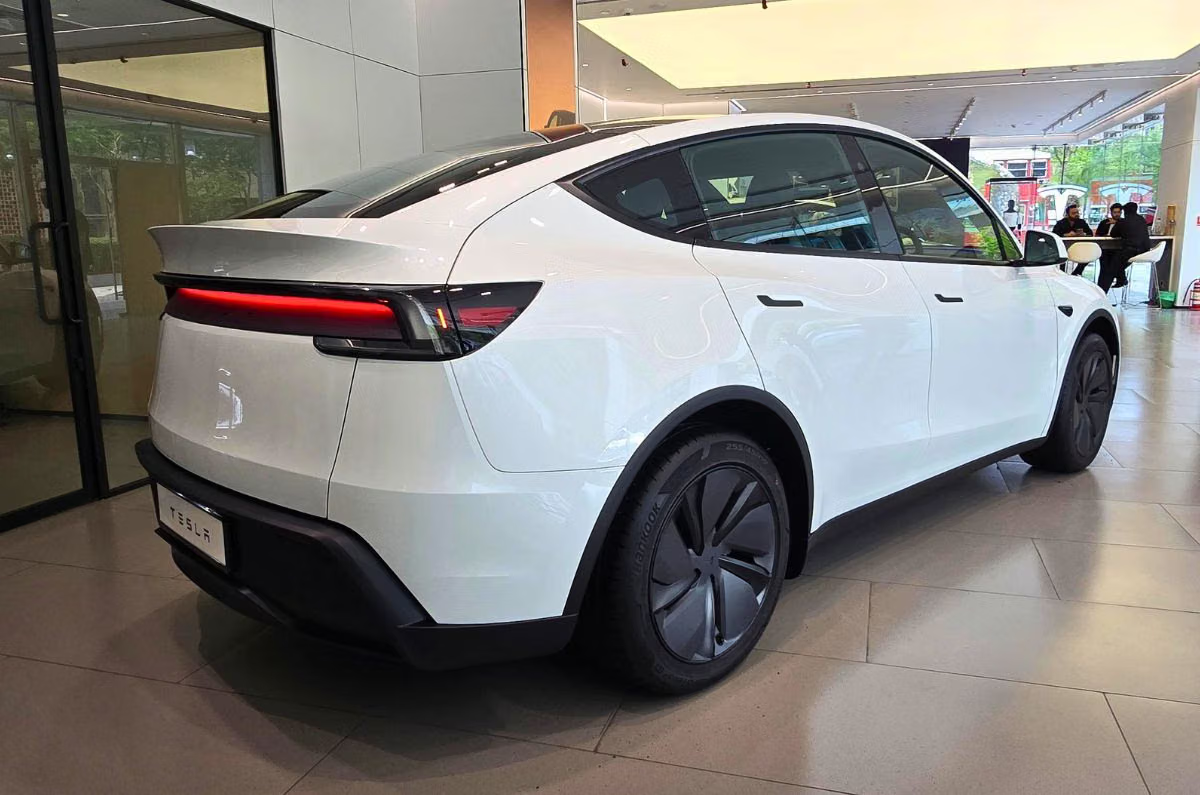
Model Y L Adds Six-Seat Configuration
The introduction of the Model Y L also gives Tesla an opportunity to appeal to buyers looking for additional practicality.
Unlike the standard five-seat configuration, the Model Y L offers seating for six passengers.
The larger configuration could make the electric SUV more relevant to Indian families who place greater emphasis on passenger capacity while still wanting a premium EV.
The dual-motor all-wheel-drive system also gives the Model Y L a different performance and drivetrain proposition compared with the rear-wheel-drive variants.
With a claimed range of 681km, Tesla is also positioning the Model Y L as a long-distance electric vehicle rather than an EV intended exclusively for urban driving.
Tesla Gains Ground in India’s Growing Luxury EV Market
Tesla’s July sales came during a particularly strong month for India’s electric passenger vehicle market.
India recorded its highest-ever monthly electric passenger vehicle retail sales in July, with 34,033 units sold across the market.
Tesla’s 115 units represented approximately 0.33 percent of India’s overall electric passenger vehicle sales during the month.
The figure highlights an important distinction between Tesla’s position in the overall EV market and its position within the luxury EV segment.
Tesla remains a niche manufacturer in terms of total passenger vehicle volumes, but within the premium electric category, its performance is becoming increasingly significant.
The company faces competition from established luxury manufacturers such as BMW and Mercedes-Benz, both of which have expanded their electric vehicle portfolios in India.
Competition From BMW, Mercedes-Benz and Volvo
The luxury EV market in India is becoming increasingly competitive as established premium manufacturers expand their electric offerings.
BMW currently leads the segment by a considerable margin, with 390 luxury EVs sold in July according to the supplied Vahan data.
Mercedes-Benz followed with 174 units, while Tesla recorded 115.
Volvo Auto India registered 51 units.
Tesla’s performance therefore places it firmly among the major players in India’s luxury EV market, despite having a much smaller overall product portfolio than some established manufacturers.
The Model Y’s pricing could remain an important factor in this competition, particularly as buyers compare electric SUVs on purchase price, range, technology and charging capabilities.
AI Features Add a Technology-Focused Dimension
Tesla has also expanded the technology offering available with the Model Y in India.
One of the notable additions is the Grok AI assistant, which adds an artificial-intelligence-based feature to the vehicle’s technology ecosystem.
The development fits into Tesla’s broader positioning of its vehicles as technology products as well as automobiles.
For premium EV buyers, software, connected features and digital interfaces are increasingly becoming important elements of the ownership experience.
The availability of AI-based features could therefore help Tesla differentiate the Model Y from conventional premium SUVs and other electric vehicles.
However, the long-term importance of these features will depend on how useful they prove to be in everyday driving and ownership.
What the July Sales Mean for Tesla
The July sales surge provides Tesla with a positive indication of consumer response following its pricing strategy.
Moving from 38 units in June to 115 units in July is a substantial improvement, but the company will need to sustain stronger monthly volumes before the increase can be considered a lasting trend.
The first 16 days of August have already provided another encouraging signal, with 60 vehicles retailed during that period.
If the pace continues, Tesla could potentially record another strong month in August.
For the company, maintaining sales momentum will depend on several factors, including pricing, availability, customer experience, charging infrastructure and the expansion of its product lineup.
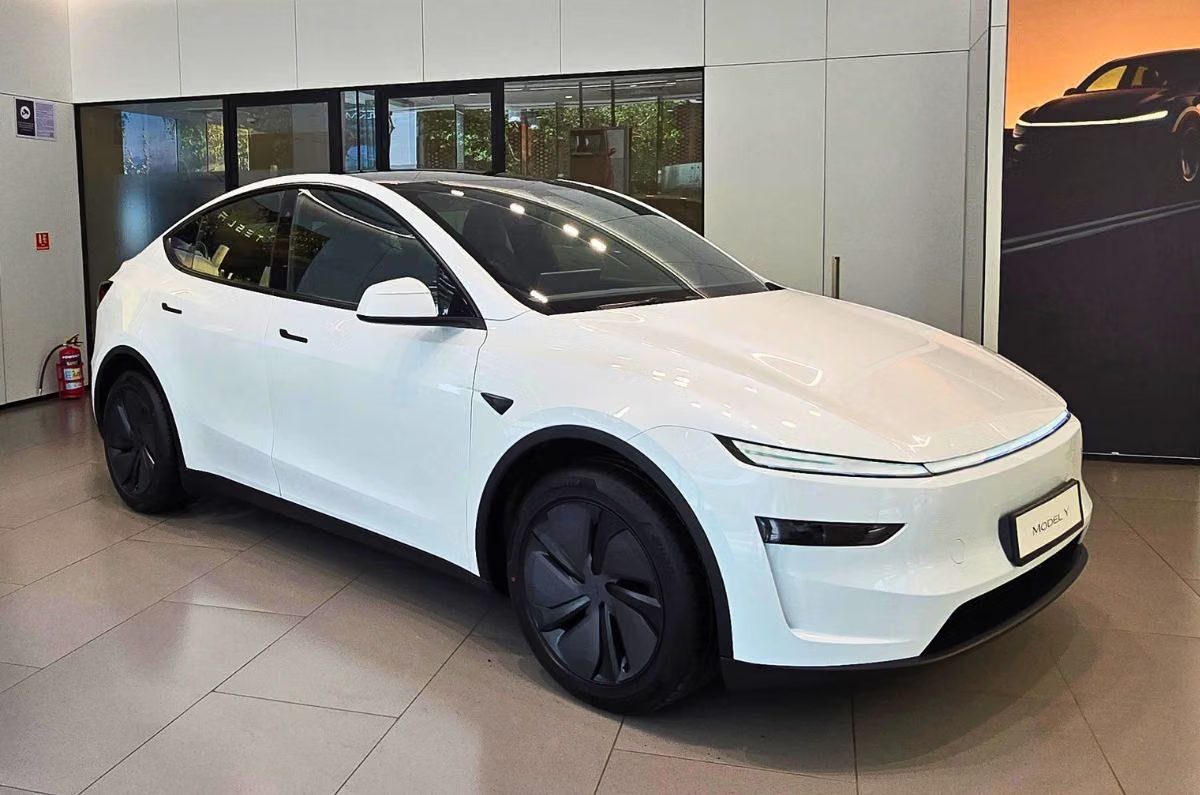
Tesla Model Y Could Strengthen Its Position in India
The Model Y’s latest sales performance demonstrates that there is a market in India for premium electric SUVs, particularly when pricing becomes more competitive.
The Rs 9 lakh reduction has clearly changed the Model Y’s market positioning, helping Tesla attract more customers and significantly increasing its monthly sales.
With more than 600 cumulative units now sold in India, Tesla has crossed an important early milestone.
The company still operates in a relatively narrow premium segment, but its July performance shows that the Model Y can compete effectively against established luxury EV brands.
As India’s electric vehicle market continues to expand, Tesla’s ability to maintain its sales momentum will be closely watched.
For now, the combination of a lower entry price, multiple Model Y configurations, long claimed driving ranges and new technology features has given Tesla a strong boost in India’s luxury EV market.