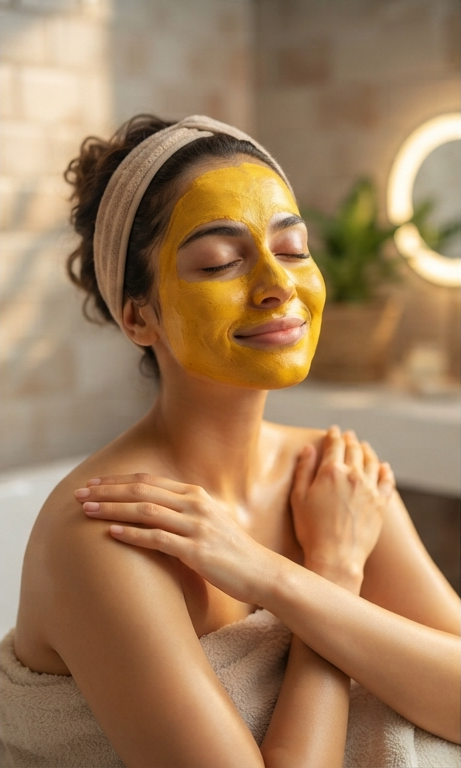
A face pack can give the skin a temporary hydrated and refreshed appearance, but dermatologists caution that no homemade remedy can permanently change a person’s natural complexion. Choosing gentle ingredients, avoiding harsh DIY mixtures and following basic skincare habits can help the face look healthier and more radiant.
Face packs have long been part of beauty and skincare routines, particularly when people want their skin to look fresh before a special occasion. Social media has also made homemade face packs increasingly popular, with ingredients from the kitchen often promoted as simple solutions for dullness, dryness and uneven-looking skin.
However, the idea that one face pack can dramatically “improve complexion” or permanently make someone’s natural skin tone lighter is misleading. A more realistic goal is to support the skin barrier, improve hydration and temporarily enhance the appearance of smoothness and radiance.
Table of Contents
According to the American Academy of Dermatology (AAD), facial masks can help with specific skin concerns depending on their ingredients. They may moisturise the skin, support the skin barrier and provide a temporary boost to its appearance, but they are not a replacement for a regular skincare routine or medical treatment.
For anyone interested in trying a face pack, the safest approach is to focus on healthy-looking, hydrated skin rather than changing one’s natural complexion.

Can a Face Pack Really Make Skin Glow?
A face mask can make the skin appear more refreshed, particularly when it contains moisturising or soothing ingredients. The effect can be noticeable after use because hydration temporarily improves the way the skin surface reflects light.
Dermatologists at Cleveland Clinic explain that face masks can provide a short-term boost in appearance, although such effects may be temporary. They also emphasise that basic skincare habits such as cleansing, moisturising and daily sun protection remain more important than relying on masks alone.
This distinction matters because the word “glow” is often used in beauty content to describe several different things. It can refer to hydrated skin, a smoother surface, reduced dryness or simply a fresher appearance. It does not necessarily mean that the skin’s natural colour has changed.
A good skincare routine should therefore aim to keep the skin comfortable, moisturised and protected, rather than trying to achieve a particular skin tone.
A Gentle Face Pack Approach
Instead of promoting a harsh “fairness” remedy, a safer face-pack approach is to use ingredients known for being relatively gentle and moisturising.
For example, a simple plain, unsweetened yoghurt-based mask may provide mild exfoliating benefits because yoghurt naturally contains lactic acid. Cleveland Clinic notes that milk and yoghurt contain lactic acid, which can exfoliate the skin and make it appear brighter.
However, even natural ingredients can irritate some people’s skin. Therefore, a homemade mask should never be considered automatically safe simply because its ingredients come from the kitchen.
A simple approach is to use a small amount of plain yoghurt on clean skin for a short period, then rinse gently with lukewarm water and apply a moisturiser. People with sensitive or reactive skin may prefer to skip homemade masks altogether and choose a fragrance-free product formulated specifically for facial skin.
The objective should be hydration and a fresh appearance, not skin lightening.
Why Hydration Can Make Skin Look Brighter
Dry skin can appear rough, flaky or dull. When the outer layer of the skin is adequately moisturised, the surface can look smoother and more supple.
The AAD recommends ingredients such as hyaluronic acid, ceramides and glycerin for dry or sensitive skin because they can support hydration and the skin barrier. Colloidal oatmeal is another ingredient dermatologists identify as potentially soothing for irritated skin.
This is one reason a moisturising face mask may create the appearance of a “glow”. The effect is related to hydration and surface appearance rather than a permanent change in pigmentation.
For teenagers in particular, a complicated skincare routine is usually unnecessary. A gentle cleanser, a suitable moisturiser and sunscreen can provide a much stronger foundation than repeatedly experimenting with homemade packs.
Vitamin C and Other Ingredients for Radiance
Some commercially formulated masks contain ingredients that have been studied for particular skincare concerns.
The AAD lists vitamin C among ingredients that can help brighten and firm the skin and identifies it as an antioxidant. For people concerned about uneven tone or signs of sun damage, professionally formulated products may offer more predictable results than homemade mixtures.
Other ingredients have different purposes. For example, hyaluronic acid primarily supports hydration, while niacinamide can be useful for oily or acne-prone skin. Clay-based ingredients such as kaolin or bentonite can help absorb excess oil.
The important point is that skincare ingredients should be selected according to the person’s actual skin needs.
A face pack designed for very dry skin, for example, may not be appropriate for someone whose primary concern is excess oil. Similarly, a strong exfoliating mask may be unnecessary for someone with sensitive skin.

Avoid Lemon Juice and Harsh DIY Ingredients
One of the most important precautions when experimenting with homemade skincare is avoiding highly acidic or irritating ingredients.
Cleveland Clinic specifically advises against applying lemon or lime juice and apple cider vinegar directly to the skin because their low pH can cause irritation.
This is particularly relevant because lemon juice is frequently promoted online as a natural skin-brightening ingredient.
Natural does not automatically mean gentle.
Irritation can actually make some pigmentation problems worse. The AAD notes that irritating skincare products can contribute to dark spots, particularly in darker skin tones, and recommends choosing gentler products when treating pigmentation concerns.
Therefore, trying to brighten the face with an aggressive DIY remedy can potentially have the opposite effect.
Why “Fairness” Claims Need to Be Treated Carefully
Beauty content frequently uses terms such as “fairness,” “complexion improvement” and “instant whitening.” These claims can create unrealistic expectations and encourage people to try increasingly harsh products.
Healthy skin comes in a wide range of natural colours and tones. A skincare routine should not be built around trying to make naturally darker skin resemble a lighter complexion.
If someone has uneven pigmentation, persistent dark spots or areas of discoloration, the underlying cause is more important than simply trying to make the skin lighter.
According to the AAD, hyperpigmentation can have several causes, and effective treatment begins with identifying what is causing the discoloration. Sun protection is also a central part of managing dark spots.
Sunscreen Is More Important Than Any Face Pack
Anyone hoping to maintain an even, healthy-looking complexion should pay particular attention to sun protection.
The AAD recommends sunscreen as an important part of treating and preventing dark spots. For pigmentation concerns, it recommends a broad-spectrum sunscreen with SPF 30 or higher, with tinted formulations containing iron oxide offering additional protection against visible light.
This means a face pack used occasionally cannot compensate for daily sun exposure without adequate protection.
A simple routine of gentle cleansing, moisturising and sunscreen can be more beneficial over time than repeatedly using strong masks.
How Often Should a Face Pack Be Used?
More is not necessarily better when it comes to facial masks.
The AAD warns that using masks too frequently or leaving them on longer than directed can lead to irritation and dryness. This is particularly important with exfoliating masks or products containing active ingredients.
People should therefore follow the instructions on a commercial product rather than assuming that keeping it on longer will produce better results.
With homemade masks, there is even more reason to be cautious because the concentration, pH and stability of ingredients may not be standardised.
If a mask causes burning, itching or stinging, it should be removed immediately.
Always Test a New Product First
Skin can react to ingredients even when they are commonly considered gentle.
The AAD recommends testing new skincare products on a small area before applying them more widely. Its dermatologists suggest testing a product on a small area and monitoring the skin for signs of redness, itching or swelling.
This is particularly important for people with sensitive skin or a history of reactions to cosmetics.
A reaction can sometimes take time to appear, so simply assuming that a product is safe because there was no immediate reaction may not always be sufficient.
If a product causes a reaction, it should be washed off and discontinued. Persistent or severe symptoms warrant professional medical advice.
“Natural” Does Not Always Mean Safe
Another common misconception is that homemade or plant-based skincare is automatically safer than commercially formulated products.
Cleveland Clinic notes that “natural” is a broad and poorly defined term and that many products marketed as natural can contain ingredients capable of causing allergic contact dermatitis.
This includes certain fragrances and botanical ingredients.
The lesson is simple: ingredient origin is not the same as safety.
A properly formulated skincare product may actually be easier to evaluate because its ingredients and intended use are clearly stated.
Face Packs for Different Skin Concerns
The best mask depends on what the skin actually needs.
For Dry Skin
Hydrating ingredients can be useful. The AAD identifies hyaluronic acid, ceramides and glycerin as ingredients that can support dry or sensitive skin.
For Oily Skin
Clay ingredients can help absorb excess oil, while niacinamide may be useful for oily or acne-prone skin.
For Acne-Prone Skin
Masks containing appropriate acne-focused ingredients may help as part of an overall routine, but a face mask should not be considered a substitute for acne treatment.
For Sensitive Skin
Simple, fragrance-free and soothing formulations are generally preferable. The AAD specifically cautions that fragrance and essential oils can irritate some people’s skin.
What About Instant Glow Before an Event?
A face mask can be useful before an event if the goal is to temporarily make the skin appear hydrated and refreshed.
However, it is better not to experiment with a completely new product immediately before an important occasion. A previously tolerated, gentle moisturising mask is a safer choice.
Cleveland Clinic notes that face masks can provide an immediate but temporary boost in appearance.
The safest strategy is therefore to maintain a consistent routine rather than searching for a dramatic last-minute transformation.
When a Skin Problem Needs a Dermatologist
A face pack should not be used to self-treat persistent skin problems.
If someone has ongoing acne, unexplained pigmentation, persistent redness, itching, swelling, peeling or other changes in the skin, professional evaluation may be appropriate.
The AAD advises consulting a board-certified dermatologist when skin worsens after using a facial mask or when an underlying skin condition may be involved.
This is especially important because similar-looking symptoms can have very different causes.

The Bottom Line
Face packs can be a useful addition to a skincare routine when chosen carefully. They may provide hydration, soothing benefits or a temporary fresh-looking appearance, depending on their ingredients. Dermatologists, however, do not consider face masks a replacement for daily skincare or treatment for medical skin conditions.
For people looking for a healthy-looking glow, the safest approach is to prioritise gentle cleansing, adequate moisturising, sun protection and carefully selected skincare ingredients.
A simple yoghurt-based mask may provide mild exfoliation because yoghurt contains lactic acid, but even homemade ingredients can cause irritation and should be tested cautiously.
Most importantly, a face pack cannot permanently change a person’s natural complexion, and there is no need to pursue a particular skin colour to have healthy-looking skin. If the goal is brighter, smoother-looking skin, consistency and skin health are more meaningful targets than dramatic overnight promises.
Before trying any new face pack, read the ingredients, avoid harsh acidic DIY mixtures such as lemon juice, test the product on a small area and stop immediately if burning, itching or irritation occurs. For persistent skin concerns, a dermatologist can provide advice based on the individual’s skin type and condition.