Cockroach Janta Party leaders announce plans to expand protests over alleged electoral fraud and demand the resignation of Chief Election Commissioner Gyanesh Kumar after thousands of demonstrators were detained in Delhi.
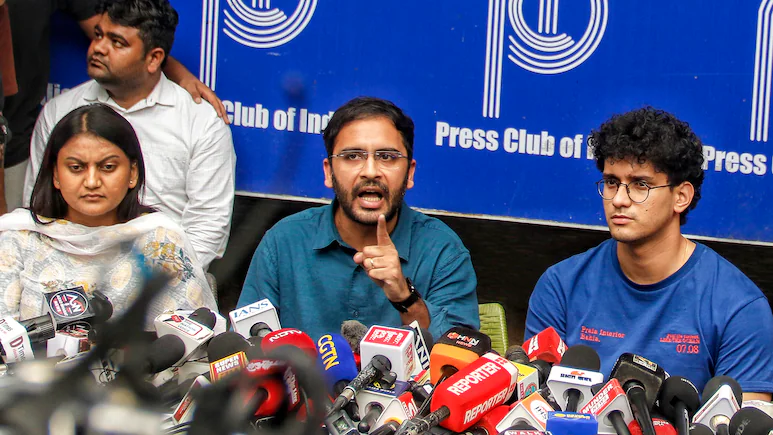
CJP (Cockroach Janta Party) leaders have vowed to expand their protest against Chief Election Commissioner Gyanesh Kumar beyond the national capital following a major police crackdown in Delhi. The announcement came on Sunday after senior CJP leaders were released from custody, a day after thousands of protesters were detained while attempting to assemble near Jantar Mantar to demand Kumar’s resignation over allegations of electoral fraud. The party has pledged to organise demonstrations across the country, accusing the central government and the Bharatiya Janata Party (BJP) of misusing the Special Intensive Revision (SIR) of electoral rolls.
CJP co-convener Ashutosh Ranka declared that the movement would continue until the Chief Election Commissioner stepped down. Party leader Saurav Das also announced plans to extend the agitation beyond Delhi, accusing the central government and the Bharatiya Janata Party (BJP) of misusing the Special Intensive Revision (SIR) of electoral rolls.
The developments have intensified the political confrontation over electoral processes, the conduct of the Election Commission, and the right to peaceful assembly. The detention of political leaders, restrictions on public gatherings, and disruptions to transport services have also raised questions about the balance between maintaining public order and protecting democratic freedoms.
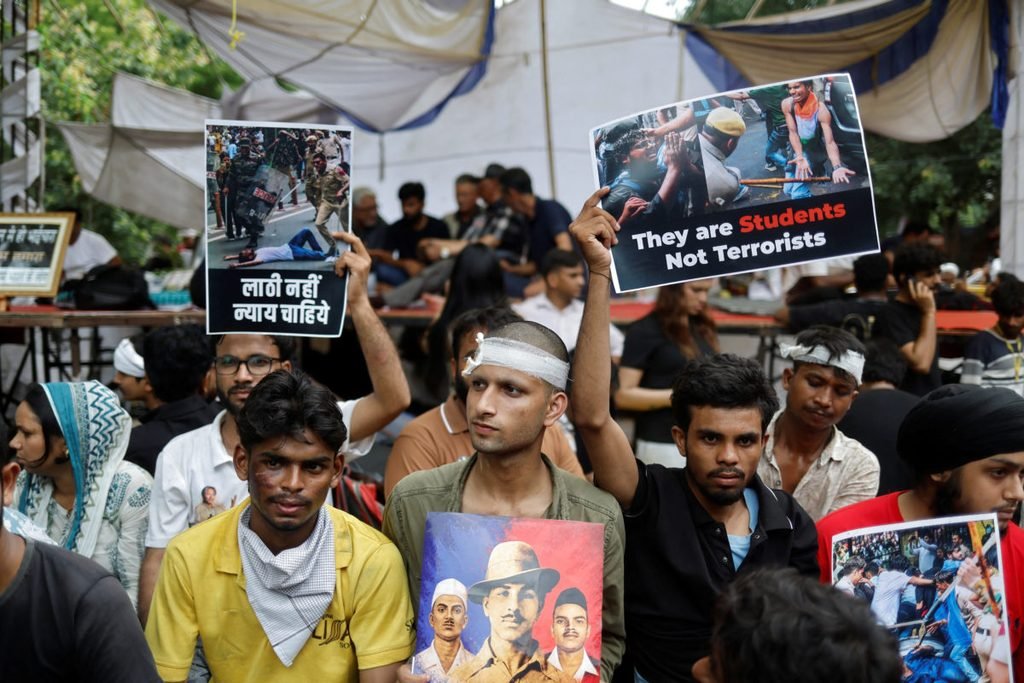
Table of Contents
CJP Leaders Announce Nationwide Agitation After Release
Addressing a press conference after their release, Ranka said the movement was far from over and warned that the party would continue its campaign against what it describes as electoral irregularities.
“The fight has just begun,” Ranka said, adding that the protest would not stop until Gyanesh Kumar resigned.
Saurav Das reinforced the message, saying demonstrations would be organised not only in Delhi but across the country. He criticised Prime Minister Narendra Modi and the BJP over the alleged misuse of the Special Intensive Revision of voter lists, an exercise that has become a central point of contention in the ongoing political dispute.
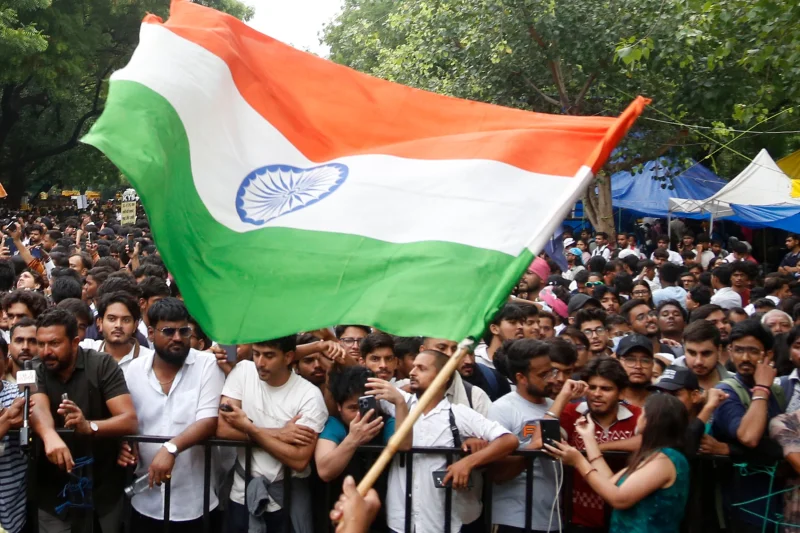
The CJP leaders’ announcement followed a tense weekend in the capital, where police deployed extensive security arrangements to prevent large gatherings around Jantar Mantar. Protesters had sought to assemble at the designated demonstration site to press for the resignation of the Chief Election Commissioner.
The party’s decision to widen the agitation signals a possible shift from a concentrated demonstration in Delhi to a broader campaign involving supporters and opposition-aligned groups in other parts of the country. However, the locations, dates and organisational details of the proposed nationwide protests were not specified in the supplied account.
Abhijeet Dipke, Two Other Leaders Detained After Arriving in Delhi
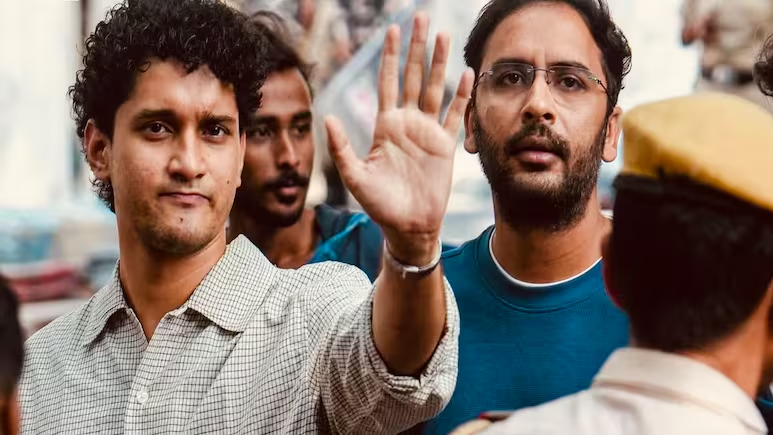
CJP chief Abhijeet Dipke, co-convener Ashutosh Ranka and party leader Saurav Das were detained on Saturday morning after their flight from Mumbai landed in Delhi. According to the police account, the three were taken into preventive custody and produced before an executive magistrate in Delhi Cantonment on Sunday morning.
The magistrate released them on the condition that they refrain from breaching the peace for one year.
Ranka alleged that the three leaders had been “kidnapped” from inside the aircraft. The allegation adds another dimension to the dispute over the authorities’ handling of political activists seeking to participate in demonstrations.
Following his release, Dipke left for his hometown in Maharashtra to attend his grandmother’s last rites. He later posted a message on X addressing the conditions attached to his release and rejecting the suggestion that he had agreed to stop protesting.
“Haven’t signed any bond that says we won’t protest. We will hit the streets again,” Dipke wrote.
The statement became a key part of the CJP’s response to the police action, with the party maintaining that its leaders had not surrendered their right to organise peaceful demonstrations.
CJP Questions Restrictions on Peaceful Protests
The conditions imposed on the three leaders became a central issue at the press conference. CJP said none of its leaders had signed a bond promising to refrain from future protests and argued that the restriction concerned breaches of peace rather than peaceful political activity.
In a statement posted on X, the party said participating in a peaceful protest was a constitutional right and should not automatically be treated as a threat to public order.
Ranka also accused Prime Minister Narendra Modi, Union Home Minister Amit Shah and Chief Election Commissioner Gyanesh Kumar of contributing to the situation that led to the confrontation.
The dispute highlights a broader question in democratic governance: how authorities should manage large political gatherings while protecting citizens’ freedom to express dissent.
Peaceful assembly and political expression are protected under India’s constitutional framework, subject to lawful and reasonable restrictions. Authorities may impose conditions to address public safety and maintain order, but the legality of any particular detention or restriction depends on the circumstances, the applicable law and the procedures followed.
The CJP leaders’ statements represent their position on the release conditions. The precise legal terms of the magistrate’s order and their application to any future demonstration would need to be assessed from the order itself and the relevant legal provisions.
The leaders also demanded that Jantar Mantar be made accessible to protesters, arguing that the established demonstration venue should remain available for people seeking to raise political and electoral concerns.
Allegations of Pressure on Activists and Their Families
CJP’s legal team head, Ratna Singh, raised separate allegations concerning the treatment of activists and their families during the crackdown.
Singh alleged that police personnel had threatened the families of protesters and asked them to prevent their children from participating in the demonstrations. She also claimed that Intelligence Bureau personnel had tracked her movements and questioned the basis for restrictions imposed on activists.
“I am a citizen. I have the right to go anywhere. How can you keep me in wrongful detention?” she asked.
These allegations could not be independently established from the supplied account. They remain claims made by CJP representatives and would require responses from the authorities and further verification.
Ranka also criticised the way Dipke was informed about his grandmother’s death while he was in detention, describing the circumstances as insensitive.
The allegations have broadened the controversy beyond the original demand for the Chief Election Commissioner’s resignation. They have placed the conduct of law enforcement agencies, the treatment of detained demonstrators and the communication of sensitive personal information under scrutiny.
The police account cited in the report states that the three leaders were taken into preventive custody and later produced before an executive magistrate. A fuller assessment of the competing claims would require additional information about the circumstances of their detention and the relevant official records.
Thousands Detained as Security Is Tightened Across Delhi
The Saturday demonstration triggered a substantial security operation across the national capital. According to the figures cited in the supplied report, at least 3,000 protesters, including politicians, were detained. Some estimates placed the total number as high as 7,000.
Most of those detained were released later that night.
Police established security restrictions around areas of Delhi to prevent large gatherings near Jantar Mantar. The measures affected not only protesters but also transport operations, with several Metro stations closed and a large number of trains cancelled.
Delhi Metro kept 45 stations closed during the security operation, while the Railways cancelled approximately 250 trains in view of the planned protest. Authorities subsequently informed the Supreme Court on Sunday that transport operations had returned to normal.
The scale of the arrangements demonstrated the logistical challenges involved in managing a large demonstration in the capital, particularly when political leaders and supporters from different parts of the country attempt to gather at the same location.
At the same time, the disruption raised concerns about the wider impact of preventive security measures on commuters and ordinary residents. The extent to which individual restrictions were necessary or proportionate would depend on the specific security assessments and orders issued by the authorities.
YouTuber Dhruv Rathee was among those released late on Saturday night, according to the supplied report.
The events also prompted renewed debate about the circumstances in which preventive detention may be used to manage anticipated public disorder, especially when the stated objective of a gathering is political protest.
CJP Leaders Compare the Situation to the Emergency
Ranka said the events of the preceding 72 hours had reminded him of the Emergency imposed by the then Prime Minister Indira Gandhi between 1975 and 1977.
The Emergency remains one of the most consequential periods in modern Indian political history. During that period, civil liberties were curtailed, political opponents were detained and press freedoms faced severe restrictions.
By invoking that period, Ranka sought to frame the recent detentions and restrictions as a warning about the treatment of political dissent. He also criticised transport disruptions, claiming that the cancellation of trains under the present administration reflected an extraordinary response to the protest.
Saurav Das similarly accused the Centre of creating an “Emergency-like situation” and argued that the authorities could have invited a delegation of protesters for discussions instead of relying on extensive security measures.
The comparison is a political allegation made by the CJP leaders, rather than an established equivalence between the current events and the historical Emergency. The legal and political circumstances of the two periods are different, and any assessment requires consideration of the specific measures involved.
Nevertheless, the reference illustrates how the Delhi crackdown has become part of a wider political argument about civil liberties, dissent and the limits of state power.
The authorities’ subsequent statement to the Supreme Court that transport operations had returned to normal provided an indication that the immediate disruption was easing by Sunday. It did not, by itself, resolve the questions surrounding the detention of protesters or the conditions under which future demonstrations might take place.