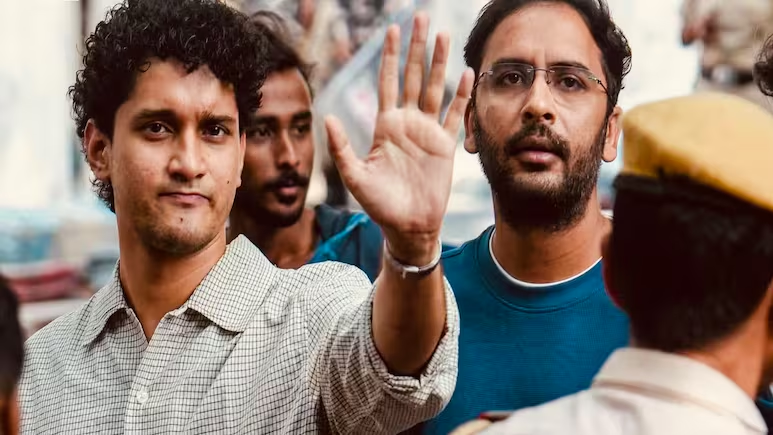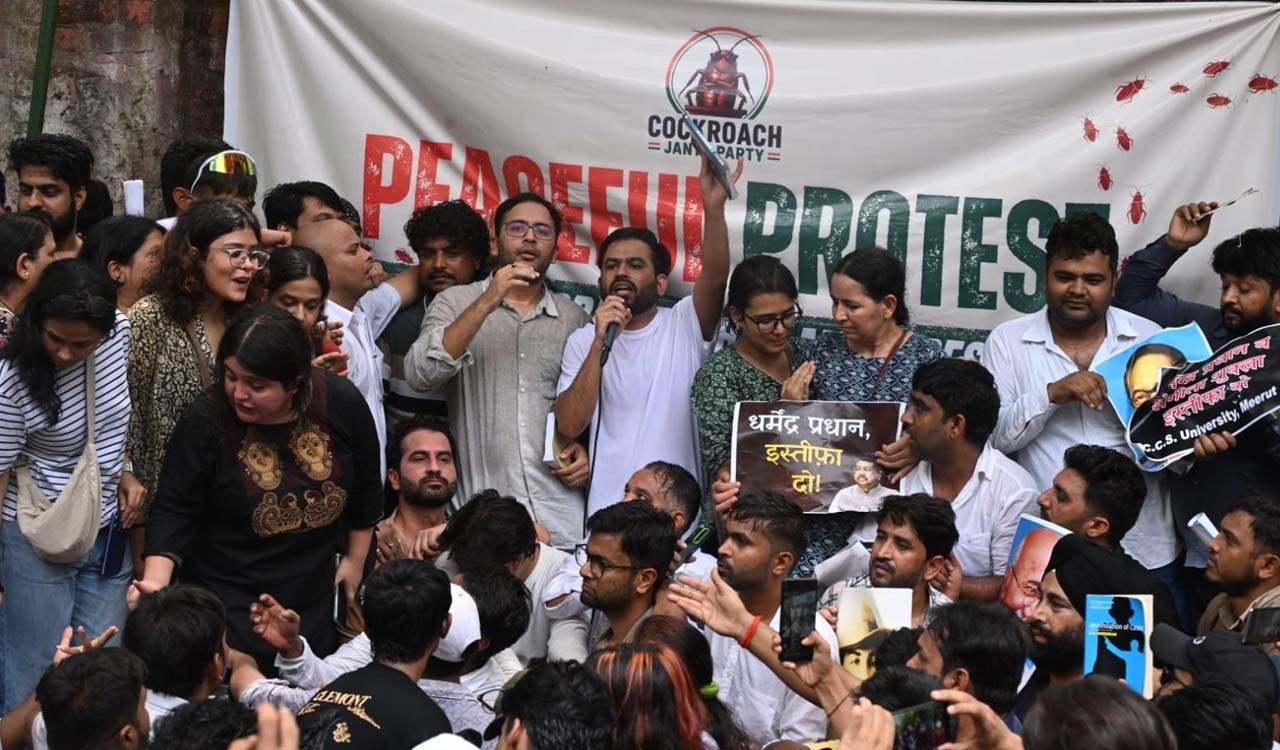
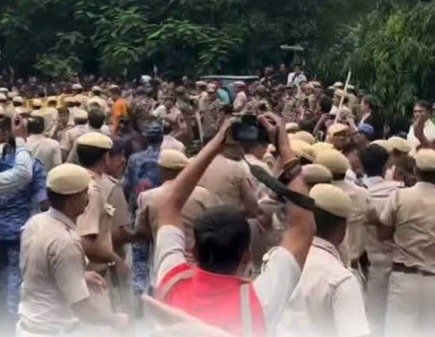
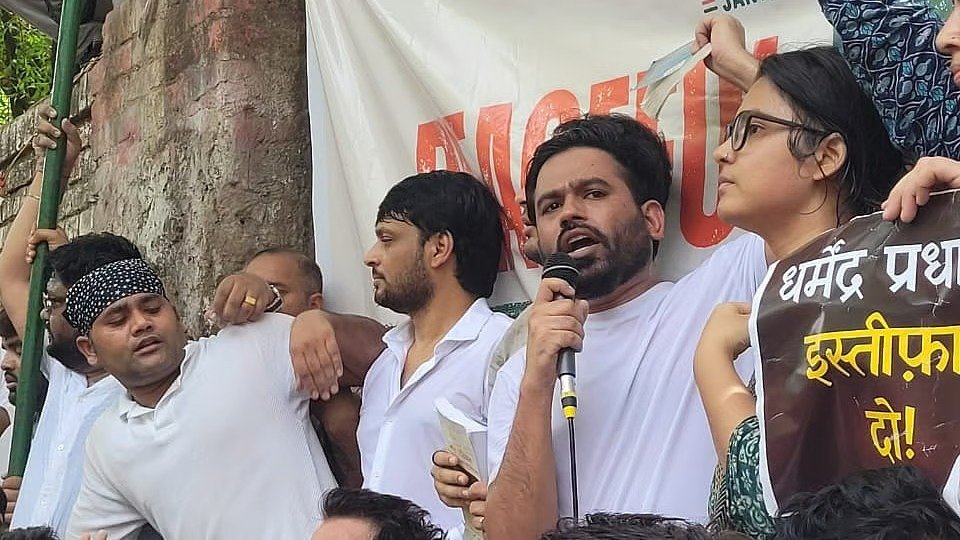
CJP protests in New Delhi witnessed dramatic scenes on Monday after demonstrators clashed with security personnel near Jantar Mantar during an attempted march towards Parliament. The confrontation prompted Delhi Police to use a lathicharge to disperse sections of the crowd and restore order as thousands of supporters gathered in the heart of the national capital on the opening day of the Monsoon Session of Parliament.
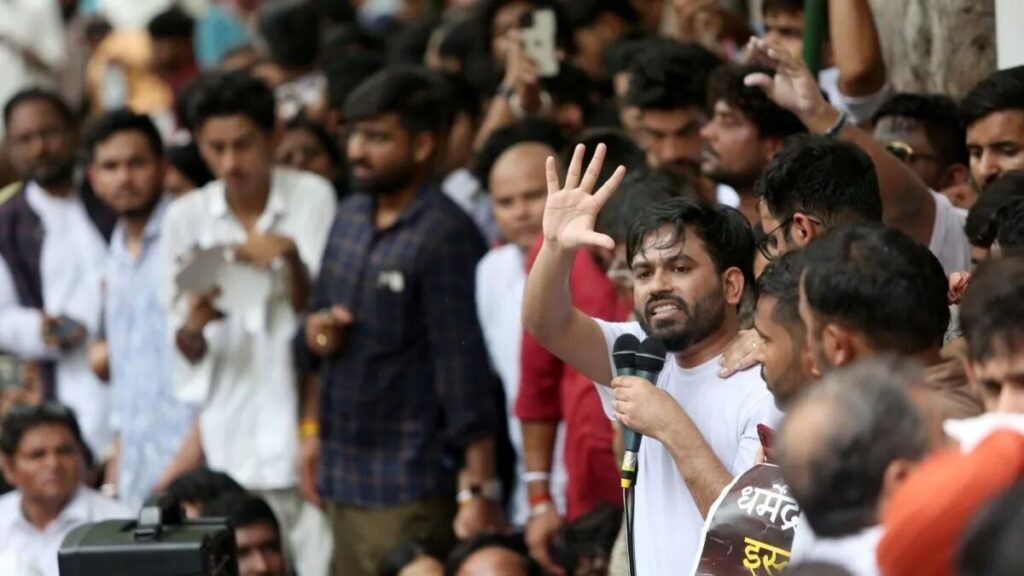
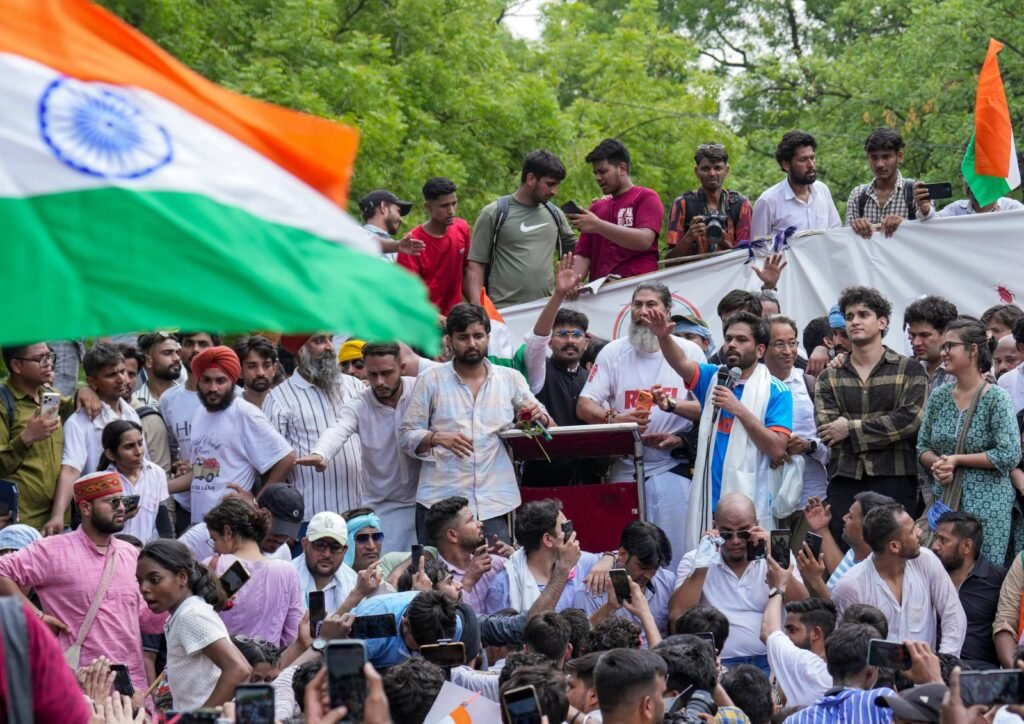
The large-scale demonstration attracted significant public and political attention, with an estimated 15,000 people assembling across key areas including Jantar Mantar, Janpath, Sansad Marg and Mandi House. The heavy turnout led authorities to tighten security across central Delhi, deploying additional police personnel and enforcing movement restrictions around Parliament and other high-security zones.
The CJP protest was organised to press the party’s demands and demonstrate public support. While the gathering initially remained within the designated protest area, tensions escalated after a section of protesters attempted to move beyond the permitted route towards Parliament. Security personnel stopped the march, resulting in a brief confrontation between demonstrators and law enforcement officials.
As the situation became increasingly difficult to manage, police used a lathicharge to push back the crowd and prevent protesters from advancing further. The action dispersed the gathering temporarily before demonstrators regrouped inside the approved protest zone at Jantar Mantar. Authorities later confirmed that the situation had been brought under control without any prolonged disruption.
Table of Contents
Massive Crowd Prompts Tight Security
The scale of the CJP mobilisation made it one of the largest political demonstrations seen in Delhi in recent months. Thousands of supporters travelled from different regions to participate in the protest, creating heavy crowds across several important roads and public spaces in central Delhi.
Because Parliament’s Monsoon Session commenced on the same day, security agencies had already implemented extensive arrangements across the New Delhi district. Barricades were installed at multiple locations, while police, paramilitary personnel and reserve forces remained stationed along roads leading to Parliament House.
Authorities closely monitored crowd movement throughout the day to ensure that demonstrations remained peaceful and confined to designated areas. Senior police officers supervised operations on the ground while additional teams remained on standby to respond quickly to any change in the situation.
Police Appeal for Peace and Cooperation
Delhi Police repeatedly urged protesters to remain inside the authorised protest site and avoid attempting to march towards Parliament without permission.
Deputy Commissioner of Police Sachin Sharma appealed to demonstrators to cooperate with security arrangements and maintain peace. He reminded the public that restrictions under Section 163 of the Bharatiya Nagarik Suraksha Sanhita (BNSS) were in force across sensitive areas and requested everyone to exercise patience while expressing their views peacefully.
Police officials also made it clear that no unauthorised march towards Parliament would be permitted because of heightened security during the parliamentary session. Authorities established a strict security perimeter and stated that protesters would not be allowed to move beyond the Kerala Bhawan area.
Officials explained that such restrictions were necessary to maintain law and order, ensure smooth functioning of Parliament and avoid congestion in one of the country’s most sensitive administrative zones.
Metro Restrictions Affect Commuters
The large CJP gathering also affected public transport services in central Delhi.
To manage crowd movement, exit gates at Patel Chowk Metro Station were temporarily closed, preventing passengers from entering the high-security zone directly. Commuters travelling to the protest area instead used nearby stations such as Central Secretariat and Krishi Bhawan before continuing their journey on foot.
Traffic movement across several important roads experienced temporary disruptions as police diverted vehicles away from the protest site. Barricades, security checks and controlled movement caused delays for commuters during peak hours.
Authorities advised motorists to use alternate routes while maintaining continuous monitoring of traffic conditions throughout the day.
Why Security Was Significantly Increased
Large public demonstrations near Parliament always require extensive planning because the area houses several important government institutions.
With Parliament in session, thousands of lawmakers, government officials and visitors were expected to be present inside the Parliament complex. Security agencies therefore adopted additional precautionary measures to prevent any unauthorised movement toward high-security zones.
The deployment included local police personnel, reserve police forces and surveillance teams positioned across strategic locations. Continuous monitoring helped officials assess crowd movement in real time and respond quickly whenever required.
Security experts often note that crowd management during major political demonstrations requires balancing two equally important responsibilities—protecting citizens’ democratic right to peaceful protest while ensuring public safety and preventing disruption of essential government functions.
CJP Indicates Willingness for Dialogue
Despite the confrontation, CJP leaders maintained that they remained open to discussions with the government.
Chief spokesperson Saurav Das was escorted by Delhi Police personnel to the office of the Deputy Commissioner, where he held a brief meeting with senior officials.
After the interaction, Das stated that CJP was willing to engage in dialogue and suggested that further progress depended on the government’s response.
The statement indicated that while the protest continued, organisers were also prepared to pursue discussions through official channels if meaningful negotiations were initiated.
Political analysts believe communication between protest organisers and authorities often plays a vital role in reducing tensions during large public demonstrations and preventing further escalation.
Political Leaders Extend Support
The CJP protest received support from several political leaders and activists, adding to its visibility.
Senior Aam Aadmi Party leaders, including Manish Sisodia and Atishi, visited Jantar Mantar to express solidarity with the demonstrators. Their presence attracted considerable attention and highlighted the broader political significance of the protest.
Gitanjali J. Angmo, wife of environmental activist Sonam Wangchuk, also attended the gathering. Her participation drew attention because Wangchuk’s recent hunger strike has become one of the central issues linked to the ongoing movement.
Supporters continued raising slogans and demanding that the government address the concerns highlighted during the protest.
Continuous Monitoring Across Central Delhi
Even after the initial clashes ended, Delhi Police maintained heightened security across central Delhi.
Senior officers continued supervising operations while surveillance teams monitored crowd movement at Jantar Mantar, Janpath, Sansad Marg, Mandi House and adjoining areas . CJP Additional security personnel remained deployed at important intersections to prevent any fresh attempt to march towards Parliament.
Officials stated that maintaining peace remained their highest priority while allowing demonstrators to continue their protest within the designated location.
The CJP gathering once again demonstrated the challenges involved in managing large political protests in the national capital, particularly during Parliament sessions when security measures are naturally stricter. While the brief confrontation led to police intervention, CJP the situation was stabilised quickly, allowing the demonstration to continue under close supervision as authorities remained on high alert throughout the day.