India’s presidency of BRICS 2026 comes at a particularly important moment for the grouping and for New Delhi’s foreign-policy strategy. With the bloc now expanded to 11 members, India is seeking to use its chairship to promote practical economic cooperation, strengthen the voice of the Global South and advance reforms in global institutions while maintaining its strategic autonomy.
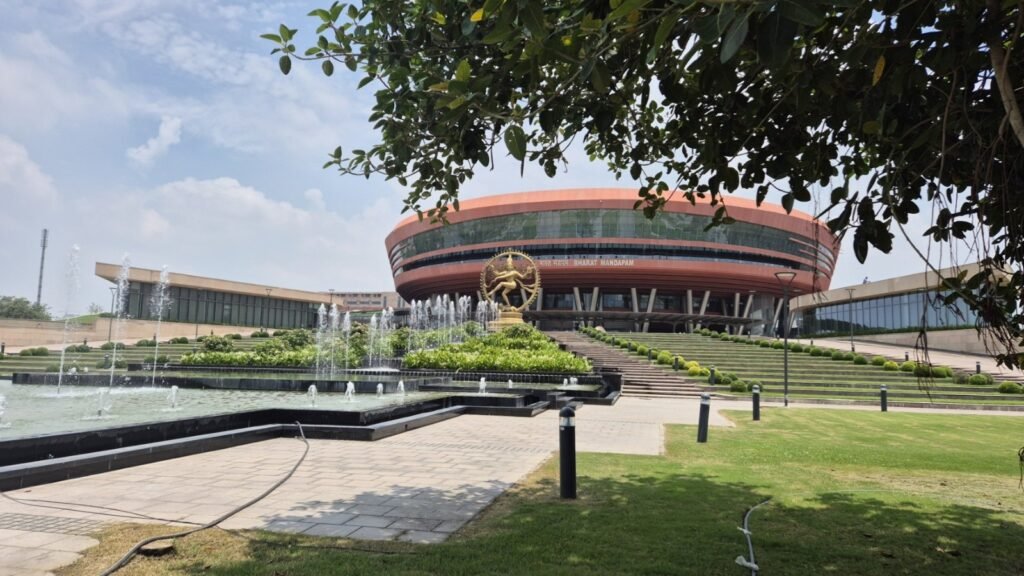
The 18th BRICS Summit is scheduled to take place in New Delhi on September 12-13, bringing together leaders of the expanded grouping at a time of geopolitical uncertainty, trade tensions and shifting global economic relationships. The BRICS 2026 summit is therefore expected to provide India with an important platform to outline its priorities for the enlarged bloc.
For India, BRICS 2026 is not simply about managing relations with China and Russia. It is also an opportunity to shape the priorities of a larger coalition that includes major emerging economies from Asia, Africa, the Middle East and Latin America.
India’s chairship is guided by the theme “Building for Resilience, Innovation, Cooperation and Sustainability.” These four priorities are intended to provide a framework for cooperation across the bloc’s political and security, economic and financial, and cultural and people-to-people pillars.
An Expanded BRICS Changes India’s Diplomatic Task
The significance of BRICS 2026 has grown because of the grouping’s expansion. BRICS now comprises Brazil, China, Egypt, Ethiopia, India, Indonesia, Iran, Russia, Saudi Arabia, South Africa and the United Arab Emirates.
 Together, these countries represent a substantial share of the world’s population and global economic output. The enlarged membership gives the grouping greater economic and geographic weight, but it also makes consensus more complicated.
The members have different political systems, economic structures, strategic priorities and relationships with major powers. For India, that means BRICS 2026 is as much about managing differences as promoting common interests.
New Delhi therefore has an interest in keeping BRICS focused on practical cooperation rather than allowing the grouping to become dominated by geopolitical confrontation.
The challenge for BRICS 2026 will be to demonstrate that expansion can strengthen cooperation rather than make decision-making more difficult.
What India Wants From China
China is likely to be one of the most important relationships India will have to manage during BRICS 2026.
The two countries have substantial economic links, but their relationship has also been shaped by unresolved strategic and security concerns. Recent diplomatic engagement has indicated efforts to stabilise bilateral relations, while economic ties remain significant.
Against this background, India’s approach within BRICS 2026 is expected to favour constructive engagement with China without allowing the grouping to become China-centric.
More Balanced Trade
One major Indian interest is creating more balanced and mutually beneficial trade.
India wants BRICS to expand trade among member states, including trade in services, while strengthening resilient and diversified global value chains. At the BRICS Trade Ministers’ Meeting in Jaipur, members also made progress on the BRICS Economic Partnership 2030 and agreed on principles intended to improve financing access for smaller businesses.
For India, deeper economic engagement with China can offer opportunities in manufacturing, technology and supply chains. At the same time, New Delhi is likely to remain attentive to trade imbalances and excessive dependence on a single source for critical products.
The broader objective of BRICS 2026 is therefore not simply more trade, but more resilient and diversified trade.
Technology and Innovation
Technology is another area where India wants cooperation to deliver practical benefits.
India’s chairship has placed innovation at the centre of its agenda, including cooperation in emerging technologies and support for developing-country priorities. India has proposed initiatives involving startups, small and medium enterprises and innovation networks.
For India, cooperation with China and other BRICS members can potentially expand access to technology, investment and industrial partnerships. However, New Delhi is also likely to emphasise diversification and resilience rather than allowing critical supply chains to become overly concentrated.
This approach is expected to remain an important part of BRICS 2026, particularly as countries seek stronger technological capabilities and more secure supply networks.
What India Wants From Russia
Russia remains another crucial BRICS partner for India, particularly because of energy, trade and long-standing strategic ties.
India’s relationship with Moscow has remained important despite Russia’s continuing war in Ukraine and wider geopolitical tensions surrounding the conflict. Prime Minister Narendra Modi has reiterated India’s position that the war should end and emphasised the importance of peace while also highlighting growing India-Russia economic cooperation.
For BRICS 2026, Russia is particularly significant because energy security is one of the areas where India sees considerable potential for cooperation.
Energy Security
Energy security is one of the clearest areas where India sees value in cooperation with Russia and the wider bloc.
India’s BRICS Energy agenda focuses on energy security, affordability, sustainability, innovation and universal energy access. The government has also emphasised diversifying energy supplies, strengthening grid resilience and increasing clean energy capacity.
Russia’s role as a major energy producer makes it an important partner in discussions about long-term energy security. At the same time, India wants cooperation to move beyond traditional hydrocarbons.
The wider agenda includes renewable energy, technological innovation and sustainable energy transitions. These priorities are expected to feature prominently in discussions surrounding BRICS 2026.
Arctic Cooperation
The Arctic is also emerging as an area of interest in India-Russia discussions. Cooperation involving the region could have implications for energy, scientific research, shipping, connectivity and long-term resource security.
For India, engagement in the Arctic can complement its broader economic and strategic interests. Such cooperation could also create additional opportunities for discussions within the wider BRICS 2026 framework.
India’s Larger Goal: Strengthening the Global South
Beyond China and Russia, India’s presidency is designed to strengthen the voice of developing and emerging economies.
India has repeatedly presented BRICS as a platform through which countries of the Global South can pursue greater representation in international institutions.
For BRICS 2026, this means pushing for reformed multilateralism and changes to global governance structures. New Delhi is seeking reforms in institutions such as the United Nations and international financial institutions rather than rejecting the existing multilateral system altogether.
This distinction is important.
India does not necessarily want BRICS to become an alternative system designed simply to oppose Western institutions. Instead, it wants emerging economies to have a stronger voice within global decision-making.
The Global South agenda is consequently expected to remain one of the defining themes of BRICS 2026.
India’s Approach to the Global Economy
Economic cooperation is likely to remain one of the most practical areas of India’s presidency.
At the Jaipur Trade Ministers’ Meeting, India promoted increased intra-BRICS trade, greater trade in services and more resilient global value chains. Members also worked on the BRICS Economic Partnership 2030.
India is also interested in improving access to finance for small businesses. The Jaipur Consensus and Guiding Principles for MSME credit were agreed upon to help address the trade-finance gap and improve small businesses’ access to international markets.
This reflects India’s effort to make cooperation relevant not only to governments and large corporations but also to smaller enterprises.
These economic priorities are expected to give BRICS 2026 a practical focus, particularly as member states seek stronger trade and investment opportunities.
Digital Payments and Local-Currency Trade
Another important area is financial cooperation.
India has shown interest in expanding mechanisms that can facilitate cross-border transactions and reduce friction in trade between BRICS economies. Local-currency settlement and digital financial infrastructure could become important components of this discussion.
India’s digital public infrastructure, including systems associated with digital payments, provides New Delhi with an opportunity to showcase its technological capabilities.
However, India is also likely to approach proposals for financial integration cautiously. Its objective is to improve trade efficiency and financial resilience rather than automatically commit to a single alternative monetary system.
This balanced financial approach could become another important feature of BRICS 2026.
 India Is Unlikely to Turn BRICS Into an Anti-Western Bloc
One of the most important aspects of India’s strategy is what it does not want the grouping to become.
India has maintained relationships with the United States, Europe, Russia, China and other major powers simultaneously. Its foreign policy emphasises strategic autonomy and issue-based cooperation rather than permanent alignment with one geopolitical camp.
New Delhi’s approach is therefore more likely to favour a non-Western rather than anti-Western grouping.
That distinction could become increasingly important as tensions between major powers intensify. India wants BRICS to provide greater strategic space for emerging economies, but it also has significant economic, technological and security interests involving Western countries.
Consequently, New Delhi is likely to resist attempts to transform the grouping into a formal geopolitical alliance.
This strategic balancing will be closely watched throughout BRICS 2026, particularly as India seeks to maintain relationships across competing geopolitical blocs.
Climate and Sustainability on India’s Agenda
Sustainability is another central pillar of India’s presidency.
The country has placed climate resilience, energy transition and sustainable development within its wider BRICS agenda. India has also argued for greater attention to the needs of developing economies during the transition toward cleaner energy.
For many member states, the challenge is balancing climate commitments with economic development and growing energy demand.
India therefore wants cooperation that recognises the different circumstances of developing countries, including their need for affordable energy and development finance.
Climate and sustainability are consequently expected to form an important part of the discussions at BRICS 2026.
Building More Resilient Supply Chains
The disruption of global supply chains in recent years has increased attention on economic resilience.
India’s agenda places resilience at the centre of cooperation in areas including agriculture, health, disaster-risk reduction, energy and supply chains.
This is particularly relevant to India’s relationship with China. Rather than simply reducing economic dependence, India is seeking diversified and reliable supply networks.
BRICS could provide a platform for cooperation among producers, manufacturers, logistics providers and emerging markets.
Transport cooperation is another part of this effort. Stronger BRICS transport cooperation could improve trade, connectivity and logistics efficiency while helping build more resilient global supply chains.
Supply-chain resilience will therefore remain a major economic priority during BRICS 2026.
The Challenge of Holding the Expanded Bloc Together
The biggest test for India’s presidency may ultimately be internal.
The expanded bloc contains countries with different priorities and, in some cases, competing geopolitical interests. India, China and Russia may share an interest in a stronger role for emerging economies, but their individual foreign-policy objectives are not identical.
Other members have their own priorities involving energy, trade, regional security, investment and development.
The larger the grouping becomes, the harder it can be to achieve consensus on sensitive political issues. For BRICS 2026, India will need to demonstrate that the enlarged membership can function effectively without allowing disagreements to overwhelm practical cooperation.
That is why India’s emphasis on economic development, energy, transport, health, technology, climate and digital cooperation may prove significant.
China and Russia Support India’s Presidency
Beijing and Moscow have publicly backed India’s leadership of the grouping.
Chinese Ambassador to India Xu Feihong and Russian Charge d’Affaires Roman Babushkin have reaffirmed support for India’s BRICS presidency and described the organisation as an important platform for cooperation and advancing the interests of the Global South.
That support gives India political space to pursue its agenda, but it does not eliminate the differences that exist among members.
For New Delhi, the objective during BRICS 2026 will be to turn broad political support into concrete outcomes.
What to Watch at the BRICS 2026 Summit
As leaders gather in New Delhi, several issues are likely to receive particular attention.
First will be the future direction of the expanded BRICS grouping. India will need to demonstrate that enlargement can produce meaningful cooperation rather than simply create a larger forum.
Second will be India’s engagement with China. Economic cooperation could deepen, but New Delhi is expected to remain focused on balanced trade, resilient supply chains and strategic autonomy.
Third will be energy cooperation with Russia and other major producers. Energy security and the transition toward cleaner sources are likely to remain important.
Fourth will be financial and digital cooperation, including efforts to make cross-border trade easier and more resilient.
Finally, the summit will test whether the bloc can strengthen the Global South’s influence without becoming an explicitly anti-Western political grouping.
 A Delicate Balancing Act for India
India’s presidency comes with both an opportunity and a difficult diplomatic responsibility.
New Delhi wants China for economic cooperation, Russia for energy and strategic partnerships, and the wider expanded bloc for stronger Global South cooperation and global institutional reform. At the same time, it wants to preserve its freedom to work with the United States, Europe and other partners.
The challenge is to pursue all three objectives without allowing one relationship to undermine another.
India’s four-part agenda of resilience, innovation, cooperation and sustainability provides a framework for that balancing act. Recent ministerial meetings have already produced initiatives covering trade, MSMEs, startups, logistics, energy and industrial cooperation.
The September summit will show whether those initiatives can be converted into broader political commitments and measurable outcomes for member states.
For India, the ultimate measure of success may not be whether BRICS takes a confrontational position against another major power. Instead, it could be whether the expanded grouping can deliver practical economic opportunities, strengthen the voice of developing countries and give India greater room to pursue an independent foreign policy.
With the grouping now representing a substantially larger share of the global economy and population, BRICS 2026 offers New Delhi a significant opportunity to shape how the bloc evolves.
The task will be to manage internal differences, deepen practical cooperation and ensure that expansion translates into influence rather than fragmentation. If India can maintain that balance, BRICS 2026 could become an important milestone in the evolution of the expanded grouping and in New Delhi’s broader effort to strengthen the role of the Global South in global affairs.