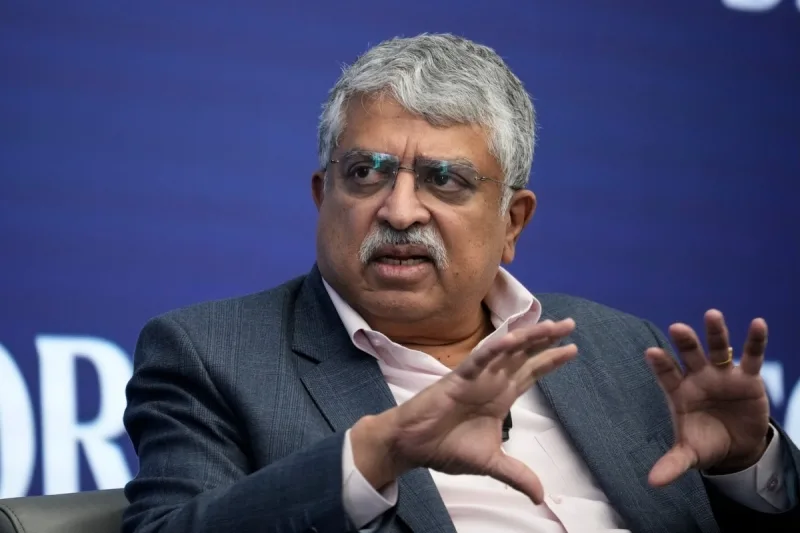
Nandan Nilekani one of the most significant education policy announcements of recent years, Prime Minister Narendra Modi has constituted a high-powered Examination Reform Task Force under the leadership of Infosys co-founder Nandan Nilekani. The move comes amid growing public concern over question paper leaks, examination irregularities and the need to restore trust in India’s competitive examination system. The Prime Minister said the objective is to make examinations more reliable, transparent and technology-driven, while ensuring that students’ futures are protected through systemic reforms.
The announcement follows weeks of nationwide debate over the integrity of public examinations and signals a shift from short-term corrective measures to long-term structural reform. Besides announcing tougher legislation against paper leaks, the government has entrusted one of India’s most respected technology leaders with preparing a roadmap for transforming the country’s examination ecosystem.
Table of Contents
Why Nandan Nilekani?
The decision to appoint Nandan Nilekani has drawn widespread attention because of his unparalleled experience in building large-scale digital infrastructure.
Born in Bengaluru, Nandan Nilekani graduated from IIT Bombay before co-founding Infosys in 1981 with Narayana Murthy and six other entrepreneurs. Over the next three decades, Infosys emerged as one of India’s most influential IT companies, helping establish the country’s reputation as a global technology hub.
However, Nandan Nilekani biggest contribution came outside the private sector.
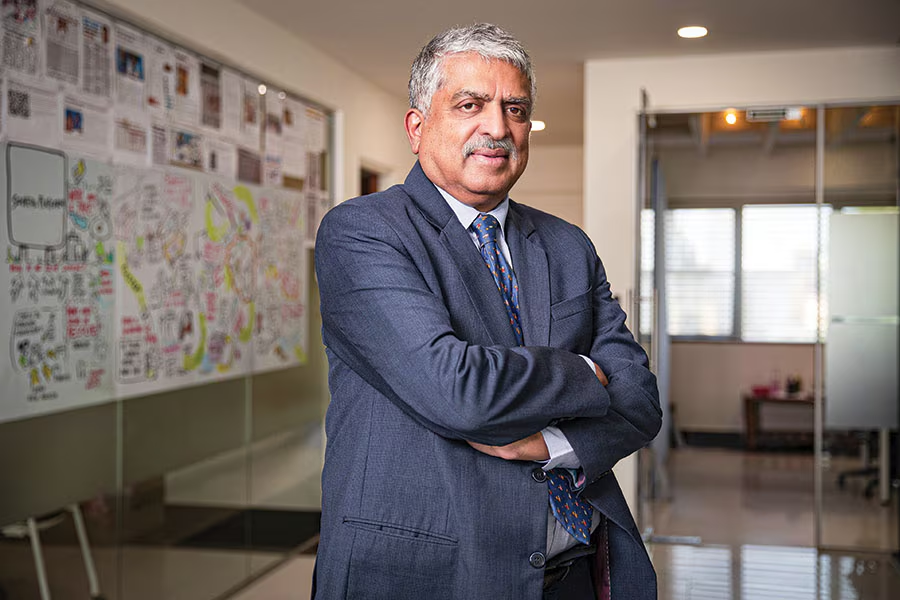
In 2009, he was appointed the founding Chairman of the Unique Identification Authority of India (UIDAI) and led the creation of Aadhaar, the world’s largest biometric digital identity programme. Today, Aadhaar serves more than 1.4 billion residents and has become the backbone of numerous digital government services. His leadership in developing secure identity verification, digital authentication and public digital infrastructure is widely regarded as one of the reasons he was selected to lead the examination reforms panel.
PM Modi’s Vision for Examination Reforms
While announcing the task force, Prime Minister Narendra Modi emphasised that India’s examination system must inspire confidence among students and parents.
According to the Prime Minister, future reforms will focus on three key principles:
- Trustworthiness
- Transparency
- Maximum use of technology
He also announced that Parliament would consider stronger legal provisions to tackle examination paper leaks, including tougher penalties for offenders. The government believes that combining stricter laws with technology-driven reforms will significantly reduce examination fraud in the coming years.
Why Examination Reform Has Become a National Priority
India conducts some of the largest public examinations in the world.
Every year, millions of candidates appear for examinations conducted by agencies such as:
- National Testing Agency (NTA)
- UPSC
- SSC
- Railway Recruitment Boards
- Banking Recruitment Agencies
- State Public Service Commissions
- Universities and professional institutions
These examinations determine admissions, scholarships, recruitment and career opportunities for millions of students.
In recent years, repeated allegations of question paper leaks and organised cheating have sparked widespread protests and demands for comprehensive reform. The latest announcement comes after public concern intensified over examination security and fairness, prompting the government to adopt a broader strategy focused on systemic improvements.
A High-Powered Task Force with Diverse Expertise
Unlike traditional committees that consist primarily of bureaucrats or education officials, this task force brings together experts from multiple disciplines.
The committee includes leaders with backgrounds in:
- Technology
- Artificial Intelligence
- Digital Governance
- Space Science
- National Security
- Higher Education
- Public Administration
The government’s approach reflects the belief that examination reforms are no longer purely educational issues but also involve cybersecurity, logistics, digital infrastructure and governance.
Technology Will Drive the Next Generation of Examinations
Nandan Nilekani appointment strongly indicates that technology will play a central role in future reforms.
Experts expect the committee to evaluate several advanced technologies, including:
Artificial Intelligence
AI can identify suspicious examination patterns, monitor examination centres and assist in detecting malpractice.
Biometric Authentication
Digital identity verification could eliminate impersonation by linking candidates securely to their examination records.
Blockchain Technology
Blockchain-based record management could create tamper-proof examination data and secure digital certificates.
Encrypted Digital Question Papers
Advanced encryption may prevent question papers from being leaked before examinations begin.
Real-Time Monitoring Systems
Integrated surveillance systems could allow authorities to detect irregularities during examinations rather than after they occur.
Given Nandan Nilekani extensive experience in building India’s digital public infrastructure, many observers expect technology recommendations to form the backbone of the final report.
Lessons from Aadhaar
Many analysts believe the government hopes to replicate the success of Aadhaar in the education sector.
The Aadhaar project demonstrated that technology can securely manage identity verification for over a billion people while maintaining high levels of efficiency.
Similar principles could be applied to:
- Candidate registration
- Digital verification
- Examination attendance
- Secure evaluation
- Certificate authentication
If implemented effectively, these measures could significantly improve examination integrity while reducing administrative delays.
Beyond Technology: Governance and Accountability
Although digital systems are expected to play a major role, technology alone cannot solve every challenge.
The task force is also expected to recommend improvements in:
- Institutional accountability
- Examination logistics
- Question paper handling
- Risk management
- Data governance
- Staff training
- Audit mechanisms
- Standard operating procedures
Experts believe combining administrative reforms with technological safeguards will create a more resilient examination system.
Impact on Students
Perhaps the biggest beneficiaries of the proposed reforms will be students.
Every examination controversy creates uncertainty for candidates who spend years preparing for highly competitive entrance tests.
Improved examination systems could provide:
- Greater transparency
- Faster grievance redressal
- Stronger candidate verification
- Fairer evaluation
- Reduced opportunities for malpractice
- Higher public confidence
For millions of aspirants preparing for national-level examinations, these reforms could help ensure that success depends solely on merit.

Challenges Ahead
Despite the Nandan Nilekani optimism surrounding the announcement, implementing nationwide reforms will not be easy.
India conducts thousands of examinations annually through numerous agencies operating under different administrative structures.
Key challenges include:
- Standardising examination protocols
- Integrating digital infrastructure across states
- Protecting sensitive examination data
- Ensuring cybersecurity
- Training officials
- Balancing technology with accessibility
Experts caution that meaningful reform will require close coordination between central ministries, state governments, educational institutions and examination bodies.
A Turning Point for India’s Examination System
The formation of the task force represents one of the most ambitious attempts to modernise India’s examination framework.
Rather than focusing only on preventing paper leaks, the government appears to be pursuing broader reforms that address governance, digital transformation, institutional capacity and long-term resilience.
Education policy experts note that India’s examination system is among the largest in the world, making successful reforms potentially significant not only for students but also for the country’s economic and educational future.
What Happens Next?
The task force is expected to consult stakeholders from government agencies, educational institutions, technology organisations and examination authorities before submitting its recommendations.
Once the report is finalised, the government is expected to begin implementing reforms in phases, alongside new legislation designed to strengthen penalties for examination-related offences.
While no official timeline has been announced for the report, the government’s messaging suggests that Nandan Nilekani implementation will be prioritised given the urgency of restoring confidence in public examinations.
The appointment of Nandan Nilekani to head Prime Minister Narendra Modi’s Examination Reform Task Force marks a pivotal moment in India’s efforts to modernise its examination system. By selecting the architect of Aadhaar to lead the initiative, the government has signalled that technology, transparency and institutional accountability will form the foundation of future reforms.
As India seeks to eliminate paper leaks, strengthen examination security and rebuild public trust, the task force has the opportunity to reshape one of the country’s most critical public systems. Nandan Nilekani recommendations are implemented effectively, the initiative could usher in a new era of secure, transparent and technology-enabled examinations, ensuring that millions of students compete on a fair and trustworthy platform while reinforcing confidence in India’s education ecosystem.