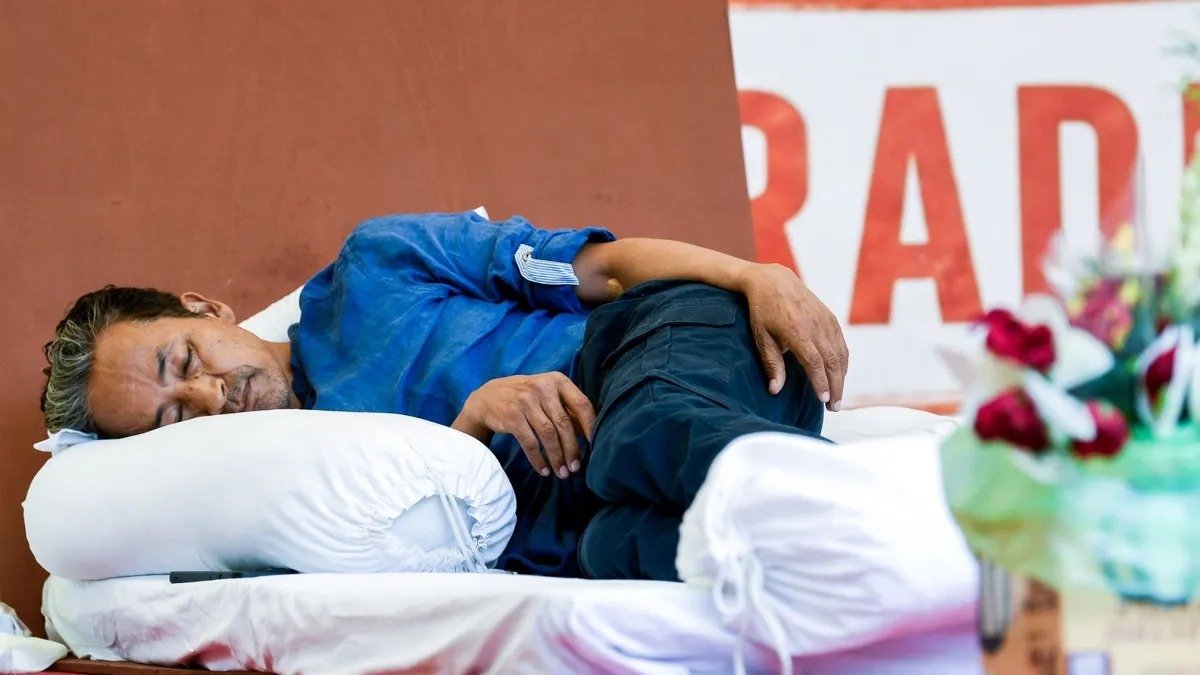
Sonam Wangchuk was shifted to Delhi’s Safdarjung Hospital early Saturday after completing 21 days of an indefinite hunger strike at Jantar Mantar. The move came as his health reportedly deteriorated, prompting Delhi Police to intervene following directions from the Delhi High Court and medical experts. The activist had been fasting while demanding the resignation of Union Education Minister Dharmendra Pradhan over the alleged NEET paper leak and calling for greater accountability in India’s examination system.
The development marks a significant moment in the ongoing protest, which has drawn national attention over the past three weeks. While supporters view the hunger strike as a peaceful democratic protest seeking reforms in education, authorities have maintained that immediate medical care became necessary to protect the activist’s life.
Table of Contents
Police Shift Sonam Wangchuk to Hospital
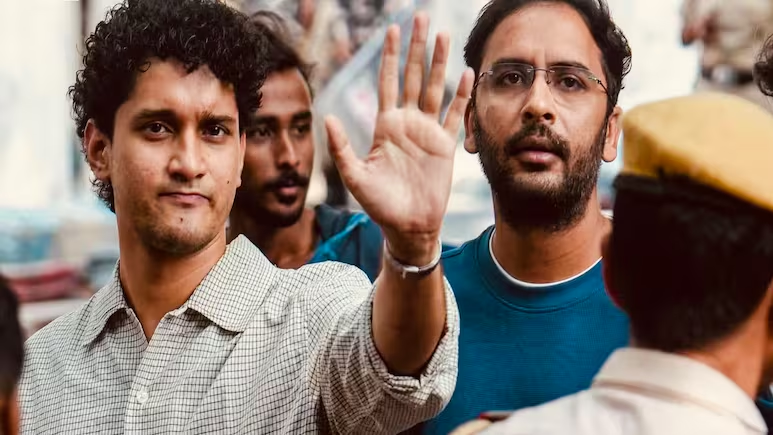
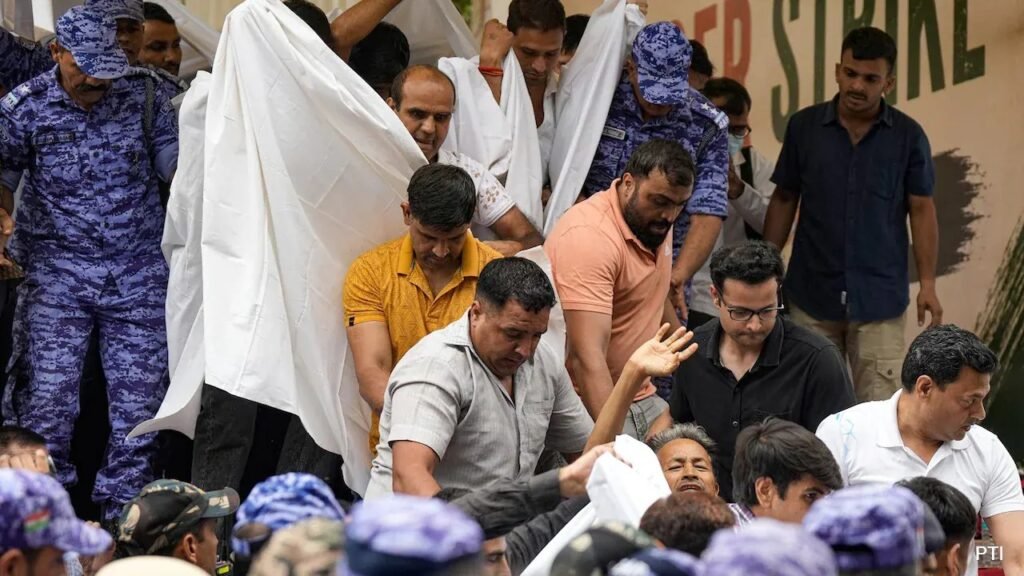
In the early hours of Saturday, Delhi Police reached the protest site at Jantar Mantar and moved Sonam Wangchuk to Safdarjung Hospital. Officials stated that the decision was taken after consulting medical experts and in compliance with the Delhi High Court’s directions regarding his deteriorating health.
According to the police, the activist’s condition had worsened after remaining on an indefinite fast for over 20 days. Authorities said that protecting his life was the primary objective and that he required immediate medical attention.
Police also stated that the shifting process was carried out with restraint despite some resistance from protesters present at the site. Officials appealed to demonstrators to vacate Jantar Mantar peacefully following the operation.
Health Condition Raised Serious Concerns
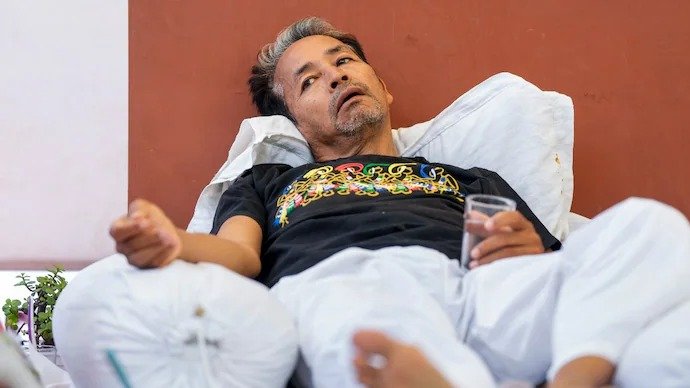
Medical bulletins released over the past several days had consistently indicated that Sonam Wangchuk’s health was declining. Doctors monitoring his condition reported substantial weight loss, increasing weakness, and signs of medical complications associated with prolonged fasting.
Reports suggested that the 59-year-old activist had lost more than eight kilograms during the hunger strike. Medical experts also warned that continued fasting without intervention could lead to severe organ damage, making the situation a medical emergency.
Following his admission to Safdarjung Hospital, initial reports indicated that Sonam Wangchuk remained conscious and his vital signs were stable. However, doctors continued close monitoring due to the prolonged duration of the fast and the associated health risks.
Delhi High Court’s Intervention
The Delhi High Court played an important role in the developments leading up to the hospitalisation. During earlier hearings, the court observed that every citizen’s life is precious and directed authorities to conduct daily medical examinations of Sonam Wangchuk.
The court instructed the Centre and concerned authorities to ensure that all necessary medical measures were taken to safeguard his health. It emphasized that preserving life should remain the highest priority regardless of the ongoing protest.
These judicial directions became one of the key reasons cited by Delhi Police while explaining the decision to shift Sonam Wangchuk from the protest site to the hospital.
Why Sonam Wangchuk Started the Hunger Strike
The indefinite hunger strike was launched over demands linked to the alleged NEET paper leak controversy. Sonam Wangchuk joined the movement calling for accountability within India’s examination system and demanded the resignation of Education Minister Dharmendra Pradhan.
The protest argued that repeated allegations of examination irregularities have affected the confidence of students and parents across the country. Protesters claimed that stronger reforms are necessary to improve transparency, strengthen security during examinations, and restore trust in national competitive tests.
The demonstration at Jantar Mantar was organised by the Cockroach Janta Party (CJP), an online satirical movement led by founder Abhijeet Dipke. The organisation’s central demand has remained the resignation of the Education Minister over the alleged examination controversy.
Growing Political Attention
As Sonam Wangchuk’s health continued to decline, several leaders from opposition political parties visited him at the protest site to express solidarity and concern.
Among those who met the activist were Congress leader Pawan Khera, Samajwadi Party MP Dimple Yadav, and Aam Aadmi Party chief Arvind Kejriwal. While extending support for his concerns regarding educational reforms, they also appealed to Sonam Wangchuk to end his fast considering the serious deterioration in his health.
The growing political attention transformed the protest from a limited demonstration into a nationally discussed issue, bringing broader public focus to concerns surrounding examination reforms and student welfare.
Police Statement on the Operation
Delhi Police issued an official statement explaining that the action was carried out strictly in accordance with legal directions and medical advice.
Officials stated that while implementing the High Court’s orders, some protesters attempted to obstruct the operation, leading to minor commotion. However, police maintained that maximum restraint was exercised throughout the process and no excessive force was used.
Authorities reiterated that Sonam Wangchuk was shifted solely for essential medical treatment and appealed to remaining protesters to cooperate peacefully with law enforcement agencies.
Planned March to Parliament
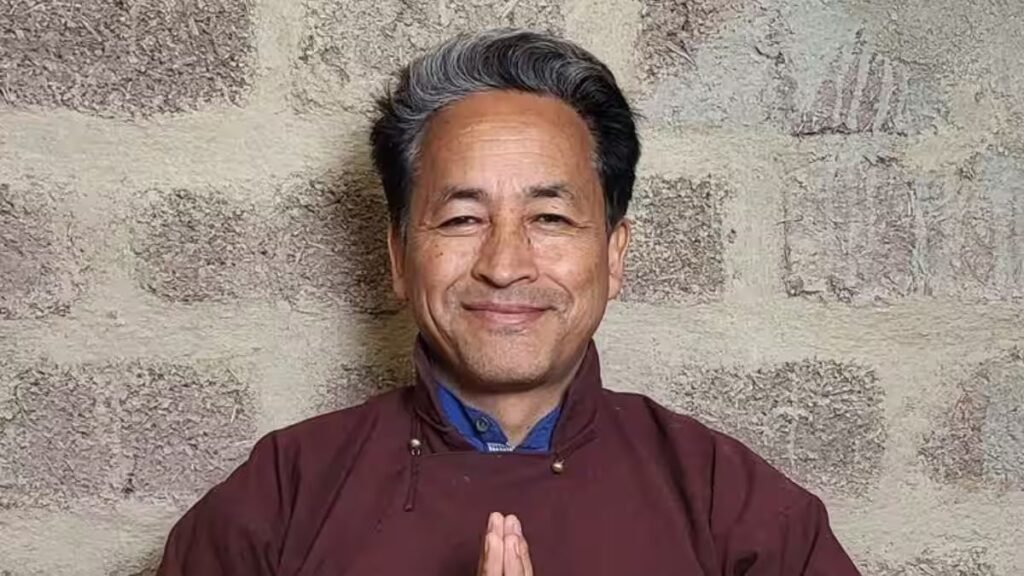
Despite Sonam Wangchuk being admitted to hospital, organisers have announced that the movement will continue.
The protesters have called for a march towards Parliament on July 20, coinciding with the opening day of the Monsoon Session. Organisers have appealed to political parties and civil society groups to participate in the demonstration and support demands for educational reforms.
The planned march is expected to keep the issue in the national spotlight, particularly as Parliament begins discussions on key national matters.
Broader Debate Over Education Reforms
The developments surrounding Sonam Wangchuk have once again highlighted the larger debate over India’s competitive examination system. Over the past few years, concerns regarding alleged paper leaks, examination security, transparency, and accountability have repeatedly surfaced in public discussions.
Education experts have consistently argued that restoring public confidence requires stronger digital security, improved monitoring mechanisms, quicker investigations into alleged irregularities, and greater transparency throughout the examination process.
The controversy has also intensified conversations about protecting the interests of millions of students who prepare for highly competitive national examinations every year. Public trust in examination authorities remains a crucial factor in maintaining the credibility of India’s education system.
Current Situation
As of Saturday, Sonam Wangchuk remains under medical supervision at Safdarjung Hospital, where doctors continue to monitor his condition closely following his prolonged hunger strike.
Delhi Police have maintained that the decision to shift him was based entirely on medical necessity and court directions. Meanwhile, supporters of Sonam Wangchuk have reiterated that their campaign for educational reforms will continue through peaceful democratic means, with the proposed Parliament march remaining part of their ongoing movement.
The incident has brought renewed national attention to the balance between the right to peaceful protest, judicial intervention for protecting life, and the continuing public demand for transparency and accountability in India’s education system.