Sonam Wangchuk Ends Hunger Strike Following Government Assurance
Education reform activist Sonam Wangchuk on Friday brought his 26-day hunger strike to an end after receiving written assurances from the Central Government regarding key demands linked to examination reforms, accountability in the education system, and the alleged NEET paper leak controversy.
The announcement marked a significant development in the nationwide debate over examination transparency, student welfare, and accountability. Wangchuk’s protest had drawn widespread attention from students, education activists, civil society organisations, and political leaders across party lines, transforming the issue into one of the country’s most prominent education-related movements.
The decision to end the fast came after meetings with senior Union Ministers and support from Members of Parliament representing multiple political parties, who assured Wangchuk that the issues raised during the protest would be taken up for discussion in Parliament.
Table of Contents
“End of Hunger, Beginning of Accountability”
The announcement was made through a social media post by Wangchuk’s team carrying the message:
“END OF HUNGER… BEGINNING OF ACCOUNTABILITY…!”
The statement said that Wangchuk had decided to conclude his fast after receiving assurances from both the Central Government and Members of Parliament that the issue of accountability in India’s examination system would be discussed on the floor of Parliament.
According to the statement, the government also assured that:
- Examination reforms would be discussed in Parliament.
- The issue of paper leaks would receive detailed attention.
- Families of students who allegedly lost their lives following the recent NEET paper leak controversy would be considered for suitable compensation.
- Peacefully protesting students and youth would not face criminal cases.
The announcement was welcomed by many supporters who had been following Wangchuk’s protest for nearly four weeks.
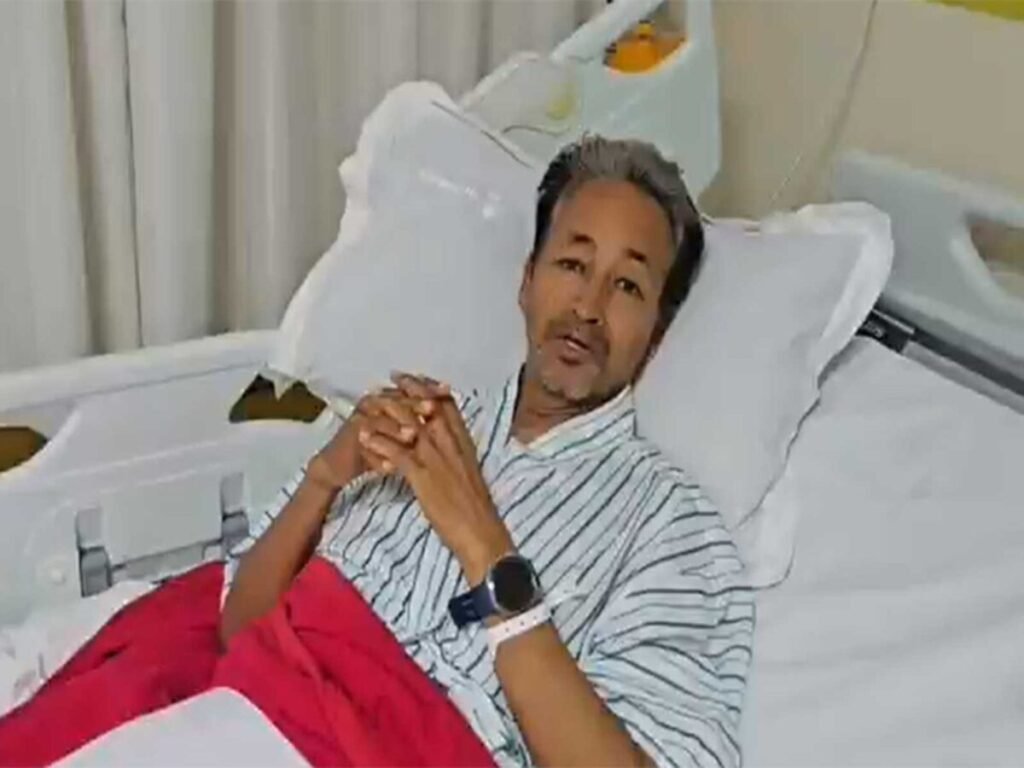
26-Day Hunger Strike Focused on Examination Reforms
Sonam Wangchuk began his indefinite hunger strike to demand greater accountability within India’s examination system following growing concerns over alleged paper leaks and examination irregularities.
Throughout the protest, Wangchuk repeatedly argued that competitive examinations represent the dreams and future of millions of students and therefore require complete transparency, fairness, and institutional accountability.
His demands centred around:
- Stronger safeguards against examination paper leaks.
- Transparent investigation into alleged irregularities.
- Parliamentary discussion on examination reforms.
- Protection of students’ interests.
- Greater accountability within educational institutions.
Over the course of 26 days, the protest gained national attention as students and education activists extended their support through both physical demonstrations and social media campaigns.
Meeting With Union Ministers Leads to Breakthrough
In a video message released after ending his fast, Wangchuk revealed that the decision followed a meeting with senior Union Ministers J.P. Nadda and Jitendra Singh.
According to Wangchuk, the ministers reiterated the government’s commitment to addressing concerns regarding examination reforms.
He explained that the government had taken time to provide a written commitment, but after receiving the formal assurance, he considered it appropriate to conclude his fast.
Wangchuk also noted that leaders of the Ladakh Apex Body were present during the discussions.
The meeting represented an important step toward dialogue between the protesters and the Central Government after weeks of demonstrations.
Support From MPs Across Political Parties
Before the government meeting, approximately 65 Members of Parliament from different political parties reportedly met Wangchuk during his hunger strike.
According to Wangchuk, the MPs expressed support for his demands and appealed to him to end the fast.
They assured him that issues relating to paper leaks and examination reforms would receive attention in Parliament.
The cross-party support highlighted that concerns regarding examination transparency extend beyond political differences and have emerged as a national issue affecting students across the country.
The backing of MPs also added momentum to calls for institutional reforms aimed at strengthening public confidence in competitive examinations.
Government Gives Written Assurance
One of Sonam Wangchuk’s key conditions before ending his fast was obtaining a written assurance rather than verbal commitments alone.
According to Sonam Wangchuk, that written commitment has now been received.
The government’s written response reportedly includes assurances regarding:
- Parliamentary discussion on paper leaks.
- Examination reforms.
- Accountability within the education system.
- Positive consideration of compensation for affected families.
- Protection of peaceful protesters.
The written assurance ultimately paved the way for Wangchuk to conclude his protest.
Centre Responds to Sonam Wangchuk’s Key Demands
According to an official government statement, the Centre has responded positively to several demands raised during the protest.
The statement indicated that the government is:
- Positive about not registering cases against students and youth who participated peacefully in demonstrations at Jantar Mantar and during the Parliament march.
- Committed to allowing a comprehensive parliamentary discussion on paper leaks and educational reforms.
- Positively considering suitable compensation for families of victims linked to the recent NEET paper leak controversy.
While the statement does not constitute immediate policy implementation, it reflects the government’s willingness to engage with the concerns raised by protesters.
Sonam Wangchuk’s Focus on Examination Accountability
One of the central themes of Wangchuk’s protest was accountability.
He argued that examination-related controversies should not be treated merely as isolated criminal cases but as systemic failures requiring institutional reform.
According to education experts, examination integrity depends upon:
- Secure paper handling.
- Transparent evaluation systems.
- Independent investigations.
- Strict punishment for those involved in leaks.
- Improved technological safeguards.
Wangchuk maintained that restoring public confidence requires long-term structural reforms rather than temporary administrative measures.

NEET Paper Leak Issue Sparks National Debate
The alleged NEET paper leak has become one of India’s most widely discussed education-related controversies.
The issue has led to:
- Student protests across multiple states.
- Political debates in Parliament.
- Demands for ministerial accountability.
- Calls for stronger examination security.
Students have argued that paper leaks undermine years of preparation and reduce trust in competitive examinations.
Several opposition parties have also demanded detailed discussions regarding examination reforms and accountability.
The government has maintained that those responsible will face action while simultaneously expressing readiness for parliamentary debate.
Students and Civil Society Extend Support to Sonam Wangchuk
Throughout the 26-day hunger strike, Wangchuk received support from:
- Students
- Education reform advocates
- Teachers
- Civil society organisations
- Public intellectuals
- Members of Parliament
Supporters argued that the movement represents broader concerns regarding fairness within India’s examination system.
Many students stated that competitive examinations determine educational and professional opportunities for millions of young people and therefore require the highest standards of transparency.
The widespread backing helped transform Wangchuk’s protest into a larger national conversation on educational governance.
Sonam Wangchuk’s Demands Reach Parliament
One of the major outcomes of the protest is the government’s assurance that examination reforms will be discussed in Parliament.
Parliamentary discussions allow:
- Government explanations.
- Opposition scrutiny.
- Public accountability.
- Policy recommendations.
- Official parliamentary records.
Education experts believe such discussions can contribute to stronger legislative and administrative reforms if followed by concrete action.
Many observers now expect the forthcoming debate to address both immediate concerns and long-term improvements in examination systems.

Need for Long-Term Examination Reforms
The controversy has once again highlighted the need for comprehensive reforms in India’s competitive examination framework.
Experts have suggested several measures, including:
- Enhanced cybersecurity for question papers.
- Digital monitoring of paper transportation.
- Independent oversight mechanisms.
- Faster investigation of examination fraud.
- Stronger legal penalties.
- Improved coordination among examination agencies.
Many education specialists argue that protecting students’ confidence in competitive examinations requires continuous institutional improvements.
Sonam Wangchuk’s decision to end his 26-day hunger strike marks an important moment in the ongoing national debate over examination reforms and accountability.
Following written assurances from the Central Government and support from Members of Parliament across political parties, Sonam Wangchuk concluded his fast with the message, “End of Hunger, Beginning of Accountability.”
The government’s commitment to discuss examination reforms in Parliament, positively consider compensation for affected families, and avoid legal action against peaceful protesters has been welcomed by many supporters as a constructive step toward dialogue.
As Parliament prepares to deliberate on issues relating to examination security and accountability, attention will now shift from protest to policy. Students, educators, and citizens across the country will closely watch whether these assurances translate into meaningful reforms capable of strengthening transparency, restoring public trust, and safeguarding the future of millions of young aspirants who rely on fair and credible competitive examinations.