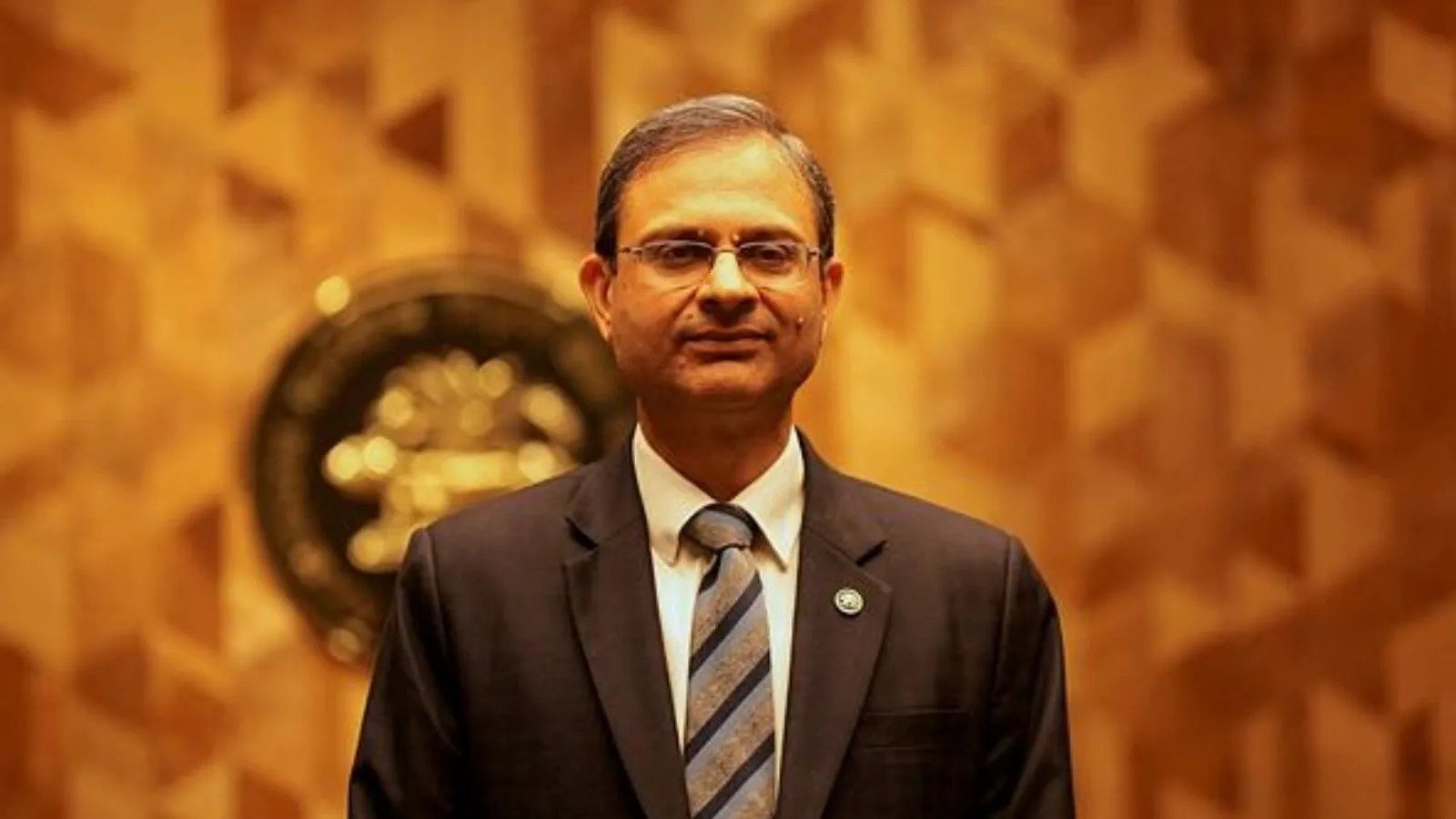
RBI Governor Sanjay Malhotra has called for stronger cooperation among central banks as BRICS countries work to build a more resilient, efficient and inclusive global financial system. Speaking at the BRICS Finance Ministers and Central Bank Governors meeting held in Jaipur on August 12-13, the RBI Governor underlined the critical role played by monetary authorities in maintaining price stability and safeguarding financial stability amid an increasingly uncertain global economic environment.
The meeting was co-chaired by Union Finance Minister Nirmala Sitharaman and RBI Governor Sanjay Malhotra and brought together finance ministers and central bank governors from BRICS member countries. Discussions focused on strengthening financial cooperation, improving cross-border financial infrastructure and advancing initiatives designed to support economic resilience.
According to the Reserve Bank of India, RBI Governor Malhotra emphasised that closer cooperation between central banks can help BRICS economies respond more effectively to emerging financial challenges while supporting the development of a financial system that is both efficient and inclusive.
The RBI Governor also acknowledged the work being undertaken through various central bank workstreams covering areas such as information security, fintech, cross-border payments, sustainable finance, capacity building and the Contingent Reserve Arrangement.
Table of Contents
RBI Governor Emphasises Price and Financial Stability
Price and financial stability remain fundamental responsibilities of central banks. Inflation can affect household purchasing power, business decisions and investment, while financial instability can disrupt credit markets and weaken economic activity.
Against this backdrop, the RBI Governor stressed the importance of central banks working together to strengthen the resilience of financial systems.
The global economy has become increasingly interconnected, meaning developments in one major economy can have consequences across borders. Changes in interest rates, capital flows, exchange rates and financial market conditions can quickly influence emerging markets and developing economies.
Greater communication and cooperation among central banks can therefore contribute to better preparedness and coordinated responses to financial risks.
For BRICS economies, which represent a significant share of the global population and economy, stronger institutional cooperation could also support efforts to create more diversified and resilient financial systems.

BRICS Central Bank Workstreams Gain Importance
RBI Governor Malhotra acknowledged the work carried out through central bank workstreams in several strategically important areas.
One of these areas is information security, which has become increasingly important as financial institutions accelerate their adoption of digital technologies. Banks and central banks process vast amounts of sensitive financial information, making cybersecurity and secure information-sharing mechanisms essential to financial stability.
Another key area is fintech. Financial technology has transformed the way individuals and businesses access financial services, make payments and manage money. BRICS cooperation in fintech can facilitate knowledge sharing and help member economies understand emerging technological developments while addressing associated regulatory challenges.
The central bank workstreams also cover cross-border payments, an area that has gained importance as countries seek faster, more efficient and potentially more accessible international payment systems.
Cross-border transactions can involve multiple intermediaries, currencies and regulatory frameworks. Improving such systems could reduce friction in international trade and investment and potentially support greater economic integration among BRICS members.
Focus on Cross-Border Payments and Financial Integration
The development of efficient cross-border payment mechanisms is increasingly becoming a priority for central banks around the world.
Traditional international payment systems can sometimes involve high costs, multiple intermediaries and longer settlement times. Greater cooperation among central banks can help explore ways to make international transactions faster, safer and more efficient.
For emerging economies, improved cross-border payment infrastructure can have implications for trade, remittances, investment and financial inclusion.
The BRICS discussions therefore provide an important platform for member countries to exchange experiences and explore potential solutions to common financial challenges.
The RBI Governor’s emphasis on cooperation reflects the broader recognition that technological advances and changes in global finance require coordinated approaches rather than isolated policy responses.

Sustainable Finance Also on the Agenda
Sustainable finance was another area highlighted by RBI Governor Malhotra in connection with the central bank workstreams.
The transition towards more sustainable economic activity requires significant investment and financial-sector participation. Central banks and financial regulators have increasingly examined how climate-related and environmental risks can affect financial stability.
Cooperation in sustainable finance can allow countries to exchange information, regulatory experiences and approaches to managing emerging financial risks.
For developing economies, the challenge is particularly significant because sustainable development must be balanced with the need for continued economic growth, infrastructure development and access to affordable finance.
BRICS cooperation can provide a platform for member countries to share experiences while taking into account the different economic structures and development priorities of individual nations.
Capacity Building Remains a Key Priority
The RBI Governor also recognised capacity building as an important component of central bank cooperation.
Financial systems are continuously evolving, with technological innovation, new forms of financial intermediation and changing global regulations creating new demands on policymakers and institutions.
Capacity-building initiatives can help strengthen institutional expertise, improve regulatory capabilities and facilitate the exchange of knowledge between central banks.
For developing economies in particular, knowledge sharing can help policymakers respond to emerging challenges while developing financial systems suited to domestic economic conditions.
The emphasis on capacity building also highlights the long-term nature of BRICS financial cooperation. Rather than focusing exclusively on immediate policy challenges, central bank collaboration can help strengthen institutional capabilities over time.

Contingent Reserve Arrangement Adds Financial Safety Net
The Contingent Reserve Arrangement (CRA) was also among the areas highlighted in the central bank workstreams.
The CRA is an important component of BRICS financial cooperation and is designed to provide a financial safety net for participating countries facing short-term balance-of-payments pressures.
Such arrangements can contribute to confidence during periods of financial stress by providing an additional layer of support.
The continued work surrounding the CRA reflects BRICS members’ broader objective of strengthening financial resilience and reducing vulnerability to external shocks.
For emerging economies, external financial pressures can arise from sudden changes in global capital flows, currency markets, commodity prices or international interest rates. Cooperation mechanisms can therefore play an important role in enhancing preparedness.
Nirmala Sitharaman Holds Bilateral Talks With Indonesia
Alongside the BRICS meeting, Union Finance Minister Nirmala Sitharaman held a bilateral meeting with Indonesia’s Vice Minister of Finance Juda Agung on August 12.
The discussions covered a wide range of financial and economic issues, including financial-sector development, international financial services, knowledge exchange on establishing and operating financial centres, the India-Indonesia Economic and Financial Dialogue, stronger trade relations and local currency transactions.
The bilateral discussions added another dimension to the broader BRICS financial engagement, highlighting India’s efforts to strengthen economic relationships with fellow emerging economies.
India and Indonesia have increasingly sought to deepen cooperation across trade, investment and financial sectors. Greater interaction between financial authorities can facilitate knowledge sharing and help both countries identify areas for stronger institutional and economic cooperation.

India-Indonesia Partnership Enters a “Golden Era”
During the meeting, Sitharaman highlighted progress in bilateral relations following recent high-level visits between India and Indonesia.
The Finance Ministry said she noted that Prime Minister Narendra Modi’s State Visit to Indonesia last month had taken the India-Indonesia Comprehensive Strategic Partnership into its “golden era”.
The reference reflects the broader strengthening of ties between the two countries and the growing importance of economic cooperation within their strategic partnership.
Financial cooperation can support this relationship by facilitating greater trade, investment and knowledge exchange between the two economies.
The discussions on local currency transactions were particularly relevant in the context of efforts by emerging economies to explore mechanisms that can facilitate bilateral trade while reducing dependence on third-country currencies for certain transactions.
Cooperation Through International Financial Institutions
Sitharaman and Agung also discussed cooperation in multilateral institutions.
Both sides agreed that India and Indonesia, as members of the Global South, should continue working closely in multilateral forums.
The Global South has increasingly sought a stronger voice in international economic and financial institutions, particularly on issues concerning development finance, global governance, trade and financial stability.
Closer coordination between major developing economies such as India and Indonesia can potentially strengthen their ability to advocate for shared priorities in international forums.
Such cooperation also complements India’s broader engagement with emerging economies through platforms such as BRICS.
Indonesia Appreciates India’s Economic Resilience
During the bilateral discussion, Agung appreciated India’s strong economic growth and resilience.
The two sides also stressed the importance of sustaining economic growth in an environment marked by global uncertainties.
The global economic landscape continues to be influenced by multiple factors, including geopolitical developments, changes in trade patterns, financial market volatility and differing monetary-policy conditions across major economies.
For emerging markets, maintaining growth while preserving macroeconomic stability can be a delicate policy challenge.
India and Indonesia’s discussions therefore focused not only on expanding economic cooperation but also on strengthening the structural foundations required for sustained growth.
Structural Reforms and Infrastructure Investment Highlighted
The two sides underlined the importance of structural reforms and continued infrastructure investment in strengthening macroeconomic stability.
Structural reforms can improve productivity, competitiveness and the efficiency of an economy over the long term. Infrastructure investment, meanwhile, can support economic activity by improving connectivity, logistics and access to essential services.
For developing economies, infrastructure spending also has the potential to generate employment and support private-sector investment.
The emphasis on these areas reflects a broader understanding that macroeconomic stability is not determined solely by monetary policy. Fiscal policy, structural reforms, investment and institutional capacity all contribute to the long-term strength of an economy.
Digital Public Infrastructure Emerges as a Key Growth Enabler
Another important area discussed by India and Indonesia was Digital Public Infrastructure (DPI).
India’s experience with digital public infrastructure has attracted international interest because of the potential for technology-enabled systems to improve access to financial and public services.
DPI can support broader financial inclusion by creating digital platforms and systems that allow individuals and businesses to participate more easily in the formal economy.
For emerging economies, digital infrastructure can also support innovation, reduce transaction costs and improve the delivery of government services.
The inclusion of DPI in the India-Indonesia discussions demonstrates the growing importance of digitalisation in economic policy and financial-sector development.
BRICS Cooperation Gains Broader Significance
The Jaipur meeting comes as BRICS countries continue to explore ways to strengthen economic and financial cooperation among member economies.
Central bank cooperation is particularly important because monetary and financial developments increasingly cross national borders. Inflationary pressures, capital movements, currency volatility, cybersecurity risks and technological changes can affect several economies simultaneously.
By strengthening dialogue and sharing expertise, central banks can improve their ability to identify emerging risks and develop appropriate policy responses.
The areas highlighted by Malhotra—from fintech and cross-border payments to sustainable finance and information security—reflect the changing priorities of modern central banking.
What the Meeting Means for India’s Financial Diplomacy
The meeting also demonstrates India’s growing role in shaping discussions on international financial cooperation.
The participation of the RBI Governor alongside the Union Finance Minister reflects the importance of coordinating monetary, financial and broader economic perspectives in international forums.
While the Finance Ministry handles fiscal and economic policy matters, the RBI plays a central role in monetary policy, financial regulation and maintaining financial stability. Their combined engagement allows India to present a more comprehensive approach to international economic cooperation.
The bilateral engagement with Indonesia further demonstrates India’s strategy of combining multilateral participation with direct economic diplomacy.
The BRICS Finance Ministers and Central Bank Governors meeting in Jaipur placed central bank cooperation at the centre of discussions on global financial resilience. RBI Governor Sanjay Malhotra highlighted the importance of cooperation among central banks in maintaining price and financial stability while building a financial system that is resilient, efficient and inclusive.
The workstreams covering information security, fintech, cross-border payments, sustainable finance, capacity building and the Contingent Reserve Arrangement demonstrate the wide-ranging nature of BRICS financial cooperation.
At the same time, Finance Minister Nirmala Sitharaman’s bilateral discussions with Indonesia’s Juda Agung highlighted India’s efforts to deepen economic and financial ties with Indonesia.RBI Governor The talks covered financial-sector development, international financial services, local currency transactions, trade, infrastructure, structural reforms and Digital Public Infrastructure.
With global economic RBI Governor uncertainties continuing to test emerging economies, the emphasis on stronger institutional cooperation, sustainable growth and financial resilience carries significance beyond the two-day meeting. For India and its BRICS partners, closer cooperation among financial authorities could play an increasingly important role in strengthening economic stability and supporting inclusive growth in the years ahead.