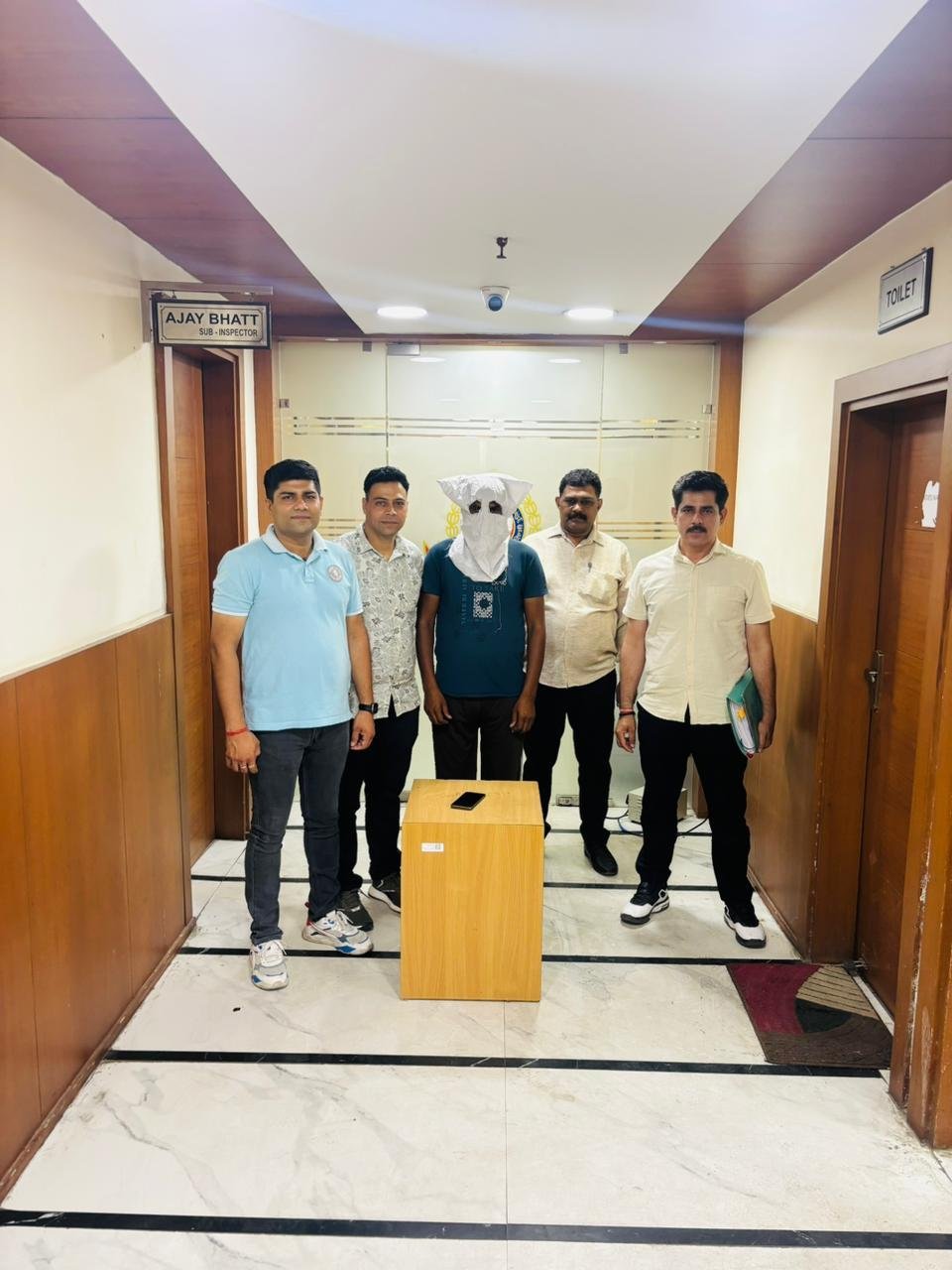
The Cyber Police Station of Shahdara District has busted an organised Online Shopping fraud racket that allegedly cheated people through fake Facebook advertisements offering branded suits and sarees at attractive prices. The operation led to the arrest of one accused from Rajasthan and exposed a wider cyber fraud network that used fake social media profiles, fraudulent SIM cards, and mule bank accounts to target unsuspecting online shoppers.
The successful crackdown once again highlights the growing threat of Online Shopping fraud in India, where cybercriminals increasingly use social media platforms and digital payment systems to trap consumers with fake offers and misleading advertisements. At the same time, the operation reflects the professionalism, technical expertise, and investigative capabilities of Delhi Police’s cyber units in tracing digital fraud networks operating across state borders.
According to officials, the case came to light after a Delhi-based woman filed a complaint alleging that she had been cheated of Rs. 49,963 through multiple online transactions after responding to attractive Facebook advertisements promoting branded suits and sarees at discounted prices.
The fraudsters reportedly convinced the victim to transfer money under the pretext of booking orders and delivery charges. However, once the payment was received, the accused stopped responding and blocked all communication with the complainant.
Acting swiftly on the complaint, Cyber PS Shahdara registered an FIR under relevant sections of the Bharatiya Nyaya Sanhita and immediately launched an investigation into the Online Shopping fraud operation.
How the Online Shopping Fraud Was Carried Out
Police investigation revealed that the accused and his associates were operating a well-organised Online Shopping fraud syndicate from Village Loharwadi in Rajasthan’s Alwar district.
The gang allegedly used fake advertisements on Facebook to attract customers looking for fashionable clothing items at low prices. Investigators found that the fraudsters carefully studied trending fashion products, popular saree collections, and branded suit designs before creating fake promotional content to make their advertisements appear genuine.
Cybercrime experts say this method has become increasingly common because social media platforms allow fraudsters to target large numbers of users quickly and cheaply.
In this particular Online Shopping fraud case, the accused reportedly followed a systematic strategy:
- Collecting photos and videos of trending fashion products
- Creating fake promotional advertisements
- Operating fake Facebook profiles and business pages
- Contacting customers through calls and online chats
- Convincing victims to make advance payments
- Blocking victims immediately after receiving money
Investigators stated that the accused relied heavily on trust-building techniques. Victims were often persuaded through polite communication, fake assurances, and attractive discounts that appeared too good to ignore.
The Online Shopping fraud network primarily targeted women shoppers searching for affordable branded clothing on social media platforms.
 Technical Surveillance Helped Police Crack the Case
To crack the case, a dedicated police team was formed under the supervision of Rajendra Prasad Meena.
The investigation team included Inspector Vinit Kumar, Head Constable Dharmendra Rathi, Head Constable Bikash Kumar, and Head Constable Sandeep Khokar. The operation was conducted under the leadership of SHO Cyber PS Shahdara Vijay Kumar and ACP Operations Mohinder Singh.
Officials said the team conducted extensive technical analysis and digital surveillance to trace the Online Shopping fraud network. Investigators tracked mobile numbers, payment trails, SIM card usage, social media activity, and digital transaction patterns linked to the accused.
The police eventually discovered that the fraud racket was operating from interior areas of Village Loharwadi in Rajasthan.
After sustained surveillance and monitoring of suspect movements, the police team successfully apprehended the main accused identified as Sarup Khan, aged 33 years.
Police officials deserve appreciation for their coordinated and technology-driven investigation because cyber fraud cases often involve criminals operating from remote locations while targeting victims across different states.
Mule Bank Accounts Used to Hide Money Trail
One of the most significant findings during the investigation was the use of mule bank accounts by the accused.
Cybercrime experts explain that mule accounts are bank accounts used to transfer or hide illegally obtained money. In many Online Shopping fraud cases, criminals rapidly move money through multiple accounts to make tracking difficult for investigators.
According to police officials, the fraud proceeds in this case were layered through several banking channels, UPI transfers, ATM withdrawals, and digital payment systems.
The accused allegedly used different accounts to quickly distribute money among gang members and avoid detection.
Investigators found that one of the mule bank accounts linked to the accused was already connected with at least two additional NCRP complaints involving approximately Rs. 60,000.
The SIM cards recovered from the accused were also reportedly linked to multiple cyber fraud complaints, indicating that the Online Shopping fraud operation may have targeted several victims over time.
Social Media Becoming a Major Tool for Cyber Fraud
The Shahdara case highlights a growing trend in India where social media platforms are increasingly being misused for Online Shopping fraud and cyber scams.
Cybercriminals now frequently create fake business pages, sponsored advertisements, and copied promotional videos to deceive users. Since many consumers trust visually appealing advertisements on platforms like Facebook and Instagram, fraudsters exploit this trust to gain quick payments.
Experts warn that Online Shopping fraud cases rise sharply during festive seasons, wedding periods, and sale events when people actively search for discounted products online.
Fake advertisements often feature:
- Unrealistically low prices
- Limited-time offers
- Branded clothing or electronics
- Fake customer reviews
- Attractive product videos
- Free delivery claims
Once victims show interest, fraudsters begin direct communication through messaging apps, calls, or social media chats.
In many cases, customers are asked to pay full or partial amounts in advance through UPI apps or bank transfers. After receiving payment, the fraudsters disappear completely.
Cybersecurity specialists say consumers should always verify the authenticity of sellers before making online payments, especially when purchasing through social media platforms instead of trusted e-commerce websites.
Rise of Online Shopping Fraud in India
India has witnessed a sharp increase in Online Shopping fraud cases in recent years due to rapid digital adoption and expanding online payment systems.
As internet penetration and smartphone usage continue to grow, millions of people now shop online regularly. While digital commerce offers convenience and affordability, it has also created opportunities for cybercriminals to exploit inexperienced or unsuspecting consumers.
Cyber police units across India frequently receive complaints related to:
- Fake shopping websites
- Fraudulent social media ads
- Non-delivery of products
- Fake courier charges
- Advance payment scams
- Counterfeit product sales
Experts say one major challenge in combating Online Shopping fraud is that cybercriminals often operate across multiple states using fake identities, disposable SIM cards, and temporary bank accounts.
The Shahdara Cyber Police operation demonstrates how modern cyber investigations require technical expertise, financial tracking, and interstate coordination.
Recovered Items and Evidence
During the arrest operation, police recovered several important items from the accused that were allegedly used in the commission of the Online Shopping fraud.
Recovered items included:
- One mobile phone used for cyber fraud activities
- Two SIM cards linked to fraudulent operations
- One SIM connected to the mule bank account
- One SIM used for communication with victims
Police officials stated that these digital devices and communication records will help investigators identify additional gang members and trace further fraudulent transactions.
The seized mobile phone is expected to provide valuable electronic evidence regarding customer interactions, fake advertisements, bank transactions, and social media operations.
Importance of Cyber Awareness Among Consumers
The case also underlines the urgent need for stronger cyber awareness among internet users.
Cyber experts repeatedly advise consumers to avoid making payments to unknown sellers operating only through social media pages. Genuine businesses usually provide proper websites, verified customer support, business registration details, and transparent return policies.
Consumers are advised to:
- Verify seller authenticity before payment
- Avoid offers that appear unrealistically cheap
- Use trusted e-commerce platforms
- Check online reviews carefully
- Avoid direct bank transfers to unknown individuals
- Report suspicious ads immediately
- Use secure payment methods
Experts say awareness remains one of the strongest tools against Online Shopping fraud because cybercriminals mainly rely on emotional triggers such as urgency, excitement, and attractive discounts.
Delhi Police Strengthening Cybercrime Response
The successful operation by Cyber PS Shahdara reflects the increasing focus of Delhi Police on cybercrime prevention and digital investigation capabilities.
As Online Shopping fraud and other internet-based crimes continue to rise, cyber police stations are playing a critical role in tracking digital criminals and protecting consumers from financial fraud.
The Shahdara Cyber Police team deserves appreciation for its swift response, sustained technical surveillance, and coordinated efforts that led to the arrest of the accused despite the interstate nature of the operation.
By tracing digital footprints, monitoring transaction patterns, and identifying communication links, investigators were able to dismantle an organised Online Shopping fraud network that exploited innocent consumers through fake social media advertisements.
Officials have confirmed that further investigation is underway to identify additional gang members and uncover the full scale of the cyber fraud syndicate operating from Rajasthan.