

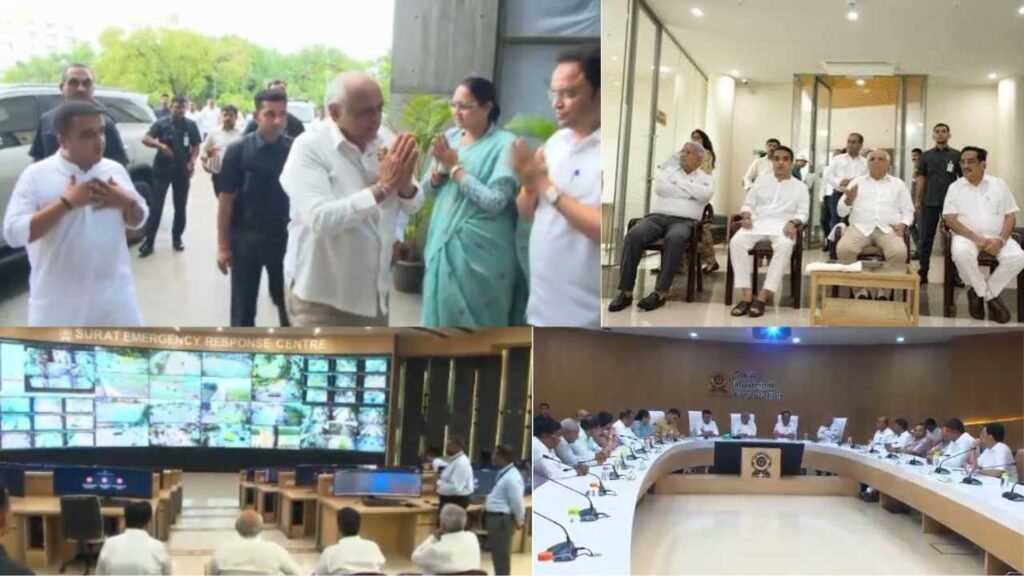
CM Bhupendra Patel visited Surat on Thursday to review the flood situation after unprecedented rainfall led to severe waterlogging across several parts of South Gujarat. Accompanied by Deputy Chief Minister Harsh Sanghavi and Union Jal Shakti Minister C.R. Paatil, CM Bhupendra Patel chaired a high-level review meeting with elected representatives, district officials and senior administrative officers to assess the impact of the floods, evaluate the ongoing relief work and discuss measures to reduce the impact of similar incidents in the future.
The visit came at a crucial time as Surat, along with neighbouring districts such as Navsari and Valsad, witnessed extensive flooding following continuous heavy rainfall. Several low-lying areas remained submerged, affecting daily life, damaging properties and prompting emergency rescue operations by multiple agencies. Through the review meeting, CM Bhupendra Patel emphasised the importance of coordinated action, timely relief and long-term infrastructure planning to improve flood resilience across the region.
Table of Contents
Record-Breaking Rainfall Brings Surat to a Standstill
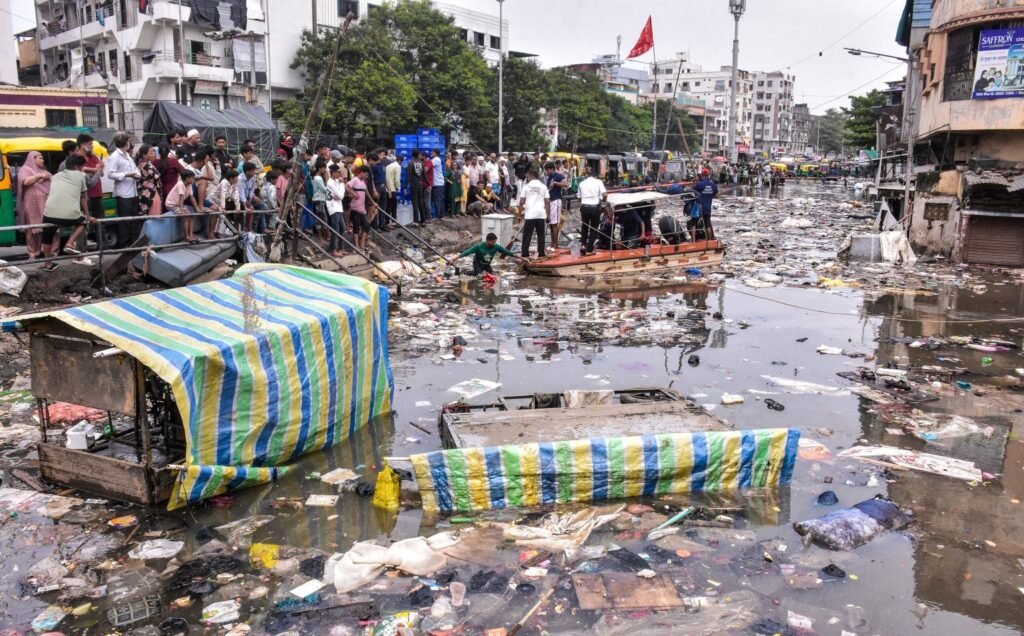
According to Deputy Chief Minister Harsh Sanghavi, the rainfall recorded in Surat on July 7 was among the highest the city has experienced in recent history. Continuous downpours caused water to accumulate rapidly in several neighbourhoods, leading to severe waterlogging in seven to eight major locations.
The sudden rise in water levels disrupted transportation, affected residential colonies and created challenges for emergency services. Roads remained inundated for several hours, making it difficult for residents to move safely while local authorities worked continuously to restore normalcy.
Heavy monsoon rainfall often tests the drainage capacity of urban areas, and this event highlighted the need for stronger flood management infrastructure in rapidly expanding cities like Surat. The administration closely monitored the situation as rescue teams and civic agencies worked simultaneously to assist affected communities.
Government Reviews Relief Measures and Damage Assessment
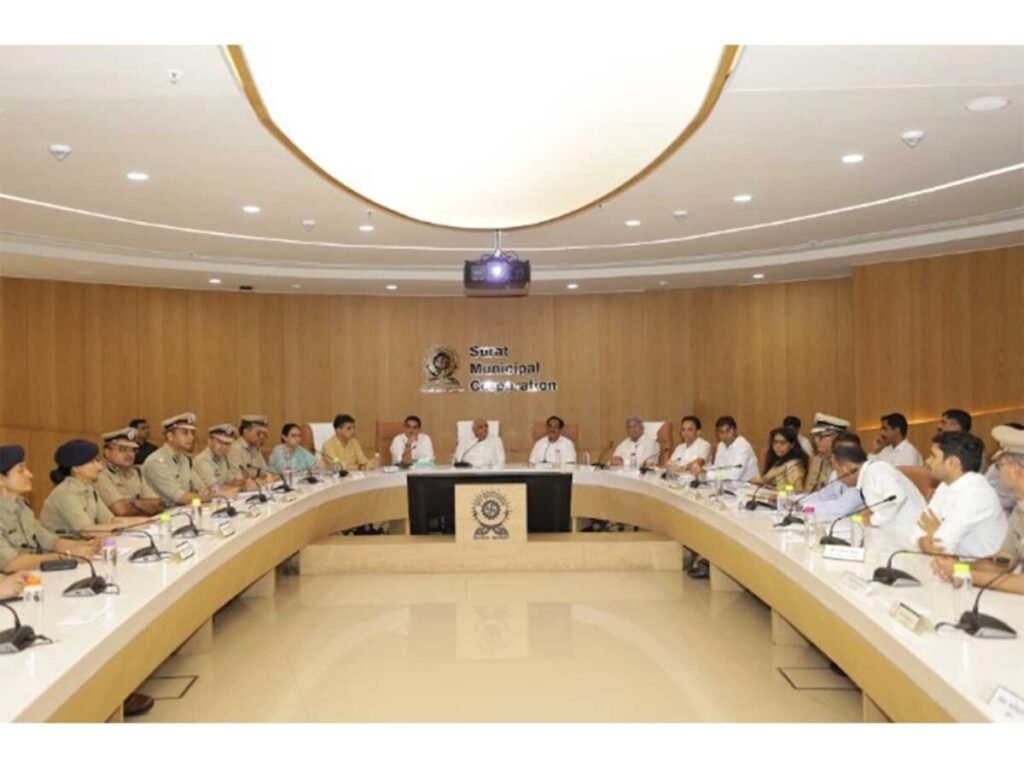
During the review meeting, CM Bhupendra Patel held detailed discussions with district officials regarding the overall flood response. Senior officers presented updates on relief operations, waterlogging, property damage and the condition of affected localities.
The meeting was attended by legislators, mayors, district administration officials and local representatives who shared ground-level assessments of the flood situation. Discussions focused on both immediate relief measures and the planning required to minimise future flood risks.
Officials reviewed how different departments coordinated during the emergency and examined areas where infrastructure improvements could strengthen disaster preparedness during future monsoon seasons.
₹500 Crore Project Announced to Prevent Future Flooding
One of the most significant announcements made by CM Bhupendra Patel during the review meeting was the approval of a ₹500 crore project aimed at preventing creek water from entering Surat during periods of heavy rainfall.
The proposed project is expected to strengthen flood protection infrastructure by addressing one of the key reasons behind recurring waterlogging in vulnerable parts of the city. Preventing the inflow of creek water during intense rainfall could help reduce flooding in residential areas and improve overall drainage management.
The announcement reflects the state government’s focus on long-term infrastructure development rather than relying only on emergency response measures after heavy rainfall.
By investing in preventive solutions, CM Bhupendra Patel has indicated that flood mitigation will remain an important priority as Gujarat continues to face increasingly unpredictable monsoon conditions.
Residents and Rescue Agencies Work Together During Crisis
Harsh Sanghavi praised the people of Surat for their cooperation during the flood emergency, stating that residents actively supported government agencies wherever assistance was required.
He noted that the challenging situation demanded teamwork from both authorities and citizens. Local communities helped emergency teams reach vulnerable areas while ensuring that affected families received timely assistance.
The combined efforts of government departments, volunteers and local residents helped speed up rescue operations despite difficult conditions caused by rising water levels and blocked roads.
Such coordination played an important role in reducing risks during one of the city’s most severe rainfall events.
NDRF and SDRF Lead Emergency Rescue Operations
As floodwaters entered residential localities, specialised rescue teams from the National Disaster Response Force (NDRF), State Disaster Response Force (SDRF) and other emergency agencies were deployed across affected areas.
These teams carried out evacuation operations, relocated stranded residents and ensured that people trapped inside flooded neighbourhoods were moved to safer locations.
One of the major rescue operations took place at Sriram Nagar Society in Surat, where NDRF personnel safely evacuated 85 people. The rescued group included 36 men, 27 women and 22 children.
CM Bhupendra Patel ,The operation demonstrated the preparedness of disaster response agencies in handling urban flood emergencies. Rescue teams continued monitoring vulnerable areas while coordinating with local authorities to ensure that emergency assistance reached those in need.
Focus Extends Beyond Surat to South Gujarat
The review meeting was not limited to Surat alone. According to Valsad BJP MP Dhaval Patel, CM Bhupendra Patel also reviewed the flood situation in Navsari and Valsad, where heavy rainfall had resulted in widespread waterlogging and property damage.
Representatives from the affected districts informed CM Bhupendra Patel about local challenges, infrastructure requirements and relief measures already undertaken by the administration.
The discussions highlighted the need for region-wide planning as several districts in South Gujarat experienced similar weather-related challenges during the recent spell of heavy rainfall.
Officials agreed that future planning should include improved drainage systems, better water management and stronger disaster preparedness across the region.
State Government Reaffirms Commitment to Flood Prevention
During the discussions, officials emphasised that the Gujarat government remains committed to implementing measures that can reduce the impact of future flooding.
CM Bhupendra Patel , review focused on strengthening coordination between departments, improving infrastructure and ensuring that emergency response systems remain prepared for extreme weather events.
CM Bhupendra Patel’s visit underlined the government’s intention to closely monitor the situation on the ground while accelerating projects designed to improve urban resilience against heavy rainfall.
With relief operations continuing in affected districts and a major flood prevention project now announced, the administration has shifted its attention towards building stronger infrastructure capable of protecting cities from similar monsoon-related challenges in the years ahead.