Murder Case investigations demand speed, precision, and scientific evidence to ensure that justice is delivered without delay. Demonstrating a prompt and professional response, the Shahdara District Police solved a Murder Case within hours after a 30-year-old woman was found dead with multiple stab injuries inside a room in Delhi’s Karkardooma Village. The swift investigation led to the apprehension of the victim’s husband and the recovery of the alleged weapon used in the crime.
The case highlights the importance of immediate police action, coordinated teamwork, forensic investigation, and community cooperation in solving serious criminal offences. By acting quickly from the moment a PCR call was received, investigators were able to reconstruct the sequence of events and identify the accused before valuable evidence could be lost.
Table of Contents
PCR Call Leads Police to the Crime Scene
The Murder Case came to light on the morning of June 28, 2026, when Police Station Anand Vihar received a PCR call reporting that a woman was lying in a pool of blood inside a room in Karkardooma Village.
A local police team immediately reached the location and discovered the victim with multiple stab injuries. She was declared dead at the scene.
The deceased was identified as Sonam Joshi, a 30-year-old woman originally from Lucknow, Uttar Pradesh. According to police, she was employed as a full-time domestic helper in Noida and had recently come to stay at the residence of her sister-in-law, Kaushal, in Karkardooma Village.
Given the seriousness of the Murder Case, senior officers from Shahdara District reached the location without delay. The Crime Team and the Forensic Science Laboratory (FSL) were also called to conduct a scientific examination of the crime scene and preserve all available evidence.
Crime Scene Examined with Scientific Precision
Every Murder Case depends heavily on evidence collected during the initial hours of investigation. Recognising this, investigators ensured that the crime scene was secured before any detailed examination began.
Forensic experts photographed the room, documented the condition of the surroundings, collected biological samples, examined bloodstain patterns, and searched for fingerprints and other trace evidence that could help establish exactly how the crime had occurred.
The victim’s body was later shifted for post-mortem examination to determine the precise cause of death and provide additional forensic findings that would assist investigators.
Scientific evidence has become one of the strongest pillars of modern criminal investigations. Unlike assumptions or speculation, forensic findings provide objective facts that can be verified in court, making them invaluable in every Murder Case.
Investigation Quickly Focused on the Husband
As investigators questioned family members, neighbours, and people connected with the victim, important information began to emerge regarding the movements of Sonam’s husband, Anuj Joshi.
According to Delhi Police, the investigation revealed that the accused had allegedly purchased a knife in Lucknow before travelling to Delhi by bus.
Police said he reached Karkardooma Village at around 5:40 a.m. on June 28.
Investigators believe that after arriving at the residence where Sonam was staying, he entered the room while she was asleep and allegedly attacked her with the knife, causing multiple fatal injuries.
The timeline established through witness statements, forensic findings, and field investigation enabled officers to quickly piece together the events, allowing the Murder Case to be solved within a remarkably short period.
Swift Police Action Results in Immediate Arrest
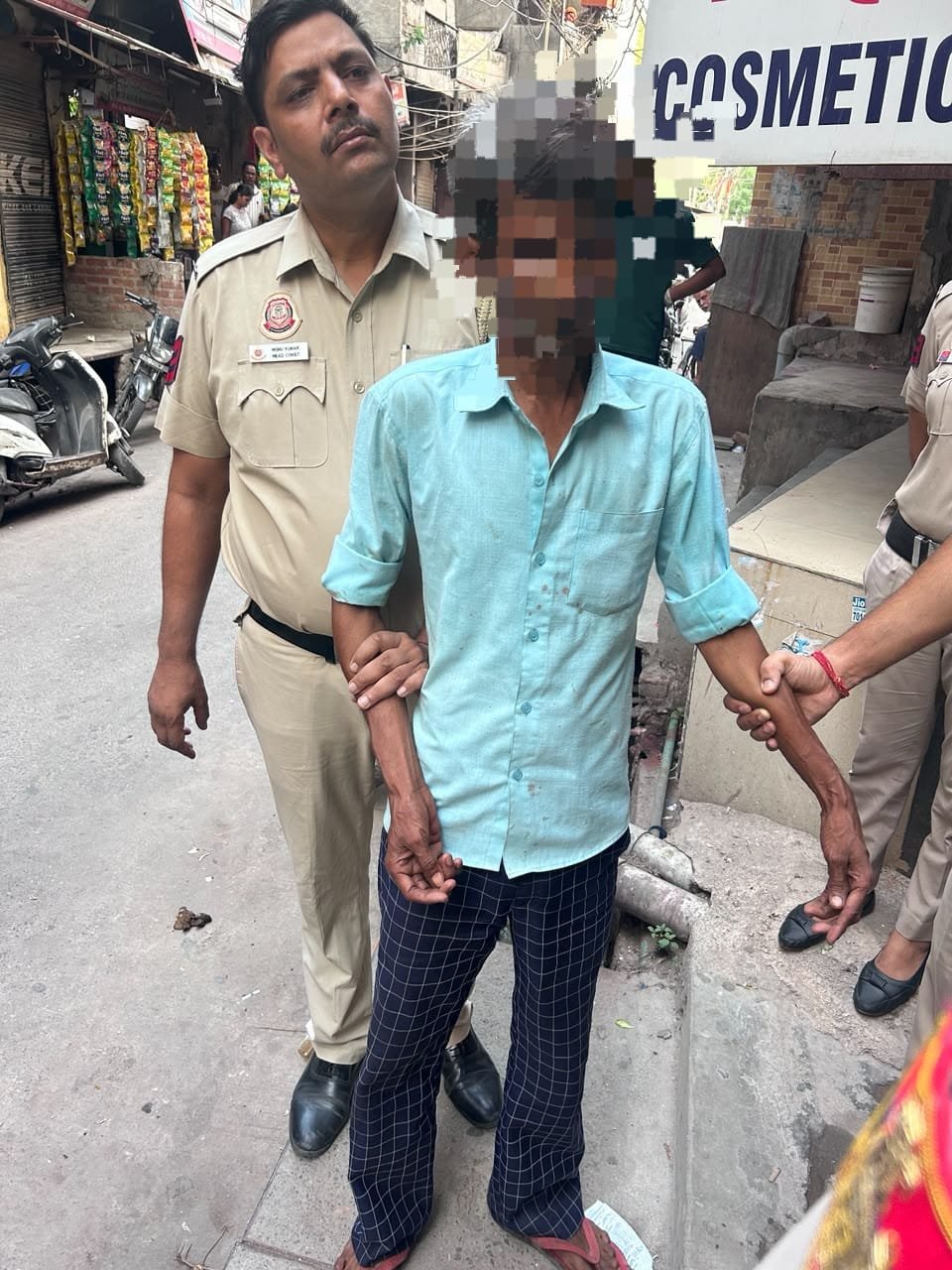
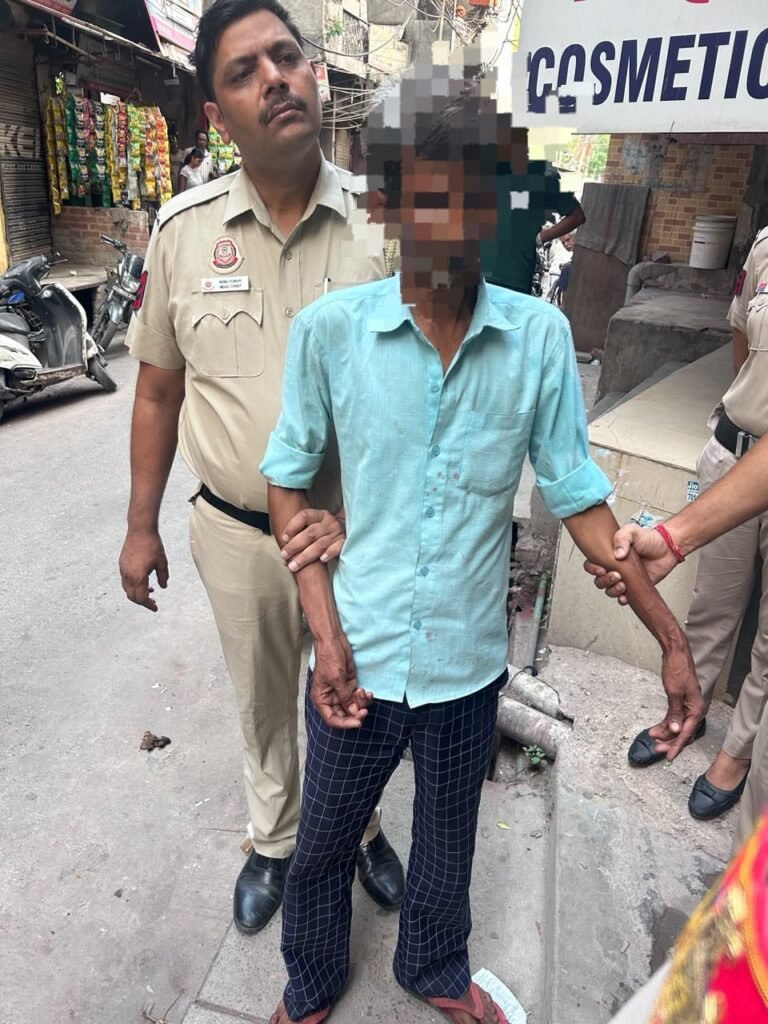
One of the most significant aspects of this Murder Case was the speed with which the accused was apprehended.
According to Delhi Police, Anuj Joshi was apprehended with the assistance of family members and local residents, whose cooperation proved valuable during the investigation.
Police also recovered the alleged weapon of offence during the operation. Investigators stated that the accused had concealed the knife inside a plastic bag within the room after committing the crime.
The recovery of the weapon is expected to become a crucial piece of evidence during the legal proceedings. Forensic experts will examine it for fingerprints, blood traces, DNA evidence, and other scientific findings that may further strengthen the prosecution’s case.
Recovering the weapon used in a Murder Case often plays a vital role in establishing the sequence of events and linking the accused directly to the offence.
Profile of the Accused
Police identified the accused as Anuj Joshi, approximately 35 years old and a resident of Lucknow, Uttar Pradesh. He was also residing in Pandey Tola, Aliganj, Lucknow.
According to investigators, he earns his livelihood by operating an ice cream cart in Lucknow.
Police are continuing to examine his background, movements before the incident, and relationship with the deceased as part of the ongoing Murder Case investigation.
Family Background Under Investigation
Delhi Police stated that Anuj Joshi was previously married to a woman named Jyoti, with whom he has two children.
After his divorce, he married Sonam Joshi, and the couple had three children together.
Police said all five children currently reside with the accused in Lucknow.
Investigators are examining the family’s background and interpersonal circumstances to better understand the events that ultimately led to the Murder Case. While several aspects are being examined, police have not yet publicly disclosed a confirmed motive behind the crime.
Forensic Science Plays a Crucial Role
Modern criminal investigations increasingly rely on scientific techniques to establish facts beyond doubt. In a Murder Case, forensic examination often provides answers that witness statements alone cannot.
Experts analyse fingerprints, biological samples, bloodstain patterns, DNA evidence, clothing, weapons, and other physical material recovered from the crime scene. These findings help investigators reconstruct the sequence of events with greater accuracy.
In this investigation, the timely arrival of the Crime Team and FSL experts ensured that valuable evidence was preserved immediately after police reached the scene.
Such scientific procedures not only strengthen the investigation but also improve the chances of successful prosecution during trial.
Coordinated Police Response Ensured Quick Progress
The successful detection of this Murder Case reflects the importance of coordination among different branches of law enforcement.
Local police officers were the first to respond after receiving the PCR call. Senior district officers supervised the investigation, while forensic experts collected scientific evidence. The Crime Team documented the scene, and investigators simultaneously questioned witnesses and analysed the available information.
This coordinated approach reduced delays and enabled officers to quickly identify the accused and recover the alleged weapon.
Such teamwork has become an essential feature of professional policing, particularly in serious offences where every minute can influence the outcome of an investigation.
Community Cooperation Strengthened the Investigation
Police also acknowledged the role played by family members and local residents during the investigation.
Their timely cooperation assisted officers in locating and apprehending the accused without unnecessary delay. Community participation often becomes an important factor in serious criminal investigations, especially during the crucial hours immediately following an offence.
When citizens cooperate with law enforcement by providing factual information, investigators are often able to verify leads more efficiently and prevent suspects from escaping.
Shahdara Police Receive Appreciation for Swift Investigation
The speed with which Shahdara District Police solved the Murder Case has drawn appreciation for their prompt and professional handling of the investigation.
From immediately responding to the PCR call to securing the crime scene, involving forensic experts, collecting scientific evidence, identifying the suspect, recovering the alleged weapon, and apprehending the accused within hours, the investigation reflects a well-coordinated policing effort.
The quick response ensured that crucial evidence was preserved at the earliest stage of the investigation, significantly strengthening the case. The professionalism displayed by the investigating officers, Crime Team, and Forensic Science Laboratory demonstrates the growing emphasis on evidence-based policing in Delhi.
According to the police, further investigation into the Murder Case remains in progress, and additional legal procedures will continue as investigators complete the collection of evidence and prepare the case for prosecution.