

New Mitsubishi Pajero Gets Triton-Based Platform, 204hp Diesel Engine and Seven-Seat Layout
Mitsubishi Pajero has officially returned in its fifth-generation avatar, with the Japanese automaker unveiling a larger, more modern and more capable version of one of its most recognised SUV nameplates. The 2026 Mitsubishi Pajero comes back as a three-row flagship SUV, combining a strong focus on off-road capability with improved practicality, modern technology and long-distance comfort.
The new Pajero is based on the Mitsubishi Triton pickup truck’s ladder-frame architecture and shares its 2.4-litre turbo-diesel engine with the popular pickup. However, Mitsubishi has made several changes to the platform and powertrain setup to suit the SUV’s characteristics, including a revised chassis, updated suspension and a new-generation eight-speed automatic gearbox.
The new Mitsubishi Pajero will initially be launched in Thailand before making its way to markets such as Japan and Australia by the end of March 2027. For India, however, the chances of the new Pajero being introduced remain low. If Mitsubishi does bring the SUV to the Indian market, its combination of size, seven-seat practicality, diesel power and four-wheel-drive hardware would put it directly in the territory of the Toyota Fortuner.
2026 Mitsubishi Pajero Design: Bigger, Rugged and Modern
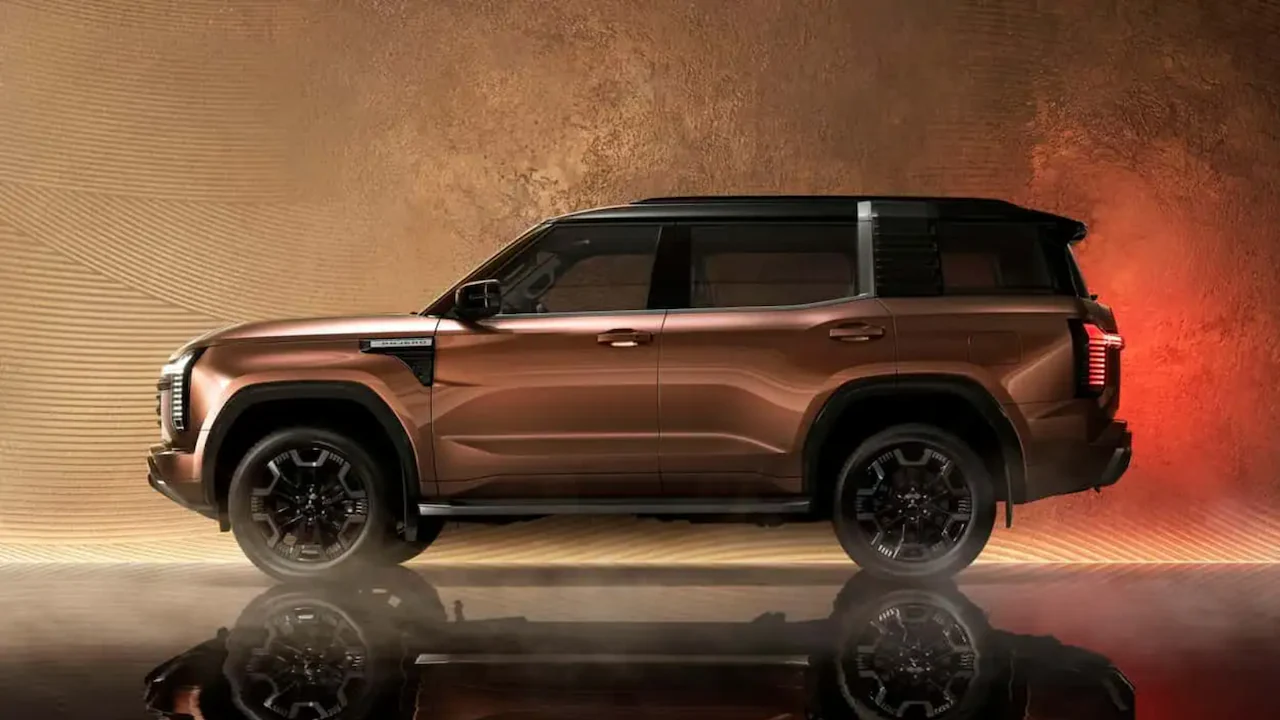
The fifth-generation Mitsubishi Pajero represents a major design departure from the previous generation. Instead of attempting to replicate the styling of earlier Pajero models, Mitsubishi has adopted the company’s latest SUV design language, taking inspiration from models such as the Xforce and Destinator. The new Mitsubishi Pajero combines these modern design cues with the traditional characteristics expected from a rugged off-road SUV.
The result is a large and rugged SUV that combines a modern appearance with traditional off-road design elements.
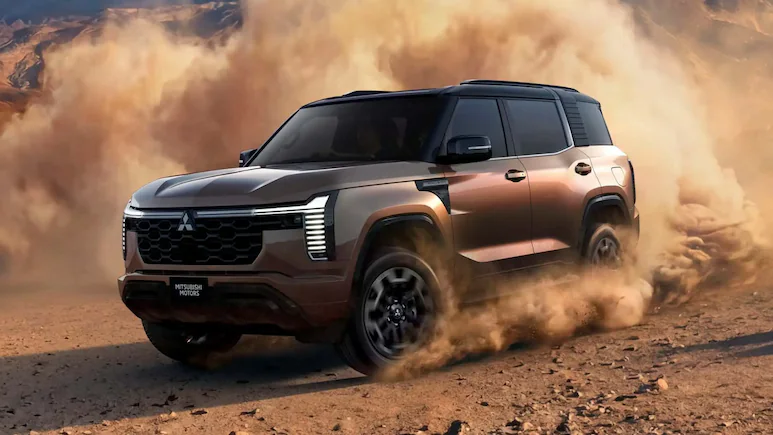
At the front, the Mitsubishi Pajero features a wide grille flanked by modern lighting elements, while the substantial wheel arches give the SUV a muscular stance. The lower section of the body gets significant protection, reinforcing its intended off-road character.
The SUV also features a relatively flat roofline and large glasshouse. These design elements are not purely cosmetic, as Mitsubishi says they are intended to improve interior space and outward visibility, particularly for passengers seated in the rear rows.
Side steps, mud flaps and high-set suspension further emphasise the Pajero’s focus on rough-terrain driving. The overall design is therefore more functional than simply being styled as an urban premium SUV.
The new Pajero measures 4,920mm in length, 1,925mm in width and 1,910mm in height. It has a wheelbase of 2,870mm, giving it a substantial footprint on the road.
Depending on the variant, the SUV can be equipped with 20-inch wheels. Unlike the older Pajero models that were known for their externally mounted spare wheel and distinctive rear design, the new-generation model adopts a more conventional tailgate layout, with the spare wheel positioned underneath the vehicle.
Spacious Seven-Seat Interior
Inside, the 2026 Mitsubishi Pajero has been designed as a practical three-row, seven-seat SUV. Mitsubishi has focused on making the second and third rows more usable rather than treating the rearmost seats as occasional seating.
The second-row seats can slide by up to 150mm and can also tumble forward. This allows occupants to adjust the balance between passenger space and luggage capacity according to their requirements.
Sliding the second row forward can provide easier access to the third row, while moving it backwards can improve legroom for second-row passengers. The arrangement can also be used to create additional luggage space when required.
The flat roofline contributes to the cabin’s overall sense of space and is particularly beneficial for passengers sitting in the third row. This could make the Pajero a more practical proposition for families who regularly need all seven seats.
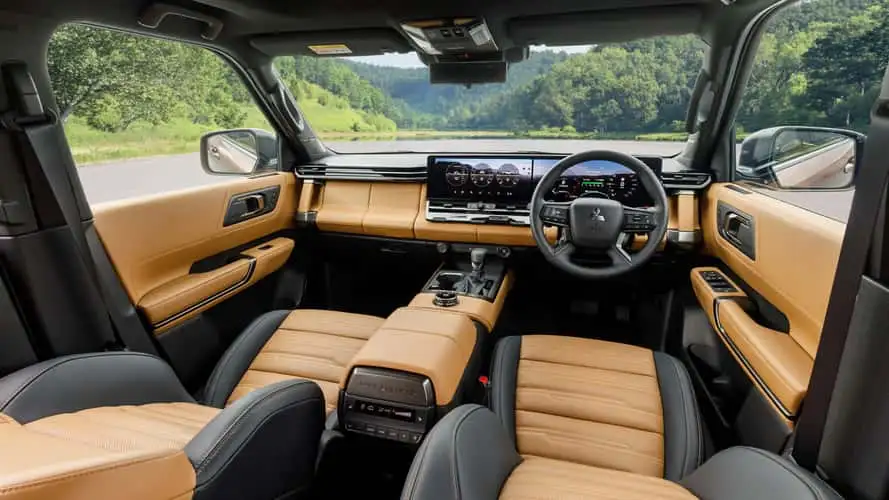
Higher variants receive leather upholstery and soft-touch dashboard materials, while sturdy grab handles add to the SUV’s practical character. Mitsubishi has also focused on reducing cabin noise through features such as double-glazed side windows and an acoustic windscreen.
Feature-Rich Cabin With Large Displays
The new Mitsubishi Pajero gets a modern dashboard with large digital displays dominating the upper variants.
Higher-spec versions feature two 14.3-inch screens, while lower variants receive 12.3-inch displays. The screens provide access to infotainment and vehicle-related functions while giving the dashboard a more contemporary appearance.
Despite the increased reliance on digital interfaces, Mitsubishi has retained physical controls for frequently used functions. This includes controls for climate-related functions, allowing drivers to access important settings without depending entirely on the touchscreen.
The four-wheel-drive system can also be controlled through a rotary controller positioned within easy reach of the driver.
The SUV gets tri-zone automatic climate control, allowing different sections of the cabin to maintain separate temperature settings. Manual rear sunshades are also available, while heated second-row seats add to passenger comfort.
Another interesting feature is the cooled storage compartment located beneath the centre armrest. USB charging ports are provided across all three rows, helping passengers keep their devices powered during longer journeys.
For audio enthusiasts, higher variants can be equipped with a 12-speaker Yamaha sound system.
2.4-Litre Turbo-Diesel Engine Produces 204hp
Powering the 2026 Mitsubishi Pajero is a 2.4-litre four-cylinder turbo-diesel engine derived from the Mitsubishi Triton.
The engine produces 204hp and 480Nm of torque. While the power output is similar to the Triton’s specification, the Pajero gets 10Nm more torque.
The diesel engine is paired with a new-generation eight-speed automatic transmission. The combination is designed to deliver the low-end torque required for off-road driving while also providing relaxed performance during highway journeys.
The choice of a diesel engine is particularly significant for an SUV of this size and character. Diesel power remains well suited to vehicles designed for towing, long-distance travel and demanding terrain because of the strong torque delivery at lower engine speeds.
However, Mitsubishi has not simply transferred the Triton’s mechanical package directly into the Pajero. The SUV receives several chassis-related changes intended to improve both durability and driving behaviour.
Revised Triton-Based Ladder-Frame Platform
The new Mitsubishi Pajero uses a revised version of the Triton’s ladder-frame architecture.
Mitsubishi says the structure makes greater use of high-tensile steel, increasing chassis stiffness. A stiffer structure can provide benefits in terms of durability, handling and overall vehicle control.
For an SUV expected to spend time away from paved roads, chassis strength is particularly important. The platform needs to cope with uneven surfaces, articulation and repeated loads without compromising passenger comfort.
The revised architecture also allows Mitsubishi to position the Pajero as a more capable off-road SUV while retaining the benefits of a modern family vehicle.
Suspension and Off-Road Hardware
The Pajero uses a high-mounted double-wishbone suspension setup at the front and a five-link rigid axle at the rear.
The suspension configuration is designed to provide a balance between road-going comfort and off-road wheel movement. Mitsubishi has also given the SUV 230mm of ground clearance, reducing the likelihood of the underbody making contact with obstacles on rough terrain.
Its approach angle stands at 30.4 degrees, while the breakover angle is 22.6 degrees and the departure angle is 25.8 degrees.
These figures indicate that the Pajero has been designed to tackle more than just mildly rough roads. The approach and departure angles are particularly important when driving over steep inclines, declines or obstacles where the front or rear of the vehicle could otherwise make contact with the ground.
Mitsubishi has also worked on the vehicle’s weight distribution. The Pajero has a 52:48 front-to-rear weight distribution, while its long-travel suspension is intended to maintain tyre contact over uneven surfaces.
Super-All Wheel Control Comes Standard
One of the biggest strengths of the new Pajero is Mitsubishi’s Super-All Wheel Control, or S-AWC, system.
The technology is offered as standard and integrates several vehicle-control systems, including four-wheel drive, Active Yaw Control, traction control, stability control and ABS.
The system can manage power delivery and braking at individual wheels depending on driver inputs and surface conditions. This can help the vehicle maintain traction when road surfaces become slippery or uneven.
For a vehicle carrying the Pajero nameplate, the inclusion of a sophisticated all-wheel-drive system is significant. Earlier Pajero models built a strong reputation around their off-road capabilities, and Mitsubishi appears to be positioning the new model as a continuation of that tradition with modern electronic control systems.
2026 Mitsubishi Pajero vs Toyota Fortuner: Potential India Rival
If Mitsubishi eventually decides to bring the new Pajero to India, one of its most obvious rivals would be the Toyota Fortuner.
The Indian SUV market has a strong demand for large, three-row SUVs that combine road presence, diesel power and rugged construction. The Fortuner has traditionally occupied an important position in this segment.
The Pajero’s specifications suggest that it could fit naturally into the same category. Its seven-seat layout, ladder-frame construction, turbo-diesel engine, high ground clearance and four-wheel-drive system would make it relevant to buyers looking for a combination of family practicality and off-road capability.
However, Mitsubishi’s previous presence in India and the company’s current market strategy make a near-term launch uncertain.
The earlier-generation Pajero was sold in India and was positioned as a premium seven-seat SUV. Its price was around Rs 27 lakh at the time, putting it above several mainstream SUVs.
The new model would face a very different competitive environment if it entered India. The SUV market has become significantly more competitive, with buyers having more choices across different price points.
India Launch Still Uncertain
For now, there is no indication that the 2026 Mitsubishi Pajero will be launched in India. Mitsubishi is expected to introduce the SUV first in Thailand, followed by markets including Japan and Australia by the end of March 2027.
The company’s decision to revive the mitsubishi pajero nameplate is nevertheless significant for the global SUV market.
The Pajero was historically associated with Mitsubishi’s off-road heritage and became particularly well known for its rugged capabilities. The fifth-generation model attempts to carry that reputation forward while adapting the SUV to modern expectations around technology, comfort and family usability.
For Indian buyers, the combination of a powerful diesel engine, three-row seating and advanced four-wheel-drive hardware could make the Pajero an interesting alternative to established SUVs if Mitsubishi eventually considers a local launch.
Mitsubishi Pajero Revives an Iconic SUV Name
The return of the mitsubishi pajero represents more than the arrival of another large SUV. It marks the revival of one of Mitsubishi’s most recognisable automotive nameplates.
The new model combines a Triton-derived ladder-frame platform with a 204hp diesel engine, eight-speed automatic transmission, seven-seat cabin and standard S-AWC technology.
Its 230mm ground clearance and off-road-focused suspension further underline Mitsubishi’s intention to retain the Pajero’s adventurous character.
At the same time, the SUV has moved significantly towards modern family-oriented requirements, with large screens, tri-zone climate control, heated second-row seats, multiple charging points, premium materials and a Yamaha audio system.
The 2026 Mitsubishi Pajero will therefore attempt to bridge two worlds: the rugged off-road SUV tradition associated with its name and the comfort and technology expected from a modern flagship family SUV.
Whether it eventually reaches India remains uncertain. But if mitsubishi pajero does decide to introduce it here, the new Pajero could become a serious contender in the large seven-seat SUV space and a potential Japanese rival to the Toyota Fortuner.