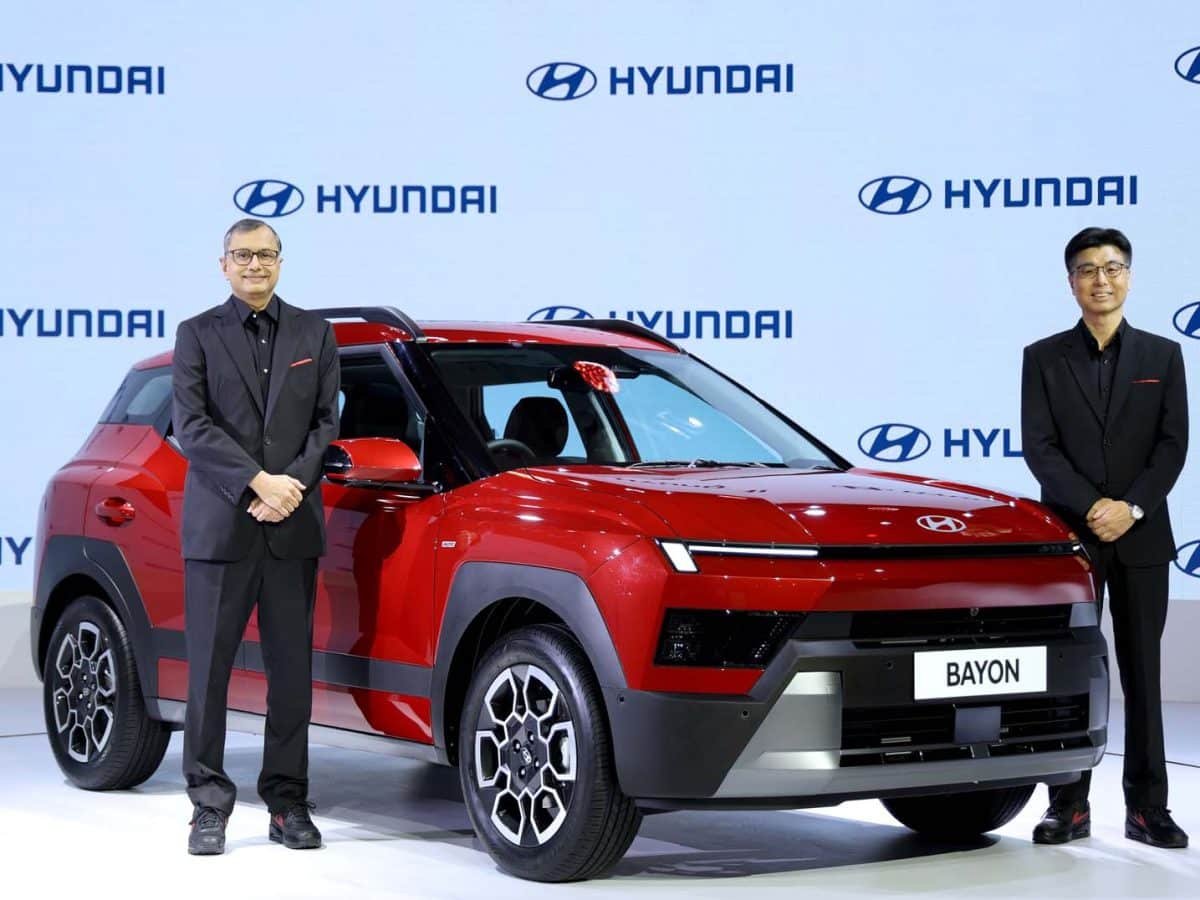
Hyundai Bayon has been launched in India at an introductory price of Rs 9.99 lakh (ex-showroom), expanding its SUV portfolio with a model positioned below the Creta. The new SUV enters a competitive segment featuring established and upcoming rivals, including the Kia Seltos, Tata Sierra and Maruti Suzuki Victoris. With its distinctive styling, modern lighting elements and focus on safety, the Bayon aims to strengthen Hyundai’s presence in India’s highly competitive SUV market.
The Bayon is manufactured at Hyundai’s Chennai facility, with production covering both right-hand-drive and left-hand-drive configurations. This arrangement supports the company’s export plans alongside its domestic sales ambitions. Bookings for the SUV are already open in India, allowing prospective buyers to register their interest.
The new model is built on Hyundai’s Global K Enhanced Platform and adopts the company’s latest ‘Art of Steel’ design language. Measuring approximately 4.2 metres in length, the Bayon is slightly shorter than the 4.3-metre Hyundai Creta. Its compact dimensions, distinctive exterior design and positioning within Hyundai’s product range make it an important addition to the brand’s SUV portfolio.
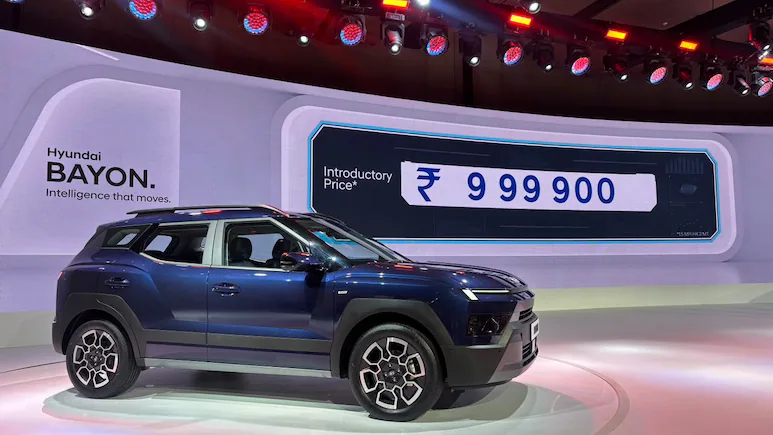
Table of Contents
Hyundai Bayon Price and Market Positioning
The Hyundai Bayon has been launched in India at Rs 9.99 lakh, ex-showroom. This starting price places it below the Creta in Hyundai’s lineup and gives the company another option for buyers exploring SUVs in the compact-to-mid-size category.
Hyundai already has a significant presence in the Indian SUV market, with models serving different price points and customer requirements. The Bayon expands that portfolio by introducing a vehicle with its own design identity rather than simply replicating the styling of the Creta.
The SUV’s position below the Creta could make it relevant to buyers looking for a Hyundai with SUV proportions and contemporary styling without moving directly into the Creta’s price bracket. However, the actual value proposition will depend on the complete variant lineup, equipment levels and powertrain specifications.
The announced starting price provides an entry point for potential customers, but buyers should compare the final on-road cost, which varies according to registration charges, insurance and other applicable expenses. Details such as the number of variants and the prices of higher trims have not been established in the launch details.
Rivals in a Competitive SUV Market
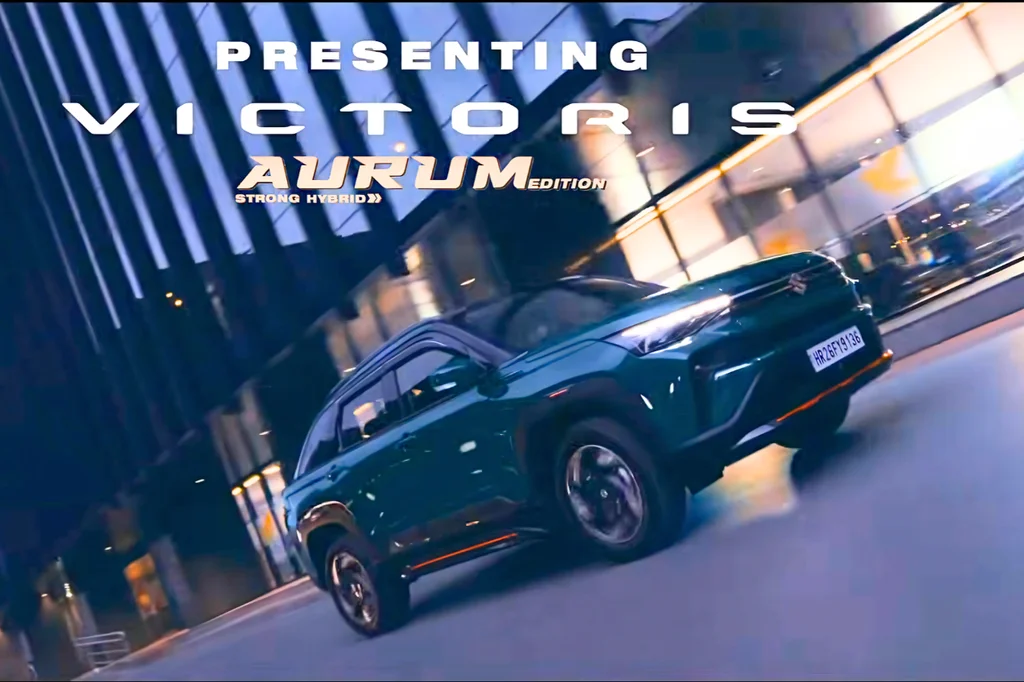
The Hyundai Bayon enters a market where buyers have a growing number of SUV options. Models such as the Kia Seltos, Tata Sierra and Maruti Suzuki Victoris represent the competitive landscape in which the new Hyundai will have to establish its appeal.
Customers in this category increasingly consider several factors before making a purchase. Exterior styling, cabin comfort, infotainment technology, safety equipment, fuel efficiency, performance and after-sales support can all influence buying decisions.
Hyundai’s existing brand presence could help the Bayon attract customers who are already familiar with the company’s products and dealership network. Its distinct exterior design may also appeal to buyers who want something visually different from more familiar SUVs.
Nevertheless, a competitive starting price alone may not determine the model’s success. Buyers will need to evaluate the Bayon’s equipment and performance against comparable vehicles before deciding which SUV best suits their requirements.
The Bayon’s precise competitive position will become clearer when its full specifications, variant-wise features and powertrain options are available for comparison.
Exterior Design: Hyundai’s ‘Art of Steel’ Language
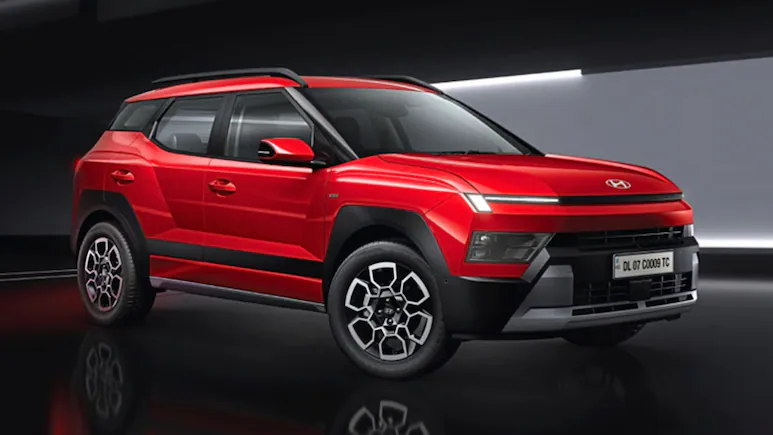
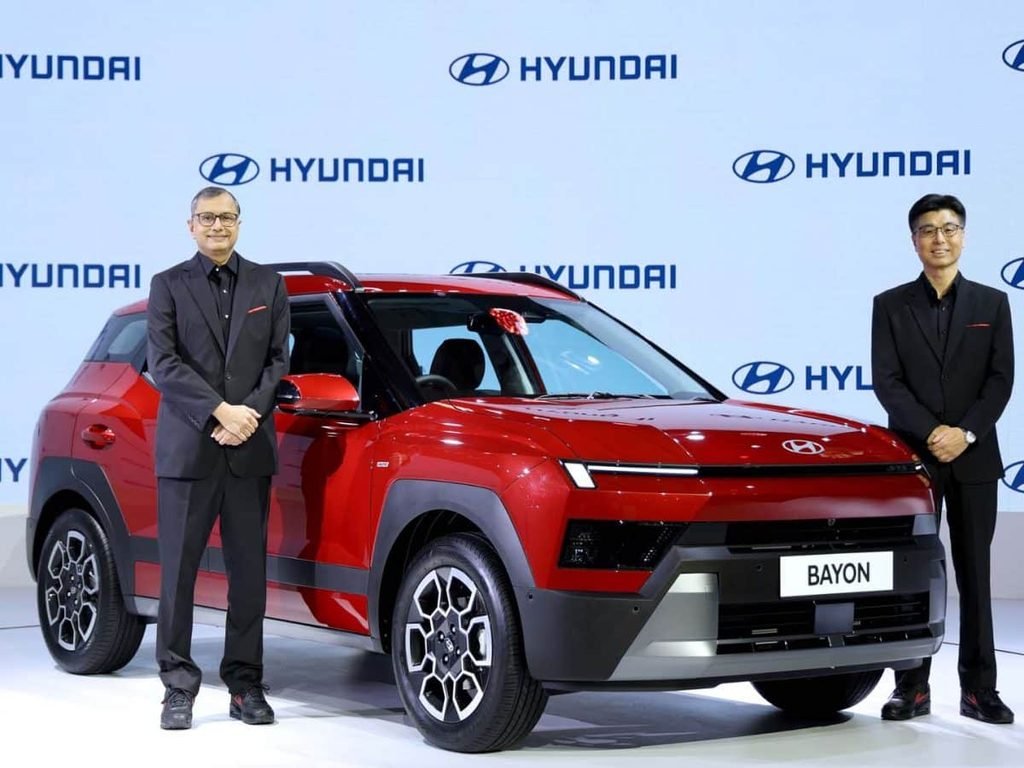
One of the key highlights of the Hyundai Bayon is its exterior styling. The SUV adopts Hyundai’s latest ‘Art of Steel’ design language, giving it a distinctive appearance within the manufacturer’s range.
Rather than relying on a conventional SUV design, the Bayon combines sharp body lines, prominent wheel arches, modern lighting elements and contrasting black exterior cladding. These details contribute to a more rugged appearance while maintaining a contemporary design identity.
Its overall length of approximately 4.2 metres gives the SUV a slightly smaller footprint than the Hyundai Creta, which measures around 4.3 metres. Although the difference in length is relatively modest, the Bayon’s dimensions help distinguish it from its larger stablemate.
The front and rear sections feature several styling elements intended to make the vehicle recognisable on the road. The lighting arrangement, alloy wheel design and tailgate lettering all contribute to the SUV’s individual character.
Front Profile and LED Lighting
At the front, the Hyundai Bayon features LED projector headlights accompanied by L-shaped daytime running lights, or DRLs. These L-shaped elements also function as turn indicators, combining two lighting functions within the same design arrangement.
The front design does not feature a full-width light bar. Instead, the separate lighting elements create a more segmented appearance, distinguishing the Bayon from SUVs that use connected lighting signatures across the front fascia.
LED projector headlights are an important part of the vehicle’s modern exterior presentation. However, actual visibility and nighttime performance depend on factors beyond the lighting technology alone, including beam distribution and adjustment.
The absence of a full-width light bar also gives the Bayon a different visual identity from vehicles that use continuous LED strips as a central styling feature.
Side Profile, Wheel Arches and Alloy Wheels
The side profile continues the Bayon’s sharp design theme. Flared wheel arches, prominent character lines and extensive black cladding give the SUV a more muscular appearance.
Black cladding is a common styling feature in the SUV category, where it is frequently used to create visual contrast around the lower body and wheel arches. On the Bayon, it works alongside the sharper body contours to emphasise the vehicle’s proportions.
The SUV also gets petal-style 17-inch alloy wheels. Their distinctive design adds another visual element to the side profile and complements the exterior styling.
Wheel size and design can influence a vehicle’s appearance, although they do not independently determine ride quality or handling. Those characteristics also depend on tyre specifications, suspension tuning and other engineering factors.
The supplied launch details identify the 17-inch alloy wheels as an exterior feature, but do not establish whether this equipment will be standard across all variants or restricted to particular trims.
Rear Styling and Tail-Lamp Design
At the rear, the Hyundai Bayon features a slim black band that houses its LED tail-lamps. This element provides visual continuity across the rear section without introducing a full-width light bar.
The tailgate carries prominent ‘BAYON’ lettering, making the model’s identity immediately visible. A roof spoiler with an integrated stop lamp completes the rear styling package.
Together, the black band, LED tail-lamps, tailgate lettering and roof spoiler give the rear a distinctive appearance. These details also help separate the Bayon visually from other SUVs in Hyundai’s current lineup.
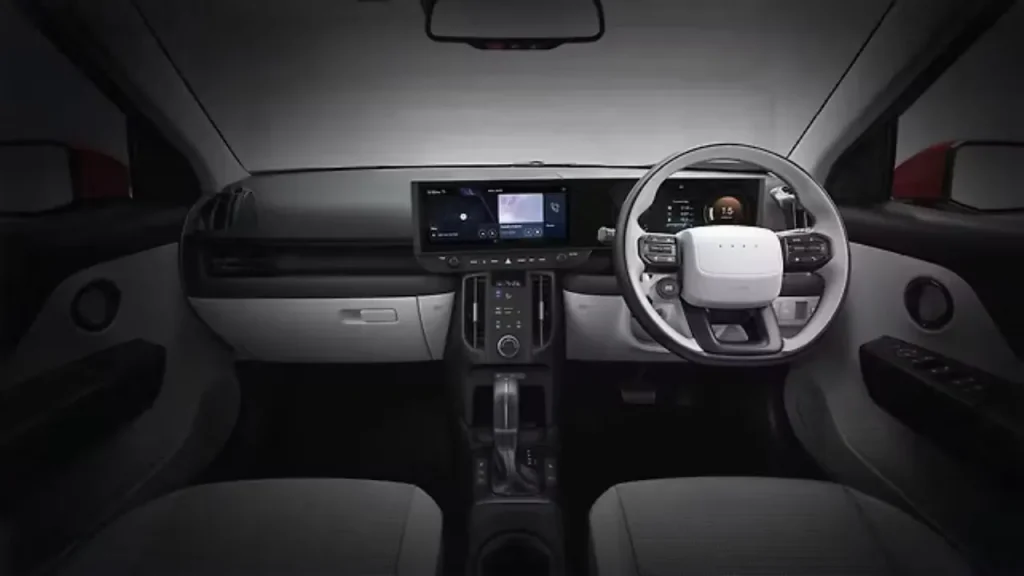
While the exterior design is one of the model’s most clearly described attributes, information about the interior layout, cabin materials, luggage capacity and passenger space is not included in the supplied launch details.
Platform and Engineering
The Hyundai Bayon is based on the company’s Global K Enhanced Platform. The architecture is an important part of the vehicle’s underlying engineering, providing the foundation on which the SUV’s body, suspension and other major systems are developed.
Hyundai states that the platform has been engineered with five-star Indian crash-test safety standards in mind. This indicates that safety performance has been considered in the vehicle’s development.
However, the distinction between engineering for a particular safety standard and receiving an official crash-test rating is important. A vehicle’s intended safety performance should not be confused with a confirmed rating awarded after independent testing.
According to the supplied launch information, Bharat NCAP results for the Bayon are expected by the end of 2026. The final assessment will provide a more concrete indication of its crash-test performance once the results are officially announced.
Until those results become available, buyers should treat the anticipated rating as pending rather than assume that the SUV has already received a five-star Bharat NCAP score.
Safety: Bharat NCAP Assessment Expected
Safety is an important consideration for buyers in India, particularly as awareness of crash-test ratings and vehicle protection continues to influence purchasing decisions.
The Bayon’s Global K Enhanced Platform and Hyundai’s stated engineering objectives place safety among the vehicle’s key development considerations. Nevertheless, the final safety assessment will be significant in determining how the SUV performs under the relevant testing procedures.
Bharat NCAP provides a framework for evaluating vehicle safety through structured crash testing. Its results can help consumers compare vehicles and better understand their assessed protection performance.
For the Bayon, the expected results by the end of the year will be an important milestone. Buyers interested in the SUV should look for the official assessment before drawing conclusions about its final crash-test rating.
It is also important to distinguish crashworthiness from the availability of active safety and driver-assistance systems. The supplied launch information does not provide a complete list of airbags, electronic stability features, driver-assistance technologies or other safety equipment. These details will need to be confirmed through the official variant specifications.
Engine and Performance: What Is Known So Far?
Although the Hyundai Bayon’s launch price, exterior design and platform have been outlined, the supplied information does not specify its engine options or performance figures.
Consequently, details such as engine displacement, petrol or diesel availability, maximum power, torque, transmission choices and fuel-efficiency figures cannot be confirmed from the available launch material.
These specifications will be important for buyers comparing the Bayon with other SUVs in the market. Engine output and transmission options can influence acceleration, drivability and suitability for different driving conditions, while fuel efficiency can affect long-term running costs.
Customers should also consider how a vehicle will be used in everyday conditions. Urban buyers may prioritise smooth low-speed performance and ease of driving, while those who frequently travel on highways may place greater importance on overtaking performance and cruising comfort.
Until Hyundai confirms the Bayon’s complete powertrain specifications, potential customers should avoid relying on unverified figures or assumptions about the engines and gearboxes that may be offered in India.
Features and Equipment: Confirmed Highlights
The available launch information provides a clear picture of several exterior features but does not establish the complete equipment list.
The confirmed highlights include:
- LED projector headlights.
- L-shaped DRLs that also function as turn indicators.
- Petal-style 17-inch alloy wheels.
- Flared wheel arches and black exterior cladding.
- A slim black rear band housing LED tail-lamps.
- ‘BAYON’ lettering on the tailgate.
- A roof spoiler with an integrated stop lamp.
- The Global K Enhanced Platform.
- Hyundai’s ‘Art of Steel’ exterior design language.
The availability of these features across individual variants remains to be confirmed where the launch information does not specify otherwise.
Details about the infotainment screen, smartphone connectivity, digital instrument cluster, wireless charging, automatic climate control, sunroof, connected-car functions and seat adjustments are also not provided. These features should therefore not be assumed to be part of the standard equipment.
For buyers, the final variant-wise feature list will be as important as the headline price. It will determine whether the entry-level model provides the equipment they need or whether a higher-priced version offers a more suitable combination of convenience, technology and safety.
Manufacturing in Chennai and Export Plans
The Hyundai Bayon is manufactured at Hyundai’s Chennai facility. The production arrangement includes both right-hand-drive and left-hand-drive configurations, supporting the company’s plan to supply the SUV to export markets as well as India.
Manufacturing vehicles in multiple steering configurations allows automakers to prepare models for markets with different driving conventions. Right-hand-drive vehicles are designed for countries where traffic generally keeps to the left, while left-hand-drive versions serve markets where traffic generally keeps to the right.
The Bayon’s export-oriented production plan gives the Chennai facility a role in supporting the model beyond the domestic market.
For Hyundai, introducing the SUV in India while also preparing it for overseas markets can help connect local manufacturing operations with broader production and distribution requirements. However, the specific export destinations and shipment schedules have not been identified in the supplied information.
Bookings Open in India
Bookings for the Hyundai Bayon are already open, allowing interested customers to register for the new SUV.
Before making a booking, buyers should check with an authorised Hyundai dealership for the applicable booking amount, cancellation conditions, delivery estimates and variant availability. These details can differ depending on the dealership and the vehicle configuration selected.
Customers should also confirm the final ex-showroom price for their chosen variant and calculate the on-road cost for their city. Insurance, registration charges and other applicable costs can increase the final amount payable.
A detailed comparison of available variants will help buyers understand the difference between the entry-level price and the cost of a more comprehensively equipped model.
Hyundai Bayon: What Buyers Should Consider
The Hyundai Bayon arrives in India with a starting price of Rs 9.99 lakh, a distinctive exterior design and a position below the Creta in the company’s SUV lineup.
Its LED projector headlights, L-shaped DRLs, 17-inch petal-style alloy wheels, black body cladding and prominent rear styling elements give it a clear visual identity. The use of Hyundai’s Global K Enhanced Platform and the anticipated Bharat NCAP assessment also make its engineering and safety performance important areas to watch.
At the same time, several details necessary for a complete buying decision remain unspecified in the available launch information. These include the engine and transmission lineup, fuel-efficiency figures, interior equipment, variant-wise feature distribution and the final Bharat NCAP results.
The SUV’s long-term competitiveness will depend on how its complete specifications compare with rival models, as well as its pricing across variants and the ownership experience offered to customers.
For now, the Bayon’s launch expands Hyundai’s Indian SUV portfolio with a model that combines a new design direction with export-oriented manufacturing. With bookings open, prospective buyers can begin exploring the SUV, while the full specifications and official safety assessment will provide a clearer picture of its overall value.
As the Indian SUV market continues to offer buyers a wide range of choices, the Hyundai Bayon’s pricing, design and final equipment package will be central to determining how successfully it establishes itself alongside the Creta and competing models.