Hyundai Bayon will feature a range of driving-focused technologies in its IVT automatic variant ahead of its scheduled India launch on October 26. The SUV will get Dash Boost Mode, Sporty Drive Tech, steering-mounted paddle shifters and three selectable drive modes, highlighting Hyundai’s focus on responsive acceleration, driver control and everyday usability.
Bookings for the Hyundai Bayon are already open at a token amount of Rs 11,000. The company has also disclosed key details about the SUV’s powertrain, interior equipment and safety package, giving prospective buyers a clearer picture of what to expect before its official launch.
The Bayon will be powered by Hyundai’s 1.5-litre four-cylinder MPi petrol engine, which produces 115 hp and 143.8 Nm of torque. Customers will be able to choose between a six-speed manual gearbox and an Intelligent Variable Transmission (IVT) automatic. The engine is already used in the Hyundai Creta, and the company says it has sold more than six lakh vehicles equipped with this powertrain in India since 2020.
With its newly confirmed automatic-driving features, touchscreen equipment and comprehensive safety technology, the Bayon is expected to compete in India’s increasingly competitive SUV market. However, its complete variant-wise specifications and pricing will be important factors in determining its positioning when Hyundai officially launches the vehicle.

Table of Contents
Hyundai Bayon Dash Boost Mode: What Does It Do?
One of the key highlights of the newly revealed driving package is Dash Boost Mode, which Hyundai says is designed to provide a quicker acceleration response when the driver needs an immediate burst of power.
The feature is particularly relevant during overtaking, when a driver may need the vehicle to respond promptly to accelerator inputs. On highways and other roads where traffic conditions change quickly, responsive acceleration can help make driving feel more immediate and engaging.
Hyundai describes Dash Boost Mode as providing an “instant power boost”. However, the company has not yet explained the precise mechanics behind the system or disclosed whether it changes engine output, transmission behaviour or accelerator response.
Consequently, the feature should not automatically be interpreted as an increase in the engine’s maximum power output. The Bayon’s confirmed engine specifications remain 115 hp and 143.8 Nm of torque, and Hyundai has not announced a separate power figure for Dash Boost Mode.
The feature’s real-world performance will become clearer after the vehicle is driven and tested. Factors such as the speed of acceleration response, the behaviour of the IVT gearbox and the conditions under which the mode can be activated will help establish how useful it is in everyday driving.
For buyers considering an automatic SUV, the addition of a dedicated acceleration-focused mode could make the Bayon more appealing to drivers who want convenience without giving up some control over the vehicle’s response.
Sporty Drive Tech Aims to Improve the Driving Experience
Alongside Dash Boost Mode, Hyundai has confirmed Sporty Drive Tech for the Bayon’s IVT automatic variant.
The system is intended to deliver a sportier and more connected acceleration experience. While the company has not provided a detailed technical explanation of how Sporty Drive Tech operates, its stated objective is to make the relationship between accelerator input and vehicle response feel more engaging.
In an automatic vehicle, transmission behaviour plays an important role in determining how the car responds when the driver accelerates. The way the transmission manages its ratios and responds to changing demands can influence both driving smoothness and the feeling of acceleration.
Hyundai has not specified whether Sporty Drive Tech introduces particular changes to the IVT’s operating characteristics or how it interacts with the three selectable drive modes. These details will need to be confirmed through the company’s final technical specifications or a road test.
The inclusion of both Dash Boost Mode and Sporty Drive Tech suggests that Hyundai is seeking to distinguish the Bayon’s automatic version through features designed around acceleration and driver engagement, rather than focusing exclusively on convenience.
Their effectiveness, however, will depend on how naturally the systems operate under different driving conditions.
Paddle Shifters Add More Control to the IVT Automatic
The Hyundai Bayon IVT will also feature paddle shifters mounted behind the steering wheel. These allow the driver to issue transmission-control inputs without having to reach for a conventional gear selector.
Paddle shifters are commonly associated with vehicles that offer a more driver-focused experience. They allow drivers to interact with the transmission through controls positioned close to their hands, making it easier to request changes in transmission response while keeping their attention on the road.
For the Bayon, this feature adds another layer of driver involvement to the automatic transmission package.
The exact operation of the paddle shifters in the Bayon will depend on Hyundai’s implementation of the IVT system. The company has not yet detailed the available simulated ratios, operating conditions or whether the paddles function differently across the selectable drive modes.
Nevertheless, their presence gives buyers an additional way to influence how the automatic powertrain responds, particularly when driving conditions call for a different response from the transmission.
The feature may be useful for drivers who prefer greater involvement behind the wheel but still want the convenience of an automatic vehicle in regular traffic.
Three Drive Modes: Eco, Normal and Sport
Hyundai has confirmed three selectable drive modes for the Bayon: Eco, Normal and Sport. A steering-mounted Drive Mode button will allow drivers to switch between these settings.
Each mode is intended to suit a different driving requirement.
Eco Mode
Eco mode prioritises fuel efficiency. Its purpose is to support economical driving by favouring efficiency-oriented vehicle responses.
This setting may be particularly relevant during everyday commutes, where drivers want to balance convenience with fuel consumption. However, Hyundai has not announced official fuel-efficiency figures for the Bayon, so the actual difference between Eco and the other modes remains unconfirmed.
Normal Mode
Normal mode is designed to balance performance and efficiency for everyday use. It is intended to provide a middle ground for drivers who do not need the more efficiency-focused behaviour of Eco mode or the sharper character associated with Sport mode.
For most routine journeys, including city driving and mixed-use trips, Normal mode is expected to be the general-purpose setting.
Sport Mode
Sport mode offers a more responsive driving character. It is intended for drivers who want the vehicle to react more promptly to their inputs.
The presence of Sport mode complements the Bayon’s other automatic-transmission features, including Dash Boost Mode and Sporty Drive Tech. However, Hyundai has not confirmed whether these functions can be combined or how their operation changes when Sport mode is selected.
The steering-mounted Drive Mode button should also make switching between the three settings convenient, without requiring drivers to navigate through extensive infotainment menus.
Hyundai Bayon Engine and Transmission Specifications
The Bayon will use Hyundai’s familiar 1.5-litre MPi four-cylinder petrol engine. The naturally aspirated engine produces 115 hp and 143.8 Nm of torque, according to the specifications revealed by the company.
Buyers will have two transmission choices: a six-speed manual gearbox and an IVT automatic.
The manual option is likely to appeal to customers who prefer direct control over gear selection, while the IVT version is aimed at those who prioritise convenience and smoother operation in changing traffic conditions.
Hyundai’s Intelligent Variable Transmission is designed to manage the relationship between engine speed and vehicle acceleration without requiring the driver to shift gears in the conventional manner. The driving experience can differ from that of a traditional stepped automatic gearbox, making real-world testing important for assessing responsiveness and refinement.
The Bayon’s confirmed power and torque figures provide a useful starting point for understanding its performance positioning. However, acceleration times, top speed, fuel-efficiency figures and detailed transmission specifications have not been provided in the available information.
These details will be important for customers comparing the Bayon with other petrol-powered SUVs in the Indian market.
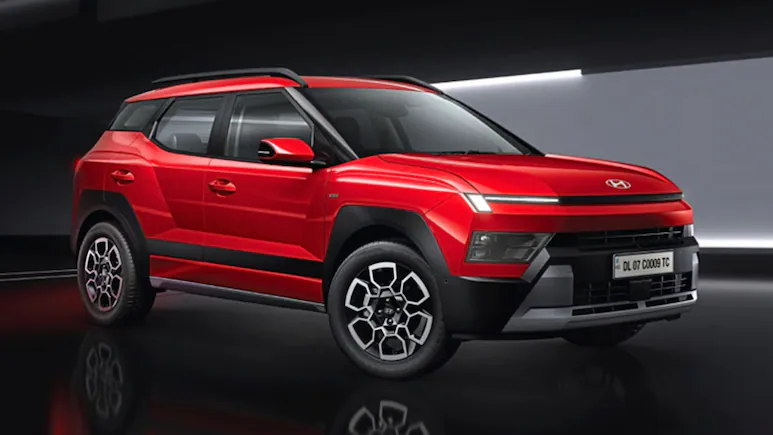
Engine Already Used in the Hyundai Creta
Hyundai has stated that it has sold more than six lakh vehicles equipped with the 1.5-litre MPi engine in India since 2020. The same engine is currently offered in the Hyundai Creta.
This existing presence gives the powertrain an established position within Hyundai’s Indian lineup. Buyers familiar with the Creta may recognise the engine’s basic specifications, although the driving experience in the Bayon could differ depending on the vehicle’s weight, tuning, transmission calibration and other engineering characteristics.
The engine’s established use also makes the Bayon’s powertrain configuration relatively straightforward to understand before launch.
However, the company’s reported sales figure should not be interpreted as a separate sales total for the Bayon. It refers to vehicles equipped with the engine, and Hyundai has not disclosed the Bayon’s expected sales volumes.
The manual and IVT options also mean that buyers will need to evaluate the transmission according to their own driving requirements rather than choosing solely on the basis of the engine’s specifications.
Interior Features: Twin 12.3-Inch Screens and Panoramic Sunroof
Hyundai has revealed several interior features for the Bayon, including twin curved 12.3-inch screens, a panoramic sunroof, a powered driver’s seat and a Bose audio system.
The twin-screen arrangement is a prominent element of the cabin’s technology package. Large displays can make vehicle information and infotainment functions easier to access, depending on the interface design and the way information is organised.
The final usability of the system will depend on factors such as screen visibility, menu layout, response speed and the placement of frequently used controls. Hyundai has not yet provided a complete breakdown of the infotainment system’s functions in the information available.
The panoramic sunroof is another feature likely to attract buyers who value a brighter cabin and a more open interior feel. Its availability across the variant lineup has not been specified, so prospective customers will need to check the final variant-wise equipment list.
A powered driver’s seat adds an additional convenience feature by allowing electrical adjustment rather than relying entirely on manual controls. The precise adjustment functions and the availability of memory settings have not been confirmed.
Meanwhile, the Bose audio system is intended to enhance the in-car listening experience. Details about the number of speakers, audio output and variant availability remain undisclosed.
Together, these features indicate that Hyundai is placing emphasis on cabin technology, convenience and comfort alongside the Bayon’s driving-related equipment.
Safety Package Includes Six Airbags and Electronic Stability Control
Safety is another major part of the Hyundai Bayon’s announced equipment package.
Hyundai says the SUV will offer more than 35 standard safety features across variants. The confirmed equipment includes six airbags, Electronic Stability Control (ESC), Hill-Start Assist Control and a tyre pressure monitoring system.
Six airbags are intended to provide additional occupant protection in a collision, while ESC helps the driver maintain control when the vehicle begins to deviate from its intended path under certain conditions.
Hill-Start Assist Control is designed to help prevent unwanted backward movement when starting on an incline. This can be useful in urban environments where drivers frequently encounter flyovers, ramps and steep parking areas.
The tyre pressure monitoring system is intended to alert drivers to tyre-pressure issues, depending on the system’s design. Maintaining appropriate tyre pressure is important for vehicle handling, tyre wear and overall road safety.
Hyundai has also described the Bayon as being built on its Global K Enhanced Platform and engineered for five-star Indian safety standards. This is the company’s stated positioning for the vehicle; it should not be confused with an independently awarded crash-test rating unless an official assessment is announced by the relevant testing authority.
The final safety specifications and the availability of individual features across variants will be important considerations for buyers.
Hyundai SmartSense Level 2 Pro ADAS With 23 Functions
The wider Bayon lineup will offer Hyundai SmartSense Level 2 Pro Advanced Driver Assistance Systems (ADAS), featuring 23 functions.
ADAS technologies are designed to assist drivers by providing alerts or, where supported, intervening in certain driving situations. Depending on the functions included, such systems can help with aspects of collision avoidance, lane-related monitoring and driving assistance.
However, the available information does not provide a complete list of the 23 functions. It is therefore not possible to confirm which specific assistance systems will be offered, how each will operate or whether all functions will be available on every variant.
The reference to Level 2 Pro ADAS should also be understood as a driver-assistance package rather than a system that replaces the need for driver supervision. Drivers remain responsible for monitoring road conditions and maintaining control of the vehicle.
The availability of these technologies could make the Bayon more attractive to customers who place a high priority on driver assistance and active safety equipment. As with other features, the final variant-wise specification list will determine which buyers receive access to the full package.
Hyundai Bayon Launch Date and Booking Details
Hyundai has scheduled the Bayon’s India launch for October 26, with bookings already open at Rs 11,000.
The booking amount allows interested customers to register their interest ahead of the official launch. However, the amount should not be confused with the vehicle’s final price, and the complete pricing structure has not been provided in the available information.
Hyundai is expected to disclose the remaining launch details through its official announcement. These may include the variant lineup, prices, colour options, equipment distribution and other specifications required by customers to make an informed purchase decision.
The Bayon’s positioning will depend not only on its features but also on how Hyundai prices the manual and IVT versions against competing SUVs.
Buyers should also compare the availability of features such as the panoramic sunroof, powered driver’s seat, Bose audio system and Level 2 Pro ADAS across the different variants before making a booking decision.
What the Newly Revealed Features Mean for Buyers
The Hyundai Bayon’s latest feature announcement puts particular emphasis on the IVT automatic version. Dash Boost Mode, Sporty Drive Tech, paddle shifters and three drive modes collectively aim to offer drivers more ways to tailor the vehicle’s response to different driving situations.
At the same time, the 1.5-litre MPi petrol engine, manual gearbox option and cabin equipment indicate that the SUV is being presented as a broader everyday-use package rather than a vehicle focused exclusively on sporty driving.
Its safety equipment is another important part of the offering, with six airbags, ESC, Hill-Start Assist Control, tyre pressure monitoring and the wider availability of Hyundai SmartSense Level 2 Pro ADAS with 23 functions.
There are still several details to be confirmed, including the complete variant lineup, official prices, fuel-efficiency figures and the precise operation of the newly announced driving features. Independent driving impressions will also be needed to establish how effectively Dash Boost Mode and Sporty Drive Tech translate into real-world performance.
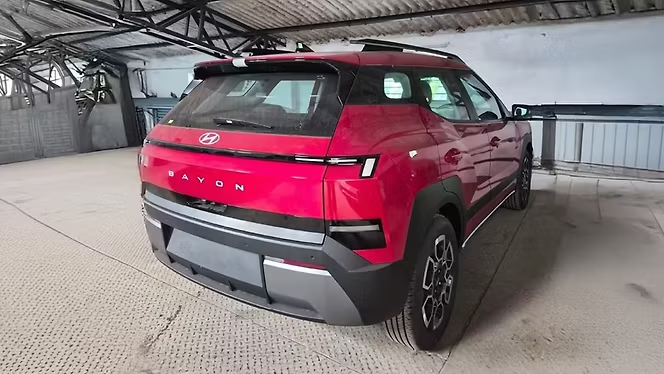
With its India launch scheduled for October 26, the Hyundai Bayon is moving closer to its official debut with an increasingly detailed feature list. The IVT automatic’s Dash Boost Mode, Sporty Drive Tech, paddle shifters and Eco, Normal and Sport drive modes are among the key highlights of the latest announcement.
The SUV will also offer a 1.5-litre petrol engine producing 115 hp and 143.8 Nm, a choice of manual and IVT transmissions, twin 12.3-inch screens, a panoramic sunroof, a powered driver’s seat and a Bose audio system. Hyundai has additionally outlined a safety package that includes more than 35 standard features across variants and Level 2 Pro ADAS with 23 functions across the wider lineup.
With bookings open at Rs 11,000, attention will now turn to the official prices, variant-wise equipment and the real-world performance of the automatic-driving technologies. These details will help determine how competitively the Bayon is positioned when it launches in India.