
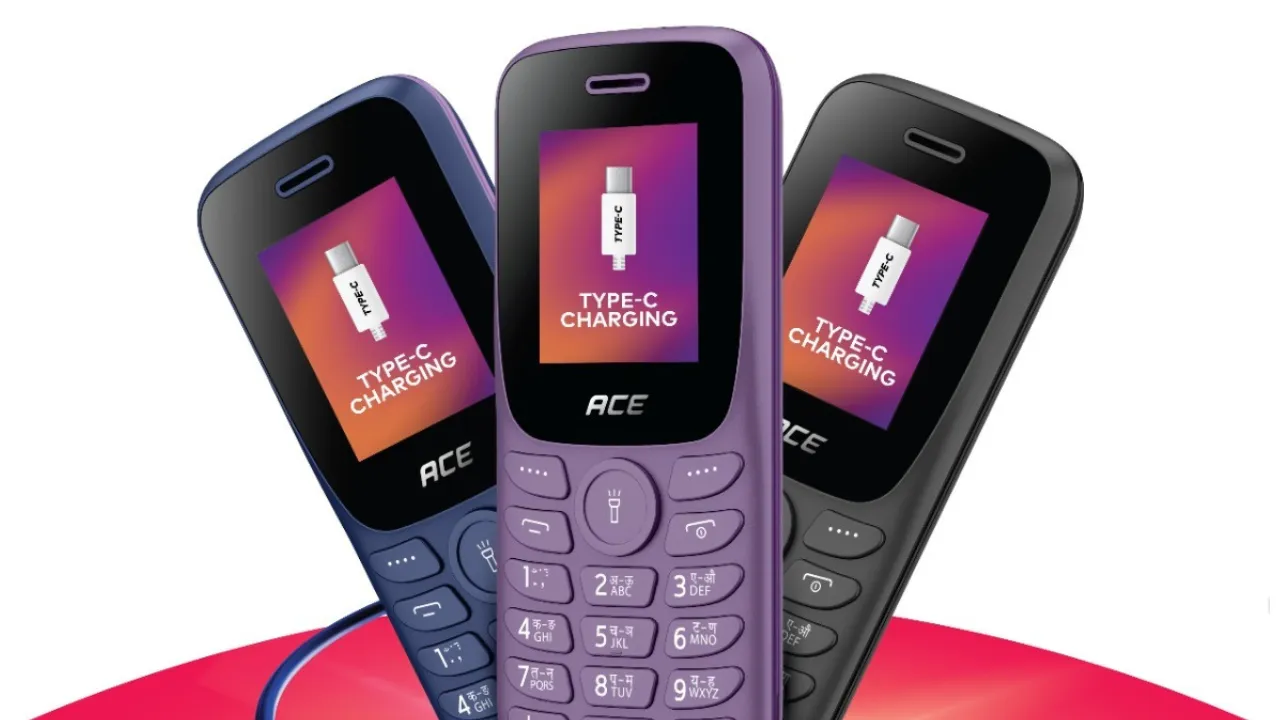
Itel has announced a major charging upgrade for its feature-phone portfolio in India, confirming that USB Type-C charging will now be standard across its entire feature-phone lineup. The move will replace the older Type-B charging interface across new models, including entry-level devices.
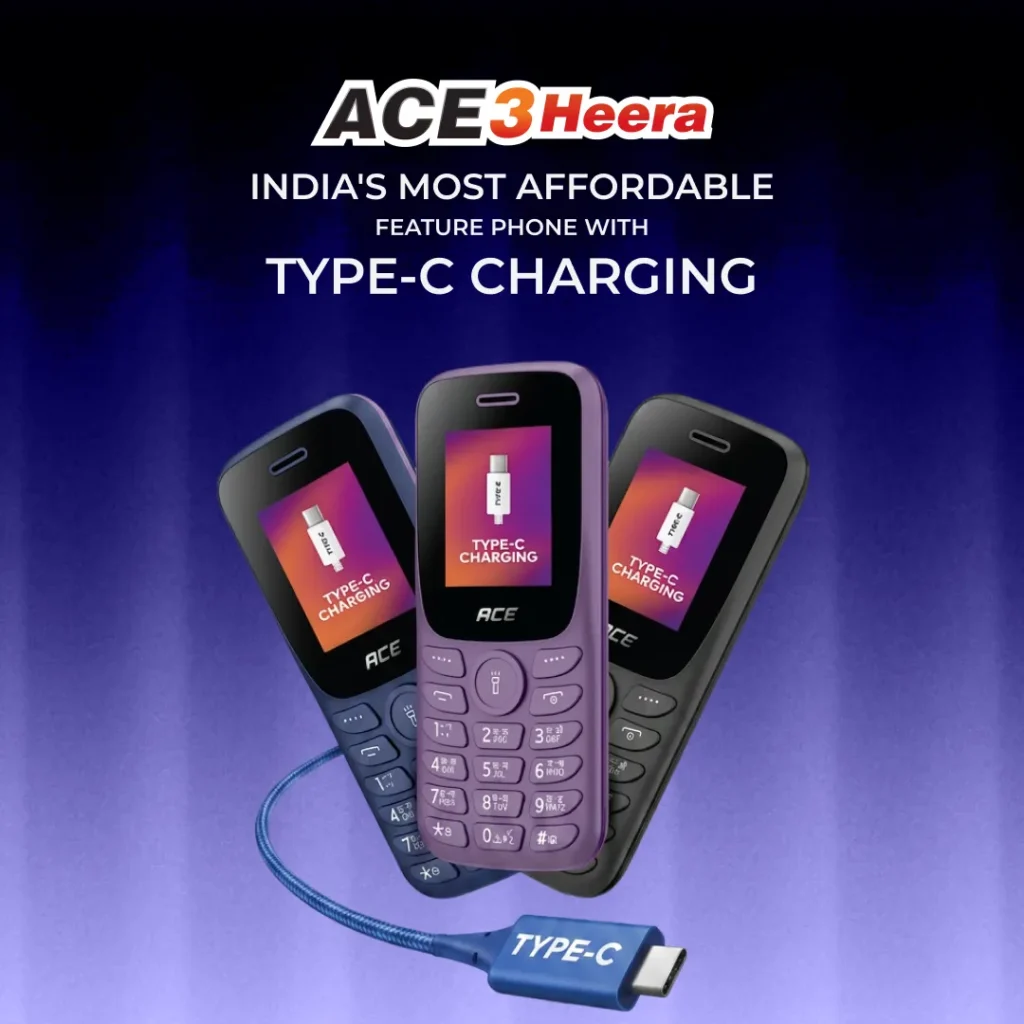
The company said the transition is aimed at giving feature-phone users a more consistent and convenient charging experience. Itel has also confirmed that its upcoming Heera feature phone will arrive with Type-C connectivity, extending the newer charging standard to another device in its entry-level portfolio.
Table of Contents
Itel Moves Away From Older Type-B Charging
Feature phones continue to serve an important segment of India’s mobile-phone market, particularly among users who prioritise basic communication, long battery life and affordability over advanced smartphone features.
However, charging technology in this category has traditionally lagged behind smartphones. With Type-C now becoming common across modern phones, tablets and other electronics, Itel’s decision is intended to reduce that gap.
Under the new policy, all new Itel feature phones sold in India will support USB Type-C charging, including entry-level models. The company said it plans to phase out the older Type-B connector from its feature-phone range.
The change means customers purchasing different devices from the company’s portfolio can increasingly rely on the same charging standard rather than keeping separate cables for different products.
Heera Feature Phone to Get Type-C Support
The upcoming Heera feature phone is one of the products specifically mentioned in the announcement.
Itel said the next version of the Heera will feature Type-C charging and will be positioned in the entry-level segment. While the announcement focuses primarily on the charging upgrade rather than providing a complete specification sheet for the upcoming device, the inclusion of Type-C marks an important change for the model.
The decision is also notable because Type-C support will no longer be limited to selected premium or higher-priced feature phones within the company’s range.
Instead, Itel intends to make the charging interface part of its broader portfolio strategy.
Why Type-C Matters for Feature Phone Users
USB Type-C has become increasingly common across consumer electronics because of its reversible connector design and broad compatibility.
Unlike older connectors that require users to position the plug correctly, Type-C can be inserted either way. This makes everyday charging simpler, particularly for users who frequently connect and disconnect their phones.
A common charging interface can also reduce the need to maintain different cables for different devices.
For feature-phone owners who also use smartphones, tablets, earbuds or other Type-C-equipped products, the transition could make charging more convenient because a compatible cable may already be available at home or at work.
Itel described the move as an effort to introduce a universal charging standard across its portfolio while improving charging convenience and reliability.
From Smartphones to Feature Phones
Itel had already adopted USB Type-C across its smartphone portfolio and on selected feature phones. The latest announcement extends that approach to the company’s entire feature-phone range in India.
This creates a more consistent product strategy across different categories.
The move is particularly relevant as the distinction between basic and advanced mobile-device hardware continues to evolve. While feature phones remain focused on essential functions, manufacturers are increasingly adding modern connectivity and usability features to make them more practical for today’s users.
Recent Itel launches illustrate this trend. For example, the company’s Power 451 introduced Type-C charging alongside features such as AI-based environmental noise cancellation, Bluetooth connectivity and a 2,500mAh battery.
The company’s Flip 1 also previously offered USB Type-C charging, along with a flip design, a 2.4-inch display and Bluetooth calling.
The latest portfolio-wide announcement takes that individual-device approach and turns it into a broader product policy.
Large Retail Network Supports the Strategy
Itel’s extensive retail presence could help the company roll out the charging transition across India’s diverse consumer market.
According to the company, it currently has a presence across more than 1.3 lakh retail outlets in India, supported by a network of more than 1,000 service centres.
This distribution network is particularly significant for feature phones because the category continues to have a strong offline retail presence.
Unlike premium smartphones, which are increasingly purchased online, affordable feature phones are often bought from local mobile stores and authorised retailers. A broad physical distribution network therefore remains important for reaching customers across cities, towns and smaller markets.
The availability of service centres also gives customers access to after-sales support.
One-Year Counter Replacement Policy
Alongside its charging strategy, Itel continues to offer a one-year counter replacement policy for eligible feature phones affected by manufacturing defects.
Under the policy, eligible customers can replace their devices at participating retail outlets within one year of purchase, subject to the company’s terms and conditions.
Such policies can be particularly important in the entry-level segment, where affordability and reliability are major considerations for buyers.
The combination of modern charging technology and an established retail and service network is therefore part of a broader attempt to make feature phones more convenient without significantly changing their basic proposition.
Feature Phones Continue to Evolve
The feature-phone market has changed considerably over the years.
Earlier devices were largely focused on voice calls and text messaging. Modern feature phones can offer additional capabilities such as Bluetooth, wireless FM, recording functions, digital-payment support, larger batteries, regional-language interfaces and improved call-quality technologies.
Itel’s recent product launches reflect this evolution.
The Power 451, for example, includes AI Environmental Noise Cancellation, which the company positioned as a way of improving call clarity in noisy surroundings. It also offers Bluetooth, wireless FM radio with recording, expandable storage and a bilingual King Voice assistant.
Similarly, the Aqua feature phone was introduced with an IP67 rating and AI-based environmental noise cancellation, showing how manufacturers are bringing selected modern technologies into affordable devices.
Against this background, Type-C charging represents another incremental upgrade rather than a complete change in the feature-phone concept.
Type-C Could Improve Everyday Convenience
For many users, the biggest benefit of the move may simply be convenience.
A standardised charging interface means customers are less likely to need a separate cable specifically for an older feature phone. It can also make it easier to borrow a compatible charger or use an existing Type-C charging setup.
The reversible design of the connector further simplifies the charging process.
While Type-C itself does not automatically guarantee faster charging, better battery performance or advanced connectivity, standardising the port can improve compatibility and usability.
The actual charging speed and capabilities of individual models will continue to depend on their hardware specifications.
India’s Affordable Mobile Market
The announcement also highlights the importance of India’s affordable mobile-device segment.
Smartphones dominate much of the consumer technology conversation, but feature phones continue to occupy a distinct position. They can appeal to customers looking for straightforward communication, long battery endurance and lower purchase costs.
They are also used as secondary devices by consumers who want a simple phone for calls or situations where carrying a primary smartphone may not be necessary.
For such users, practical improvements can be more meaningful than adding high-end specifications.
A modern charging port, stronger battery management, improved call quality and durable construction can collectively make an affordable phone more useful.
What the Move Means for Itel
By making Type-C standard across its feature-phone lineup, Itel is effectively creating a consistent hardware expectation for its customers.
The company is moving away from maintaining separate charging standards across different models and instead adopting the interface that has become increasingly widespread across consumer electronics.
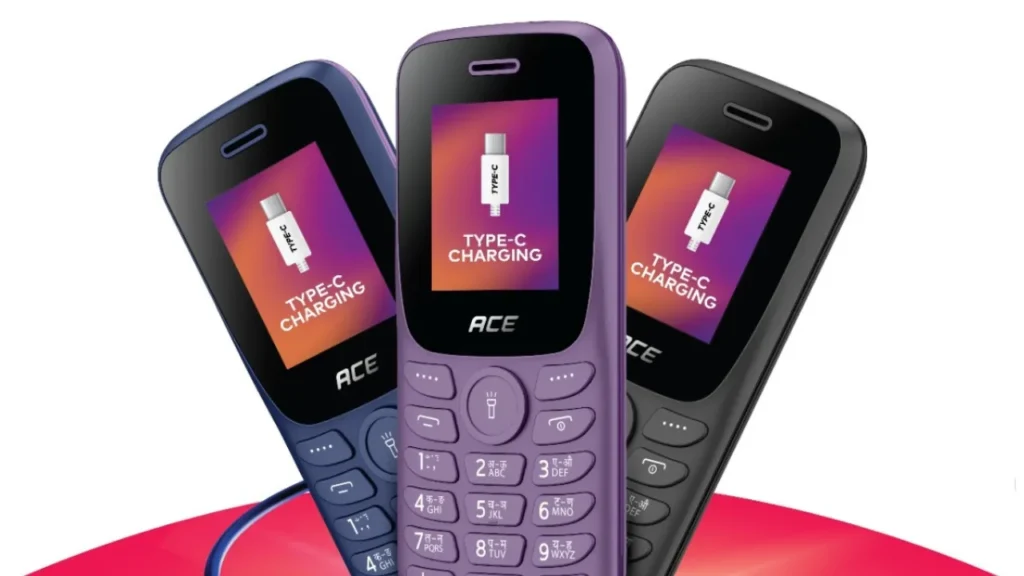
The strategy could also help simplify product messaging. Customers shopping for a new Itel feature phone will no longer have to check whether a particular model uses the older Type-B connector or the newer Type-C standard, assuming they are buying a new model covered by the company’s announcement.
The upcoming Heera will be one of the next examples of this approach.
A Small Change With Wider Significance
The shift from Type-B to Type-C may appear to be a relatively small hardware change, but its significance lies in the scale of the rollout.
Rather than introducing Type-C on a single flagship or premium model, Itel is extending it across the entire feature-phone portfolio in India, including entry-level devices.
That approach reflects the broader movement toward common charging standards across the electronics industry.
For feature-phone users, the immediate advantage is simpler charging and greater compatibility with cables already used for other devices. For Itel, the move represents another step toward modernising its affordable mobile portfolio while maintaining its focus on accessibility.
As the company prepares to introduce the Type-C-equipped Heera and transition future feature phones away from Type-B charging, the charging port is becoming more than a technical specification—it is part of the company’s broader effort to bring modern everyday conveniences to India’s feature-phone segment.