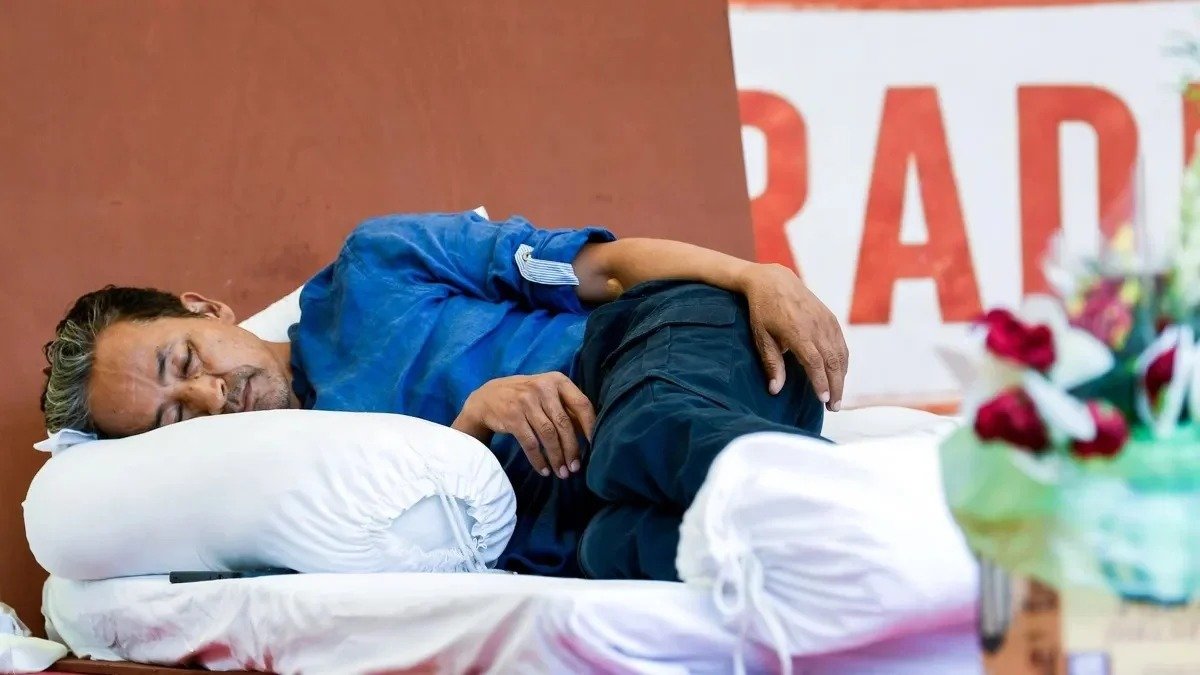
The Delhi High Court is set to hear a crucial petition filed by Gitanjali Angmo, wife of activist Sonam Wangchuk, seeking his transfer from Safdarjung Hospital to a private medical facility of the family’s choice. The matter has gained national attention as it involves questions surrounding an individual’s medical treatment, the government’s responsibility to protect life, and the legal rights of a person continuing an indefinite hunger strike.
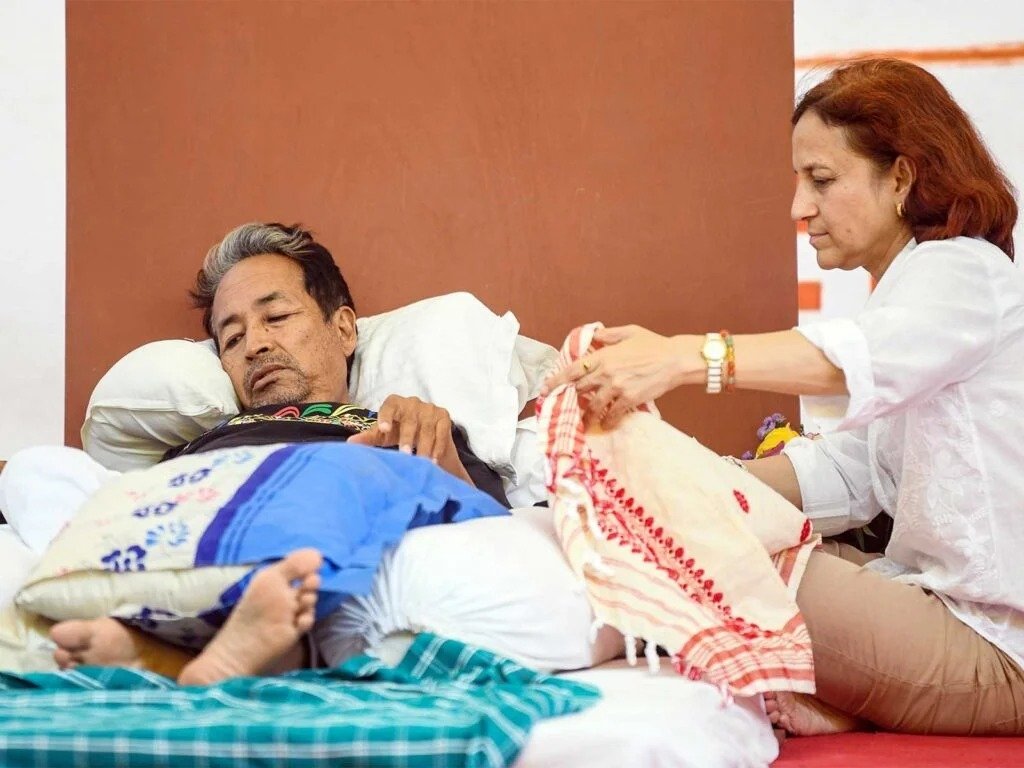
The petition filed by Gitanjali comes after Sonam Wangchuk was shifted from Delhi’s Jantar Mantar protest site to Safdarjung Hospital following concerns over his deteriorating health. While the family argues that he should be allowed to receive treatment at a private hospital they trust, the Centre has maintained that the decision to hospitalise him was taken solely to protect his life and ensure continuous medical supervision.
The High Court has decided to examine the medical facts in detail before passing any further orders. It has directed the doctors treating Sonam Wangchuk to remain present during the next hearing and submit his latest medical reports so that the court can make an informed decision regarding Gitanjali’s request.
Table of Contents
Delhi High Court Seeks Medical Reports
During the hearing, the Delhi High Court made it clear that medical evidence would play a central role in deciding the petition filed by Gitanjali.
The court directed the medical team responsible for Sonam Wangchuk’s treatment to appear before it with complete health records and explain his present medical condition.
Rather than issuing an immediate order permitting his transfer, the court decided that it would first interact directly with the treating doctors and carefully examine the medical opinion before deciding whether shifting him to another hospital would be appropriate.
This approach reflects the court’s attempt to balance the patient’s personal preferences with professional medical advice.
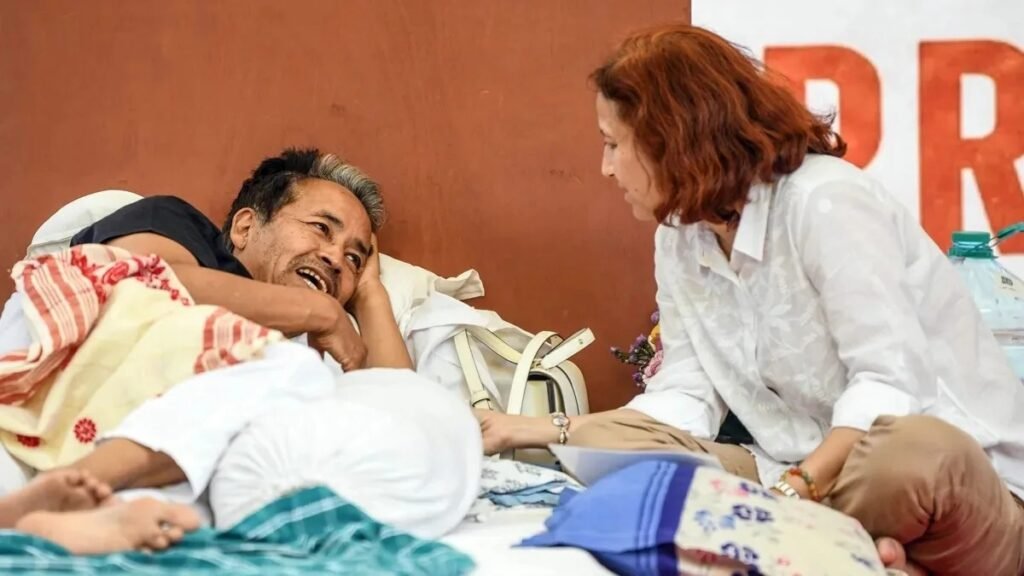
Gitanjali Seeks Transfer to Private Hospital
The petition filed by Gitanjali argues that the family has lost confidence in the treatment being provided at Safdarjung Hospital.
According to the plea, Gitanjali wants Sonam Wangchuk to be shifted to a private hospital selected by the family, where they believe he would receive treatment in an environment they consider more suitable.
The petition also raises concerns regarding his medical care while remaining under observation.
By approaching the Delhi High Court, Gitanjali has requested judicial intervention to permit the transfer after appropriate medical assessment.
The hearing is expected to determine whether the family’s request can be accommodated without compromising Wangchuk’s health.
Centre Defends Decision to Shift Wangchuk
During the proceedings, the Centre defended its actions through Solicitor General Tushar Mehta.
Presenting the government’s position, Mehta argued that the administration has a constitutional responsibility to protect the life of every citizen.
He clarified that the government’s intervention was intended solely to save Sonam Wangchuk’s life after concerns emerged regarding the health risks associated with his prolonged hunger strike.
According to the Centre, this was not an attempt to interfere with an individual’s protest but a necessary medical intervention to prevent a potentially life-threatening situation.
The government also maintained that public authorities have a responsibility to act when a person’s deteriorating health may have wider implications for public order and safety.

AIIMS Doctors Also Monitoring Health
The Centre informed the High Court that doctors from the All India Institute of Medical Sciences (AIIMS), along with specialists from Safdarjung Hospital, are monitoring Sonam Wangchuk’s condition.
According to the government’s submissions, the combined medical opinion is that continuous supervision remains essential because prolonged fasting can lead to sudden complications even when vital signs initially appear stable.
Doctors reportedly believe that timely medical intervention remains necessary to minimise health risks.
This medical opinion forms an important part of the evidence the court will consider while deciding Gitanjali’s petition.
Court Earlier Declined Interim Relief
The current hearing follows an earlier special hearing conducted by the Delhi High Court on Sunday.
During that hearing, the court declined to pass any interim order allowing Sonam Wangchuk to be shifted immediately to a private hospital.
Instead, the court observed that the circumstances required careful examination before any decision could be taken.
Justice Mini Pushkarna held that the government’s decision to move him from the protest site to the hospital could not be described as arbitrary.
The court noted that Sonam Wangchuk had not voluntarily admitted himself to any hospital despite his prolonged fast, making government intervention legally justifiable under the circumstances.
Court Finds No Evidence of Forced Medical Treatment
One of the significant observations made by the High Court relates to allegations of forced treatment.
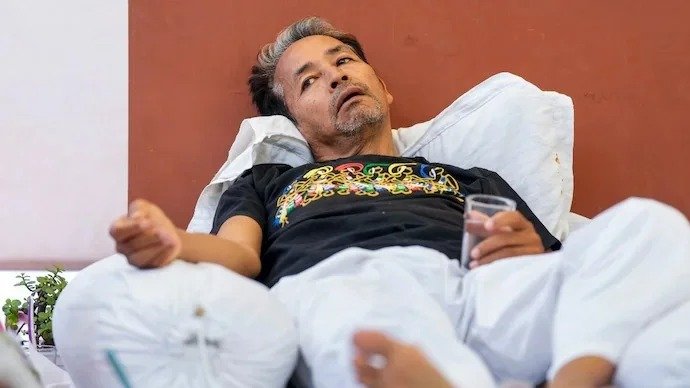
After reviewing the available material, the court observed that doctors at Safdarjung Hospital had only administered medical support that Sonam Wangchuk had consented to receive.
According to the court, he had accepted Oral Rehydration Solution (ORS) without sugar and Potassium Chloride tablets.
Since the available records indicated that these treatments were provided with his consent, the court observed that there was no evidence suggesting his bodily autonomy had been violated.
This finding became an important factor in the court’s decision not to grant immediate relief sought by Gitanjali.
Family Members Allowed Access
The High Court also considered submissions made by the Centre regarding access provided to family members.
According to the government, both Gitanjali and Sonam Wangchuk’s brother have been allowed to meet him regularly inside the hospital.
The Centre further informed the court that a separate room had been made available for the family to facilitate their interaction with him.
These arrangements were cited by the government to demonstrate that the administration has attempted to balance medical supervision with the family’s concerns.
The court accepted these submissions while considering the petition.
Medical Condition Remains Central Issue
Although the legal proceedings involve questions regarding personal choice and administrative action, the central issue before the High Court remains Sonam Wangchuk’s medical condition.
Prolonged hunger strikes can result in electrolyte imbalance, muscle loss, dehydration, low blood pressure, kidney complications, and other potentially life-threatening medical conditions.
Doctors generally recommend continuous monitoring because complications may develop suddenly even if a patient initially appears stable.
For this reason, the medical reports requested by the court are expected to play a decisive role in determining whether transferring Sonam Wangchuk would be medically safe.
The court has indicated that expert medical opinion will guide its decision rather than political or emotional considerations.
Legal Balance Between Individual Rights and State Responsibility
The case also highlights an important constitutional question regarding the balance between individual autonomy and the state’s obligation to preserve life.
On one hand, Gitanjali has argued that the family should have the freedom to choose the hospital where Sonam Wangchuk receives treatment.
On the other hand, the Centre maintains that it has a legal duty to intervene when an individual’s life faces serious risk, particularly if the situation could also affect public order.
Courts have often faced similar questions involving hunger strikes, medical consent, and state intervention, requiring judges to carefully balance personal liberty with public interest and medical necessity.
The Delhi High Court’s decision is therefore expected to provide clarity on how these competing interests should be addressed in this particular case.
Hearing Expected After Medical Assessment
The next hearing is likely to focus almost entirely on medical evidence.
The doctors treating Sonam Wangchuk will explain his current health condition, ongoing treatment, potential risks, and whether shifting him to another hospital would be medically advisable.
Only after examining these reports and hearing the experts will the High Court decide the plea filed by Gitanjali seeking his transfer to a private hospital. Until then, Sonam Wangchuk is expected to remain under continuous medical observation at Safdarjung Hospital while legal proceedings continue before the Delhi High Court.