Jaipur Call-Centre and Meerut-Ghaziabad Mule Account Network Dismantled in Coordinated Cybercrime Crackdown
Cyber fraud syndicate allegedly using stolen mobile phones, mule bank accounts, fraudulent SIM cards and a call-centre-style operation to siphon money from victims’ bank accounts has been busted by Delhi Police. Nine people have been arrested in coordinated operations carried out in Jaipur, Rajasthan, and Meerut-Ghaziabad in Uttar Pradesh.
The investigation began with the theft of a mobile phone belonging to an 88-year-old senior citizen from West Patel Nagar, Delhi. What initially appeared to be a conventional mobile theft eventually led Cyber Police Station, Central District, to uncover a wider network allegedly involved in unauthorised banking transactions and rapid movement of stolen funds.
According to Delhi Police, the syndicate had separate operational modules handling different parts of the fraud chain. While one group allegedly supplied mule bank accounts, debit cards, SIM cards and point-of-sale machines, another group operated a sophisticated call-centre-style setup in Jaipur to access banking systems, route transactions and liquidate funds.
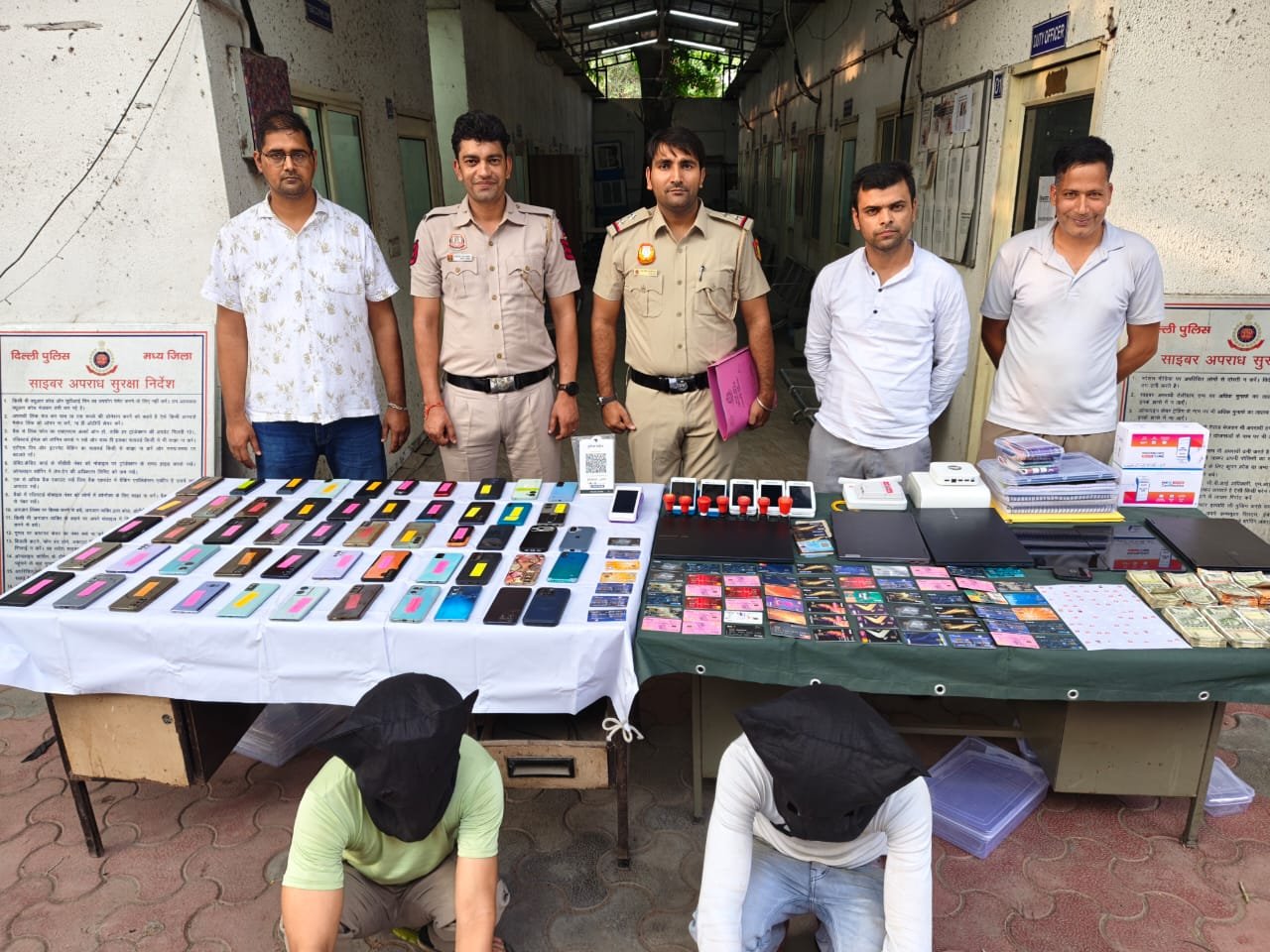
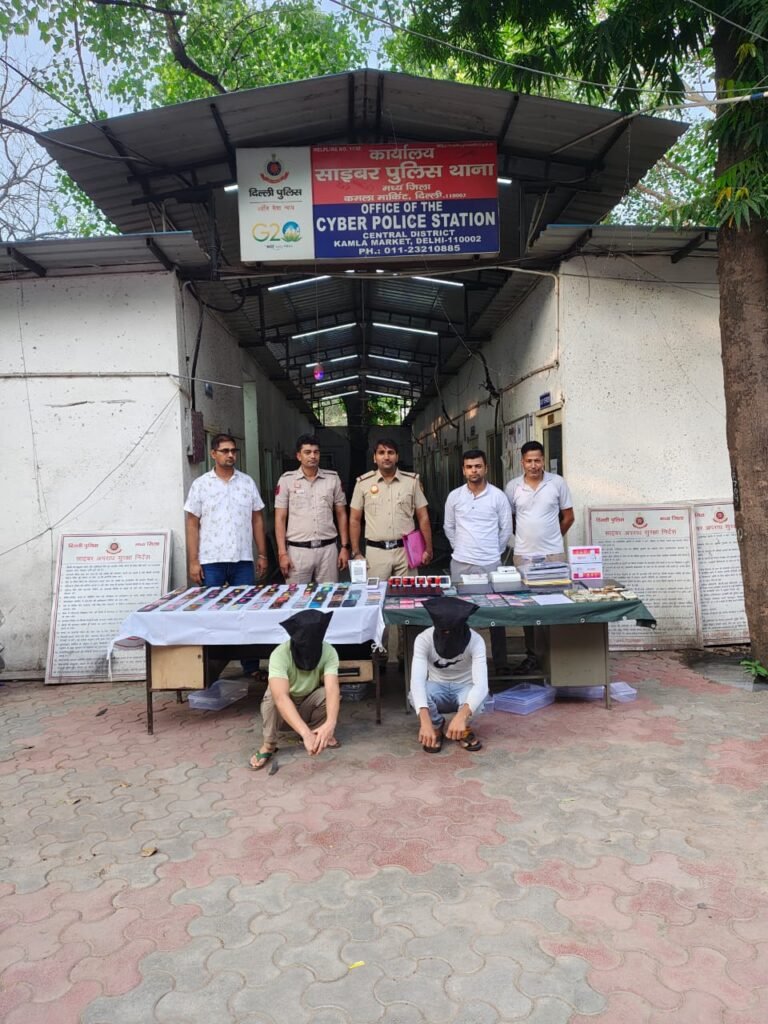
Police said 52 mobile phones, 145 SIM cards, 70 debit cards, 13 bank passbooks, six POS machines, four laptops, two mobile tablets, four high-speed internet routers and ₹4 lakh in cash were recovered during the raids.
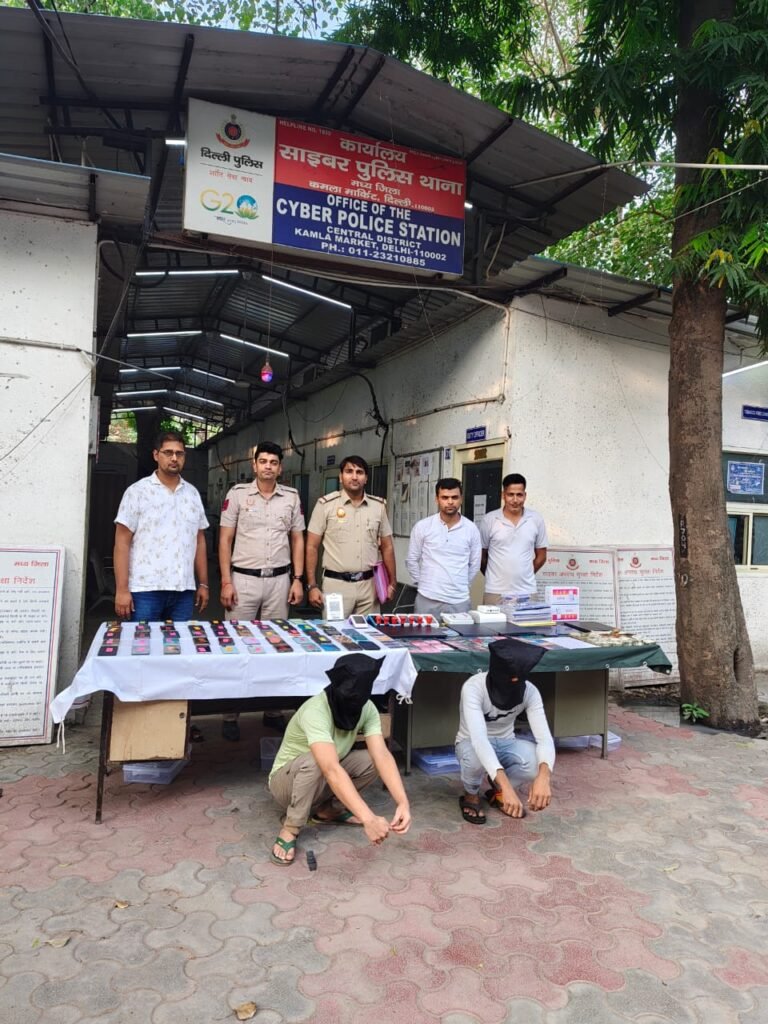
Table of Contents
Stolen Mobile Phone Led Police to Cyber-Fraud Network
The investigation originated from a complaint filed on the National Cyber Crime Reporting Portal by an 88-year-old resident of West Patel Nagar.
According to the police, the victim’s mobile phone was stolen on May 19, 2026. Two days later, on May 21, the senior citizen reissued his SIM card. He subsequently received SMS alerts indicating that money had been withdrawn from his Canara Bank account through three unauthorised transactions linked to the alleged cyber fraud operation.
The three transactions involved ₹25,000, ₹20,000 and ₹25,000 respectively, resulting in a total loss of ₹70,000.
The victim immediately reported the unauthorised transactions through the National Cyber Crime Helpline 1930, helping authorities begin tracing the alleged cyber fraud network.
Following the complaint, FIR No. 36/2026 was registered on July 23, 2026, under Section 318(4) of the Bharatiya Nyaya Sanhita at the Cyber Police Station, Central District.
The case was then treated as a high-priority technical investigation, with police teams working to trace the digital and financial trail behind the suspected cyber fraud transactions.
Investigation Reveals Multi-Location Cybercrime Operation
The investigation reportedly established that the alleged cyber fraud was not being conducted by a single group operating from one location.
Delhi Police identified separate operational components linked to the network.
One module allegedly involved the supply of mule bank accounts, debit cards, SIM cards and POS machines. This network was traced to areas around Meerut and Ghaziabad in Uttar Pradesh.
Another component was operating from Jaipur, where investigators allegedly found a functioning call-centre-style setup equipped with computers and other electronic devices.
According to police, the Jaipur operators were allegedly responsible for the technical side of the cyber fraud operation. They reportedly accessed victims’ banking accounts, routed unauthorised transactions into mule accounts and subsequently moved or withdrew the funds through POS machines and online payment channels.
The investigation therefore exposed a structured cyber fraud network in which different individuals allegedly performed different functions.
Coordinated Raids Conducted in Jaipur, Meerut and Ghaziabad
Given the possibility that digital evidence could be deleted or destroyed, Delhi Police formed dedicated teams to move quickly against the suspected cyber fraud operators.
The operation was conducted under the direct supervision of Inspector Yograj Dalal, SHO of Cyber Police Station, with overall supervision from ACP Paharganj Saurabh A Narendra.
The first team was headed by Sub-Inspector Naveen, the investigating officer, along with Constable Mukesh. The team was deployed to Jaipur to locate the alleged principal banking transaction operators linked to the cyber fraud case.
A second team comprising Head Constables Sanjeev and Deepak and Constable Deepak was sent to Meerut and Ghaziabad to target the alleged suppliers of mule accounts and associated equipment.
The simultaneous operations were designed to prevent suspects in one part of the alleged cyber fraud network from destroying evidence or alerting associates in another location.
Jaipur Raid Uncovers Call-Centre-Style Setup
The Jaipur operation led police to a residential premises in Jhotwara, where investigators allegedly found a fully functional setup resembling an illegal call centre used for cyber fraud activities.
Police arrested Nikhil Soni, 26, who has been identified as the alleged main operator and technical mastermind of the Jaipur module.
Four other alleged operators were also arrested from the Jaipur network: Abishek Kumar Jha, 23; Anand Sah Sonar, 26; Prince Sah Sonar, 20; and Bishek Kumar Jha, 21.
All four are residents of areas in Jaipur, according to the police press release.
During the raid, investigators recovered laptops, tablets, routers, bank passbooks, personal diaries containing transaction-related information and ₹4 lakh in cash, which police linked to the alleged cyber fraud operation.
Four Alleged Mule Account Suppliers Arrested
At the same time, the second police team conducted raids in Meerut and Ghaziabad as part of the alleged cyber fraud investigation.
Four alleged suppliers linked to the mule-account network were arrested. They have been identified as Amar Jatav, 23, of Meerut; Harsh, 23, of Ghaziabad; Mohan, 24, of Ghaziabad; and Vashu, 19, of Meerut.
According to investigators, these individuals allegedly formed part of the supply chain that provided bank accounts and related financial instruments used to receive and move fraudulent funds linked to the cyber fraud network.
Police recovered POS machines and mobile devices during these operations.
The seizure of such equipment is expected to help investigators establish how money was moved after unauthorised transactions were initiated from victims’ accounts.
52 Mobile Phones and 145 SIM Cards Seized
The scale of the recovery has emerged as one of the significant aspects of the cyber fraud investigation.
Delhi Police said they recovered 52 mobile phones, which allegedly contained victim-related information, banking applications and WhatsApp communications.
A total of 145 SIM cards were also seized. According to investigators, these SIM cards were allegedly used to manage unauthorised banking or UPI-related sessions associated with the cyber fraud operation.
Police also recovered 70 debit cards and 13 bank passbooks, which they described as part of the mule-account inventory.
Six POS machines were seized and were allegedly used to facilitate rapid cash liquidation.
The police also recovered four laptops, two mobile tablets and four high-speed internet routers.
In addition, ₹4 lakh in cash was recovered, which police have described as suspected proceeds of cybercrime.
Personal diaries containing transaction ledgers and victim contact directories were also seized, providing investigators with additional material for examining the alleged cyber fraud network.
Police Trace 19 Other Complaints
The investigation is now moving beyond the original ₹70,000 complaint.
Delhi Police said forensic examination of the seized laptops, tablets and mobile phones is underway. Investigators are attempting to connect the recovered mule accounts and digital evidence with other cyber fraud complaints.
According to the police, the investigation has already identified links to 19 complaints registered on the National Cyber Crime Reporting Portal across different states.
The forensic analysis could help investigators determine the number of victims associated with the cyber fraud network, identify additional financial transactions and establish the total amount of money allegedly moved through the syndicate.
Police are also conducting further financial analysis to trace the flow of funds and identify possible additional members of the network.
How the Alleged Fraud Network Operated
The investigation points to an organised system in which different participants allegedly handled different stages of the cyber fraud operation.
The first component involved the alleged theft of mobile phones from unsuspecting victims.
Once a phone was stolen, the fraudsters could potentially exploit access to information stored on the device or linked to the victim’s mobile number.
The second component allegedly involved suppliers who maintained access to mule bank accounts, debit cards, SIM cards and POS machines.
The third operational component was allegedly based in Jaipur, where technical operators worked from a call-centre-style setup.
Police allege that the technical operators used the available digital infrastructure to access banking accounts, route unauthorised transactions through mule accounts and subsequently convert the stolen funds into cash or move them through online payment channels.
The structure demonstrates how modern cyber fraud networks can divide responsibilities among multiple locations, making the investigation more complex.
Police Warn Citizens After Major Cybercrime Bust
Delhi Police have issued a specific advisory following the operation, particularly regarding the risks associated with stolen or lost mobile phones.
Citizens have been advised to immediately block their SIM cards through their telecom service provider if their mobile phone is lost or stolen.
Police have also advised citizens to report stolen handsets through the Central Equipment Identity Register, or CEIR, so that the device’s IMEI can be blocked nationwide.
The advisory is particularly important because mobile phones are increasingly linked to banking applications, UPI services, email accounts, social media profiles and other sensitive digital services.
Any delay in securing a lost device or mobile number can increase the potential risk of unauthorised access.
Report Unauthorised Transactions Immediately
Delhi Police have also urged citizens to report unauthorised financial transactions without delay.
Victims can contact the National Cyber Crime Helpline at 1930 or report incidents through the National Cyber Crime Reporting Portal.
The rapid reporting of financial fraud can be important because investigators and financial institutions may have a greater opportunity to trace or restrict suspicious transactions when they are reported promptly.
In the present case, the 88-year-old complainant contacted the cybercrime helpline immediately after discovering the unauthorised withdrawals, eventually helping investigators uncover a much larger alleged network.
Investigation Continues
Although nine people have been arrested, Delhi Police said the investigation remains ongoing.
Digital forensic teams are examining the seized electronic devices, while investigators continue to analyse bank accounts, transaction records, SIM cards and other evidence.
The police are also attempting to determine the full extent of the alleged financial operation and identify whether additional people were involved.
The identification of links to 19 complaints across different states indicates that the investigation could expand further.
For investigators, the seized phones, laptops, tablets, SIM cards, debit cards, passbooks and transaction records could provide crucial leads into the network’s alleged operations.
The case also highlights the increasingly organised nature of cybercrime, where a stolen mobile phone can potentially become the entry point into a much broader financial fraud operation.
For citizens, Delhi Police’s advisory underlines the importance of immediately securing mobile connections, blocking stolen devices and reporting suspicious bank transactions.
The investigation into the alleged interstate syndicate is continuing, with police focusing on digital evidence, financial trails and possible links to additional victims and suspects.