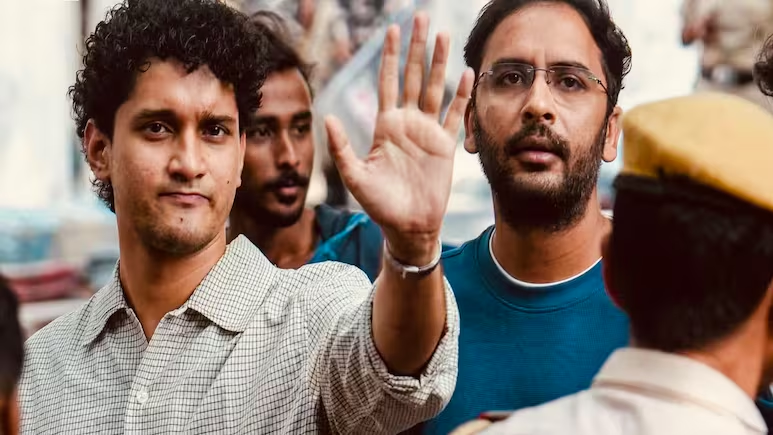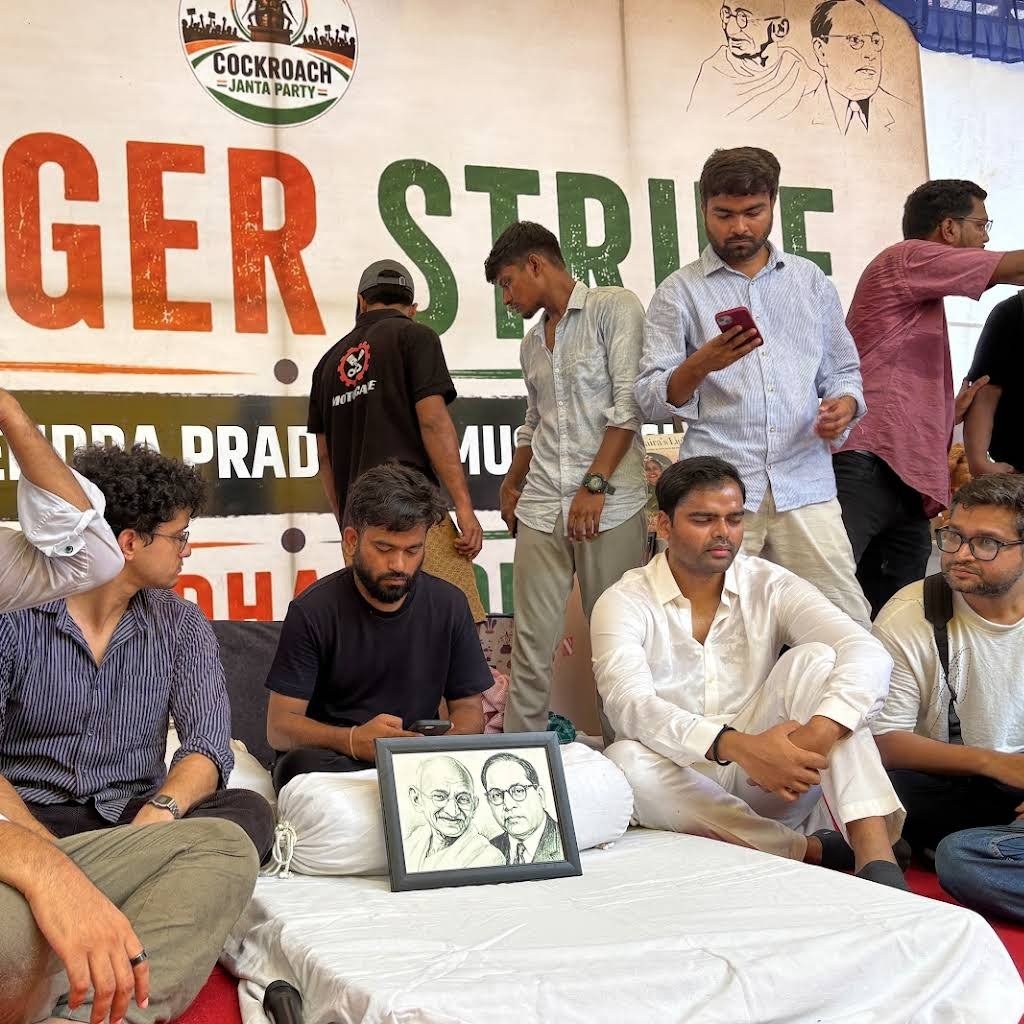
The political and public debate around the ongoing Hunger Strike intensified on Saturday after Cockroach Janta Party (CJP) founder Abhijeet Dipke announced that he would begin an indefinite Hunger Strike following the removal of environmental activist Sonam Wangchuk from Delhi’s Jantar Mantar and his transfer to a hospital. The development has added a new dimension to the protest, which has already drawn national attention over the past three weeks.
Dipke made the announcement through a post on X shortly after Delhi Police shifted Wangchuk for medical treatment. His decision signals continued support for the activist’s campaign while raising fresh questions about the government’s response to prolonged peaceful protests and the health risks associated with an extended Hunger Strike.
Table of Contents
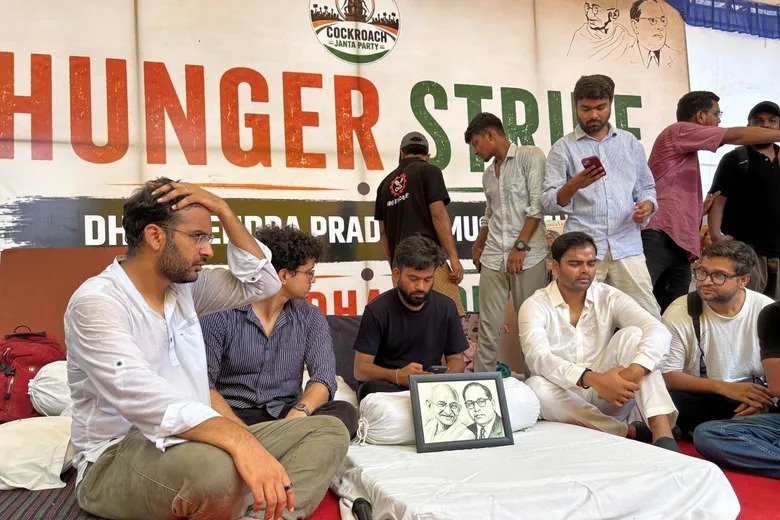
Abhijeet Dipke Announces Indefinite Hunger Strike
Abhijeet Dipke confirmed his decision through a brief message on social media, stating that he was beginning an indefinite Hunger Strike with immediate effect. The announcement came only hours after authorities removed Wangchuk from the protest site in the early morning.
Although Dipke did not provide a detailed statement outlining his immediate demands, his move is widely being viewed as an effort to continue public attention on the issues that Wangchuk has been raising during his protest. By beginning his own Hunger Strike, Dipke has indicated that the campaign will continue even while Wangchuk receives medical care.
His announcement quickly gained attention online, with supporters and political observers discussing whether the latest development could further expand the movement.
Sonam Wangchuk Shifted to Hospital After Health Concerns
Earlier on Saturday, Delhi Police removed Sonam Wangchuk from Jantar Mantar and admitted him to a hospital after nearly three weeks of continuous fasting. According to the office of the Deputy Commissioner of Police (New Delhi), the activist was shifted for “essential medical care” as his health required close monitoring.
Medical experts generally warn that an extended Hunger Strike lasting several weeks can lead to serious complications, including dehydration, electrolyte imbalance, muscle loss, weakened immunity, reduced blood pressure, and risks to vital organs. Continuous medical supervision becomes necessary once a prolonged fast reaches an advanced stage.
Officials stated that the decision to move Wangchuk was based on medical necessity rather than any change in the status of his protest. Authorities have maintained that protecting the life and health of an individual remains a priority when such situations arise.
Protest Continues Despite Hospitalisation
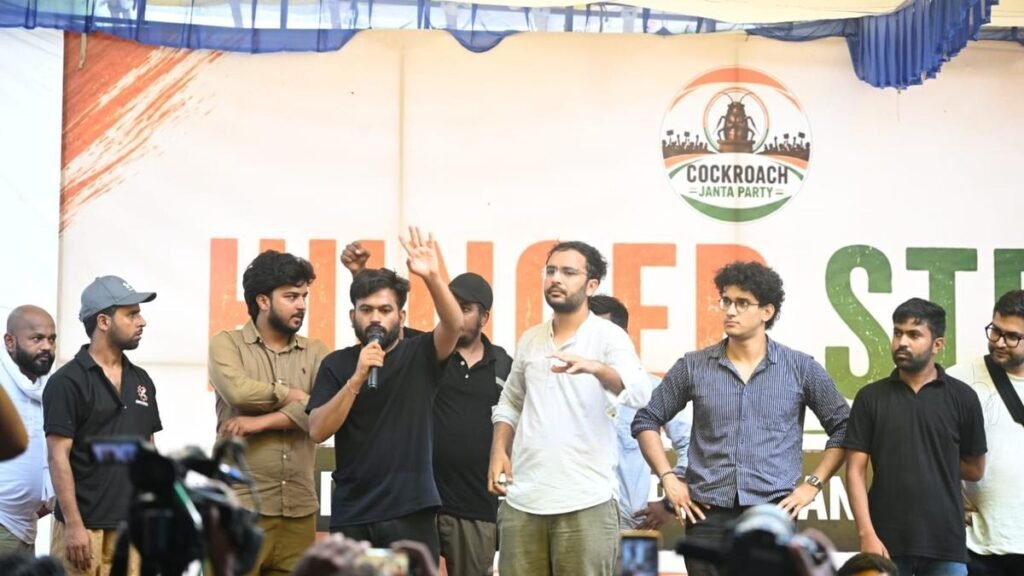
Although Wangchuk is no longer present at the protest venue, the movement has not come to an end. Dipke’s decision to begin his own Hunger Strike demonstrates that supporters intend to keep public attention focused on the campaign.
Supporters gathered at various locations have continued expressing solidarity through peaceful demonstrations, discussions on social media, and public appeals. Many believe that the shift of leadership from Wangchuk to another protester reflects an attempt to ensure that the campaign continues without interruption.
Political observers note that symbolic actions such as an indefinite Hunger Strike often carry significant emotional and political weight because they demonstrate a willingness to endure personal hardship for a public cause.
Why Hunger Strikes Draw National Attention
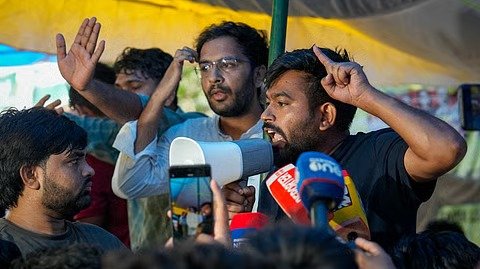
A Hunger Strike has long been recognised as one of the most powerful forms of non-violent protest in India. Rather than using demonstrations involving force or disruption, participants choose voluntary fasting to draw attention to their demands and encourage dialogue.
Throughout India’s democratic history, several prominent leaders, social reformers, and activists have used Hunger Strike movements to highlight concerns ranging from governance and environmental protection to corruption, social justice, and constitutional rights.
The approach is intended to generate public awareness while maintaining a peaceful method of protest. However, prolonged fasting also creates serious medical challenges, making the balance between democratic expression and public safety increasingly complex for authorities.
Police Explain the Decision
Delhi Police have stated that Wangchuk’s removal from the protest site was undertaken after considering his medical condition. According to officials, the activist required immediate healthcare after spending around 20 days on continuous fasting.
Authorities have stressed that the decision should not be interpreted as an attempt to end the protest but rather as a necessary intervention to safeguard his health.
The statement from the New Delhi DCP’s office described the hospital transfer as essential medical care, reinforcing the position that health concerns had become the primary consideration.
At the same time, police continue to monitor the situation surrounding Dipke’s newly announced Hunger Strike and any gatherings connected with the ongoing movement.
Growing Public and Political Discussion
The latest developments have triggered widespread discussion across political circles, civil society organisations, and social media platforms.
Supporters argue that a Hunger Strike remains a legitimate democratic tool to peacefully communicate public concerns. They believe such protests highlight issues that participants feel require greater governmental attention.
Others have focused on the medical dangers associated with prolonged fasting, arguing that authorities have a responsibility to intervene before irreversible health complications develop.
The combination of Wangchuk’s hospitalisation and Dipke’s immediate decision to continue the protest has ensured that the issue remains firmly in the national spotlight.
Health Risks Associated With a Prolonged Hunger Strike
Doctors consistently caution against extended fasting without medical supervision. During a prolonged Hunger Strike, the human body gradually exhausts its stored energy, forcing it to consume muscle and fat reserves. As fasting continues, several complications may emerge, including severe weakness, electrolyte imbalance, low blood pressure, irregular heartbeat, kidney problems, and nutritional deficiencies.
Medical monitoring becomes increasingly important after the first two weeks, particularly when participants refuse regular food intake. Health experts often recommend immediate intervention if vital signs begin to deteriorate.
These concerns explain why authorities frequently decide to hospitalise protesters when their condition worsens, even if the protest itself continues through supporters.
What Happens Next
With Sonam Wangchuk now receiving treatment in hospital and Abhijeet Dipke beginning his own Hunger Strike, the campaign has entered a new phase. Public attention is expected to remain focused on both the health of Wangchuk and the progress of Dipke’s protest in the coming days.
Observers will also be watching whether additional organisations, activists, or political groups decide to extend their support through peaceful demonstrations or similar actions. Meanwhile, authorities are expected to continue monitoring the situation closely while balancing public order, medical considerations, and the constitutional right to peaceful protest.
The latest developments underline how the ongoing Hunger Strike has evolved beyond a single individual, becoming a broader discussion about democratic expression, public participation, and the challenges of prolonged non-violent protests in India.