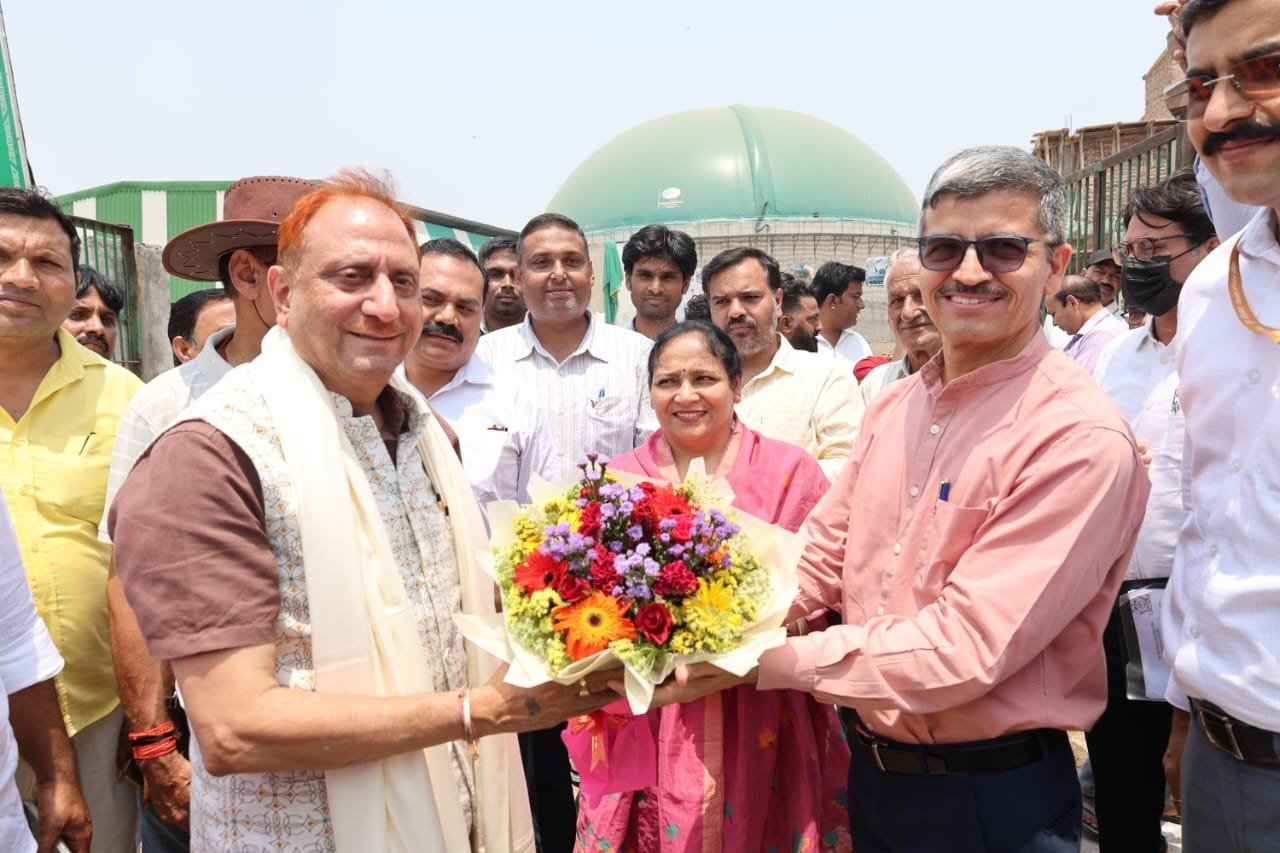
The Municipal Corporation of Delhi , accelerates efforts to operationalize the Goyla biogas plant in Najafgarh zone. During an inspection visit , Delhi Mayor Pravesh Wahi directed officials to ensure that the biogas plant becomes fully operational without unnecessary delays, describing the project as a major step toward transforming the national capital into a cleaner and greener city.
The visit highlighted the increasing importance of sustainable waste management infrastructure in Delhi, especially in rural and semi-urban dairy clusters where untreated animal waste continues to pose serious environmental and public health risks. The Goyla biogas plant project has emerged as a key environmental initiative aimed at reducing pollution, improving sanitation, and preventing cow dung waste from entering drains connected to the Yamuna River.
Mayor Pravesh Wahi, accompanied by senior MCD officials and representatives of the plant agency, reviewed the progress of construction works at the facility located in the Najafgarh zone. Officials present during the inspection included Najafgarh Zone Chairperson Savita Sharma, MCD Additional Commissioner B. S. Jaglan, and Deputy Commissioner Najafgarh Zone Sumit Kumar.
The proposed biogas plant is expected to play a crucial role in scientific waste processing and renewable energy generation while addressing long-standing sanitation challenges in the dairy-dominated regions of Goyla and Nangli.
Why the Goyla Biogas Plant Matters for Delhi
Delhi has struggled for years with solid waste management, untreated sewage, and river pollution. While landfill sites and municipal waste remain visible concerns, another major environmental issue often receives less public attention — the disposal of animal waste generated by dairy colonies.
Areas such as Goyla and Nangli house nearly 1,500 dairies that collectively produce massive quantities of cow dung every day. Much of this untreated waste eventually flows into open drains, reaches the Najafgarh drain, and finally enters the Yamuna River. Environmental experts have repeatedly warned that this continuous discharge contributes significantly to water pollution, foul smell, methane emissions, and unhygienic conditions in surrounding neighborhoods.
The new biogas plant aims to address this issue directly by converting cow dung into useful resources through scientific processing methods.
According to officials, the Goyla biogas plant will process nearly 200 metric tons of cow dung daily. This processed waste can then be converted into compressed biogas (CBG), organic manure, and other reusable byproducts. Such projects are increasingly being viewed as an essential part of India’s transition toward cleaner energy and circular waste management systems.
Mayor Pravesh Wahi emphasized during the inspection that the biogas plant would not only improve local sanitation but also reduce pollution levels affecting residents in nearby villages and colonies.
 Understanding How a Biogas Plant Works
A biogas plant is essentially a facility that converts organic waste into energy through a biological process called anaerobic digestion. In simple terms, animal waste such as cow dung is collected and stored in large airtight tanks where bacteria break down the organic matter in the absence of oxygen.
This process produces methane-rich biogas, which can then be purified and used as fuel for cooking, transportation, electricity generation, or industrial use. The remaining material, known as slurry, can be converted into organic fertilizer for agricultural purposes.
Experts believe biogas plant technology offers multiple environmental benefits at the same time:
- Reduction in waste dumping
- Prevention of water pollution
- Lower greenhouse gas emissions
- Cleaner surroundings
- Renewable energy generation
- Better public hygiene
In densely populated urban centers like Delhi, such projects are becoming increasingly important because they address both waste disposal and energy sustainability simultaneously.
The Goyla biogas plant is being developed with this broader environmental vision in mind.
 Delhi’s Push for Clean and Green Infrastructure
During the inspection, Mayor Pravesh Wahi stated that the Municipal Corporation of Delhi is committed to supporting the vision of Delhi Chief Minister Rekha Gupta to transform Delhi into a clean and green capital.
He stressed that projects like the Goyla biogas plant represent practical environmental solutions rather than symbolic initiatives. According to him, proper waste management infrastructure is essential if Delhi wants to reduce pollution and improve urban living standards.
Officials informed the Mayor that the plant is expected to be completed and operational before July 2026. Strict instructions were issued to concerned departments and agencies to avoid delays and coordinate effectively for timely completion.
The Mayor also directed authorities to complete all pending construction-related work on priority and ensure smooth operationalization of the facility.
Environmental observers note that timely completion will be crucial because delayed infrastructure projects often reduce public confidence and increase project costs. By personally inspecting the site and reviewing progress, the Mayor appeared to send a strong message regarding accountability and urgency.
Biogas Plant Can Reduce Pressure on the Yamuna River
One of the biggest expected benefits of the Goyla biogas plant is its potential contribution toward reducing pollution in the Yamuna River.
The Yamuna has long suffered from untreated sewage, industrial discharge, and waste inflow from drains across Delhi. Environmental studies have repeatedly shown that the Najafgarh drain is among the largest contributors of pollutants entering the river.
Animal waste flowing from dairy clusters worsens the situation by increasing organic pollution load in water bodies. When cow dung enters drains untreated, it decomposes and releases harmful gases while also affecting oxygen levels in water.
The Goyla biogas plant aims to intercept this waste before it reaches drainage systems. By scientifically processing cow dung at the source itself, authorities hope to significantly reduce direct waste discharge into the Najafgarh drain and Yamuna River.
Experts in urban waste management say this approach reflects a more sustainable and preventive model of environmental governance.
Instead of only cleaning polluted water bodies later, projects like the biogas plant attempt to stop pollutants from entering the system in the first place.
 Learning from the Nangli Sakrawati Biogas Plant
Officials also highlighted the success of the Nangli Sakrawati biogas plant established last year with government support. That project reportedly demonstrated how dairy waste can be effectively processed through scientific methods while generating useful byproducts.
The experience gained from the Nangli facility is expected to help authorities manage operations at the Goyla biogas plant more efficiently.
Municipal officials stated that together, the biogas plants operated by MCD have the capacity to process nearly 200 metric tons of cow dung daily. This represents a significant step toward sustainable dairy waste management in Delhi.
Experts believe that if projects like the Goyla biogas plant continue to succeed, similar facilities may eventually be introduced in other dairy-heavy zones across Delhi-NCR.
Tree Plantation Drive Reinforces Environmental Message
During the inspection visit, Mayor Pravesh Wahi also participated in a tree plantation drive near the project site. The activity was intended to spread awareness regarding environmental conservation and ecological responsibility.
Urban planners increasingly argue that waste management projects must be integrated with broader environmental initiatives such as tree plantation, water conservation, and pollution control measures.
The Mayor stated that the MCD remains committed to ensuring sanitation in surrounding rural areas and improving environmental conditions for local residents.
Residents in parts of Najafgarh and nearby villages have often complained about foul smell, poor drainage, mosquito breeding, and unhygienic conditions caused by untreated dairy waste. Authorities believe the biogas plant could help reduce many of these issues over time.
Importance of Administrative Coordination
Another major point emphasized during the visit was inter-agency coordination. Large-scale urban infrastructure projects often face delays due to administrative hurdles, approvals, funding issues, or lack of communication between departments.
Mayor Pravesh Wahi instructed officials to work closely with all agencies involved in the construction and operational process of the biogas plant. He stressed that delays should not affect public interest or environmental goals.
Urban development experts frequently point out that successful waste management projects require cooperation between municipal authorities, engineering teams, environmental regulators, local communities, and technical agencies.
The Mayor’s inspection indicated that the administration is attempting to maintain regular monitoring to ensure the project progresses according to schedule.
A Significant Step Toward Sustainable Urban Waste Management
As Delhi continues to battle pollution, overflowing waste, and environmental degradation, projects like the Goyla biogas plant are increasingly being viewed as necessary infrastructure rather than optional development schemes.
The plant represents an attempt to convert an environmental problem into a sustainable solution by turning dairy waste into usable energy and organic resources. At a time when Indian cities are struggling to balance urban growth with environmental protection, the success of such projects could become an important model for future waste management strategies.
The inspection by Mayor Pravesh Wahi also demonstrated the importance of administrative oversight in ensuring timely implementation of environmental projects. By prioritizing the operationalization of the biogas plant, the Municipal Corporation of Delhi is signaling a stronger focus on scientific waste disposal, cleaner surroundings, and pollution reduction in rural and urban areas alike.