New Delhi: The Aam Aadmi Party (AAP) once transformed the political landscape of Delhi by dislodging well-established political parties and emerging as a powerful alternative. While Indian politics has witnessed similar shifts before—such as the rise of the Asom Gana Parishad in Assam decades ago—AAP’s journey stood out for its remarkable consistency. For nearly 13 years, the party remained at the forefront of Delhi politics and went on to register a landslide victory in Punjab, where it formed the government with a commanding mandate.
However, the February 2025 Delhi Assembly elections marked a turning point in AAP’s political journey. The party suffered a significant electoral setback as its once-formidable fortress in Delhi crumbled. The Bharatiya Janata Party (BJP) returned to power in the national capital after nearly 27 years in opposition.
Table of Contents
Born out of the anti-corruption movement led by social activists, AAP had positioned itself as a party committed to transparency and clean governance. Yet, the question now dominating political discussions is what led to the collapse of its strongest bastion. More importantly, political observers are now debating whether the setback in Delhi could signal a larger decline in the party’s national relevance.

From Political Revolution to Electoral Setback
AAP’s emergence was widely regarded as one of the most significant developments in modern Indian politics. It successfully challenged the dominance of both the BJP and the Congress in Delhi, presenting itself as a governance-focused alternative.
Over the years, the party expanded its influence beyond Delhi, achieving a historic victory in Punjab. This dual success elevated AAP from a regional force to a national political player with ambitions of reshaping Indian politics.
However, the defeat in Delhi has fundamentally altered that narrative. The loss has raised concerns not only about the party’s governance model but also about its long-term political sustainability.
Punjab Now Becomes the Biggest Test
Following its defeat in Delhi, the immediate concern for the Aam Aadmi Party is the future of its government in Punjab.
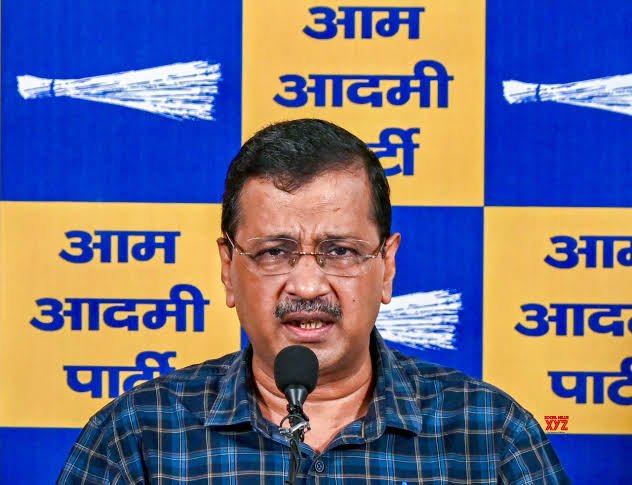
The party’s top leadership, including Arvind Kejriwal and Manish Sisodia, has reportedly shifted significant political attention towards Punjab. Senior leaders are now spending considerable time in the state, reflecting the party’s determination to protect its only major government.
Political analysts believe AAP recognizes that another electoral defeat—particularly in Punjab—could severely weaken its national identity.
BJP and Congress Prepare for Punjab Battle
The BJP’s successful strategy in defeating AAP in Delhi has encouraged the party to strengthen its organizational efforts in Punjab ahead of future elections.
At the same time, the Congress has also intensified preparations, viewing Punjab as an opportunity to reclaim lost political ground.
Although the Bhagwant Mann government currently remains in office, Punjab presents several governance challenges, including border security, drug trafficking, unemployment, law and order concerns, and economic issues.
Given Punjab’s strategic location as a border state, every national political party considers it politically significant. Consequently, AAP is expected to face strong competition from both the BJP and Congress in the coming years.
Is AAP Losing National Relevance?
The central question now is whether AAP can continue to remain relevant in national politics after losing Delhi.
Many political observers believe that the answer to this question will largely depend on how the party performs in Punjab and whether it can rebuild public confidence elsewhere.
Since the formation of the BJP government under Chief Minister Rekha Gupta in Delhi, AAP’s political activity in the capital has appeared considerably subdued.
Except for occasional press conferences by Leader of Opposition Atishi, the party has largely struggled to generate significant political momentum.
Several municipal councillors have reportedly left the party to form a separate political platform, dealing another blow to AAP’s organizational strength. The party also chose not to aggressively contest the mayoral election, which many interpreted as a sign of declining confidence.
Opposition Strategy Faces Challenges
AAP attempted to corner the Delhi government over issues such as the promised ₹2,500 monthly financial assistance for women.
However, these political campaigns failed to generate the expected public response.
Political commentators argue that instead of presenting a constructive opposition, the party often focused on smaller political controversies that failed to resonate with voters.
As a result, many citizens viewed these efforts as reactions driven more by political frustration than by substantive governance issues.
Leadership Image Under Scrutiny
The changing public image of several senior leaders has also attracted attention.
Former Delhi minister and one of AAP’s prominent leaders, Saurabh Bharadwaj, launched a YouTube channel titled Berozgaar Neta (Unemployed Leader), a move that sparked widespread discussion on social media.
Critics argued that such actions weakened the party’s political seriousness and provided opponents with opportunities to question its credibility.
Many observers questioned whether senior leaders of established national parties like the BJP or Congress would adopt similar approaches immediately after an electoral defeat.
The episode further fueled debates regarding AAP’s evolving political identity.
Can AAP Rebuild Its Foundations?
Political organizations often recover from electoral setbacks through organizational restructuring, leadership reforms, and renewed grassroots engagement.
For AAP, however, the challenge appears significantly larger because Delhi represented not just its strongest electoral base but also the birthplace of its political movement.
With its organizational roots weakened in Delhi, rebuilding public trust may require a comprehensive political strategy rather than short-term campaigns.
The party also faces criticism from opponents who argue that it has struggled to develop a consistent ideological framework beyond governance-focused politics.
Congress Factor in Delhi Politics
Some political observers believe that the Congress indirectly influenced AAP’s electoral setback in Delhi.
AAP’s independent electoral strategy during the Haryana Assembly elections reportedly strained relations between the two opposition parties.
Several analysts suggest that the Congress’s refusal to fully cooperate with AAP in Delhi may have contributed to splitting opposition votes, indirectly benefiting the BJP.
Although these interpretations remain political opinions rather than established facts, they continue to shape discussions surrounding opposition unity.
Challenges Ahead
Despite its recent setbacks, it would be premature to conclude that AAP’s political journey has reached its end.
Indian politics has repeatedly demonstrated that parties can recover from significant defeats through effective leadership and organizational renewal.
Nevertheless, the road ahead appears exceptionally challenging.
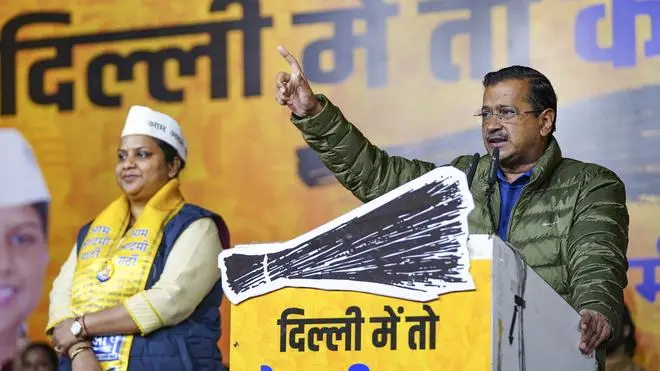
The party must simultaneously defend its government in Punjab, rebuild its organizational structure in Delhi, regain public confidence, strengthen its cadre, and redefine its political messaging.
Failure on multiple fronts could further diminish its influence in national politics.
Nearly 13 years ago, the Aam Aadmi Party emerged like a political comet, rapidly reshaping the country’s political landscape with its anti-corruption movement and governance-driven agenda.
Its spectacular rise inspired millions and established it as one of India’s most influential regional parties.
However, the February 2025 Delhi Assembly election marked the most serious setback in its history, raising difficult questions about its future direction.
While one electoral defeat alone does not determine the destiny of any political party, AAP now stands at a crucial crossroads. The coming years—particularly the political developments in Punjab—will determine whether the party can revive its fortunes or continue its downward trajectory.
Whether AAP writes a new chapter of political resurgence or witnesses a gradual decline in national relevance remains one of the most closely watched questions in contemporary Indian politics.