
Axor Helmet has introduced the new MX Carbon off-road helmet in India at ₹20,060, combining a predominantly carbon-fibre shell with ECE 22.06, DOT and ISI certifications. The Axor helmet is designed for riders looking for a lightweight, performance-oriented option for off-road and motocross use.
Axor, the Axor helmet brand operated by Vega Auto, has expanded its premium riding-gear portfolio in India with the launch of the MX Carbon. Positioned as a lightweight, triple-certified off-road helmet, the new model focuses on reducing Axor helmet mass while maintaining the structural and impact-protection characteristics expected from a modern riding helmet.
The MX Carbon is manufactured at Vega Auto’s facilities in Belagavi, Karnataka. According to the company, its predominantly carbon-fibre construction allows it to achieve a weight of approximately 1,050 grams in the largest shell size, with a tolerance of around 50 grams. Smaller shell sizes are expected to weigh approximately 50 grams less.
Priced at ₹20,060, the MX Carbon enters a premium segment where lightweight construction, safety certification, ventilation and specialist off-road design are increasingly important considerations.
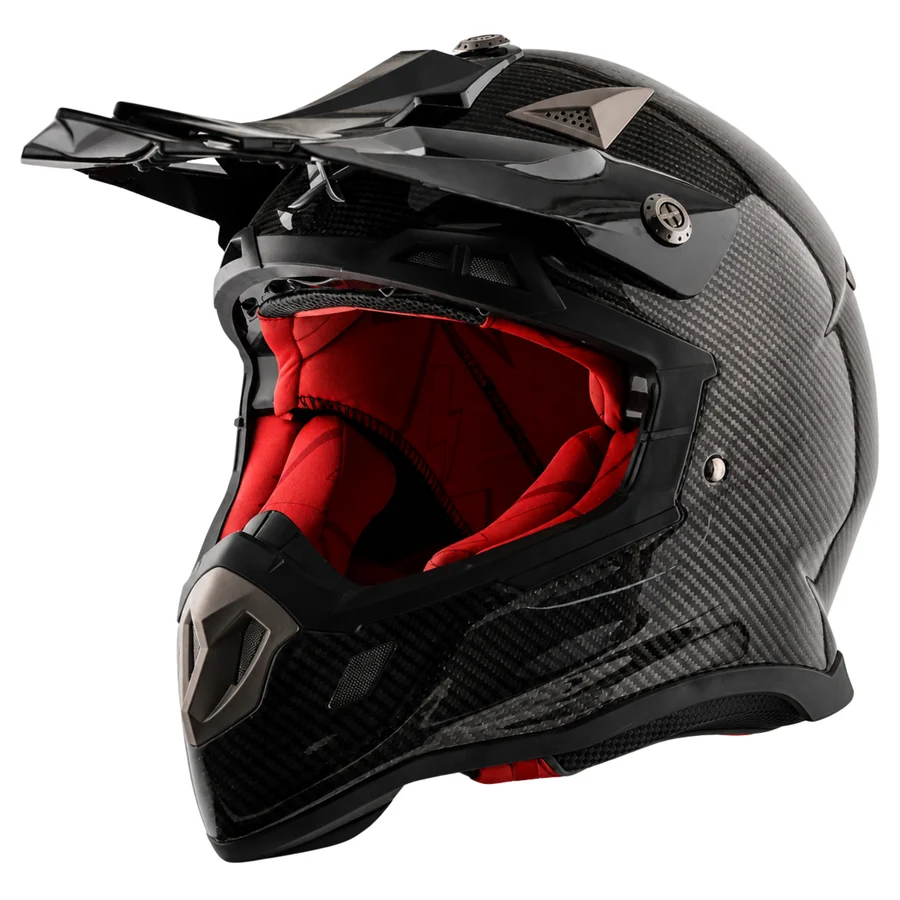
Table of Contents
Axor MX Carbon Focuses on Lightweight Construction
Weight is one of the defining characteristics of the new Axor MX Carbon. The large shell size weighs approximately 1,050 grams, plus or minus 50 grams, while smaller versions are expected to be lighter.
For riders who spend extended periods on motorcycles, reducing Axor helmet weight can make a noticeable difference to overall comfort. A lighter Axor helmet can reduce the load carried by the neck and shoulders, particularly during long riding sessions.
The benefit becomes especially relevant in off-road riding, where riders may spend considerable time standing on the motorcycle, changing body position and dealing with uneven terrain.
Axor has used a predominantly carbon-fibre shell for the MX Carbon. Carbon fibre is valued in performance applications for its high strength-to-weight characteristics, allowing manufacturers to pursue a lighter construction without simply reducing the amount of protective structure.
The company’s move also reflects a wider trend in the premium Axor helmet industry, where manufacturers are increasingly using advanced composite materials to balance protection, weight and comfort.
Triple Safety Certification
One of the major highlights of the MX Carbon is its claimed triple certification.
The Axor helmet meets ECE 22.06, DOT and ISI homologation requirements. These certifications cover different regulatory markets and testing frameworks, giving the helmet broader applicability for domestic and international markets.
ECE 22.06 is the newer European Axor helmet standard and involves a comprehensive set of tests covering areas such as impact performance and other safety characteristics. DOT certification is associated with the US Federal Motor Vehicle Safety Standard for motorcycle helmets, while ISI certification is the relevant Indian standard.
Axor’s wider product range also demonstrates the company’s focus on these certification standards. Its officially listed Axor helmets include models carrying ECE 22.06, DOT and ISI certifications.
For the MX Carbon, the combination of all three standards is particularly significant because the Axor helmet is being positioned not simply as a lightweight product, but as a performance-oriented model intended for multiple markets.
Designed Specifically for Off-Road Riding
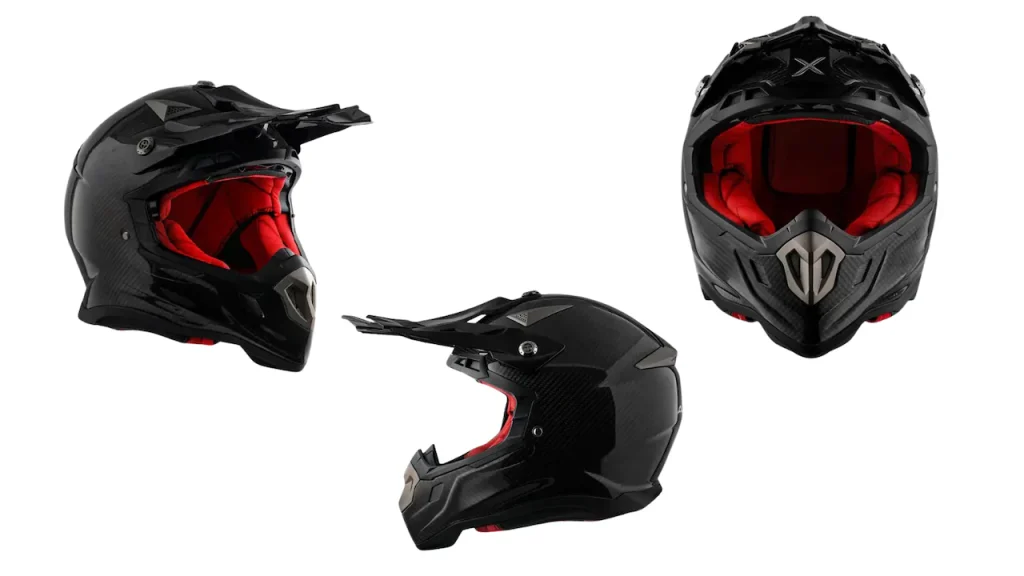
Unlike conventional full-face road helmets, the MX Carbon follows a purpose-built off-road design.
The helmet does not feature an integrated visor. Instead, its open eye-port is designed to work with riding goggles, a setup commonly associated with motocross and other forms of off-road riding.
Using goggles allows riders to choose eye protection according to the conditions they encounter. Dust, mud, changing light and airflow are common considerations when riding away from paved roads, making the goggles-based design particularly suitable for the segment.
The absence of a conventional road-bike visor also contributes to the helmet’s distinctive motocross appearance.
The MX Carbon’s design is therefore aimed at a specific use case rather than attempting to serve as a universal road helmet.
Ventilation System Aims to Maintain Airflow
Ventilation is another important aspect of an off-road helmet.
The MX Carbon features multiple air intakes and rear exhaust vents designed to promote continuous airflow through the helmet. This is particularly relevant during physically demanding riding, where heat can build up inside the helmet.
Off-road riding can involve greater physical movement than normal road riding, with riders frequently standing on the footpegs and actively using their body to control the motorcycle. Maintaining airflow can therefore contribute to comfort during longer sessions.
The ventilation arrangement also complements the helmet’s lightweight construction, with both features aimed at making the helmet more comfortable during extended use.
Multi-Density EPS Liner for Impact Absorption
Inside the carbon-fibre shell, the MX Carbon uses a multi-density EPS liner.
Expanded polystyrene, or EPS, is widely used in motorcycle helmets as an energy-absorbing material. The liner is designed to help manage impact energy during a crash.
A multi-density arrangement can use different densities of material in different areas of the helmet, allowing manufacturers to tailor the liner’s characteristics to specific zones.
The MX Carbon combines this internal structure with its carbon-fibre shell, creating a construction that prioritises both weight reduction and impact management.
It also gets a double D-ring fastening system, a retention arrangement commonly used in performance-oriented motorcycle helmets. The fastening system is intended to keep the helmet securely positioned on the rider’s head.
Aerodynamic Shape Designed to Reduce Neck Strain
The helmet’s exterior shape has also been developed with aerodynamics in mind.
At higher speeds, helmet shape can influence the amount of aerodynamic force acting on the rider’s head. An appropriately designed shell can help manage airflow around the helmet.
Axor says the MX Carbon’s aerodynamic shell shape is intended to reduce neck strain at higher speeds.
This is particularly relevant for riders who spend extended periods riding in exposed environments. Reducing unnecessary aerodynamic load can contribute to comfort, although actual experience can vary depending on riding position, motorcycle type, speed and individual fit.
The relatively low weight of the MX Carbon is another factor that can contribute to reduced neck fatigue.
₹2 Crore Investment in Composite Manufacturing
The launch of the MX Carbon also highlights Vega Auto’s investment in composite-material manufacturing.
According to the company, it has invested approximately ₹2 crore in its composite manufacturing infrastructure to support advanced material fabrication for the new helmet.
Vega Auto has also expanded its composite division to three times its operating capacity compared with 2020.
The investment indicates that the company is looking beyond a single helmet launch and is building manufacturing capability around advanced composite products.
Carbon-fibre construction typically requires specialised manufacturing processes compared with conventional thermoplastic helmet shells. Expanding composite production capacity could therefore allow the company to develop additional lightweight products in the future.
Made in Belagavi, Karnataka
The MX Carbon is designed and manufactured at Vega Auto’s facilities in Belagavi, Karnataka.
The location is significant because it highlights the growing role of Indian manufacturing in premium motorcycle safety equipment.
Vega Auto’s official Axor product information identifies its manufacturing location in Karnataka, while its current range includes helmets built around different shell materials and certification standards.
The MX Carbon’s carbon-fibre construction places it toward the more specialised end of that portfolio.
A Premium Product for Adventure and Motocross Riders
At ₹20,060, the Axor MX Carbon is positioned well above mainstream motorcycle helmets. Its price reflects the combination of carbon-fibre construction, specialist off-road design and multiple safety certifications.
The target audience is therefore likely to include adventure riders, motocross enthusiasts and off-road riders who place a higher priority on weight and specialised equipment.
The helmet’s design makes it particularly suited to riders who already use goggles and want a dedicated off-road setup rather than a conventional road-going full-face helmet.
For adventure riders, the low weight could be especially relevant during long-distance trips where helmet comfort becomes an important part of overall riding fatigue.
Lightweight Helmets Are Becoming More Important
The MX Carbon arrives at a time when lightweight construction is becoming an increasingly important selling point in premium motorcycle safety equipment.
Carbon-fibre and composite helmets can offer manufacturers greater freedom to reduce weight while maintaining a strong outer shell. Other Indian helmet brands have also introduced carbon-fibre products as the premium segment expands. For example, Steelbird’s Ignyte brand launched a carbon-fibre series in India earlier in 2026, highlighting the growing interest in lightweight composite Axor helmet technology.
However, weight alone does not determine Axor helmet safety. Correct fit, certification, retention and proper use remain essential factors when selecting protective riding equipment.
Axor MX Carbon: Key Highlights
The new helmet combines several features aimed at performance-focused riders:
- Predominantly carbon-fibre shell
- Approximately 1,050 grams in the largest shell size
- Smaller shell sizes expected to be around 50 grams lighter
- ECE 22.06 certification
- DOT certification
- ISI certification
- Dedicated off-road design
- Goggle-compatible setup without an integrated visor
- Multi-density EPS liner
- Double D-ring fastening system
- Multiple ventilation intakes and rear extractors
- Aerodynamic shell design
- Manufactured at Vega Auto’s Belagavi facility
- Approximate ₹2 crore investment in composite manufacturing infrastructure
- Price of ₹20,060
Price and Market Position
At ₹20,060, the Axor MX Carbon is clearly aimed at riders willing to pay a premium for lightweight construction and specialised off-road equipment.
Its biggest differentiators are the claimed 1,050-gram weight, carbon-fibre shell and triple certification. The combination gives Axor a product positioned between conventional off-road Axor helmets and more expensive international premium offerings.
The Axor helmet also strengthens the company’s presence in a segment where adventure motorcycles and off-road riding have become increasingly popular among Indian riders.
What Makes the MX Carbon Stand Out?
The most important aspect of the new Axor helmet is not any single feature but the way Axor has combined several characteristics into one product.
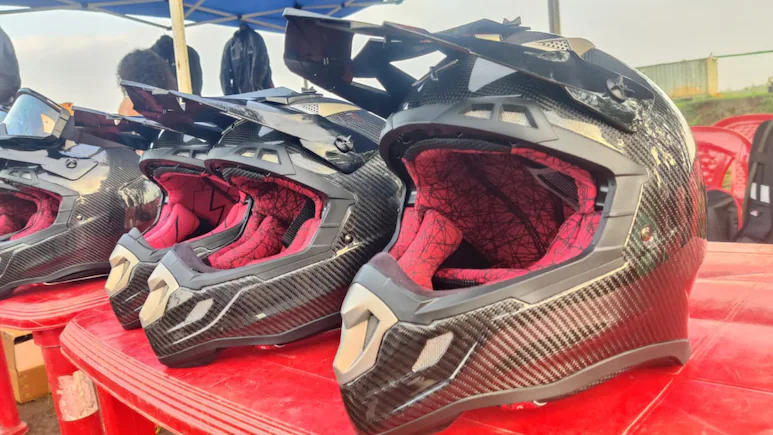
A carbon-fibre shell helps reduce weight, while the multi-density EPS liner is designed for impact absorption. The triple certification gives it regulatory credentials across multiple markets. The off-road shape and goggle-focused design make its intended purpose clear, while the ventilation system addresses the heat and airflow requirements associated with physically demanding riding.
The result is a Axor helmet focused on a specific type of rider rather than a mass-market audience.
At ₹20,060, the Axor MX Carbon is also an important product for Vega Auto’s premium ambitions. The company’s investment in composite manufacturing suggests that advanced materials could play a larger role in its future Axor helmet portfolio.
For riders seeking a lightweight, purpose-built off-road Axor helmet with ECE 22.06, DOT and ISI certification, the MX Carbon represents Axor’s latest attempt to combine advanced materials, specialist design and domestic manufacturing into a single premium product.