New Himalayan 440 is expected to sit between the Scram 440 and Himalayan 450, combining the LS440 engine with a more off-road-focused chassis
Royal Enfield Himalayan 440 will make its debut in India on September 4, 2026, expanding the company’s adventure motorcycle portfolio with a model positioned between the Scram 440 and the more premium Himalayan 450. The launch will take place at the Himalayan Base Camp in Leh, Ladakh, an appropriate setting for a motorcycle carrying the Himalayan name. The event is also expected to coincide with the 10th anniversary of the Himalayan range, which began with the Himalayan 411 in 2016.
The upcoming motorcycle is expected to follow a simpler and more accessible formula than the Himalayan 450. Instead of competing directly with the larger and more technologically equipped adventure bike, the Himalayan 440 is likely to focus on ruggedness, straightforward mechanical hardware and the approachable character that made the earlier Himalayan 411 popular.
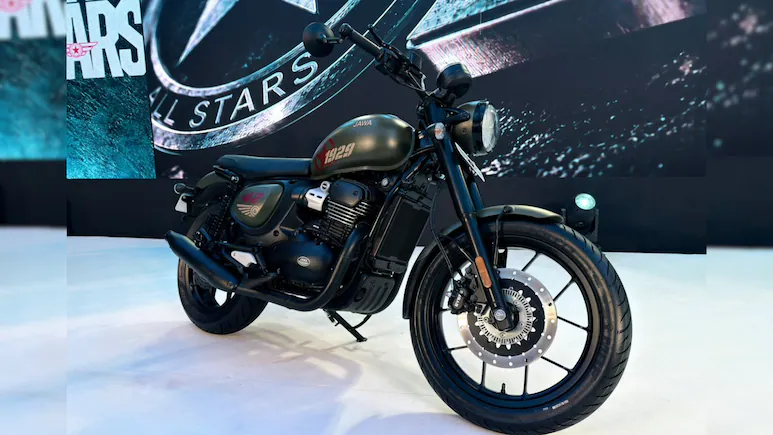
The biggest mechanical link is expected to be the LS440 engine already used by the Scram 440. Royal Enfield’s official information confirms that the Scram 440 uses a 443cc long-stroke single-cylinder engine producing 25.4 bhp and 34 Nm.
While several details of the Himalayan 440 remain based on expectations until the motorcycle is officially unveiled, the launch date itself is confirmed. The September 4 debut should finally reveal the production motorcycle’s exact equipment, pricing, dimensions and specifications.
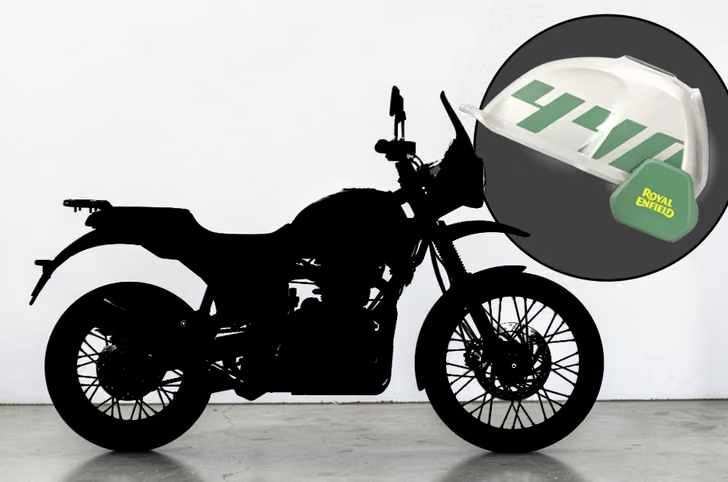
Table of Contents
Himalayan 440 to Fill the Gap in Royal Enfield’s Adventure Range
The Royal Enfield Himalayan 440 is expected to occupy an interesting middle ground within Royal Enfield’s motorcycle portfolio.
At present, Royal Enfield’s Indian lineup includes the Scram 440 and Himalayan 450, alongside several other adventure and road-oriented models. The company currently lists both the Scram 440 and Himalayan 450 in its India range.
The Scram 440 is designed as a crossover motorcycle with urban usability and off-road capability. Royal Enfield describes it as being derived from an adventure motorcycle while retaining a character suited to city and highway riding.
The Himalayan 450, meanwhile, represents the company’s more advanced adventure offering.
The Royal Enfield Himalayan 440 is expected to sit between these two approaches. It could provide more serious off-road hardware than the Scram 440 without adopting all of the technology and premium equipment of the Himalayan 450.
That positioning could make the Royal Enfield Himalayan 440 particularly interesting for riders who want a practical adventure motorcycle without necessarily wanting the highest specification available in the Himalayan family.
LS440 Engine Expected to Power the Himalayan 440
The biggest mechanical connection between the Royal Enfield Himalayan 440 and Scram 440 is expected to be the LS440 powerplant.
The Scram 440’s 443cc long-stroke engine produces 25.4 bhp and 34 Nm, according to Royal Enfield’s official specifications. The company says the D-platform engine is designed to deliver strong low-end and top-end performance for both city and highway use.
The supplied information indicates that the Royal Enfield Himalayan 440 is expected to use the same basic engine without major mechanical changes.
That approach would make sense from a product-development perspective.
The engine is already in production, meaning Royal Enfield can use an existing powertrain while concentrating development effort on the chassis, suspension, wheels and adventure-specific equipment.
The LS440’s long-stroke character should also suit the intended role of the Royal Enfield Himalayan 440. Adventure riders generally benefit from predictable torque delivery at lower engine speeds, particularly when riding slowly over loose or uneven surfaces.
Performance Positioned Above the Himalayan 411
The LS440’s output is slightly higher than the figures associated with the older Himalayan 411.
The Himalayan 411 produced around 24.5 hp and 32 Nm, while the newer 440 platform offers 25.4 bhp and 34 Nm in the Scram 440.
That represents a modest increase rather than a dramatic performance jump.
The important difference is likely to come from how the engine is paired with the Royal Enfield Himalayan 440’s chassis.
A motorcycle with a larger front wheel, longer-travel suspension and an adventure-focused setup can behave very differently from a road-biased crossover even when both use a similar engine.
The Royal Enfield Himalayan 440 is therefore likely to rely on chassis capability and riding character rather than simply chasing higher peak output.
21-Inch Front Wheel Expected to Improve Off-Road Ability
One of the most important expected changes compared with the Scram 440 is the wheel configuration.
The Scram 440 uses a 19-inch front wheel and 17-inch rear wheel, along with tubeless tyres. Royal Enfield positions that combination as suitable for both urban riding and off-road use.
The Royal Enfield Himalayan 440 is expected to move to a 21-inch front wheel, following the traditional adventure-bike configuration used by the Himalayan 411.
A 21-inch front wheel is generally better suited to challenging unpaved terrain because it can roll over obstacles more confidently and maintain greater stability when crossing uneven surfaces.
That makes the expected change particularly significant.
The larger wheel would help differentiate the Royal Enfield Himalayan 440 from the Scram 440 and make its positioning as the more off-road-focused motorcycle much clearer.
Wire-Spoke Wheels Could Reinforce the Adventure Character
The Royal Enfield Himalayan 440 is also expected to use wire-spoke wheels, potentially with tubes.
This would be another departure from the Scram 440’s alloy wheels with tubeless tyres.
Wire-spoke wheels are a traditional feature of adventure motorcycles, particularly models intended for more demanding terrain. They can also reinforce the visual connection between the new motorcycle and the older Himalayan 411.
However, the final wheel and tyre configuration remains an important detail that Royal Enfield will need to confirm at the launch.
The choice between tubed and tubeless tyres can affect puncture repair, maintenance and touring convenience, so it will be closely watched by potential buyers.
More Suspension Travel for Rough Terrain
The suspension is expected to be another major difference between the Royal Enfield Himalayan 440 and Scram 440.
The supplied information indicates that the Royal Enfield Himalayan 440 could receive around 200mm of front suspension travel, compared with approximately 190mm on the Scram 440.
The extra travel is relatively small numerically, but it supports the motorcycle’s intended off-road positioning.
Longer suspension travel gives the wheels more room to absorb larger bumps and uneven surfaces before reaching the limits of the suspension system.
For riders travelling on rough roads, gravel tracks and unpaved routes, that additional capability can be more meaningful than a modest increase in engine output.
A Simpler Alternative to the Himalayan 450
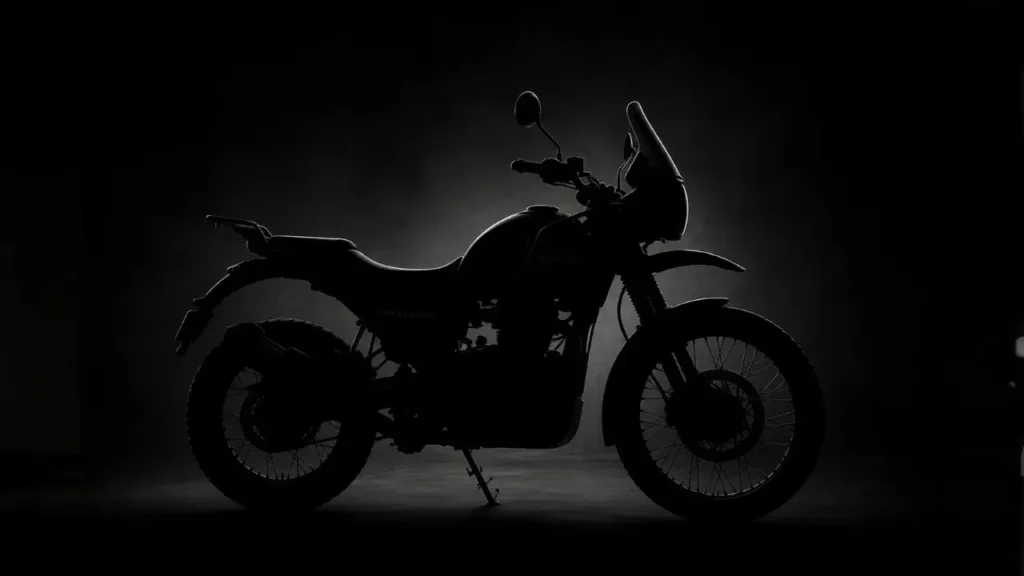
The Himalayan 440 is not expected to replicate the Himalayan 450’s complete equipment package.
The larger Himalayan 450 is the more technology-heavy adventure motorcycle in Royal Enfield’s range, while the 440 is expected to prioritise simplicity.
The supplied information indicates that the Himalayan 440 is unlikely to feature the full-colour TFT display, built-in turn-by-turn navigation, USD front fork and other premium equipment associated with the Himalayan 450.
That could actually become one of the motorcycle’s strengths.
Not every adventure-bike buyer wants a large electronics package. Some riders prefer physical controls, simpler instrumentation and equipment that can be understood and maintained easily during long-distance travel.
The Himalayan 440 could therefore attract riders who value function over technology.
Simplicity Could Be a Major Selling Point
The motorcycle’s anticipated simplicity could help it appeal to long-time Himalayan owners.
The Himalayan 411 developed a strong following among riders who valued its straightforward character and ability to handle both tarmac and rough roads.
The Himalayan 440 appears likely to draw from that philosophy while introducing the newer LS440 engine.
That could make the motorcycle appealing to riders who believe an adventure bike should prioritise durability, accessibility and ease of use rather than an extensive collection of digital features.
It would also give Royal Enfield a clearer product hierarchy.
The Scram 440 would remain the more road-oriented crossover, the Himalayan 440 would focus on simpler adventure capability and the Himalayan 450 would occupy the more premium and technologically advanced position.
Expected Instrumentation to Remain Functional
The Himalayan 440 is expected to receive relatively basic instrumentation rather than the large full-colour TFT display available on the Himalayan 450.
The emphasis is likely to be on essential information rather than extensive connectivity.
That could include speed, engine information, fuel or trip data and other basic riding information, although the precise instrument specification has not yet been confirmed.
For riders who spend considerable time travelling away from urban areas, simplicity can have practical advantages.
A less complex interface can be easier to read and operate while riding, while fewer electronic dependencies can support the motorcycle’s rugged positioning.
The September 4 unveiling should provide clarity on exactly how far Royal Enfield has taken this approach.
Price Expected Between Scram 440 and Himalayan 450
Pricing will be one of the most important elements of the Himalayan 440’s launch.
The Scram 440 currently starts at around ₹2.23 lakh ex-showroom and rises to approximately ₹2.31 lakh, according to current market data.
The Himalayan 450 sits considerably higher in Royal Enfield’s range.
The Himalayan 440 is expected to be positioned between these two models, although its final pricing has not yet been officially disclosed.
This middle positioning could be important.
A price too close to the Himalayan 450 could make the simpler motorcycle difficult to justify. On the other hand, a sufficiently clear price gap could make the Himalayan 440 an attractive choice for buyers seeking greater off-road capability than the Scram 440 without stepping into the full cost of the Himalayan 450.
September 4 Launch Will Reveal the Full Picture
Royal Enfield has confirmed September 4 as the launch date, with the unveiling scheduled around the Himalayan Base Camp event in Leh, Ladakh.
The location is particularly fitting for a motorcycle carrying the Himalayan name.
Royal Enfield has historically associated the Himalayan family with high-altitude riding, adventure touring and challenging terrain. The company’s official Himalayan Base Camp event is scheduled for September 4-6 in Leh at an altitude of around 11,480 feet.
That setting should provide an appropriate backdrop for introducing the next evolution of the motorcycle family.
Himalayan 440 vs Scram 440: What Could Change?
The basic mechanical relationship between the two motorcycles is expected to be close, but their intended use cases are different.
The Scram 440 uses a 19/17 wheel combination, six-speed gearbox and tubeless tyres, and Royal Enfield describes it as a crossover suited to both city and off-road riding.
The Himalayan 440, by comparison, is expected to gain the 21-inch front wheel and longer suspension travel necessary for more serious off-road work.
That means buyers could choose according to usage rather than simply price.
Someone spending most of their time on paved roads and wanting occasional trail capability may find the Scram 440 more suitable.
A rider planning longer adventure trips involving rough roads and unpaved terrain could find the Himalayan 440 more appealing.
Himalayan 440 vs Himalayan 450: Where the New Bike Could Fit
The comparison with the Himalayan 450 is equally important.
The Himalayan 450 offers the more powerful and technologically advanced platform, while the Himalayan 440 is expected to use simpler equipment and the LS440 engine.
That could allow Royal Enfield to serve two distinct groups of adventure riders.
The Himalayan 450 can target customers seeking modern electronics, stronger performance and premium hardware.
The Himalayan 440 could target those who want a simpler motorcycle with classic Himalayan character and practical off-road capability.
This differentiation will be critical to prevent the two motorcycles from competing too closely with each other.
A Himalayan for Riders Who Want Less Complexity
The upcoming Himalayan 440 could ultimately represent a return to the core philosophy that defined the original Himalayan.
Rather than trying to maximise electronic equipment, Royal Enfield appears to be focusing on the fundamentals: a torquey single-cylinder engine, adventure-friendly wheels, long-travel suspension and a rugged chassis.
That does not mean the motorcycle will be outdated.
Instead, it could offer a more deliberate combination of modern mechanical engineering and simpler rider technology.
For some adventure riders, that balance could be more appealing than a fully digital motorcycle.
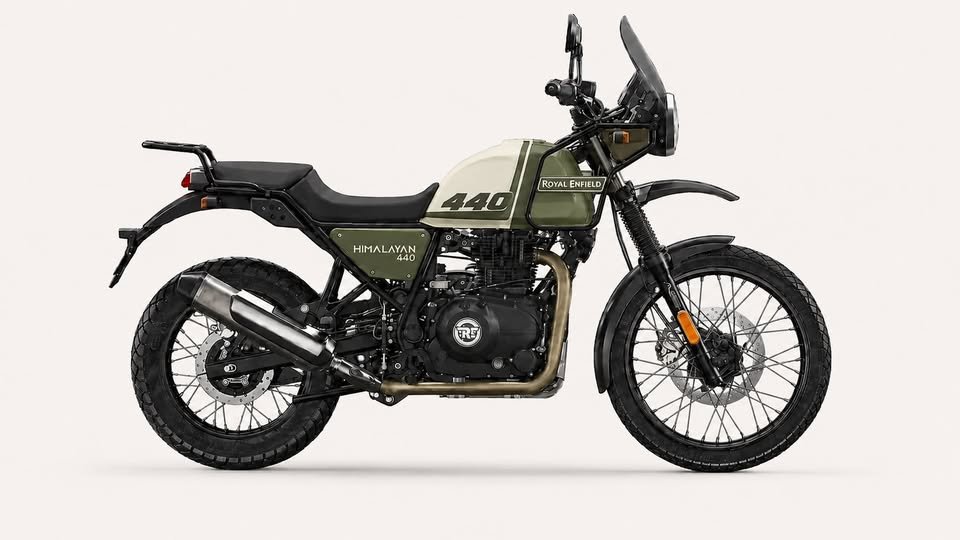
The Royal Enfield Himalayan 440 is shaping up as an important addition to the company’s adventure motorcycle range, particularly because it is expected to bridge the gap between the Scram 440 and Himalayan 450.
Royal Enfield has confirmed that the motorcycle will launch on September 4, 2026, at the Himalayan Base Camp in Leh, Ladakh. The event also coincides with the 10th anniversary period of the Himalayan range.
The motorcycle is expected to use the 443cc LS440 engine already seen in the Scram 440, where it produces 25.4 bhp and 34 Nm.
Its biggest distinguishing factors are likely to be the 21-inch front wheel, longer suspension travel and more rugged adventure-oriented chassis. At the same time, it is expected to avoid some of the higher-end technology associated with the Himalayan 450.
The eventual price will determine how effectively Royal Enfield can position the motorcycle between the Scram 440 and Himalayan 450.
If the company manages to combine a reasonable price with genuine off-road capability and the straightforward character of the earlier Himalayan 411, the Himalayan 440 could become a compelling option for riders who want an adventure motorcycle without the complexity of a heavily electronic flagship.
The full picture will emerge on September 4, when Royal Enfield officially unveils the motorcycle and confirms its final specifications, equipment and pricing.