
India is set to mark its 80th Independence Day on August 15, 2026, with a significant change to the traditional Red Fort ceremony. For the first time, “Vande Mataram” will be sung from the ramparts of the historic Red Fort before the unfurling of the national flag and the National Anthem. The development was announced by Defence Secretary Rajesh Kumar as part of preparations for this year’s national celebration.
The ceremony will be led by Prime Minister Narendra Modi, continuing the long-standing tradition of the Prime Minister addressing the nation from the Red Fort on Independence Day. The 2026 celebrations will also place particular emphasis on “Yuva Shakti” — the power and potential of India’s youth.
More than 27,000 dignitaries, visitors and students are expected to attend the Red Fort ceremony. According to the Defence Secretary’s announcement, those present will stand during the rendition of “Vande Mataram.”
Table of Contents
A Historic First at the Red Fort
The inclusion of “Vande Mataram” at the beginning of the Red Fort ceremony is among the most notable features of the 80th Independence Day celebrations.
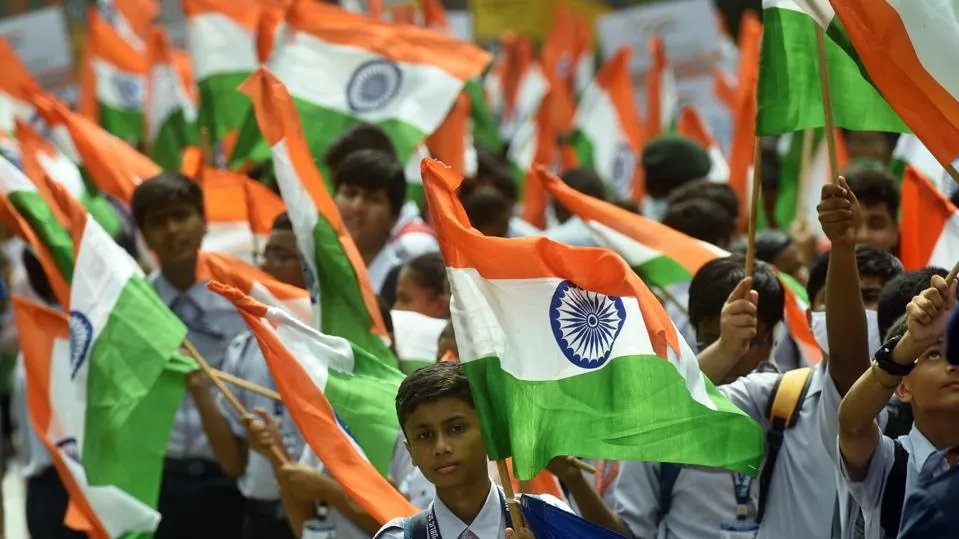
The national song will be performed before the Tricolour is unfurled and the National Anthem is played. This marks a new element in the formal programme at the Red Fort, where the Independence Day ceremony has traditionally centred on the Prime Minister’s arrival, flag unfurling, National Anthem and address to the nation.
“Vande Mataram” has a long association with India’s freedom movement. Written by Bankim Chandra Chattopadhyay, the song became an important expression of patriotism and resistance during the struggle against British rule.
The Government of India has also been observing the 150th anniversary of “Vande Mataram” through a year-long national commemoration. The programme began in November 2025 and is scheduled to continue until November 2026.
The decision to feature the song prominently during the 2026 Independence Day ceremony therefore comes during a wider period of national commemoration of its historical significance.
Why ‘Vande Mataram’ Matters to Independence Day
“Vande Mataram” occupies a unique place in India’s national history.
The song first appeared as part of Chattopadhyay’s novel Anandamath and later became closely associated with the freedom movement. The Government of India has described it as a composition that inspired India’s awakening spirit of unity and self-respect.
Over the decades, its words and melody have remained closely connected with patriotic occasions.
Its inclusion at the Red Fort in 2026 gives the national song an especially prominent place in the Independence Day programme. The decision also comes after “Vande Mataram” featured prominently in the Republic Day celebrations earlier in 2026, which marked 150 years of the composition.
The Red Fort setting adds another layer of historical significance because the monument has been the principal venue for India’s Independence Day celebrations since independence.
Red Fort Remains the Centre of the National Celebration
The Red Fort has been central to India’s Independence Day tradition since August 15, 1947.
Every year, the Prime Minister addresses the country from its historic ramparts, reflecting on India’s achievements, challenges and future priorities. The ceremony has evolved over the years, but the Red Fort has remained a powerful symbol of India’s transition from colonial rule to independence.
The 2026 event will continue that tradition.
Preparations for the ceremony have been underway for weeks. The Archaeological Survey of India ordered the Red Fort to remain closed to general visitors from July 15 to August 15, 2026, allowing preparations for the Independence Day celebrations to take place.
The closure is an annual security and preparation measure rather than an unusual development. On Independence Day itself, entry to the ceremony area is restricted to authorised guests and invitees.
80th Independence Day Puts ‘Yuva Shakti’ in the Spotlight
Another major theme of this year’s celebrations is Yuva Shakti, or youth power.
India has one of the world’s largest young populations, making young people an important part of the country’s development story. The emphasis on youth reflects the broader national discussion around education, innovation, entrepreneurship, technology, employment and leadership.
The government has previously used “Yuva Shakti” as a major theme in discussions about India’s development and the goal of building a developed India by 2047. In earlier Independence Day addresses, Prime Minister Modi has repeatedly highlighted India’s young population and its potential to drive innovation and economic growth.
The 2026 celebrations are expected to give young Indians a visible role in the national ceremony.
More than 27,000 people, including students and other invitees, are expected to attend the Red Fort event. Their participation is intended to reflect the broad public character of Independence Day and the importance of involving younger generations in national commemorations.
Youth and the Vision of a Developed India
The focus on youth also connects with India’s longer-term Viksit Bharat 2047 vision.
The idea is to transform India into a developed nation by the centenary of independence in 2047. Young Indians will form a major part of the workforce, innovation ecosystem and leadership structure by that time.
Education and skills will therefore be central to this vision. India’s expanding technology sector, startup ecosystem, digital infrastructure and research capabilities are areas where young people are increasingly expected to contribute.
The emphasis on Yuva Shakti at the 80th Independence Day ceremony can consequently be viewed within this broader context.
Rather than treating young people only as beneficiaries of government programmes, the focus increasingly presents them as participants in India’s future development.
A Ceremony Combining Tradition and a Forward-Looking Message
The 2026 Independence Day programme brings together two different ideas: India’s historical journey and its future aspirations.
The rendition of “Vande Mataram” connects the ceremony with the country’s freedom movement and the sacrifices associated with independence. At the same time, the focus on Yuva Shakti looks towards the next generation and India’s future.
This combination is particularly relevant as the country moves towards the centenary of independence in 2047.
The ceremony is therefore expected to serve not only as a commemoration of the past but also as an occasion to highlight India’s future priorities.
‘Har Ghar Tiranga’ Adds a Citizen Participation Element
Independence Day celebrations extend well beyond the Red Fort.
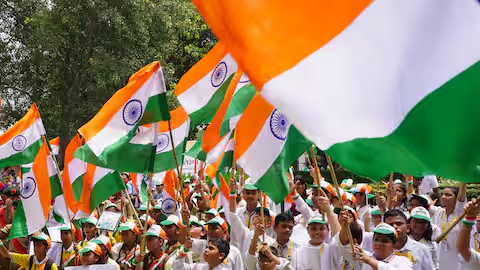
The Har Ghar Tiranga campaign is also encouraging citizens to participate by displaying the national flag at their homes and taking part in related activities. The 2026 campaign includes registration, flag-hoisting participation and the option to upload a photograph with the Tricolour and receive a certificate.
Such initiatives seek to take the spirit of Independence Day beyond official ceremonies and into communities and households across the country.
The campaign also includes activities connected with “Vande Mataram,” reflecting the song’s broader role in this year’s Independence Day period.
Young Citizens and National Participation
The participation of students at the Red Fort ceremony is particularly relevant to the Yuva Shakti theme.
Young people experience Independence Day through school programmes, cultural activities, flag ceremonies and patriotic events. Giving students a place in the national celebration can help connect these everyday experiences with the larger history of India’s independence.
The government’s MY Bharat platform has also conducted activities around Independence Day, including quizzes and youth-oriented programmes. Selected participants were eligible for e-invitations to attend the 2026 Independence Day ceremony at the Red Fort.
MY Bharat describes its mission as supporting youth participation, social mobility, educational equity and practical skills.
The Historical Meaning of Independence Day
India became independent from British colonial rule on August 15, 1947.
The day represents the culmination of a long freedom movement involving political leaders, social reformers, revolutionaries, students, workers, farmers and ordinary citizens.
Independence Day is therefore not simply a national holiday. It is an annual reminder of the country’s constitutional and democratic journey.
The Red Fort ceremony symbolises that transformation. A monument associated with India’s pre-independence history became the location from which successive Prime Ministers have spoken to an independent nation.
The addition of “Vande Mataram” to the 2026 programme adds another direct connection with the freedom movement.
What to Expect on August 15
The 80th Independence Day ceremony at the Red Fort is expected to follow its established national format while introducing the new musical element.
The key features include:
- Prime Minister Narendra Modi leading the Independence Day ceremony.
- “Vande Mataram” being sung from the Red Fort ramparts for the first time.
- The rendition taking place before the Tricolour is unfurled and the National Anthem is played.
- More than 27,000 dignitaries, visitors and students expected at the venue.
- A strong emphasis on Yuva Shakti and the role of young Indians.
- The Prime Minister’s address to the nation from the Red Fort.
The ceremony will take place amid extensive security arrangements, as is customary for the Independence Day event at the Red Fort.
Why the 2026 Celebration Is Significant
The 80th Independence Day arrives at an important point in India’s longer national timeline.
With 2047 approaching as the centenary of independence, national discussions increasingly focus on what India should look like by the time it reaches 100 years of freedom.
Youth participation is central to that question.
Today’s students and young professionals will become the country’s administrators, scientists, entrepreneurs, teachers, doctors, engineers, artists and public leaders over the coming decades. Their education, skills and opportunities will directly influence India’s future.
The Yuva Shakti theme therefore has significance beyond the Independence Day ceremony itself.
A Symbolic Start to the Celebrations
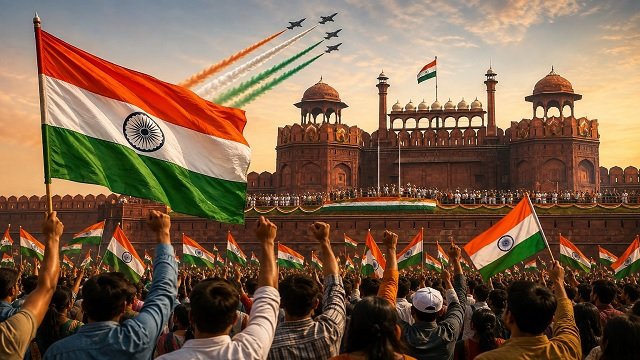
The decision to begin the Red Fort ceremony with “Vande Mataram” makes the opening moments of the 2026 celebration particularly symbolic.
The song recalls the history of India’s independence movement, while the participation of thousands of students and young citizens points towards the country’s future.
Together, these elements create a narrative connecting freedom, national identity, youth participation and India’s development ambitions.
The 80th Independence Day will consequently be watched not only for the Prime Minister’s address but also for the changes introduced into the ceremonial programme.
India’s 80th Independence Day on August 15, 2026, is set to feature a historic first at the Red Fort, with “Vande Mataram” scheduled to be sung from the ramparts before the unfurling of the Tricolour and the National Anthem. The announcement was made by Defence Secretary Rajesh Kumar, who said more than 27,000 dignitaries, visitors and students are expected to attend the ceremony.
The celebrations will also put Yuva Shakti at the centre of the national narrative, highlighting the role of India’s young population in shaping the country’s future.
The prominence of “Vande Mataram” is particularly notable because 2025–26 marks a year-long national commemoration of the song’s 150th anniversary.
As India looks towards the centenary of independence in 2047, the 2026 ceremony is set to connect the country’s freedom-era legacy with its ambitions for the future. From the historic Red Fort ramparts, the celebration will bring together a familiar symbol of India’s independence and a renewed focus on the generation expected to shape the nation’s next chapter.