
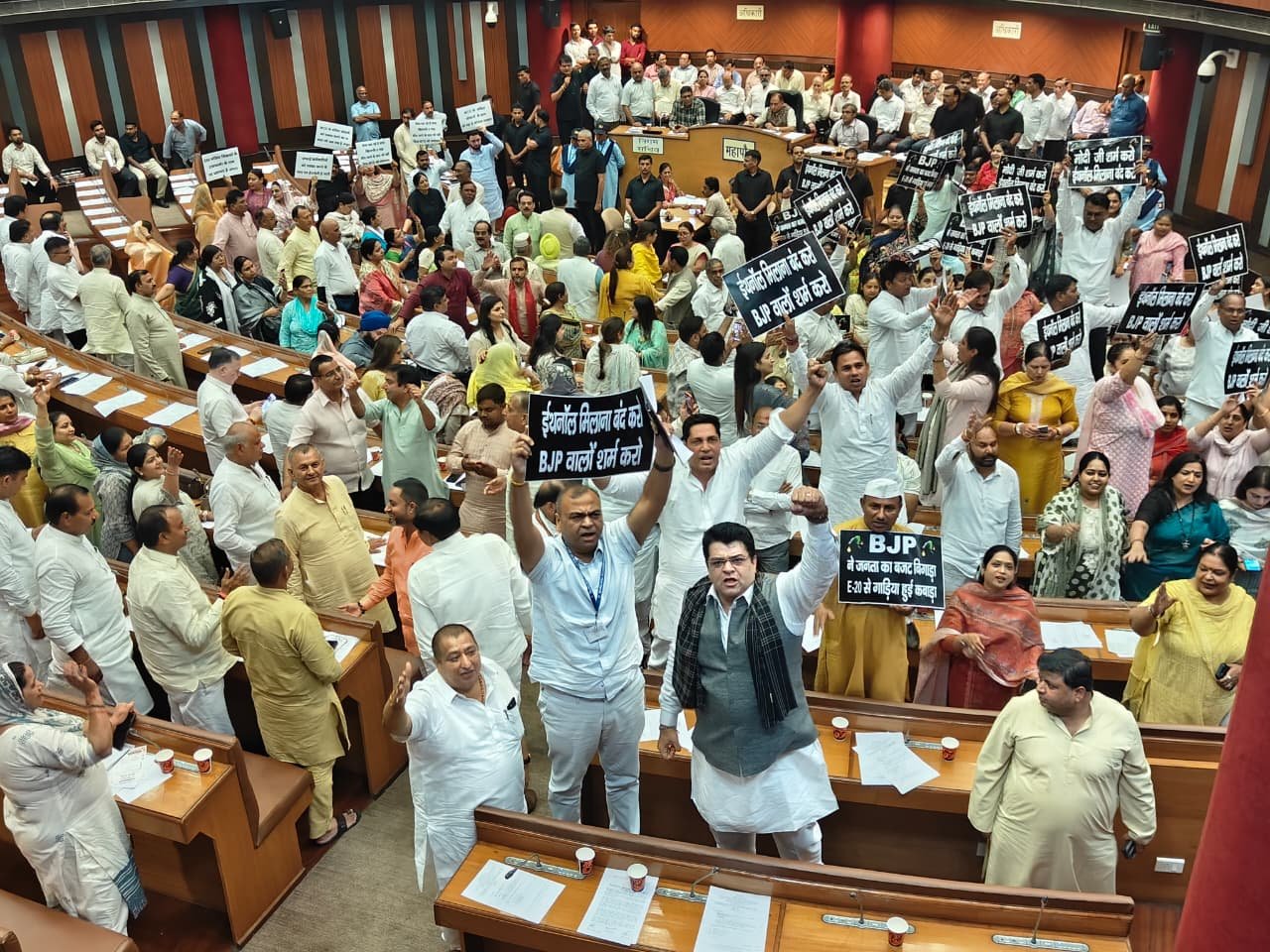
The political debate over E20 ethanol-blended petrol intensified on Thursday as councillors of the Aam Aadmi Party (AAP) staged a protest inside the Municipal Corporation of Delhi (MCD) House, accusing the Bharatiya Janata Party (BJP)-led governments of imposing a fuel policy that they claim is adversely affecting vehicle owners and placing an additional financial burden on the middle class.
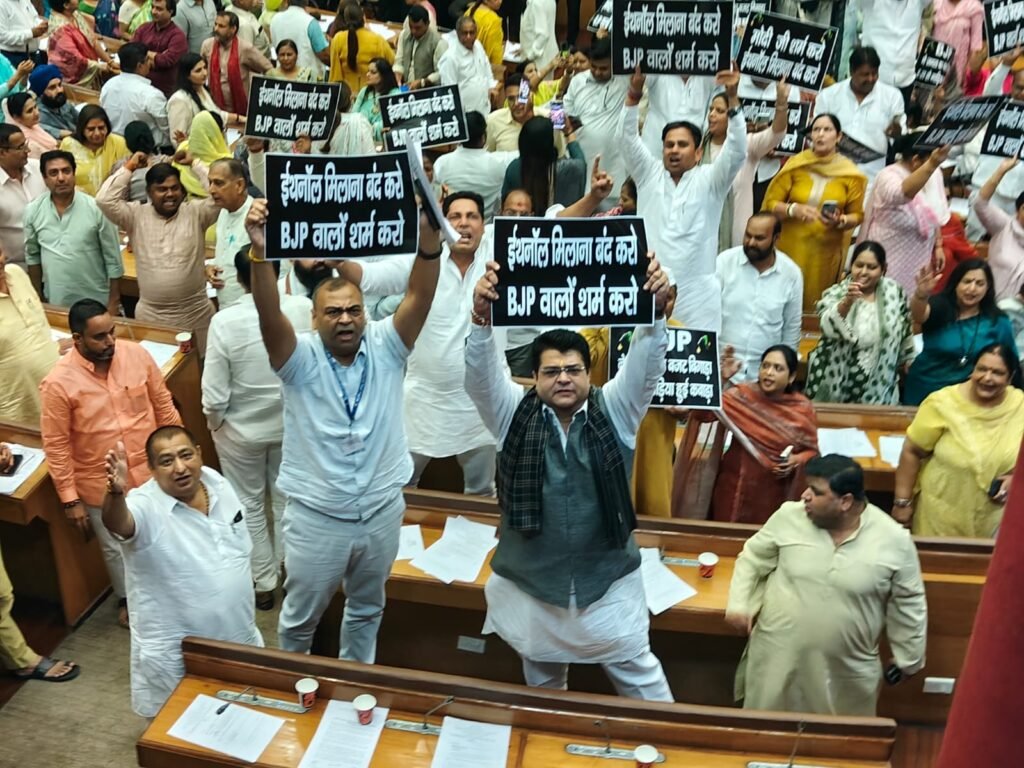
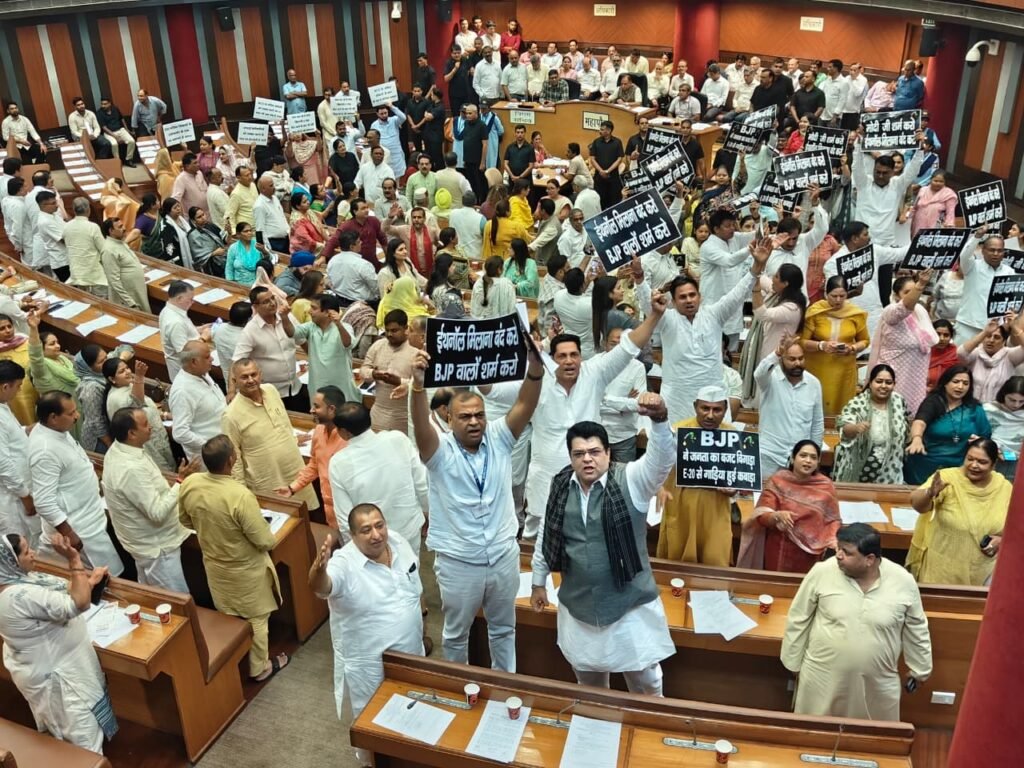
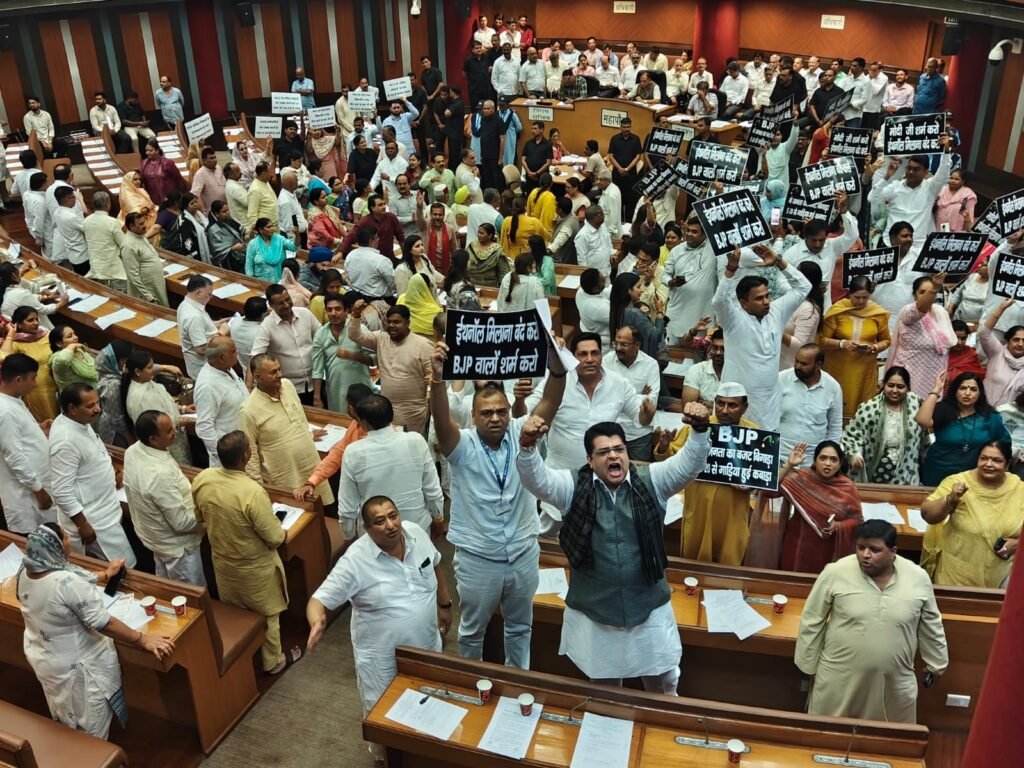
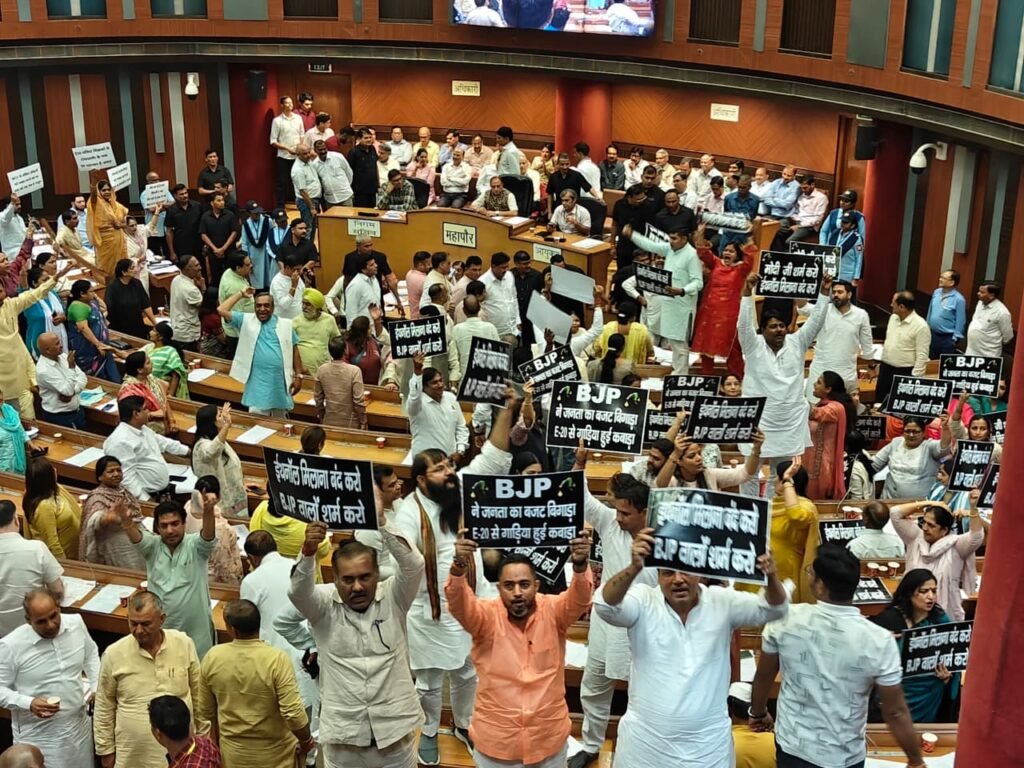
During the monthly meeting of the MCD House held at the Civic Centre in New Delhi, AAP councillors displayed placards carrying slogans against the use of E20 petrol and demanded that the policy be withdrawn. Party leaders also criticised the BJP over alleged inaction on Delhi’s recurring waterlogging problems, claiming that discussions on both issues were avoided during the proceedings.
The protest was led by Leader of Opposition in the MCD Ankush Narang, along with MCD Co-Incharges Praveen Kumar and Preeti Dogra, who accused the BJP of refusing to debate matters affecting the public.
Table of Contents
AAP Protests Against E20 Policy Inside MCD House
The monthly session of the Municipal Corporation of Delhi witnessed high political drama after AAP councillors protested against the Centre’s implementation of E20 ethanol-blended petrol. Holding posters reading “Petrol mein ethanol milana band karo, BJP walon sharm karo” (“Stop mixing ethanol in petrol. BJP, shame on you”), councillors raised slogans inside the House, alleging that the policy was harming consumers rather than benefiting them.
The demonstration centred on the party’s claim that a significant number of vehicles currently on Indian roads were not originally designed to operate on E20 fuel, potentially leading to higher maintenance costs, lower fuel efficiency, and mechanical issues for vehicle owners.
AAP leaders argued that before implementing such a policy nationwide, the government should have addressed concerns regarding compatibility with older vehicles and the financial implications for ordinary citizens.
Ankush Narang Questions Government Over Vehicle Safety
Addressing the media after the protest, Ankush Narang, Leader of Opposition in the MCD, questioned the government’s decision to expand the use of E20 petrol without, according to him, adequately addressing concerns raised by consumers.
He asked whether all vehicles currently operating on Indian roads were compatible with E20 fuel and questioned who would bear responsibility if vehicles suffered damage due to prolonged use of ethanol-blended petrol.
According to Narang, while environmental protection is an important objective, policies aimed at achieving it should not impose an additional financial burden on middle-class families.
He alleged that if consumers are forced to spend more on vehicle maintenance because of fuel compatibility issues, the government must clearly explain how their concerns will be addressed.
AAP Raises Waterlogging Alongside E20 Issue
Apart from the E20 policy, AAP leaders also criticised the BJP over the issue of severe waterlogging witnessed across several parts of Delhi during the monsoon season.
According to Ankush Narang, the opposition intended to discuss the issue during the House meeting but alleged that the agenda was completed quickly before the proceedings were adjourned.
He claimed the Mayor did not allow a detailed discussion on waterlogging despite repeated demands from opposition councillors.
The party accused the BJP of avoiding debate on civic issues that directly affect Delhi residents, including flooded roads, drainage failures, and urban infrastructure challenges experienced during heavy rainfall.
BJP Accused of Avoiding Debate
AAP leaders alleged that the House proceedings were adjourned immediately after opposition members attempted to raise the E20 issue.
MCD Co-Incharge Praveen Kumar claimed that whenever issues affecting ordinary citizens are brought before the House, meaningful discussion is avoided.
According to him, the E20 policy has become a matter of concern for vehicle owners across the country, making it an issue deserving detailed debate in elected civic institutions.
He alleged that instead of responding to questions raised by opposition councillors, the House was dissolved before a discussion could take place.
The BJP had not responded to these specific allegations in the material provided.
Concerns Raised Over Financial Burden on Vehicle Owners
AAP leaders repeatedly argued that the implementation of E20 petrol could increase financial pressure on consumers.
According to Praveen Kumar, rising vehicle prices, higher fuel costs, and maintenance expenses have already strained household budgets. He claimed that if ethanol-blended fuel accelerates wear and tear in incompatible vehicles, the burden on vehicle owners would increase further.
The party maintained that many middle-class families rely heavily on two-wheelers and cars for daily commuting and could face additional expenses if vehicle components require premature replacement.
These remarks reflect the position expressed by AAP leaders during the protest.
Preeti Dogra Says Middle Class Is Bearing the Cost
MCD Co-Incharge Preeti Dogra described the E20 issue as one that directly affects India’s middle class.
She argued that many of the same middle-class voters who supported the BJP now feel burdened by rising living costs and concerns surrounding ethanol-blended fuel.
According to Dogra, declining fuel efficiency and fears regarding vehicle durability have become major concerns among consumers.
She said the Aam Aadmi Party intends to continue raising these issues until the government addresses public concerns.
AAP Announces August 1 Protest
During the protest, Preeti Dogra also announced that the Aam Aadmi Party plans to organise a larger public demonstration on August 1 under the leadership of Arvind Kejriwal.
According to the party, the protest will focus on demanding the withdrawal of the E20 policy and highlighting its alleged impact on consumers.
She appealed to members of the public to participate in the protest and support the party’s campaign regarding ethanol-blended petrol.
Understanding E20 Petrol
E20 refers to petrol blended with 20 per cent ethanol and 80 per cent conventional petrol.
The Government of India has been promoting ethanol blending as part of its broader strategy to:
- Reduce dependence on imported crude oil
- Lower greenhouse gas emissions
- Support India’s biofuel sector
- Increase farmers’ income through ethanol production
- Improve long-term energy security
The ethanol blending programme forms an important component of India’s clean energy transition and has been progressively expanded over the past several years.
The government has maintained that modern vehicles designed for E20 fuel can safely operate using the blend while contributing to lower carbon emissions.
Debate Around Vehicle Compatibility
While the government views ethanol blending as an environmental and energy security initiative, concerns have been raised in public discussions regarding compatibility with older vehicles.
Some automobile manufacturers have introduced E20-compatible engines, while owners of older vehicles have sought greater clarity regarding long-term usage, maintenance requirements, and manufacturer recommendations.
Vehicle compatibility can vary depending on the model, year of manufacture, and engineering specifications.
Consumers are generally advised to follow the recommendations issued by their respective vehicle manufacturers regarding fuel compatibility.
Balancing Environmental Goals and Consumer Concerns
India’s ethanol blending programme represents one of the country’s major initiatives aimed at reducing fossil fuel dependence and promoting renewable energy.
At the same time, political debate continues over how the transition should be implemented and whether adequate safeguards exist for consumers whose vehicles may not have been originally designed for higher ethanol blends.
The discussion reflects the broader challenge faced by policymakers worldwide—balancing environmental sustainability with affordability, consumer convenience, and technological readiness.
As India continues expanding clean energy initiatives, public awareness, manufacturer guidance, and transparent implementation will remain important factors in ensuring a smooth transition.
With the Aam Aadmi Party announcing further protests and continuing to raise concerns over E20 petrol, the issue is likely to remain politically significant in the coming weeks.
Alongside civic issues such as waterlogging, the debate over ethanol-blended fuel has now become part of a wider political discourse surrounding public policy, affordability, and environmental reforms.
Whether future discussions lead to policy modifications or further clarification from the government remains to be seen. For now, the issue has emerged as another major point of confrontation between the AAP and the BJP, with both environmental priorities and consumer interests expected to remain at the centre of the national conversation.