The investigation into the Ram Mandir Controversy has entered a crucial phase, with Uttar Pradesh Police seeking court permission to take three accused into custody to trace the financial movement of money allegedly linked to the misappropriation of temple donations. Investigators believe that examining bank transactions, cash deposits, and possible purchases made by the accused could help establish whether the recovered funds originated from donations offered by devotees at the Ram Temple in Ayodhya.
The case has attracted nationwide attention because it concerns donations made by millions of devotees who contribute to one of India’s most significant religious institutions. While the investigation remains ongoing and guilt has yet to be established in court, officials say the financial trail could play a decisive role in determining the extent of the alleged irregularities.
Table of Contents
Police Focus on Financial Records
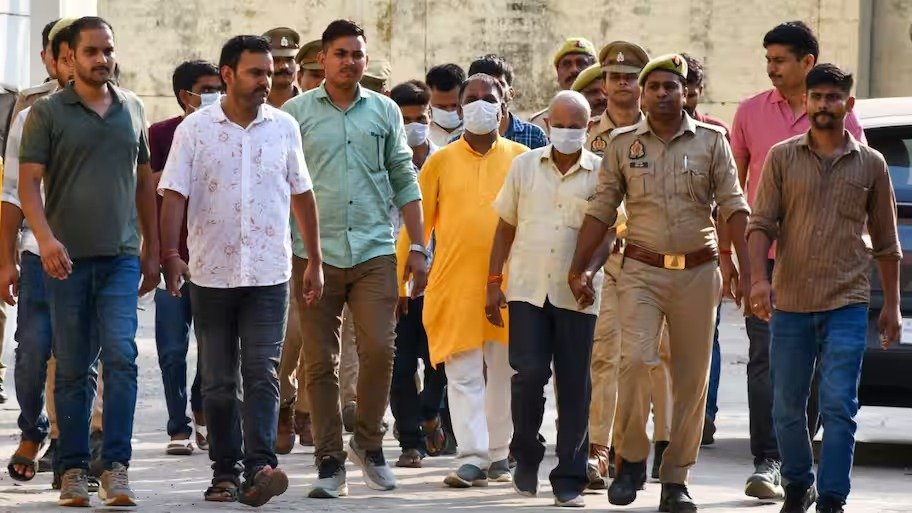
The latest development in the Ram Mandir Controversy comes after police moved the court seeking custodial interrogation of three accused—Lavkush Mishra, Anukalp Mishra, and Karunesh Pandey.
According to investigators, the primary objective of seeking custody is not merely questioning the accused but conducting a detailed examination of their financial transactions. Officials believe that analysing bank accounts, deposits, withdrawals, and expenditure patterns may reveal whether the recovered cash has any direct connection with temple donations.
Investigators suspect that some of the alleged proceeds may have already been spent on purchasing goods or transferred through banking channels. Therefore, merely recovering cash is not considered sufficient. Police intend to reconstruct the complete movement of money to determine how funds were allegedly handled after being removed from the donation counting process.
Financial experts assisting the investigation are expected to compare the accused persons’ income with their banking activities, looking for unusual deposits or transactions that cannot be explained through legitimate earnings.
Large Amounts of Cash Already Recovered
The investigation has already resulted in significant recoveries from the accused individuals.
According to police records:
- Rs 14.25 lakh was recovered from Lavkush Mishra.
- Rs 16.82 lakh was recovered from Anukalp Mishra.
- Rs 18.07 lakh was recovered from Karunesh Pandey.
These recoveries have become one of the central aspects of the Ram Mandir Controversy, prompting investigators to determine whether the money originated from donations collected at the temple or from independent sources.
Officials have clarified that recovery of cash alone does not automatically establish criminal liability. However, the source of the money remains an important question that investigators hope to answer through banking records and documentary evidence.
Bank Accounts Under Investigation
One of the most significant aspects of the Ram Mandir Controversy now revolves around banking transactions.
Police are expected to scrutinise account statements covering several months, examining whether unusually large deposits were made during the period under investigation. Investigators will also analyse transfers between family members, withdrawals made shortly after deposits, and purchases that may indicate the use of allegedly misappropriated funds.
Special attention is reportedly being given to the financial records connected to Karunesh Pandey after claims emerged from his family that nearly Rs 18 lakh had been deposited into his wife’s bank account.
Investigators now want to establish:
- When the money was deposited.
- Who deposited the funds.
- Whether the deposits were made in cash or electronically.
- Whether the amount corresponds with money allegedly missing from temple donations.
- Whether any further transfers were made from the account.
Police believe these financial records may provide a clearer picture of how money allegedly moved after leaving the donation counting system.

More Recoveries May Follow
Officials involved in the investigation believe the current recoveries may not represent the complete amount involved.
If investigators successfully establish the movement of money through banking channels, additional recoveries could be made during the custodial interrogation period. Authorities are also examining whether assets or expensive purchases were acquired using money allegedly linked to temple donations.
Tracing financial transactions has become increasingly important in modern criminal investigations because digital banking often leaves documentary evidence that can support or contradict statements made during questioning.
This financial angle has therefore become one of the most closely watched developments in the Ram Mandir Controversy.
SIT Preliminary Findings Raise Serious Questions
The ongoing police investigation follows the submission of preliminary findings by the Special Investigation Team (SIT), which was constituted by the Uttar Pradesh government after a request from the Shri Ram Janmabhoomi Teerth Kshetra Trust.
The SIT conducted an extensive review of donation counting procedures, security arrangements, CCTV footage, and administrative practices governing the handling of offerings made by devotees.
Its preliminary observations have significantly expanded the scope of the Ram Mandir Controversy beyond individual allegations, highlighting systemic shortcomings in supervision and operational safeguards.
Although the investigation is still underway, the report has identified multiple procedural weaknesses that investigators believe may have allowed irregularities to occur.
CCTV Footage Forms Key Evidence
Among the most significant findings cited by investigators is CCTV footage recorded between April 27 and June 5, 2026.
According to the preliminary report, surveillance cameras allegedly captured approximately 70 separate instances in which members of the counting staff appeared to conceal bundles of cash and loose currency notes.
Investigators claim the footage shows currency allegedly being hidden inside clothing, shoes, and other personal belongings during the counting process.
The CCTV evidence has become one of the most important components of the Ram Mandir Controversy because it provides investigators with visual material that can be compared with witness statements, recovery records, and financial evidence.
Officials are now conducting detailed forensic examinations of the recordings to establish the sequence of events and identify every individual allegedly involved.
Six Individuals Named in the Investigation
The Ram Mandir Controversy investigation has so far identified six individuals who are alleged to have prima facie involvement in the case.
Those named include:
- Avinash Shukla
- Anukalp Mishra
- Lavkush Mishra
- Manish Kumar Yadav
- Karunesh Pandey
- Ramashankar Mishra
Police have registered cases against all six individuals as part of the ongoing investigation into the Ram Mandir Controversy.
Investigators continue to emphasise that the legal process is ongoing, and the allegations against the accused will ultimately be tested before the courts.
Security Protocols Allegedly Ignored
Apart from the alleged theft itself, investigators have raised serious concerns regarding the management of the donation counting process.
Ram Mandir Controversy According to the SIT report, a detailed Memorandum of Understanding (MoU) and Standard Operating Procedure (SOP) had already been established with the State Bank of India for handling temple donations. These procedures were intended to ensure transparency, accountability, and proper security during counting operations.
However, investigators allege that several of these safeguards were either ignored or not properly implemented.
Among the reported shortcomings were:
- Absence of systematic frisking at entry and exit points.
- Failure to implement biometric attendance for staff.
- Donations from different hundis allegedly being mixed instead of counted separately.
- Dress code regulations reportedly not being enforced.
- Restrictions on carrying personal belongings during counting allegedly being overlooked.
- Inadequate control over access to donation box keys.
Ram Mandir Controversy Investigators believe that strict implementation of these measures could have significantly reduced opportunities for alleged irregularities.
These procedural failures have become a major dimension of the Ram Mandir Controversy, shifting attention beyond individual conduct to institutional oversight.
Supervisory Responsibility Under Scrutiny
The SIT has also examined the administrative structure responsible for overseeing donation management.
According to its preliminary observations, certain supervisory officials allegedly failed to ensure compliance with established protocols.
The report has specifically referred to former trustee Dr Anil Mishra and donation counting in-charge Subhash Srivastava in connection with supervisory lapses related to the counting process.
Investigators are examining whether failures in monitoring, verification, and enforcement created circumstances that allowed alleged irregularities to continue over an extended period.
It is important to note that the findings remain part of an ongoing investigation, and further legal proceedings will determine any individual accountability.
Cash Recovered Before Formal Investigation
Another noteworthy aspect of the Ram Mandir Controversy is the timing of some recoveries.
According to investigators, approximately Rs 78.94 lakh in cash and other articles had already been recovered from the accused before the formal investigation began.
Ram Mandir Controversy Officials believe these recoveries strengthened the case for launching a wider inquiry into financial records, CCTV footage, and administrative procedures.
The recovered amounts are now being matched with donation records, bank statements, and witness testimonies to determine whether they correspond with missing temple offerings.
Income and Bank Deposits Being Compared
Investigators are also conducting what financial crime experts describe as a “lifestyle and income analysis.”
This process involves comparing the salaries and declared sources of income of the accused with deposits found in their bank accounts.
According to officials, preliminary findings indicate that certain bank deposits appeared substantially higher than what would ordinarily be expected based on the accused individuals’ legitimate earnings.
While such discrepancies alone do not establish wrongdoing, they often become an important factor in financial investigations because they may indicate unexplained sources of income.
Ram Mandir Controversy ,Police are expected to rely on banking documentation, transaction histories, and financial records to determine whether these deposits can be legally explained.
Why the Financial Trail Matters
Modern financial investigations increasingly depend on documentary evidence rather than solely on witness statements.
In the Ram Mandir Controversy, investigators believe tracing every rupee—from alleged collection points to recovery locations and bank accounts—will help establish whether the recovered money can be directly connected to temple donations.
This involves analysing cash deposits, ATM withdrawals, digital transactions, purchases, and transfers between accounts. Such evidence can either support or weaken allegations depending on what the financial records ultimately reveal.
If investigators successfully establish a continuous chain linking temple donations to recovered assets or bank accounts, it could significantly strengthen the prosecution’s case. Conversely, if legitimate sources of income are established, those findings will also become part of the judicial process.
For now, Ram Mandir Controversy the investigation remains active, with police awaiting court approval for custodial interrogation as they continue examining financial records, recovered cash, surveillance footage, and administrative procedures that together form the core of the ongoing Ram Mandir Controversy.