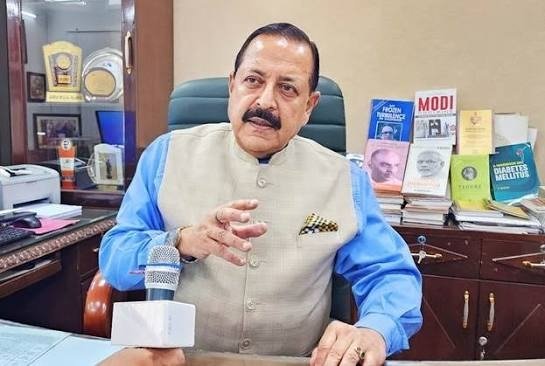
India’s education landscape is undergoing one of its biggest transformations in decades, and the National Education Policy (NEP) 2020 is increasingly being seen as the driving force behind this change. Union Minister Dr. Jitendra Singh has said that the NEP has democratized access to quality education by creating equal opportunities for students from Tier-2 and Tier-3 towns, allowing them to compete confidently with their peers in major metropolitan cities.
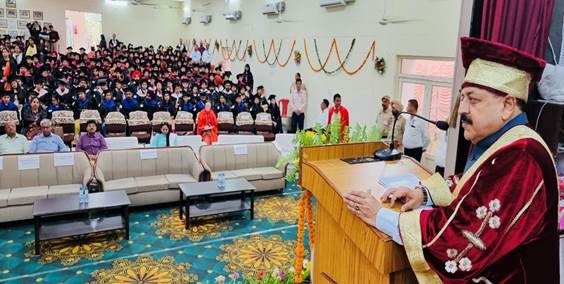
Speaking at a two-day hybrid conference organized by Government Degree College (GDC), Doda, on the implementation of the National Education Policy 2020 in Jammu and Kashmir, the minister highlighted how the NEP has shifted India’s education system away from traditional degree-centric learning towards a more flexible, skill-oriented and innovation-driven approach.
The conference, themed “Implementation of the National Education Policy 2020 in Jammu & Kashmir: Challenges of Inclusion, Equity and Accessibility,” brought together educators, policymakers and students to discuss how the policy is reshaping higher education while making learning more inclusive and accessible across the country.
Table of Contents
NEP Bringing Equal Opportunities Beyond Metropolitan Cities
One of the key messages delivered during the conference was that geographical location should no longer determine educational opportunities.
According to Dr. Singh, the NEP has created a level playing field where students studying in smaller towns such as Doda can now access the same learning opportunities available to students in India’s major urban centres.
For decades, students from remote districts often faced limited educational infrastructure, fewer institutions and restricted access to quality resources. Many had to relocate to larger cities to pursue higher education or prepare for competitive examinations.
The NEP seeks to address this imbalance by promoting digital learning, flexible academic structures and multidisciplinary education that can benefit students irrespective of where they live.
Improved internet connectivity, online educational platforms and technology-enabled classrooms are helping bridge the gap between rural and urban education, making quality learning more accessible than ever before.
Shift from Degrees to Skills
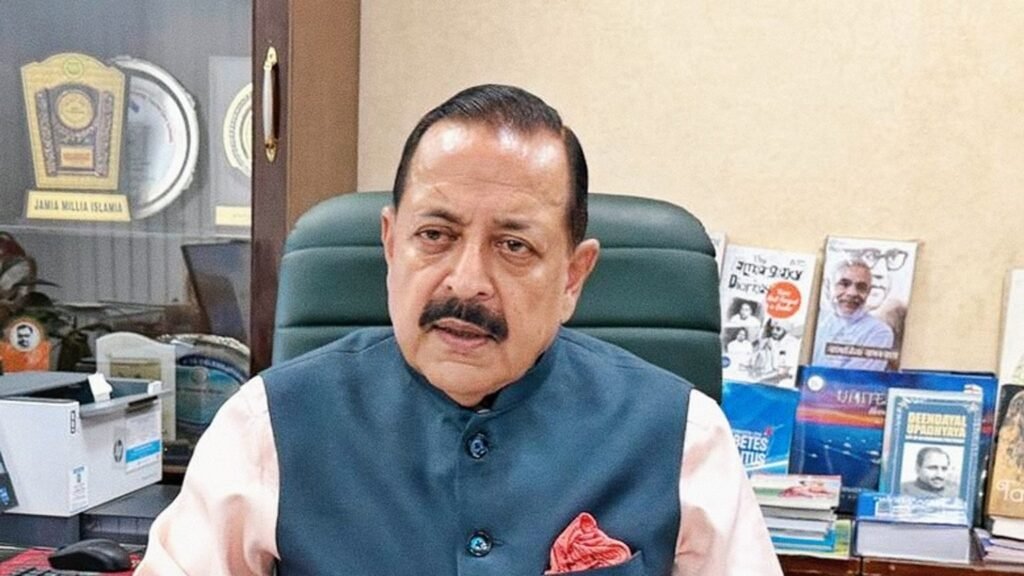
Perhaps the most significant reform introduced under the NEP is its emphasis on skills rather than simply obtaining academic degrees.
Dr. Singh explained that the modern employment market increasingly values practical knowledge, innovation, creativity and problem-solving abilities over conventional academic credentials alone.
He observed that earning a degree is no longer the ultimate objective of higher education.
Instead, the NEP encourages students to develop competencies that make them employable, entrepreneurial and capable of adapting to rapidly changing industries.
This represents a major departure from India’s earlier education model, where career choices were often limited by rigid academic streams and social expectations.
Today, under the NEP, students are encouraged to build careers aligned with their individual talents and interests.
Flexible Learning Encourages Student Choice
Another major feature of the NEP is the flexibility it offers students in selecting subjects.
Unlike traditional systems where students were largely restricted to predefined academic streams such as science, commerce or humanities, the policy encourages multidisciplinary learning.
Students now have greater freedom to combine subjects according to their aptitude and career aspirations.
During his address, Dr. Singh shared an example from an educational institution implementing the policy, where science students voluntarily attended literature classes because they found genuine interest in the subject.
Such examples illustrate how the NEP is helping create more engaging classrooms by encouraging curiosity rather than restricting learning within conventional boundaries.
Educational experts believe that multidisciplinary education also improves critical thinking, communication skills and creativity—qualities increasingly valued in today’s global workforce.
Building an Entrepreneurial Mindset
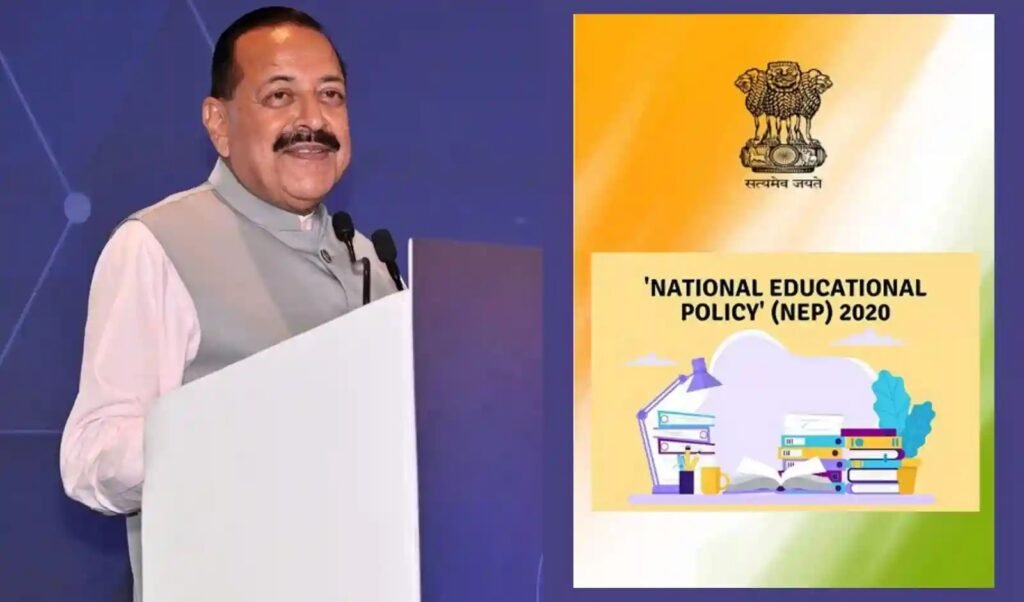
The NEP also aligns closely with India’s broader vision of becoming an innovation-driven economy.
Rather than preparing students solely for government jobs, the policy encourages entrepreneurship, research and startup creation.
Dr. Singh emphasized that employment today extends far beyond traditional government service.
Students are being encouraged to become job creators instead of only job seekers.
He linked this transformation with India’s remarkable startup growth.
According to the minister, India had around 350 startups in 2014.
Today, the country has more than 2.3 lakh recognized startups, making it the world’s third-largest startup ecosystem.
Significantly, over half of these startups have emerged from Tier-2 and Tier-3 cities.
This demonstrates that innovation is increasingly taking root beyond metropolitan centres—a trend that closely reflects the objectives of the NEP.
Doda Emerging as an Educational and Innovation Hub
During the conference, Dr. Singh praised Government Degree College, Doda, describing it as one of the oldest and most respected higher education institutions in the region.
He recalled a time when students from remote mountainous areas travelled long distances to Doda and Bhaderwah because educational institutions were scarce.
Today, with improved infrastructure and reforms introduced under the NEP, Doda has the potential to develop into an important educational destination.
The minister also encouraged the college to establish incubation facilities focused on Himalayan products, aroma-based enterprises and wellness industries.
Such initiatives, developed in collaboration with organisations like the Ministry of AYUSH and CSIR’s Aroma Mission, could create new employment opportunities while strengthening the local economy.
Lavender Revolution Demonstrates Science-Led Development
To illustrate the importance of innovation-driven education, Dr. Singh referred to the Lavender Revolution initiated under CSIR’s Aroma Mission.
What began as experimental cultivation on a small piece of land in Bhaderwah has expanded significantly across Doda district, several parts of Kashmir and other Himalayan regions.
Lavender farming has created fresh livelihood opportunities for farmers while promoting rural entrepreneurship through value-added products including essential oils, cosmetics and wellness products.
The success of the Lavender Revolution demonstrates how scientific research, skill development and entrepreneurship can work together to transform local economies.
Such examples reinforce the broader objectives of the NEP, which encourages students to apply knowledge beyond classrooms to solve real-world problems.
Strengthening Research and Scientific Infrastructure
The minister also highlighted the growing scientific infrastructure being developed in the region.
Facilities such as Himalayan research laboratories provide students with opportunities to participate in advanced scientific research without leaving their home states.
The NEP places considerable emphasis on strengthening research culture across educational institutions.
By encouraging collaboration between universities, research organisations and industries, the policy seeks to develop innovation ecosystems capable of producing globally competitive research and technology.
Students exposed to such environments are better equipped for careers in science, technology, engineering, entrepreneurship and public policy.

Government Schemes Supporting Young Entrepreneurs
Dr. Singh urged educational institutions to familiarise students with flagship government initiatives that complement the objectives of the NEP.
He specifically referred to schemes such as the Pradhan Mantri Mudra Yojana and PM Vishwakarma Yojana.
These programmes provide financial assistance, skill development and institutional support to aspiring entrepreneurs, artisans and small businesses.
Greater awareness of such schemes can help students convert innovative ideas and traditional skills into financially sustainable enterprises.
When combined with the educational reforms introduced under the NEP, these initiatives create a stronger ecosystem for entrepreneurship and self-employment.
Digital Connectivity Expanding Educational Access
Technology has become another important pillar supporting the implementation of the NEP.
Improved digital connectivity has significantly reduced geographical barriers that previously limited educational opportunities in remote regions.
Students living in mountainous districts can now attend online lectures, access digital libraries, participate in virtual laboratories and prepare for national-level competitive examinations without relocating.
This increased accessibility is particularly important for regions such as Jammu and Kashmir, where difficult terrain historically affected educational access.
Digital learning platforms are helping ensure that students receive quality education regardless of their location.
Preparing Youth for Viksit Bharat 2047
Dr. Singh also linked the objectives of the NEP with India’s long-term developmental vision.
Students currently pursuing higher education will play a leading role when India celebrates 100 years of Independence in 2047.
He emphasized that educational institutions must prepare students not only for employment but also for leadership, innovation, responsible citizenship and nation-building.
Teachers, according to the minister, have an equally important responsibility in mentoring young minds capable of addressing future economic, technological and social challenges.
By encouraging multidisciplinary learning, entrepreneurship, scientific research, innovation and skill development, the NEP is gradually reshaping India’s education system into one that equips students for a rapidly changing global economy while expanding opportunities for youth in every region of the country.