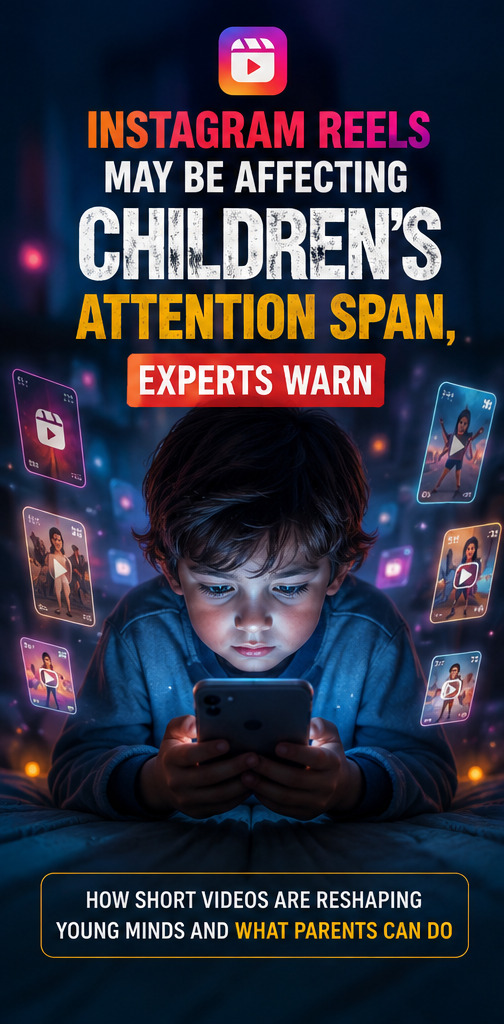
Instagram Reels, As smartphones and social media become an inseparable part of everyday life, health experts and researchers are raising fresh concerns about the growing impact of short-form video platforms on children’s cognitive development. Apps featuring short videos—such as Instagram Reels, TikTok, and YouTube Shorts—have transformed digital entertainment, but emerging research suggests that excessive exposure may be affecting children’s ability to concentrate, regulate emotions, and remain engaged in long-term tasks.
Scientists from leading academic institutions say prolonged use of Instagram Reels and similar platforms may contribute to shorter attention spans and mental health organizations have pointed to a growing body of evidence indicating that repeated consumption of rapid, highly stimulating content can alter the brain’s reward system. While these platforms are designed to maximize user engagement, experts say that prolonged use—particularly among children and adolescents whose brains are still developing—may contribute to shorter attention spans, increased dependence on instant gratification, and difficulty focusing on schoolwork or other everyday activities.
Table of Contents
Researchers emphasize that technology itself is not inherently harmful. Instead, they caution that excessive and unregulated screen time, combined with highly personalized recommendation algorithms, can influence behavioral patterns over time. Parents, educators, and healthcare professionals are therefore being encouraged to promote balanced digital habits while helping children develop healthy relationships with technology.
Growing Concerns Over Short-Form Video Consumption
Instagram Reels and other short-form video platforms have become one of the fastest-growing segments of the digital entertainment industry. Videos lasting anywhere from a few seconds to a minute provide constant novelty, making it easy for users to continue scrolling for extended periods.
Children and teenagers are among the most active users of these platforms. What may begin as harmless entertainment can gradually become a daily habit that occupies a significant portion of leisure time.
Experts explain that every swipe introduces fresh content, creating an experience that continuously stimulates curiosity and anticipation. This design encourages users to remain engaged far longer than originally intended.
Although these platforms offer educational, creative, and entertaining content, concerns arise when prolonged viewing replaces physical activity, reading, face-to-face interaction, or academic engagement.
Understanding the Concept of “Short Attention Span”
One of the primary concerns highlighted by researchers is the development of what psychologists describe as a short attention span.
Attention span refers to a person’s ability to maintain focus on a single activity, conversation, or task without becoming distracted.
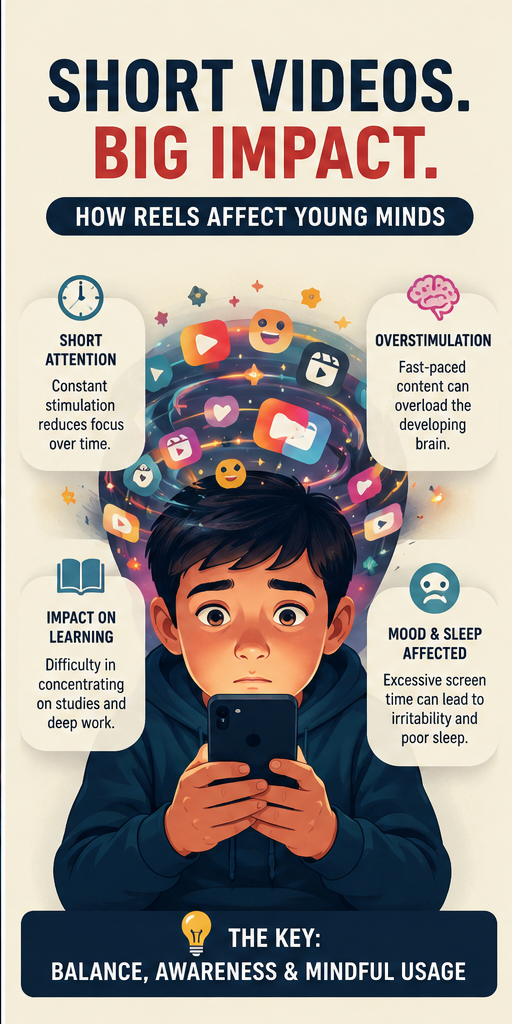
When children become accustomed to consuming rapidly changing Instagram Reels content every few seconds, they may begin finding slower-paced activities comparatively less stimulating.
Tasks such as:
- Reading books
- Completing homework
- Listening during classroom lessons
- Solving mathematical problems
- Engaging in lengthy conversations
may require sustained concentration that differs significantly from the rapid pace of short-form videos.
Researchers suggest that frequent switching between highly stimulating videos may train the brain to expect constant novelty, making sustained focus more challenging over time.
Microsoft’s Research Highlights Declining Attention Span
One widely discussed study conducted by Microsoft examined changes in human attention over time.
According to the research, the average human attention span declined from approximately 12 seconds in 2000 to around 8 seconds during the smartphone era.
The report gained widespread attention after comparing this figure to the average attention span often attributed to a goldfish.
While some experts have debated aspects of this comparison, the broader concern remains that digital media consumption patterns have changed significantly over the past two decades.
Researchers believe that frequent exposure to rapidly changing online content may contribute to these evolving attention patterns.
What Happens Inside the Brain?
Neuroscientists have been studying how repeated exposure to Instagram Reels and other short-form videos influences brain activity.
Research conducted by scientists at Zhejiang University in China used neuroimaging techniques, including MRI scans, to observe brain responses during short-video viewing.
According to researchers, one of the most active regions during this process is the ventral tegmental area (VTA), an important component of the brain’s reward system.
This area plays a major role in processing pleasure, motivation, and reward.
Each time users encounter entertaining or interesting content, the brain releases dopamine, a neurotransmitter associated with feelings of satisfaction and motivation.
Since every swipe presents new content, dopamine release may occur repeatedly, encouraging users to continue scrolling.
Researchers caution that frequent activation of this reward system may gradually reinforce habitual viewing behavior.
Understanding the “Digital Dopamine Loop”
Experts often describe this cycle as the digital dopamine loop.
Dopamine itself is not harmful—it is an essential chemical involved in learning, motivation, and pleasure.
However, problems may arise when the brain becomes accustomed to receiving frequent, immediate rewards.
Unlike reading a book, Instagram Reels deliver immediate entertainment within seconds or completing a challenging assignment—which often require sustained effort before providing satisfaction—short videos deliver immediate entertainment within seconds.
This constant stream of instant rewards may make slower activities appear comparatively less exciting.
As a result, some children may repeatedly return to their devices whenever they seek quick stimulation.
What Is “TikTok Brain”?
The term “TikTok Brain” has increasingly appeared in discussions surrounding digital behavior.
Although it is not an official medical diagnosis, it describes behavioral patterns associated with excessive consumption of rapidly changing online content.
According to reports discussed by The Wall Street Journal, repeated exposure to highly stimulating short videos during childhood and adolescence may influence attention, patience, and self-control.
The concern is particularly significant because the prefrontal cortex—the part of the brain responsible for planning, decision-making, impulse control, and long-term thinking—continues developing into a person’s mid-twenties.
Researchers emphasize that healthy cognitive development benefits from diverse experiences, including education, physical activity, social interaction, creative play, and adequate sleep.
Role of Recommendation Algorithms
Experts also point to the sophisticated algorithms powering Instagram Reels and other social media platforms powering modern social media platforms.
These systems quickly analyze viewing habits and recommend increasingly personalized content based on user preferences.
According to technology analysts, this personalization improves user engagement by continually presenting videos that users are more likely to watch.
While this enhances entertainment value, it may also encourage prolonged screen time.
Researchers note that recommendation systems are designed to maximize engagement rather than limit usage.
As a result, users—particularly children—may lose track of time while consuming endless streams of personalized content.
American Psychological Association Raises Concerns
The American Psychological Association (APA) has issued guidance regarding children’s use of social media.
According to the association, prolonged daily exposure to Instagram Reels and other social media platforms may contribute to several behavioral and emotional concerns among children and adolescents.
Experts have identified potential issues including:
- Reduced interest in studies
- Increased irritability
- Sleep disturbances
- Restlessness
- Difficulty maintaining attention
- Frequent desire to check mobile devices
The APA advises parents to monitor Instagram Reels children’s digital habits while considering individual factors such as age, emotional maturity, and family environment.
It emphasizes that healthy social media use requires thoughtful supervision rather than complete avoidance.
Teachers Also Notice Changes
Teachers say students who spend long hours watching Instagram Reels often struggle to maintain attention during classroom activities.
Educators in many schools have reported increasing difficulty maintaining Instagram Reels students’ attention during classroom instruction.
Teachers observe that some students become distracted more quickly than before and often expect rapid transitions between activities.
Long reading assignments, detailed explanations, and extended classroom discussions may become more challenging for students accustomed to fast-paced digital media.
While many factors contribute to classroom behavior, excessive recreational screen time has become an important topic of discussion among educators.
Sleep and Emotional Well-Being
Experts also highlight the connection between excessive nighttime screen use and sleep quality.
Watching Instagram Reels before bedtime may delay sleep may delay sleep and reduce overall sleep duration.
Poor sleep can further affect:
- Memory
- Academic performance
- Emotional regulation
- Physical health
- Mood
- Learning ability
Health professionals Instagram Reels recommend reducing screen exposure before bedtime to help children maintain healthier sleep routines.
Balancing Technology with Real-Life Activities
Despite growing concerns surrounding Instagram Reels, researchers emphasize, researchers emphasize that technology itself should not be viewed as the enemy.
Digital platforms can support education, creativity, communication, and skill development when used appropriately.
The goal is not to eliminate technology but to encourage balanced usage.
Parents are encouraged to ensure children also spend time engaging in activities such as:
- Outdoor sports
- Reading books
- Drawing and painting
- Music
- Family conversations
- Board games
- Creative hobbies
These activities stimulate different areas of cognitive development while promoting emotional well-being.
Practical Tips for Parents
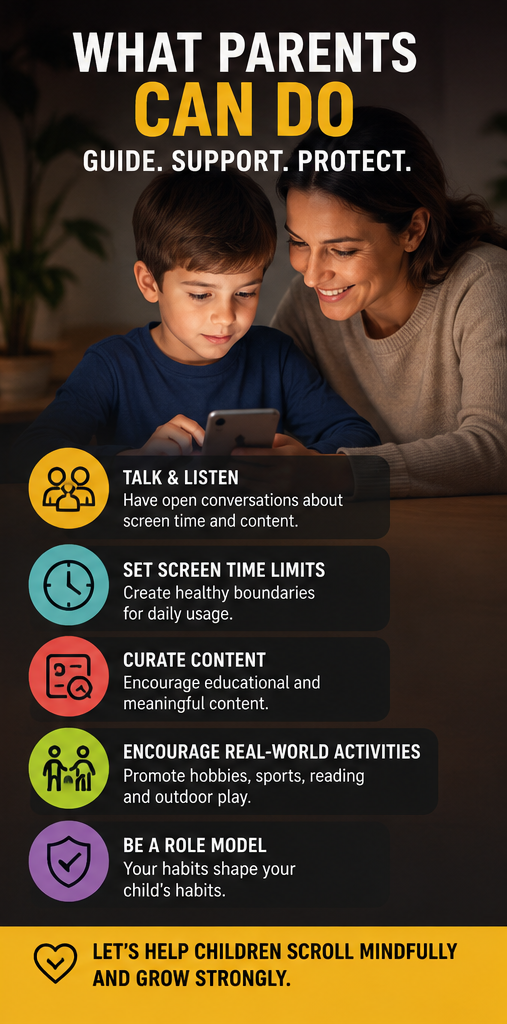
Parents should also monitor the amount of time children spend watching Instagram Reels each day, Child development experts recommend several practical strategies to encourage healthier digital habits:
Create Screen-Free Zones
Avoid using mobile phones during family meals and establish technology-free areas within the home.
Limit Screen Time Before Bed
Experts recommend avoiding smartphones and tablets for at least one hour before sleeping.
Encourage Physical Activity
Outdoor play supports both physical and mental development while reducing dependence on digital entertainment.
Be a Positive Role Model
Children often imitate parental behavior.
Parents who limit unnecessary scrolling themselves are more likely to encourage healthier habits in their children.
Monitor Content Quality
Rather than focusing only on screen time, parents should also pay attention to the type of content children consume.
Educational and age-appropriate content may provide greater value than endless passive scrolling.
Finding the Right Balance
Experts agree that social media and digital technology are likely to remain an important part of modern life.
Rather than creating fear around technology, specialists encourage families to develop balanced digital routines that combine online learning with offline experiences.
Helping children understand when and how to use technology responsibly may prove more effective than imposing blanket restrictions.
Open communication between parents and children can also help address unhealthy digital habits before they become deeply ingrained.
The growing popularity of Instagram Reels, TikTok, YouTube Shorts, and other short-form video platforms has transformed the way children consume digital content. While these platforms offer entertainment, creativity, and educational opportunities,Instagram Reels researchers increasingly warn that excessive exposure may influence attention span, concentration, emotional regulation, and long-term learning habits. Studies examining the brain’s reward system suggest that repeated exposure to rapidly changing content may encourage a preference for instant gratification, making slower-paced activities such as reading, studying, or completing school assignments feel less engaging.
Experts stress that while Instagram Reels can be entertaining and educational, excessive and uncontrolled use may negatively affect children’s focus and learning habits is not the problem—its excessive and uncontrolled use is. By encouraging healthy screen-time limits, promoting outdoor activities, maintaining screen-free family routines, and serving as positive digital role models, parents can help children develop balanced technology habits. As scientific research on digital media continues to evolve, fostering mindful and responsible use of technology remains essential to supporting children’s cognitive development, emotional well-being, and long-term academic success.