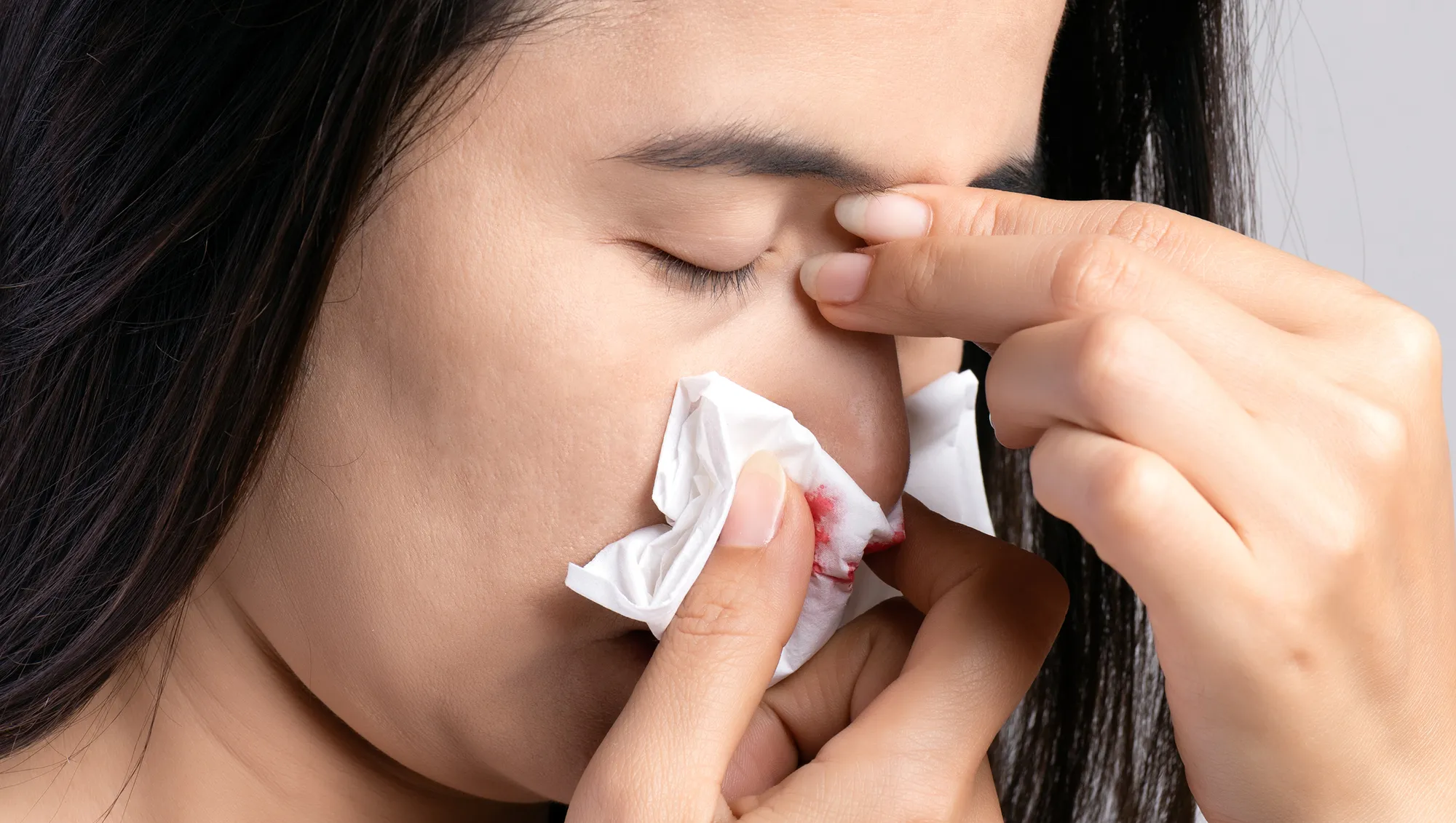
A sudden nosebleed can be an alarming experience for both children and adults. The sight of blood flowing from the nose often causes panic, leading many people to instinctively tilt their heads backward in an attempt to stop the bleeding. However, medical experts say that this widely followed practice is incorrect and can actually make the situation worse.
Known medically as epistaxis, a nosebleed is a common condition that affects people of all age groups. While most cases are mild and can be managed safely at home with proper first aid, persistent or severe bleeding may require immediate medical attention. Understanding the correct way to respond during a nosebleed can prevent complications and help stop the bleeding more effectively.
Table of Contents
According to Dr. Manasi Nigam, Consultant Physician at Kailash Deepak Hospital, the majority of nosebleeds are not medical emergencies. Remaining calm, following the correct first-aid steps, and avoiding common mistakes are often enough to manage the condition successfully.
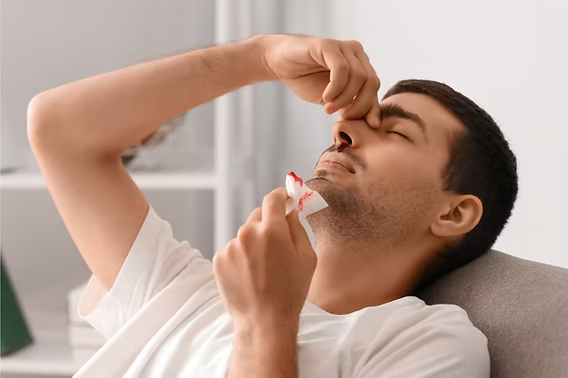
What Is a Nosebleed?
A nosebleed, or epistaxis, occurs when one or more tiny blood vessels inside the nose rupture, causing blood to flow through one or both nostrils. The inner lining of the nose contains numerous delicate blood vessels located close to the surface, making them vulnerable to injury, irritation, and environmental changes.
Most nosebleeds originate from the front part of the nasal septum—the thin wall that separates the two nostrils. This area contains a dense network of blood vessels that can rupture easily due to dryness, irritation, or minor trauma.
Although seeing blood can be frightening, experts emphasize that the vast majority of anterior nosebleeds are harmless and can be controlled without hospitalization.
Why Do Nosebleeds Occur?
Several factors can contribute to nosebleeds, ranging from simple environmental conditions to underlying medical issues.
Dry Air
One of the most common causes is exposure to dry air. During hot summers, winter months, or prolonged use of air conditioners and heaters, the nasal lining may become dry and cracked. This makes blood vessels more fragile and likely to bleed.
Nose Picking
Frequent nose picking or inserting objects into the nostrils can injure delicate blood vessels, especially in children.
Allergies
Seasonal allergies often cause itching, sneezing, and irritation. Repeated rubbing or blowing of the nose can damage blood vessels and trigger bleeding.
Infections
Colds, sinus infections, and upper respiratory illnesses may inflame the nasal lining, increasing the likelihood of nosebleeds.
High Blood Pressure
Although high blood pressure is not always the direct cause of a nosebleed, uncontrolled hypertension may make bleeding more difficult to stop and should be evaluated, particularly in older adults.
Minor Injuries
Even small injuries sustained during sports, accidental bumps, or vigorous nose blowing can result in bleeding.
Certain Medications
Blood-thinning medications and drugs that affect clotting may increase the risk of prolonged nosebleeds.
Why You Should Never Tilt Your Head Back
One of the biggest misconceptions surrounding nosebleeds is the belief that raising the head or tilting it backward helps stop the bleeding.
Medical experts strongly advise against this practice.
When the head is tilted backward, blood does not stop flowing. Instead, it travels down the back of the throat into the stomach.
Swallowed blood may lead to:
- Nausea
- Vomiting
- Choking sensation
- Coughing
- Stomach discomfort
If a large amount of blood is swallowed, a person may even vomit blood later, creating unnecessary panic.
Instead of leaning backward, experts recommend leaning slightly forward while sitting upright.
Correct First Aid for a Nosebleed
Proper first aid can usually stop most nosebleeds within a few minutes.
Step 1: Stay Calm
Remaining calm is the first and most important step. Anxiety can increase heart rate and blood pressure, potentially worsening bleeding.
Step 2: Sit Upright
Sit comfortably in a chair with your back straight.
Avoid lying flat.
Step 3: Lean Slightly Forward
Lean your upper body slightly forward.
This allows blood to flow out through the nostrils instead of entering the throat.
Step 4: Pinch the Soft Part of the Nose
Using your thumb and index finger, firmly pinch the soft portion of the nose just below the nasal bones.
Maintain constant pressure.
Step 5: Hold for 10–15 Minutes
Continue pinching without interruption for at least 10 to 15 minutes.
Many people make the mistake of checking every minute whether the bleeding has stopped.
Each time pressure is released, the forming blood clot may break, causing bleeding to restart.
Step 6: Apply a Cold Compress
Wrapping ice in a clean cloth and placing it gently over the bridge of the nose or cheeks may help constrict blood vessels.
Although helpful, this should never replace direct pressure on the nose.
Common Mistakes to Avoid
Medical experts caution against several practices that can worsen bleeding.
Do Not Tilt the Head Back
This allows blood to enter the throat rather than stopping the bleeding.
Do Not Lie Flat
Lying down can encourage blood to flow backward into the throat.
Avoid Constantly Checking the Nose
Removing pressure repeatedly interrupts clot formation.
Do Not Stuff Tissue Deep Inside the Nose
Forcing tissue or cotton deep into the nostrils may damage the lining further and make removal difficult.
Avoid Blowing the Nose Immediately
Forceful blowing may dislodge the newly formed clot.
Avoid Nose Picking
Touching the nose before complete healing increases the risk of rebleeding.
Do Not Lift Heavy Objects
Strenuous activity can increase blood pressure and restart bleeding.
Caring for the Nose After Bleeding Stops
Even after bleeding has stopped, the injured blood vessel requires time to heal.
For several hours afterward, experts recommend:
- Avoiding vigorous nose blowing.
- Keeping fingers away from the nose.
- Avoiding heavy exercise.
- Refraining from lifting heavy weights.
- Maintaining good hydration.
- Using a humidifier if indoor air is dry.
Allowing the clot to remain undisturbed reduces the likelihood of another nosebleed.
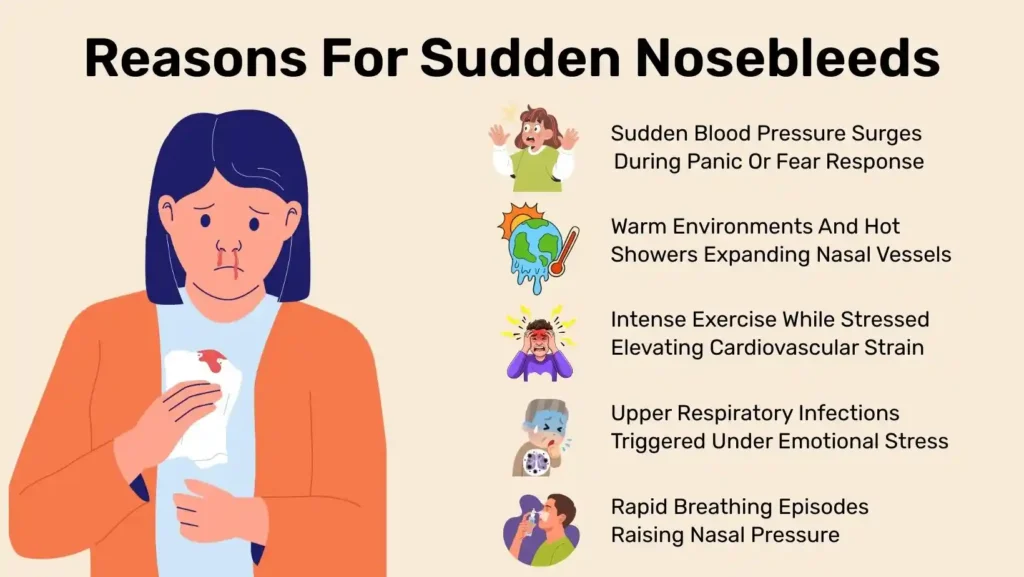
When Should You See a Doctor?
Although most nosebleeds are harmless, certain situations require professional medical evaluation.
Seek medical attention if:
- Bleeding continues beyond 20 minutes despite proper pressure.
- The bleeding is unusually heavy.
- Nosebleeds occur frequently.
- A nose injury causes visible deformity.
- Breathing becomes difficult.
- The person feels dizzy, weak, or faints.
- The nosebleed follows a serious accident.
- The individual is taking blood-thinning medication.
- High blood pressure is suspected or uncontrolled.
Persistent nosebleeds may indicate underlying conditions requiring further investigation.
Nosebleeds in Children
Children experience nosebleeds more frequently than adults because they often:
- Pick their noses.
- Sustain minor facial injuries while playing.
- Develop frequent colds.
- Have sensitive nasal linings.
Parents should remain calm and avoid frightening the child.
Helping the child sit upright, lean forward, and gently pinch the nose is usually sufficient.
If bleeding persists or recurs regularly, a pediatrician should evaluate the child.
Nosebleeds in Older Adults
Older adults may face additional risks because of:
- High blood pressure.
- Blood-thinning medications.
- Fragile blood vessels.
- Chronic medical conditions.
For this age group, recurrent nosebleeds should always be discussed with a healthcare provider.
Can Weather Trigger Nosebleeds?
Yes. Environmental conditions play an important role.
Hot weather, cold winter air, pollution, and prolonged exposure to air-conditioned environments can dry the nasal lining.
Using saline nasal sprays or humidifiers may help maintain moisture inside the nose and reduce the frequency of bleeding.
Preventing Future Nosebleeds
Simple lifestyle measures can significantly reduce the chances of recurrent nosebleeds.
Experts recommend:
- Drinking enough water.
- Using saline nasal sprays.
- Applying moisturizing gels if advised by a doctor.
- Avoiding excessive nose picking.
- Managing allergies effectively.
- Keeping blood pressure under control.
- Wearing protective equipment during sports.
- Avoiding smoking and exposure to irritants.
These preventive measures help maintain healthy nasal tissues.
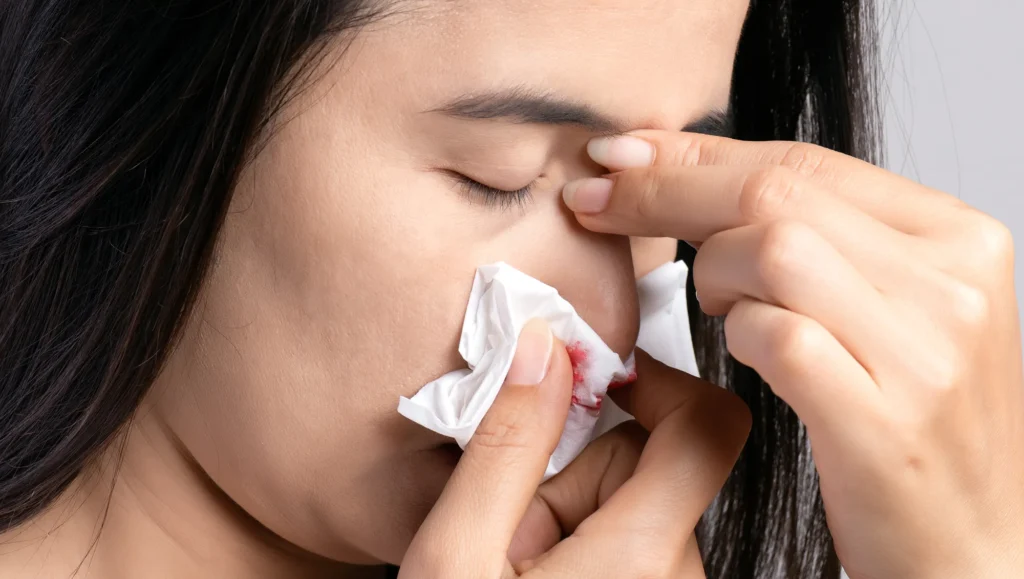
Understanding the Difference Between Minor and Serious Nosebleeds
Most nosebleeds arise from the front portion of the nose and stop with simple first aid.
However, bleeding from deeper areas of the nose—known as posterior nosebleeds—is less common but often more serious.
Posterior nosebleeds occur more frequently in older adults and individuals with hypertension or clotting disorders.
These cases generally require prompt medical treatment and should never be ignored.
Expert Advice: Stay Calm and Follow the Right Steps
According to Dr. Manasi Nigam, panic often worsens the situation more than the bleeding itself. Remaining calm, sitting upright, leaning forward, and applying continuous pressure to the soft part of the nose remain the most effective first-aid measures for most cases of epistaxis.
Understanding what not to do—particularly avoiding the common mistake of tilting the head backward—is equally important. If bleeding does not stop after 15 to 20 minutes, recurs frequently, or is accompanied by other concerning symptoms, prompt medical evaluation is essential.
With the right knowledge and timely action, most nosebleeds can be managed safely at home while recognizing when professional medical care is needed.