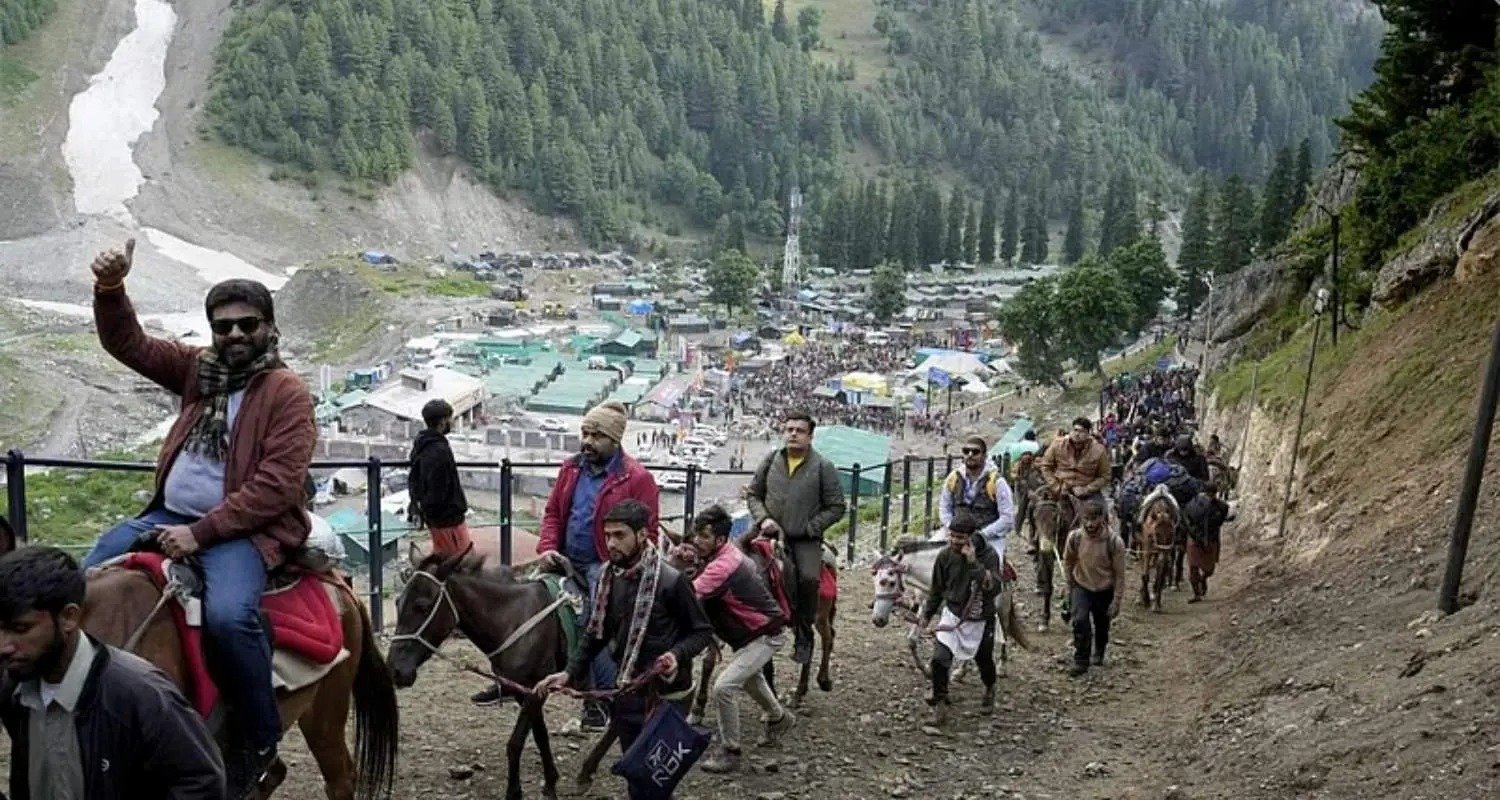
Amarnath Yatra has witnessed an overwhelming response from devotees in 2026, with more than 2.75 lakh pilgrims offering prayers at the sacred Amarnath cave shrine within the first 11 days of the annual pilgrimage. The impressive turnout reflects the enduring spiritual significance of one of Hinduism’s most revered religious journeys, which attracts lakhs of devotees from across India and abroad every year.
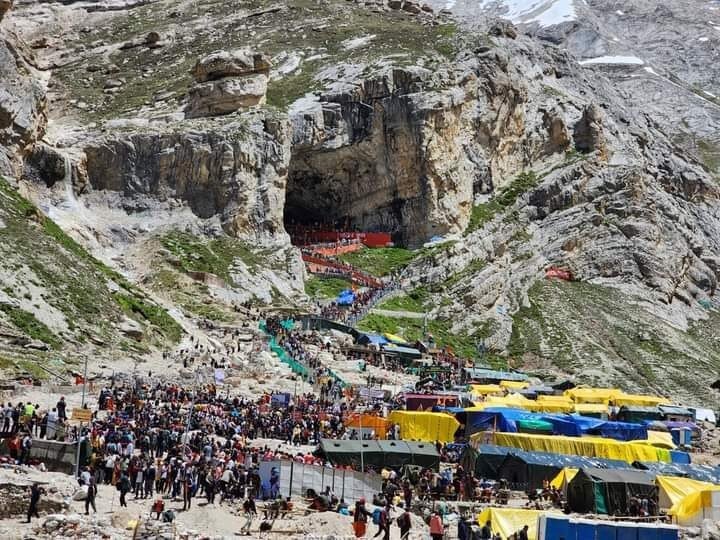
Officials said the 57-day pilgrimage, which commenced on July 3, has continued smoothly despite challenging terrain and unpredictable weather conditions in the Kashmir Himalayas. Nearly three lakh devotees have already participated in the Amarnath Yatra, highlighting the strong faith that continues to draw pilgrims to the holy cave situated at an altitude of 3,880 metres above sea level.
The administration has maintained extensive security, healthcare, transportation, and logistical arrangements to ensure that pilgrims can undertake the sacred journey safely. While a minor road accident involving one of the pilgrim convoys briefly disrupted movement on the Jammu-Srinagar National Highway, prompt rescue operations ensured that the pilgrimage continued without major interruption.
Table of Contents
Pilgrim numbers continue to rise steadily
The 2026 Amarnath Yatra has maintained a steady pace since its inauguration, with thousands of devotees arriving daily to seek blessings at the naturally formed ice Shivling inside the holy cave.
According to official figures, over 2.75 lakh pilgrims completed darshan during the first eleven days of the pilgrimage.
On Monday alone, 24,259 devotees visited the cave shrine, reflecting the continued enthusiasm among pilgrims despite the physically demanding nature of the journey.
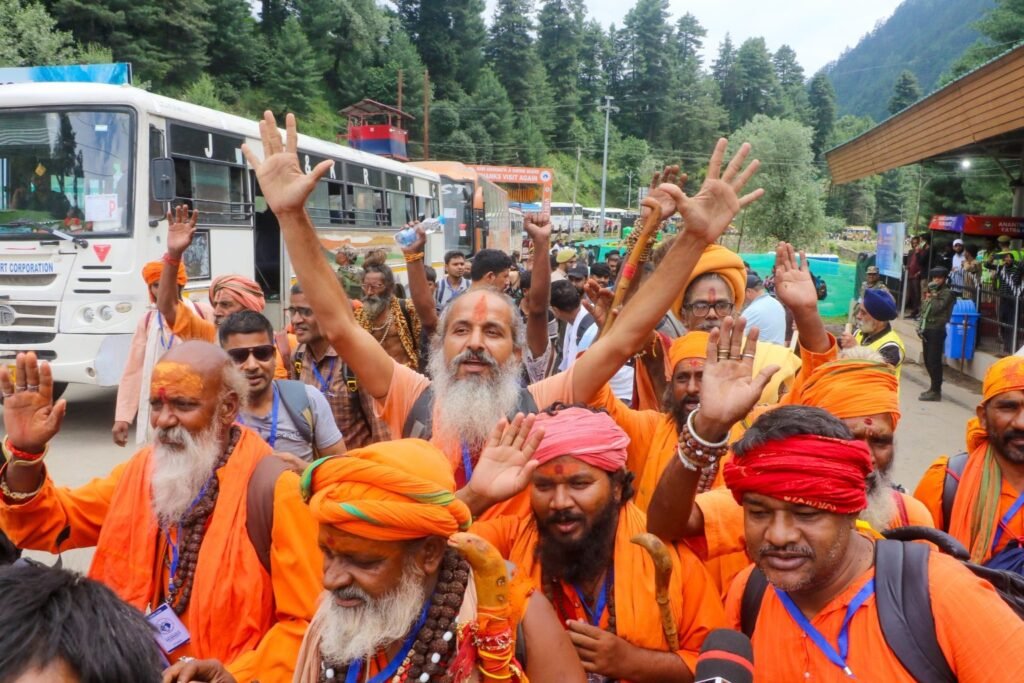
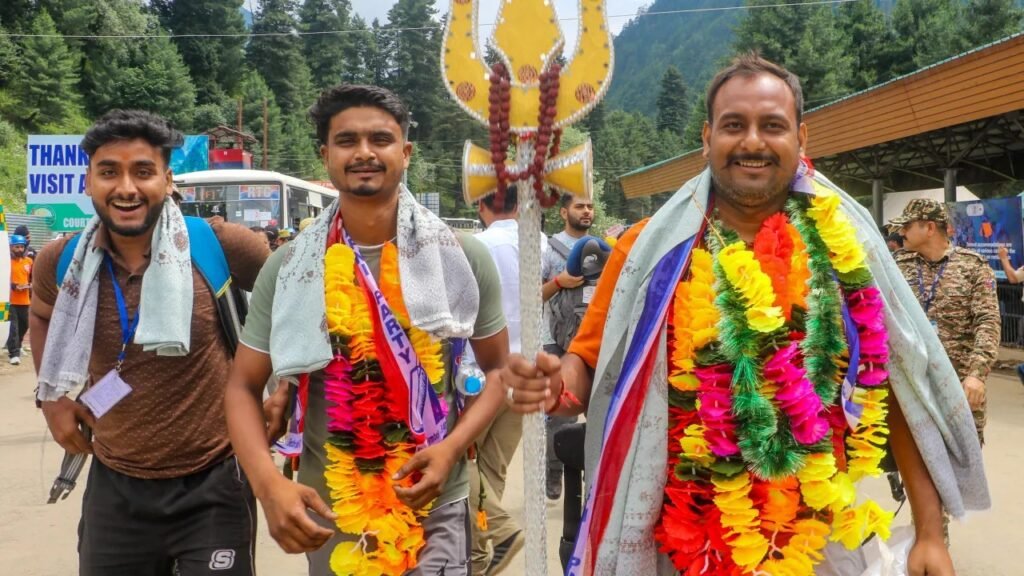
Authorities also confirmed that another 5,335 pilgrims departed from the Bhagwati Nagar Yatri Niwas in Jammu on Tuesday morning to continue the Amarnath Yatra.
The fresh batch travelled under tight security in two escorted convoys.
Among them:
- 3,599 pilgrims proceeded towards the Nunwan base camp in Pahalgam.
- 1,736 pilgrims travelled to the Baltal base camp.
These two traditional routes continue to serve as the primary access points for the annual pilgrimage.
Two routes offer different pilgrimage experiences
The Amarnath Yatra can be undertaken through two officially designated routes, each offering a distinct experience for devotees.
The Pahalgam route, beginning from Nunwan base camp, is the traditional path followed for centuries.
Although longer, this route allows pilgrims to gradually acclimatise to increasing altitude while passing through picturesque valleys, forests, mountain meadows, and glacier-fed streams.
Many devotees prefer this route because of its historical and spiritual significance.
The Baltal route, on the other hand, is considerably shorter but much steeper.
Pilgrims choosing Baltal can often complete the journey in a single day, although the physically demanding climb requires good health and stamina.
The availability of both routes allows devotees to select the option most suitable for their physical condition and travel plans.
Spiritual importance of the Amarnath cave
The Amarnath cave holds immense religious significance in Hindu tradition.
Located deep within the Himalayan mountains of Jammu and Kashmir, the cave houses a naturally formed ice stalagmite, widely worshipped as a manifestation of Lord Shiva.
According to Hindu beliefs, Lord Shiva revealed the secret of immortality, known as the Amar Katha, to Goddess Parvati inside this secluded cave.
To ensure absolute privacy during this divine conversation, mythology states that Lord Shiva left behind all living beings accompanying him before entering the cave.
Because of this sacred legend, the Amarnath Yatra is regarded as one of the holiest pilgrimages dedicated to Lord Shiva.
Every year, lakhs of devotees undertake the physically demanding journey as an expression of faith, devotion, and spiritual discipline.
Extensive arrangements ensure smooth pilgrimage
Organising the Amarnath Yatra requires months of planning involving multiple government departments and security agencies.
Given the difficult mountainous terrain, authorities establish extensive infrastructure to support pilgrims throughout the pilgrimage period.
Facilities typically include:
- Medical camps
- Emergency healthcare units
- Oxygen support centres
- Resting shelters
- Community kitchens (langars)
- Drinking water facilities
- Sanitation services
- Communication networks
- Security checkpoints
Large numbers of personnel from police, paramilitary forces, disaster response agencies, healthcare departments, and local administration remain deployed throughout the pilgrimage to ensure safety.
Continuous monitoring of weather conditions is also carried out because rainfall, landslides, or snowfall can quickly affect mountain routes.
Swift rescue after road accident
While the Amarnath Yatra has progressed smoothly overall, one unfortunate incident occurred on Monday near Chanderkote in Jammu and Kashmir’s Ramban district.
According to officials, a bus travelling in the Pahalgam-bound convoy reportedly experienced brake failure before colliding with another bus.
A parked vehicle was also damaged during the accident.
The incident resulted in 18 pilgrims sustaining minor injuries.
District administration officials, police personnel, and emergency response teams immediately reached the accident site and launched rescue operations.
All injured pilgrims were shifted to the District Hospital in Ramban where they received prompt medical treatment.
Doctors later discharged all 18 pilgrims after confirming that none had suffered serious injuries requiring prolonged hospitalisation.
The bus driver, however, sustained serious injuries and continues to receive medical treatment.
Authorities also arranged alternate transport so that the affected pilgrims could continue their Amarnath Yatra without significant delay.
Traffic movement on the Jammu-Srinagar National Highway was restored soon after damaged vehicles were removed from the road.
The swift response by emergency services ensured that disruption remained minimal.
Security remains a top priority
Given the scale of the pilgrimage and the sensitive geographical region through which it passes, security remains one of the highest priorities during the Amarnath Yatra.
Thousands of security personnel remain deployed along both pilgrimage routes.
Multiple checkpoints, convoy protection systems, surveillance mechanisms, and coordinated communication networks help ensure safe movement of pilgrims from Jammu to the cave shrine.
Authorities continuously monitor the situation and coordinate with weather agencies, local administration, healthcare providers, and transportation officials.
Such integrated planning has become increasingly important as annual pilgrim numbers continue rising.
High-altitude pilgrimage demands careful preparation
Although spiritually rewarding, the Amarnath Yatra remains physically challenging.
The cave shrine is situated at an altitude of 3,880 metres, where oxygen levels are naturally lower than at sea level.
Pilgrims often encounter:
- Steep mountain climbs
- Cold temperatures
- Thin air
- Sudden weather changes
- Long walking distances
For these reasons, authorities require compulsory medical certification before permitting participation in the pilgrimage.
Experts also advise pilgrims to maintain physical fitness, remain adequately hydrated, avoid excessive exertion, and immediately seek medical assistance if symptoms of altitude sickness develop.
The administration has established medical facilities at regular intervals to provide emergency assistance whenever required.
Economic benefits for Jammu and Kashmir
Beyond its religious importance, the Amarnath Yatra also plays a significant role in supporting the local economy.
Each year, the pilgrimage generates employment opportunities for thousands of people associated with tourism and related services.
Local residents benefit through activities such as:
- Pony services
- Porter assistance
- Tent accommodation
- Transport services
- Food stalls
- Retail shops
- Handicraft sales
Hotels, guest houses, taxi operators, and small businesses across Jammu and Kashmir also experience increased demand during the pilgrimage season.
The annual influx of pilgrims contributes substantially to regional economic activity while supporting livelihoods in remote mountain communities.
Pilgrimage to continue until late August
The 2026 Amarnath Yatra is scheduled to continue for 57 days.
Officials have confirmed that this year’s pilgrimage will conclude on August 28, coinciding with the auspicious occasions of Shravan Purnima and Raksha Bandhan.
With nearly three lakh devotees already participating during the opening phase, authorities expect the overall pilgrim count to increase significantly over the coming weeks.
Daily departures from Jammu continue under carefully monitored security arrangements, while healthcare teams, disaster response units, and administrative officials remain on alert to ensure uninterrupted movement along both routes.
The strong response witnessed during the first eleven days reflects the enduring spiritual importance of the Amarnath Yatra. Supported by extensive administrative planning, robust security measures, efficient medical services, and coordinated logistical arrangements, the annual pilgrimage continues to offer devotees an opportunity to undertake one of Hinduism’s most sacred journeys through the majestic Himalayas in search of faith, devotion, and spiritual fulfilment.