
India Celebrates Rich Textile Heritage as Government Highlights Role of Weavers, Artisans and Traditional Craftsmanship
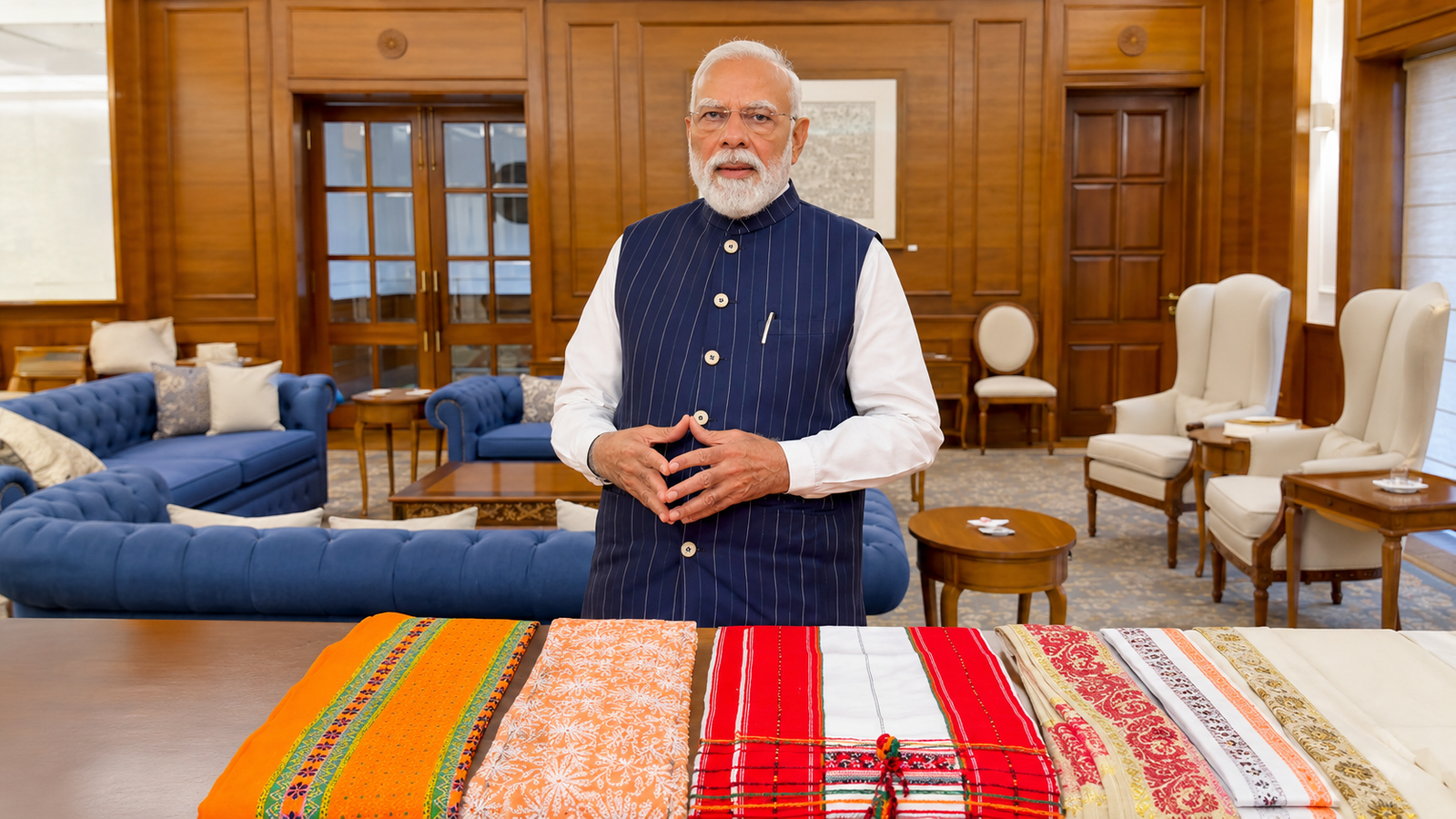
New Delhi: India is observing National Handloom Day 2026 with a renewed focus on the country’s centuries-old weaving traditions, the contribution of millions of artisans and the role of the traditional textile sector in strengthening rural livelihoods. Prime Minister Narendra Modi on Friday paid tribute to India’s weavers and artisans, describing the industry as an important pillar of rural empowerment, women-led development and the vision of an Atmanirbhar Bharat.
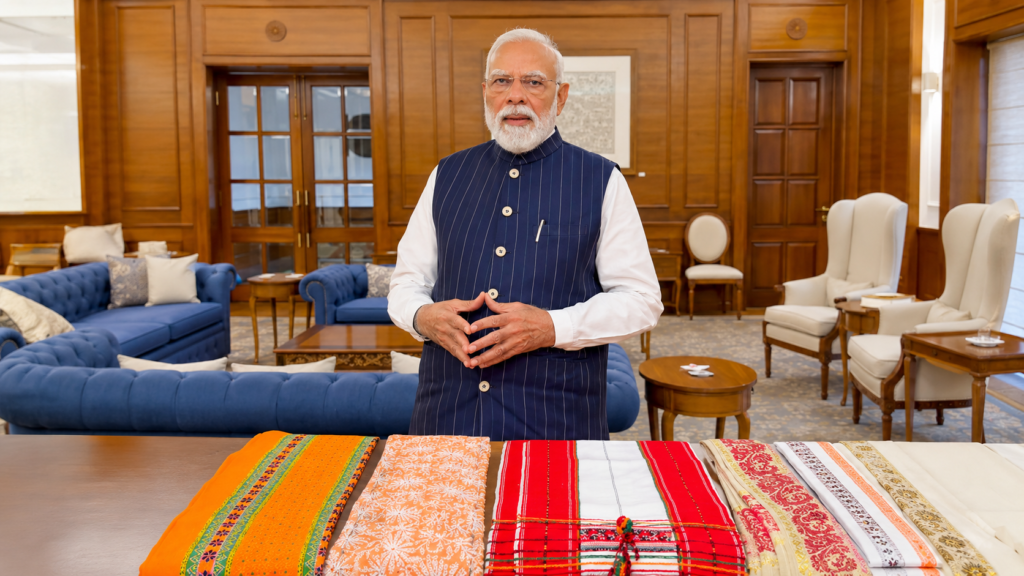
In a message shared on X, Modi highlighted the skill, creativity and dedication of generations of Indian artisans who have preserved the country’s diverse textile traditions. He also urged citizens to promote traditional textile products through social media and participate in the growing trend of “Get Ready With Me” or GRWM videos using the hashtag #NationalHandloomDay.
The celebrations come as the government seeks to increase awareness around India’s traditional textile industries while encouraging greater public participation in promoting locally produced products.
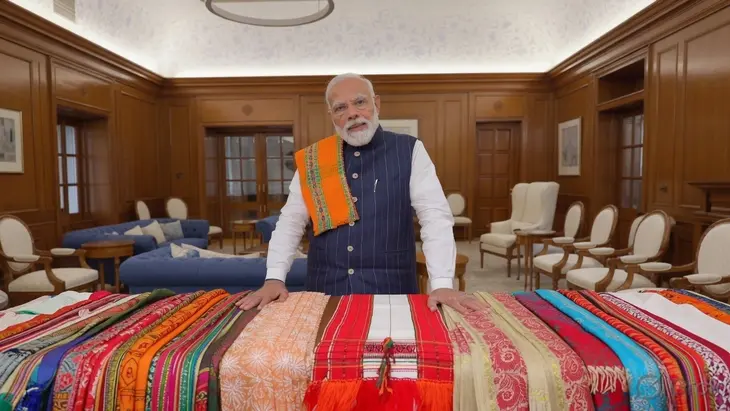
Table of Contents
PM Modi Highlights Handloom’s Role in Rural India
Prime Minister Narendra Modi’s National Handloom Day message placed the sector within a broader development framework, linking traditional craftsmanship with rural economic opportunities and women’s participation in the workforce.
Modi paid tribute to weavers and artisans who have passed their knowledge and techniques from one generation to another. According to the Prime Minister, India’s textile heritage represents not only the country’s cultural diversity but also the skill and creativity of communities that have sustained traditional weaving practices for generations.
The Prime Minister also encouraged citizens to share their favourite products online.
His appeal to use #NationalHandloomDay alongside GRWM videos represents an effort to connect traditional Indian textiles with contemporary digital culture. Social media platforms have increasingly become important spaces for artisans, designers, brands and consumers to showcase traditional fabrics and weaving techniques.
The campaign is intended to encourage greater visibility for communities associated with the sector and potentially introduce traditional products to younger audiences.
12th National Handloom Day Celebrations in New Delhi
The Ministry of Textiles is scheduled to organise the 12th National Handloom Day celebrations at the Rashtrapati Bhavan Cultural Centre (RBCC) in New Delhi.
President Droupadi Murmu will attend the event as the Chief Guest, according to the Ministry of Textiles. Union Textiles Minister Giriraj Singh, Minister of State for Textiles Pabitra Margherita, Textiles Secretary Neelam Shami Rao and Development Commissioner (Handlooms) Dr M Beena are also expected to participate.
The event will bring together weavers from different parts of India, award recipients, members of the awards selection committee, senior government officials, industry representatives, media professionals and other guests associated with the country’s textile sector.
Families of Sant Kabir Handloom Award and National Handloom Award recipients will also participate in the celebrations.
The programme is designed to recognise outstanding craftsmanship while providing a national platform for India’s weaving communities.
22 Handloom Awards to Recognise Outstanding Craftsmanship
One of the key highlights of National Handloom Day 2026 will be the presentation of the Sant Kabir Handloom Awards and National Handloom Awards for 2025.
A total of 22 awards will be presented, comprising three Sant Kabir Handloom Awards and 19 National Handloom Awards.
The awards recognise weavers for their craftsmanship, innovation and contribution to preserving India’s traditional textile heritage.
For many artisan communities, recognition at the national level provides greater visibility for techniques and textile traditions that may otherwise remain concentrated within particular regions.
The awards also underline the importance of maintaining traditional skills while allowing artisans to experiment with designs, materials and contemporary market requirements.
Commemorative Stamps and New Publications
The National Handloom Day programme will also feature the release of four commemorative postage stamps celebrating India’s diverse weaving traditions.
Two publications are also scheduled to be unveiled during the event.
These include “Earth. Root. Thread – Aal Dyed Handloom Textiles of Central India” and the Handloom Awards Book 2025.
The publications are expected to provide further attention to India’s regional textile traditions and the work of award-winning artisans.
By documenting weaving techniques and the contributions of weaving communities, such initiatives can help preserve knowledge associated with India’s traditional textile heritage.
Exhibition to Showcase Award-Winning Handloom Products
The celebrations will extend beyond the main ceremony through an exhibition featuring award-winning textile products.
Visitors will have the opportunity to view traditional textiles and observe live demonstrations of weaving techniques, including Kani weaving and Wall Hanging weaving.
Live demonstrations can provide an important connection between consumers and artisans by showing the time, skill and technical knowledge involved in producing traditional textiles.
Additional activities planned around National Handloom Day include exhibitions and conclaves involving designers and institutions associated with textile education and development.
Such programmes are intended to create greater interaction between traditional weaving communities, designers, educational institutions and the wider textile industry.
Handloom Sector Supports More Than 35 Lakh People
The scale of India’s traditional weaving industry makes it an important part of the country’s rural economy.
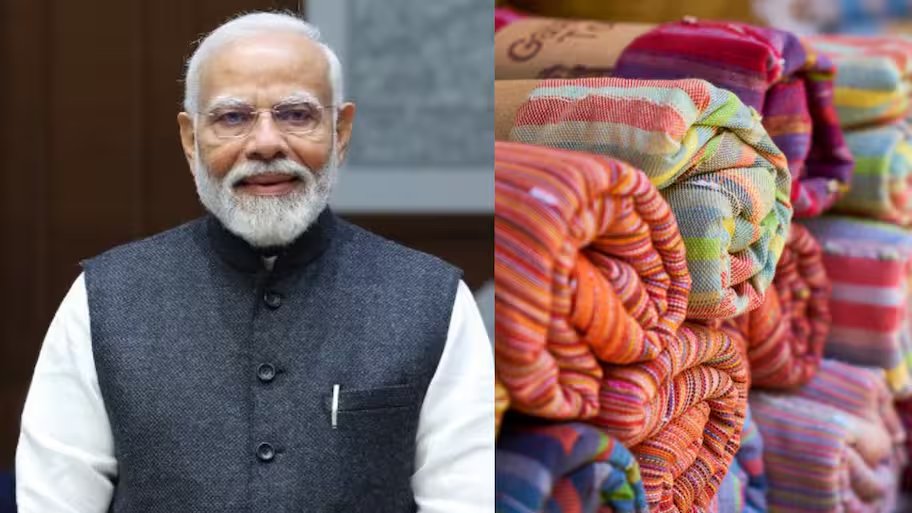
According to the Ministry of Textiles, the sector supports the livelihoods of more than 35 lakh people, with women accounting for over 70 per cent of the workforce.
This makes the industry particularly significant from the perspective of women’s economic participation and rural employment.
Unlike large-scale industrial textile production, weaving often remains closely connected to household-based and community-based production systems. This allows traditional skills to remain embedded within local economies while providing income opportunities to artisans.
The sector is also associated with environmentally sustainable production practices, adding another dimension to its importance at a time when consumers and the global fashion industry are increasingly discussing sustainability.
National Handloom Day and the Swadeshi Movement
National Handloom Day is observed every year on August 7.
The date commemorates the Swadeshi Movement, which was launched on August 7, 1905. The movement encouraged the use of indigenous products and gave renewed importance to India’s traditional industries.
Handloom became closely associated with the broader idea of self-reliance and the promotion of locally produced goods.
More than a century later, National Handloom Day continues to connect India’s historical experience with contemporary efforts to promote indigenous manufacturing, traditional craftsmanship and rural economic development.
The observance was formally launched in 2015, providing an annual platform to celebrate India’s weaving communities and highlight the importance of preserving traditional practices.
Prime Minister Narendra Modi launched National Handloom Day in Chennai in 2015.
Since then, the occasion has evolved into an important annual event involving government institutions, artisans, designers, textile organisations and consumers.
Gujarat’s Handloom Heritage Gets Global Recognition
Gujarat is among the states highlighted for its strong weaving traditions.
According to the Gujarat Chief Minister’s Office, weaving remains deeply connected to the state’s culture, craftsmanship and livelihoods.
Traditional Gujarat textiles such as Patola and Kutch weaves have gained recognition internationally. According to the information provided by the Gujarat government, these traditional products have found audiences in the United States, Europe, Japan, Australia and the Middle East.
The state’s textile products are also receiving attention from international designers and well-known personalities.
Government support, modern design approaches and improved marketing have helped create new opportunities for artisans while maintaining links to traditional techniques.
The sector in Gujarat is stated to support more than 12,000 weavers and artisans and has generated business exceeding Rs 51.07 crore, highlighting the potential of traditional textiles as both a cultural asset and an economic activity.
Balancing Tradition With Modern Markets
One of the major challenges for the weaving sector is maintaining traditional craftsmanship while adapting to changing consumer preferences.
Traditional products often involve considerable skill and time, while artisans compete with mass-produced textiles that can be manufactured at significantly larger scales.
Greater digital visibility, contemporary designs, direct-to-consumer platforms and collaborations with designers can therefore play an important role in connecting artisans with new markets.
The government’s emphasis on social media promotion through #NationalHandloomDay reflects this changing environment.
GRWM videos and other digital formats can introduce traditional Indian fabrics to younger consumers in a more accessible way, potentially helping these products become part of contemporary fashion and lifestyle choices.
Women at the Centre of India’s Handloom Economy
The fact that women constitute more than 70 per cent of the workforce also makes the sector important from the perspective of women-led development.
For many communities, weaving skills are passed through families and generations, allowing women to participate in economic activity while remaining connected to traditional cultural practices.
Greater access to markets, technology, design training and financial support could further strengthen these opportunities.
The government’s emphasis on women-led development therefore places the handloom sector within a wider economic and social policy framework.
National Handloom Day 2026: A Celebration of India’s Craft Heritage
National Handloom Day 2026 is ultimately more than an annual celebration of textiles. It is an occasion to recognise the people behind India’s traditional fabrics and the communities that have preserved weaving knowledge over generations.
From Patola in Gujarat to Kani weaving and the diverse textile traditions of Central India, India’s craft heritage reflects the country’s regional diversity.
The 2026 celebrations, with their awards, exhibitions, live demonstrations, commemorative stamps and publications, are intended to bring this heritage into greater public focus.
Prime Minister Narendra Modi’s appeal to promote traditional products online adds a contemporary dimension to the observance, encouraging citizens to become active participants in supporting India’s artisans.
As the country marks another National Handloom Day, the central message remains one of preserving tradition while creating sustainable opportunities for the future. For India’s millions of weavers and artisans, greater recognition, stronger markets and continued support could help ensure that the country’s weaving legacy remains not only a symbol of its past but also an important part of its economic and cultural future.