
Why Every Death Needs a Medical Certificate and How MCCD Can Transform India’s Healthcare System
Every death tells a story—not just about an individual, but also about the health of an entire nation. Whether a person dies due to a heart attack, cancer, stroke, road accident, infectious disease, or any other medical condition, documenting the exact cause of death is crucial. This is where the Medical Certification of Cause of Death (MCCD) plays a vital role.
In India, the government has increasingly emphasized accurate medical certification of deaths as part of strengthening the country’s public health system. The Medical Certification of Cause of Death (MCCD) is much more than a legal document; it serves as a foundation for disease surveillance, healthcare planning, medical research, policy formulation, and disaster preparedness. Under the Registration of Births and Deaths framework, medical institutions are required to issue a cause-of-death certificate free of cost, and in cases where a doctor attended the deceased during the last illness outside a hospital, that doctor is also required to certify the cause of death.
Health experts believe that improving the quality and coverage of MCCD can save millions of lives in the long run by helping governments identify disease trends early and allocate healthcare resources more effectively.
Table of Contents
What Is the Medical Certification of Cause of Death (MCCD)?
The Medical Certification of Cause of Death (MCCD) is a document completed and signed by a registered medical practitioner after determining the medical cause that led to a person’s death.
Rather than simply recording that a person has died, the MCCD explains:
- The immediate cause of death
- The underlying disease or injury responsible
- Any contributing medical conditions
- The sequence of events leading to death
The World Health Organization (WHO) recommends a standardized international format for certifying causes of death so that countries can produce reliable and comparable mortality statistics.
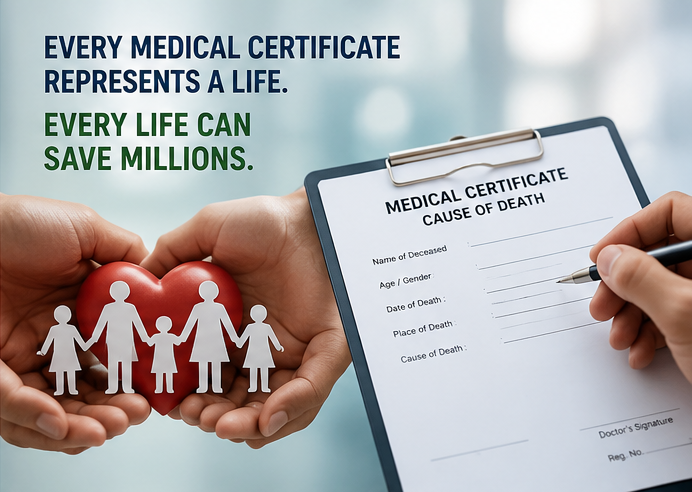
Why Is a Medical Certificate Required After Every Death?
Medical experts say that accurate certification serves two major purposes.
1. Legal Importance
The certificate helps families complete essential legal processes, including:
- Official death registration
- Insurance claims
- Pension settlements
- Property and inheritance matters
- Bank account closures
- Government benefit claims
Without proper documentation, many legal and administrative procedures become difficult.
2. Public Health Importance
The larger purpose of MCCD is to generate accurate mortality data.
When doctors correctly record the medical cause of death, governments can identify:
- Which diseases are causing the highest number of deaths
- Which regions are most affected
- Whether new epidemics are emerging
- The effectiveness of healthcare programmes
- Areas requiring additional medical infrastructure
WHO notes that cause-of-death statistics are fundamental for health research, planning, monitoring public health, and evaluating health interventions.
How Does the Medical Certificate (MCCD) Help Save Millions of Lives?
Although a medical certificate cannot change the outcome for the individual who has died, it can significantly improve healthcare for future generations.
Experts explain that high-quality mortality data enables governments to:
Detect Disease Trends
If thousands of deaths are linked to heart disease, dengue, tuberculosis, or respiratory illnesses, authorities can launch targeted prevention programmes.
Improve Healthcare Planning
Reliable mortality statistics help governments determine where to build hospitals, deploy doctors, expand intensive care facilities, or strengthen emergency services.
Strengthen Epidemic Surveillance
Accurate certification allows health authorities to identify unusual increases in deaths that may signal infectious disease outbreaks or emerging public health threats.
Allocate Resources Efficiently
Health budgets can be directed toward diseases causing the greatest burden rather than relying on estimates.
Evaluate Health Programmes
Mortality data helps assess whether vaccination campaigns, screening programmes, or other public health initiatives are reducing deaths over time.
How Is the Cause of Death Determined?
A doctor examines the patient’s medical history, clinical findings, investigations, and circumstances surrounding the death.
The Medical Certificate typically records:
- Immediate cause of death
- Conditions leading to the immediate cause
- Underlying disease responsible
- Other significant contributing conditions
WHO emphasizes that the physician should identify the underlying disease or injury that initiated the chain of events leading to death, using internationally accepted certification standards.
Difference Between Death Certificate and MCCD
Many people use the terms interchangeably, but they are different.
Medical Certification of Cause of Death (MCCD)
- Prepared by a medical practitioner
- Explains the medical cause of death
- Forms part of the death registration process
The Medical Certificate forms the basis
- Issued by the local birth and death registration authority
- Serves as the legal proof of death
- Is based on the registered death record and supporting documents, including the medical certificate where applicable
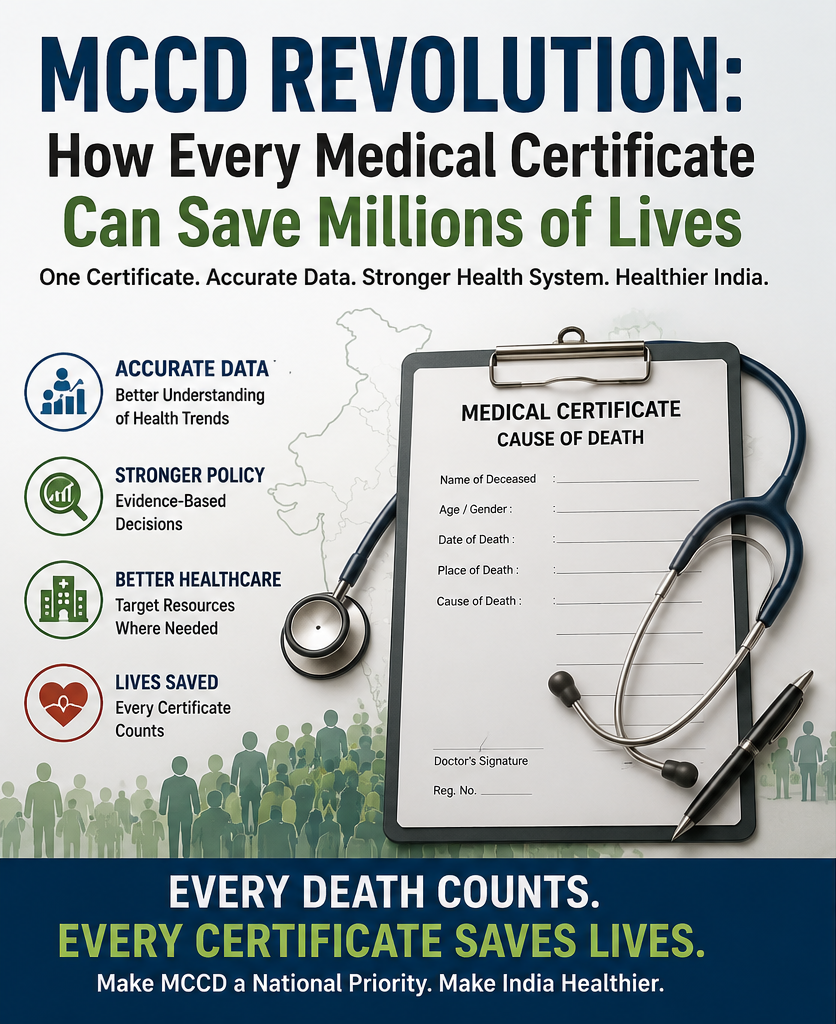
Why Accurate Cause-of-Death Data Matters
Health experts stress that poorly documented causes of death can weaken public health planning.
For example, if deaths are incorrectly recorded under vague categories rather than their true medical causes, policymakers may underestimate the burden of diseases such as diabetes, cancer, stroke, or chronic respiratory illnesses.
Accurate Medical Certificate reporting allows governments to:
- Prioritize healthcare funding
- Monitor non-communicable diseases
- Strengthen infectious disease control
- Improve maternal and child health programmes
- Track road traffic fatalities
- Measure progress toward national and global health goals
India’s Efforts to Strengthen MCCD
India has made significant progress in improving death registration over the past decade. According to WHO, death registration rose from 66% in 2011 to 92% in 2019, while continued efforts are underway to improve the quality and coverage of medically certified causes of death.
The Office of the Registrar General of India has mandated that all medical institutions issue Medical Certificates for every eligible death in accordance with the law, though implementation and reporting quality continue to improve across states.
Common Challenges in the MCCD System
Despite improvements, experts identify several ongoing challenges:
- Incomplete medical certification in some healthcare facilities
- Shortage of trained certifying doctors
- Incorrect or vague recording of causes
- Lower certification rates for deaths occurring outside hospitals
- Variations in implementation across states
Improving training, digital reporting, and compliance is considered essential to producing more reliable mortality statistics.
Role of WHO Standards
The World Health Organization has developed internationally accepted guidelines for certifying causes of death.
These standards ensure that:
- Doctors use a uniform certification format
- Diseases are coded using the International Classification of Diseases (ICD)
- Countries generate comparable mortality statistics
- Health data can guide national and global public health policies
WHO also recommends continuous training for physicians to improve the quality of death certification.
Benefits for Families
A Medical Certificate also benefits families, MCCD also benefits families by:
- Supporting faster legal documentation
- Assisting insurance settlements
- Facilitating pension and succession claims
- Providing medical clarity regarding the cause of death
- Helping maintain accurate family medical histories
Digital Transformation of Death Certification
India is gradually modernizing its Civil Registration System through greater digitization.
Experts believe electronic Medical Certificate systems can:
- Reduce paperwork
- Improve reporting accuracy
- Minimize transcription errors
- Enable faster analysis of mortality trends
- Support real-time public health surveillance
Digital certification is expected to play a growing role in strengthening India’s health information systems.
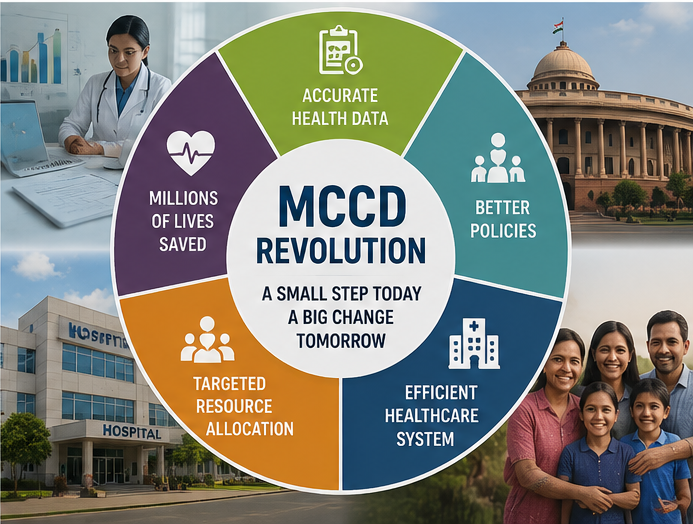
Experts Call for Greater Public Awareness
Public health specialists believe awareness about the Medical Certificate (MCCD) remains limited.
They recommend:
- Regular training for doctors
- Stronger implementation in all hospitals
- Better coordination between hospitals and registration authorities
- Public education on the importance of accurate death certification
- Wider adoption of electronic certification systems
These measures can significantly improve the quality of national mortality statistics.
The Medical Certification of Cause of Death (MCCD) is far more than a routine medical form—it is one of the most important tools for strengthening healthcare systems, improving disease surveillance, and shaping evidence-based public policy. By accurately documenting why people die, The Medical Certificate (MCCD) helps governments identify emerging health threats, allocate resources effectively, and evaluate the success of public health programmes.
For families, it provides essential legal documentation and medical clarity. For policymakers, researchers, and healthcare professionals, it offers invaluable data that can guide future interventions and potentially save millions of lives. As India continues to improve its death registration and certification systems, expanding the reach and quality of MCCD will remain a critical step toward building a healthier, more resilient nation.