
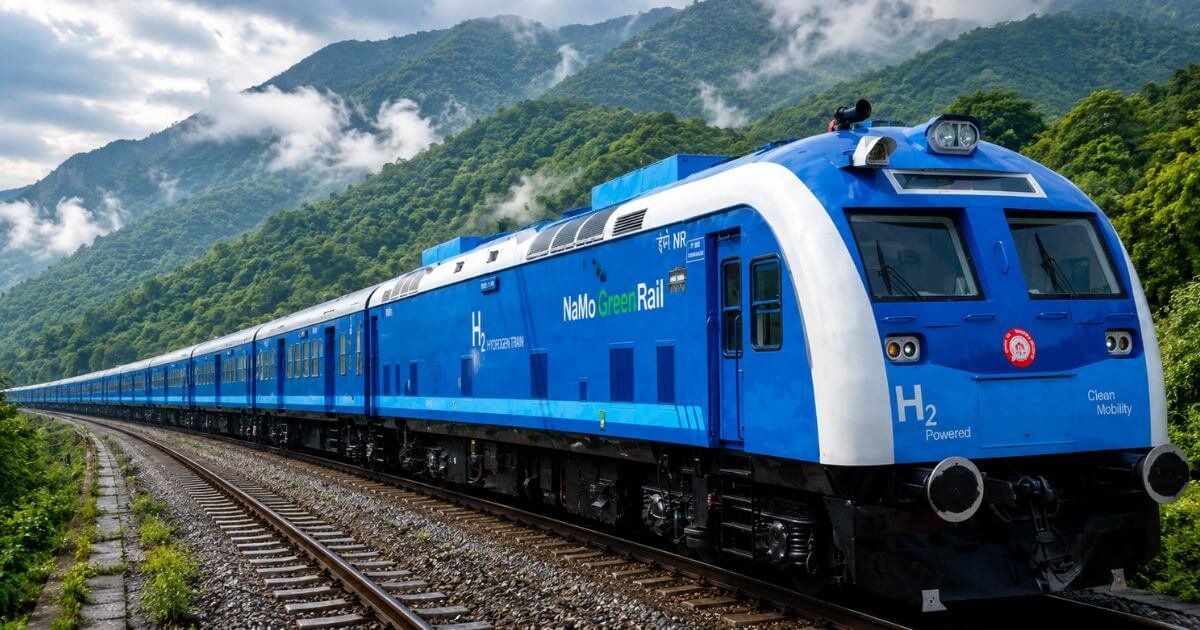
India Moves Towards Cleaner Railway Transportation
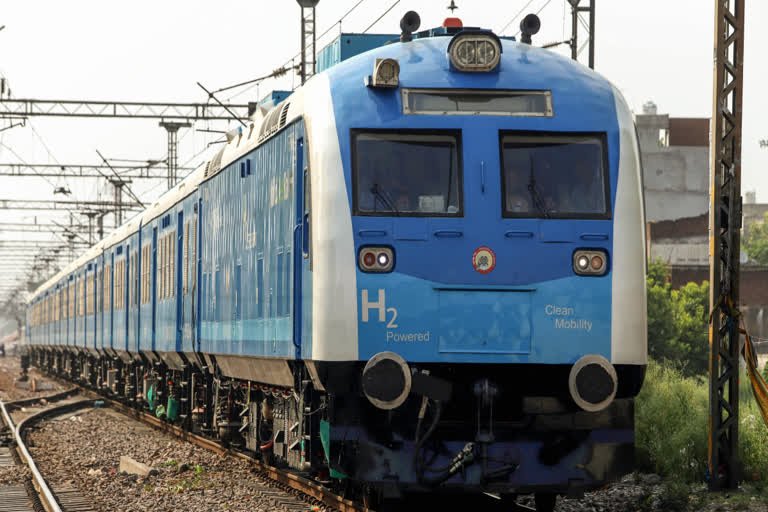
India’s Hydrogen Train has achieved a major milestone in sustainable transportation as the country’s first hydrogen-powered train completes more than 1,200 kilometres between Jind and Sonipat in Haryana. The train has saved over 3,200 litres of diesel and emits only water vapour, marking a major step towards cleaner and greener railway operations. The hydrogen train, running between Jind and Sonipat in Haryana, has completed more than 1,200 kilometres of travel, marking a significant step in Indian Railways’ efforts to reduce dependence on fossil fuels and develop zero-emission transportation solutions.
According to the Ministry of Railways, the hydrogen-powered train has saved more than 3,200 litres of diesel during its operations, replacing traditional fuel consumption with a cleaner energy source. Instead of harmful exhaust emissions, the train releases only water vapour, making it one of the most environmentally friendly rail technologies introduced in India.
The achievement comes under the broader vision of Atmanirbhar Bharat, where India is focusing on developing advanced technologies domestically while reducing carbon emissions and strengthening its clean energy ecosystem.
Table of Contents
India’s First Hydrogen Train Achieves Major Operational Milestone
Prime Minister Narendra Modi flagged off India’s first hydrogen-powered train from Jind, Haryana, on July 17, marking a historic moment for the country’s railway sector.
Since beginning operations, the train has successfully covered over 1,200 kilometres on the Jind-Sonipat route without major operational difficulties. The Railway Ministry highlighted that the successful journey demonstrates India’s growing capability in developing advanced railway technologies and adopting cleaner alternatives for mass transportation.
The milestone is particularly significant because railways are among the largest consumers of energy in the transportation sector. Moving from diesel-based systems towards hydrogen technology could play an important role in reducing emissions from railway operations.
The successful performance of the hydrogen train will now support further testing and expansion plans, including upcoming trials on the Delhi route.
How Does a Hydrogen-Powered Train Work?
Unlike conventional diesel locomotives that burn fuel to generate energy, hydrogen trains operate using fuel cell technology.
Inside the train, hydrogen reacts with oxygen in specially designed fuel cells through a chemical process. This reaction generates electricity, which powers the train’s electric motors and other onboard systems.
The biggest environmental advantage of this technology is that it does not involve combustion.
Traditional diesel engines release:
- Carbon dioxide (CO₂)
- Nitrogen oxides (NOx)
- Particulate matter
- Other harmful pollutants
However, hydrogen fuel cells produce only:
- Electricity
- Water vapour
- Heat
Because of this clean process, hydrogen trains are considered an important solution for reducing carbon emissions and improving air quality, especially in areas where complete railway electrification may not be immediately possible.
Over 3,000 Litres of Diesel Consumption Replaced
One of the biggest achievements of the Jind-Sonipat hydrogen train project has been the reduction in diesel usage.
According to the Railway Ministry, the train has replaced the consumption of more than 3,200 litres of diesel during its operation. This not only reduces fuel expenses in the long term but also contributes towards lowering greenhouse gas emissions.
The shift from diesel to hydrogen technology reflects Indian Railways’ larger objective of reducing its carbon footprint and moving towards cleaner mobility solutions.
India has one of the world’s largest railway networks, carrying millions of passengers and large quantities of freight every day. Therefore, introducing alternative energy technologies in railway operations could have a significant environmental impact.
Indigenous Technology Developed by Indian Railways
A key feature of the hydrogen train project is that it has been developed through indigenous efforts by Indian Railways.
The train consists of:
- 10 passenger coaches
- Two Hydrogen Driving Power Cars
- A total propulsion capacity of 2,400 kW
The train’s propulsion system is supported by lithium iron phosphate batteries, which improve energy efficiency and provide additional support during operations.
Railway Minister Ashwini Vaishnaw has described the project as an important achievement for India’s technological capabilities, highlighting that the propulsion system has been developed within the country.
The project represents India’s growing focus on domestic innovation in areas such as:
- Clean energy technology
- Advanced railway engineering
- Sustainable transportation systems
- Green mobility solutions
India’s First Hydrogen Storage and Refuelling Facility Established in Jind
Along with the hydrogen-powered train, Indian Railways has also developed the country’s first dedicated hydrogen storage and refuelling facility at Jind, Haryana.
The facility plays a crucial role in supporting the regular operation of hydrogen-powered trains.
According to railway officials:
- Hydrogen is stored at pressure levels of up to 500 bar
- Refuelling is carried out at 350 bar pressure
- The facility has a storage capacity of approximately 3,000 kilograms of green hydrogen
The development of such infrastructure is essential for the expansion of hydrogen-based transportation systems in India.
Hydrogen train availability, storage safety, transportation, and refuelling infrastructure are among the biggest challenges in adopting hydrogen technology worldwide. By creating this facility, India has taken an important step towards building a complete hydrogen railway ecosystem.
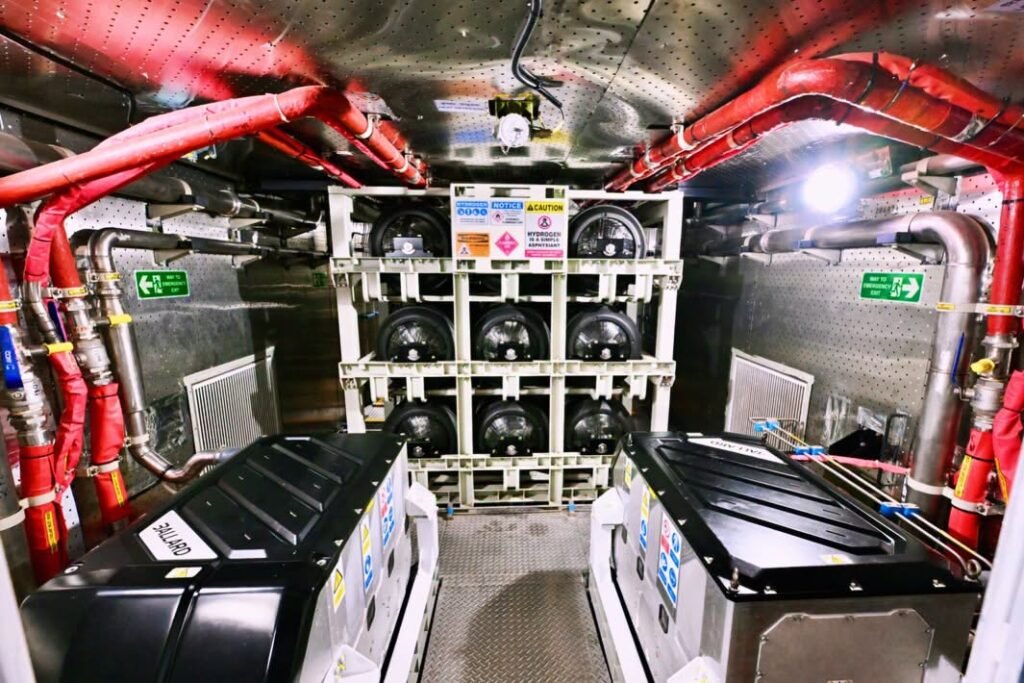
Advanced Safety Features Installed in Hydrogen Train
Safety has been a major focus during the development and testing of the hydrogen-powered train.
The Railway Ministry stated that several advanced safety systems have been installed to ensure secure operations.
Important safety features include:
Hydrogen Leak Detection Systems
Special sensors continuously monitor hydrogen levels and detect any possible leakage.
Heat, Flame and Smoke Sensors
The train is equipped with multiple monitoring systems to identify abnormal conditions and respond quickly.
Automatic Emergency Shut-Off System
In case of any safety concern, the system can automatically stop hydrogen supply to prevent risks.
Continuous Ventilation System
The train includes ventilation mechanisms designed to maintain safe operating conditions.
International Safety Compliance
The project has undergone technical validations and safety assessments before entering service.
These measures are aimed at ensuring that hydrogen technology operates safely under Indian environmental and operational conditions.
Hydrogen Train and India’s Green Mobility Mission
The launch of the hydrogen-powered train aligns with India’s broader climate and sustainability goals.
The government has been promoting cleaner transportation systems to reduce dependence on fossil fuels and achieve long-term environmental targets.
Railways are considered one of the most efficient forms of mass transportation, and introducing hydrogen technology could further improve their environmental performance.
Hydrogen-powered trains could become particularly useful on railway routes where full electrification is difficult due to geographical, technical, or economic challenges.
The technology may help:
- Reduce diesel dependency
- Lower carbon emissions
- Improve air quality
- Support renewable energy adoption
- Create new opportunities in green technology
Delhi Route Trials to Begin Soon
Following the successful operation of the Jind-Sonipat route, Indian Railways is preparing to begin further trials on the Delhi route.
Officials believe these trials will provide additional insights into the performance of hydrogen train-powered trains under different operational conditions.
The expansion of hydrogen train trials could eventually lead to wider adoption across suitable railway routes in India.
The Railway Ministry has stated that the project is part of a long-term strategy to create a domestic hydrogen rail ecosystem and establish India as a global player in clean transportation technology.
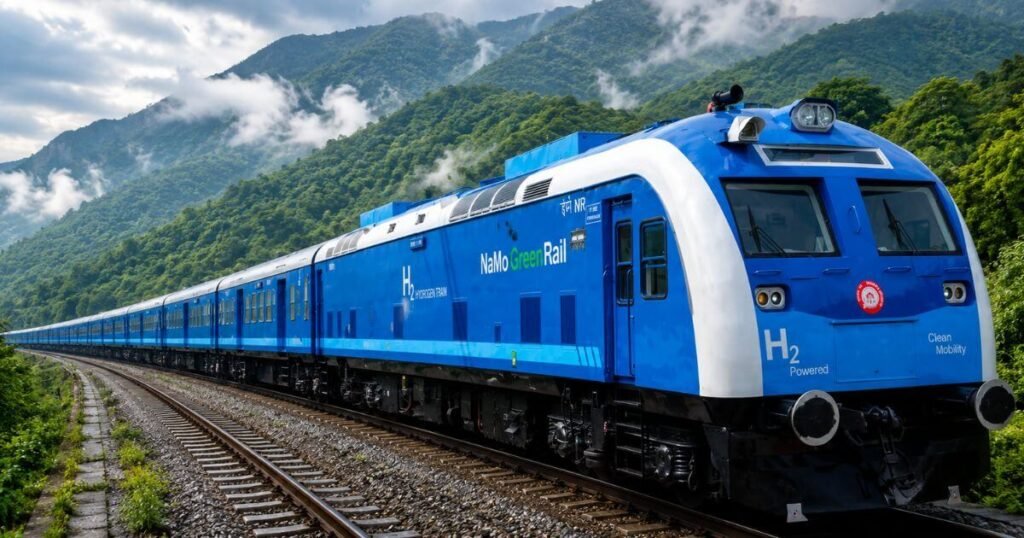
Future of Hydrogen Train-Powered Railways in India
The successful completion of 1,200 kilometres by India’s first hydrogen train represents more than just a railway achievement. It reflects a larger transformation towards sustainable mobility.
While challenges such as hydrogen production costs, infrastructure development, and large-scale implementation remain, the successful demonstration of this technology provides a strong foundation for future expansion.
With continued investment in green hydrogen production and railway innovation, hydrogen-powered trains could become an important part of India’s future transportation network.
India’s first hydrogen-powered train completing more than 1,200 kilometres between Jind and Sonipat marks a historic achievement for Indian Railways and the country’s clean energy mission.
By saving over 3,200 litres of diesel and replacing traditional exhaust emissions with only water vapour, the project demonstrates the potential of hydrogen technology in creating cleaner and more sustainable transportation systems.
Developed with indigenous technology, supported by advanced safety systems, and backed by new hydrogen infrastructure in Haryana, the project represents a major step towards India’s vision of green mobility.
As further trials begin on additional routes, the hydrogen train could become a symbol of India’s transition towards environmentally responsible and technologically advanced railway operations.