

Indian Railway reforms took centre stage on Tuesday as Union Railway Minister Ashwini Vaishnaw announced eight major structural changes aimed at making Indian Railways faster, more efficient, environmentally sustainable and business-friendly. The latest measures, unveiled under the Ministry’s ambitious “Reform Express” initiative, increase the total number of implemented reforms to 17 and mark another step towards the government’s vision of creating a modern railway network capable of supporting India’s growing economy.
The Ministry has set an ambitious target of introducing 52 reforms in 52 weeks. According to the Railway Minister, several of the earlier reforms have already started producing positive results by improving operational efficiency and simplifying procedures. The newly announced package focuses on freight transportation, logistics, infrastructure development, private sector participation, workforce skill development and technological innovation.
As India continues expanding its manufacturing sector and strengthening supply chains, the Indian Railway reforms are expected to play an important role in lowering transportation costs, increasing freight movement by rail and reducing dependence on road transport.
Table of Contents
Reform Express continues to reshape Indian Railways
The “Reform Express” initiative represents one of the most comprehensive policy transformation programmes undertaken by the Railway Ministry in recent years.
Rather than introducing isolated policy changes, the Ministry is implementing a series of structural reforms that collectively aim to modernise railway operations, improve customer services, strengthen freight transportation and create greater opportunities for private investment.
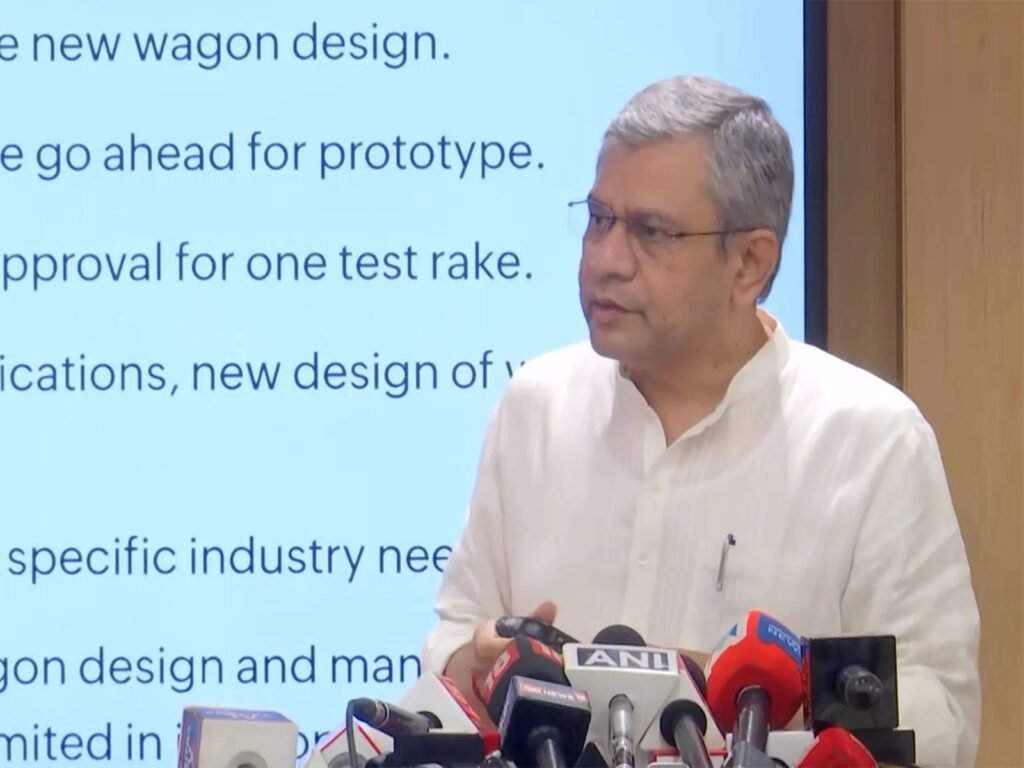
Speaking at Rail Bhawan, Ashwini Vaishnaw said the Indian Railway reforms are designed to build a future-ready railway ecosystem that supports innovation while improving ease of doing business across multiple sectors.
Freight transport remains one of Indian Railways’ most important revenue sources. By making freight services more efficient and flexible, the Ministry hopes to attract larger volumes of cargo that currently move through road networks.
Cleaner transportation through containerised fly ash movement
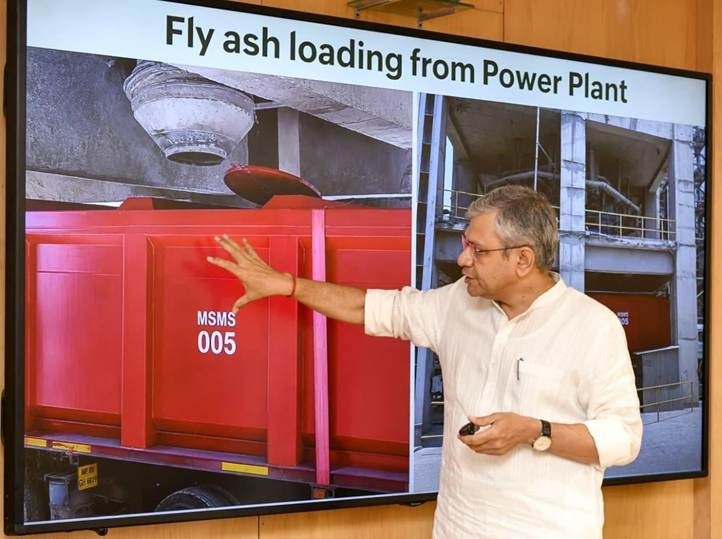
Among the most significant announcements is the introduction of a dedicated containerised transportation policy for fly ash.
Fly ash is a by-product generated by coal-based thermal power plants. It is widely used in cement manufacturing, road construction and other infrastructure projects.
Traditionally, transporting fly ash has posed environmental challenges because loose material often creates dust pollution during loading, transit and unloading.
Under the Indian Railway policy, specially designed ISO-standard containers will now be used to transport fly ash between thermal power plants and cement factories.
The new system offers several important advantages.
Closed containers help prevent dust emissions, making transportation significantly cleaner. The standardised container design also improves loading efficiency, protects material quality and reduces handling losses.
By encouraging rail-based movement instead of road transport, the initiative is also expected to lower carbon emissions while reducing traffic congestion on highways.
The move aligns with India’s broader sustainability goals and demonstrates how railway reforms can contribute to environmental protection alongside economic growth.
Unified licence simplifies container train operations
Another major announcement under the Indian Railway reform package is the introduction of a unified Pan-India Container Train Operator licence.
Previously, container train operators had to navigate a four-category licensing structure that often created administrative complexity.
The revised framework replaces the older system with a single nationwide licence allowing operators to run container trains across the entire Indian Railways network.
The simplified registration process and uniform licensing fee are expected to make entry easier for private companies interested in container transportation.
Industry experts have frequently pointed out that simpler regulations encourage greater competition, improve service quality and attract fresh investment.
With logistics becoming increasingly container-based across global markets, expanding India’s container rail network will strengthen supply chain efficiency while supporting domestic manufacturing and international trade.
Fertiliser transportation becomes more efficient
The Ministry has also introduced important changes to fertiliser transportation under the Indian Railway reforms.
A simplified freight charging structure based on per-tonne-per-kilometre pricing has been introduced to make tariff calculations more transparent and predictable.
In addition, fertilisers will now be allowed to move through containerised transport.
This reform provides multiple operational benefits.
Container transport protects fertilisers from rain, moisture and contamination during transit.
It also enables quicker loading and unloading operations while improving wagon utilisation across the railway network.
Better logistics efficiency ultimately supports timely fertiliser distribution to agricultural markets, an important factor for India’s farming sector where seasonal demand often requires rapid transportation.
By improving freight flexibility, the Indian Railway policy can help strengthen agricultural supply chains while reducing transportation bottlenecks.
Skilled workforce to improve infrastructure quality
Infrastructure development remains one of Indian Railways’ largest ongoing priorities.
Recognising that high-quality infrastructure depends on skilled workers, the Ministry has introduced a structured artisan skilling programme.
Workers involved in specialised railway construction activities such as welding, fitting and masonry will undergo practical competency assessments before receiving official certification.
Each certified worker will receive a QR code-enabled digital skill certificate linked to a live verification system.
The digital certification process offers greater transparency by allowing contractors and project authorities to verify worker qualifications instantly.
Improving workforce skills is expected to enhance construction quality, reduce project defects and strengthen long-term infrastructure reliability.
The initiative also creates better employment opportunities for skilled workers by providing officially recognised certification that can support future career growth.
Construction reforms aim to accelerate project delivery
Large infrastructure projects often face delays because of contractual disputes, land acquisition challenges or financial uncertainties.
The latest Indian Railway reforms seek to minimise such obstacles through several important policy changes.
Among the new measures are:
- Upfront performance security requirements
- Stronger contractor eligibility standards
- Mandatory insurance coverage
- Structured land handover procedures
- Expanded use of the Rail Bhoomi digital platform
These reforms aim to improve accountability throughout project execution.
The Rail Bhoomi platform, in particular, is expected to streamline land acquisition, documentation and project monitoring through digital systems that improve transparency and reduce administrative delays.
Faster project completion not only lowers construction costs but also enables railway infrastructure to become operational sooner, benefiting passengers, industries and freight operators alike.
Encouraging innovation in freight wagon design
The Ministry has also announced a new wagon design approval policy that promotes innovation in freight transportation.
Earlier, freight wagon development largely followed standardised designs.
The revised framework allows manufacturers and industries to develop customised wagons designed specifically for different cargo categories.
Potential applications include transportation of:
- Steel
- Petroleum products
- Chemicals
- Milk
- Plastic materials
- Other specialised industrial goods
Before entering commercial service, every new wagon design will undergo technical evaluation and certification by the Research Designs and Standards Organisation (RDSO).
Sector-specific wagons can significantly improve transportation efficiency by addressing the unique handling requirements of different commodities.
Specialised wagon designs also reduce cargo damage, improve loading efficiency and enhance overall logistics performance.
This reform creates new opportunities for engineering companies while encouraging innovation across India’s railway manufacturing ecosystem.
Private investment remains a key objective
One of the recurring themes across the Indian Railway reforms is increasing private sector participation.
Simplified licensing, customised freight solutions, improved infrastructure policies and transparent regulatory frameworks collectively create a more attractive investment environment.
Private companies play an increasingly important role in developing logistics infrastructure, manufacturing railway equipment, operating freight services and introducing technological innovations.
By reducing regulatory complexity and improving ease of doing business, the Railway Ministry hopes to attract additional investment that supports network expansion without placing the entire financial burden on public resources.
Many advanced railway systems worldwide operate through partnerships between governments and private enterprises, allowing faster infrastructure development while encouraging continuous innovation.
Supporting India’s economic growth through better logistics
Efficient logistics are widely recognised as one of the most important drivers of economic competitiveness.
High transportation costs increase the final price of manufactured goods, agricultural products and industrial materials.
The Indian Railway reforms seek to reduce these costs by making freight transport faster, more reliable and environmentally sustainable.
Expanding containerisation, simplifying tariffs, encouraging specialised wagons and improving project execution all contribute to building a stronger logistics ecosystem.
As India’s manufacturing sector continues to expand under initiatives promoting domestic production and exports, a modern freight network becomes increasingly essential.
The latest Indian Railway reforms reflect a broader strategy to transform Indian Railways into a technology-driven, investment-friendly and environmentally responsible transport system. By combining infrastructure modernisation, digital governance, skilled workforce development, private sector participation and freight innovation, the Ministry aims to strengthen the railway network’s role in supporting industrial growth, sustainable logistics and long-term economic development across the country.