The latest Delhi building survey conducted by the Municipal Corporation of Delhi (MCD) ahead of the monsoon season has sparked a political as well as civic debate after officials reported that only 19 buildings were found to be dangerous out of more than 2.7 million properties inspected across the capital. While the MCD maintains that the inspection was carried out through a large-scale exercise involving nearly 3,000 officials and employees, the Bharatiya Janata Party (BJP) has questioned the credibility of the findings, arguing that the figures do not accurately reflect the condition of many aging structures, particularly in densely populated and unauthorized colonies.
The Delhi survey is one of the city’s most important annual exercises because it directly impacts public safety during the monsoon. Every year, heavy rainfall weakens old buildings, causes water seepage, damages foundations, and increases the risk of structural collapse. Identifying vulnerable before the rains begin allows civic authorities to issue repair notices, evacuate unsafe properties if required, and reduce the possibility of accidents.
Table of Contents
Why the Delhi Survey Is Conducted Every Year
Delhi has witnessed rapid urban expansion over the past several decades. Along with planned residential colonies, thousands of unauthorized settlements and older neighborhoods have developed, many of which contain buildings constructed decades ago without modern engineering standards.
The annual Delhi survey aims to identify structures that could become hazardous during the rainy season. Water infiltration, aging construction materials, poor maintenance, illegal modifications, and increasing structural loads often weaken over time.
Every year before the arrival of the monsoon, officials from the MCD’s Building Department and Maintenance Department inspect properties across all 12 municipal zones. Buildings that appear structurally unsafe are marked for further action, while owners of repairable properties receive notices directing them to undertake immediate maintenance work.
The objective of the Delhi survey is preventive rather than reactive. Instead of responding after an accident occurs, civic authorities attempt to identify risks in advance and minimize potential loss of life and property.
Over 2.7 Million Buildings Covered
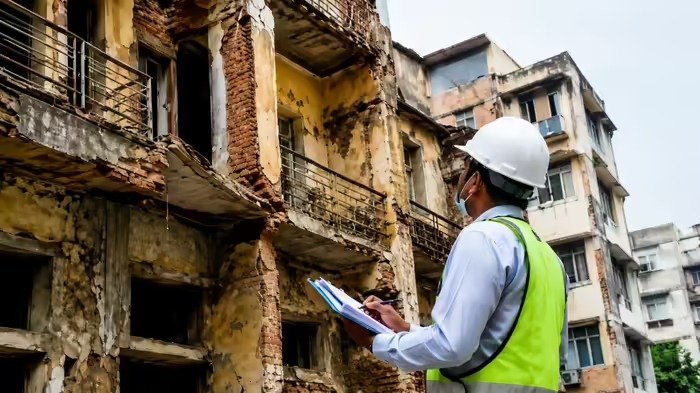
According to official figures released by the Municipal Corporation of Delhi, the Delhi survey covered 2,784,286 buildings between January and June 25, 2026.
The exercise involved approximately 3,000 officials and employees from both the Department and the Maintenance Department. Together, these teams inspected residential, commercial, institutional, and mixed-use properties spread across the capital.
Official records show that the MCD had identified 3,255,909 properties for inspection this year. By June 25, nearly 85 percent of the targeted had been surveyed.
Despite the enormous scale of the inspection, officials declared only 19 buildings as dangerous.
Only 19 Buildings Declared Dangerous
The most striking outcome of the Delhi survey is the unusually low number of unsafe buildings identified.
According to the MCD:
- 19 buildings were declared dangerous.
- 74 buildings required immediate repairs.
- Notices were issued to all owners whose properties needed repairs.
- Dangerous buildings were identified after inspections by both the Maintenance Department and the Building Department.
The Maintenance Department classified 15 buildings as dangerous, while the Department identified another four unsafe properties.
Officials stated that buildings are generally declared dangerous only when they display visible signs of severe structural deterioration or pose an immediate safety risk.
Repair Notices Issued to Property Owners
Apart from identifying dangerous buildings, the Delhi survey also focused on properties requiring urgent maintenance.
The survey found 74 buildings that needed immediate repairs.
Among these:
- 30 were identified by the Maintenance Department.
- 44 were identified by the Building Department.
Owners have been directed to repair their buildings without delay.
Repair notices play an important role in reducing future risks because relatively minor structural issues can become major safety hazards if left unattended, particularly during continuous rainfall.
Timely repairs can prevent water seepage, roof failures, wall cracks, foundation weakening, and partial structural collapse.
BJP Questions the Survey Results
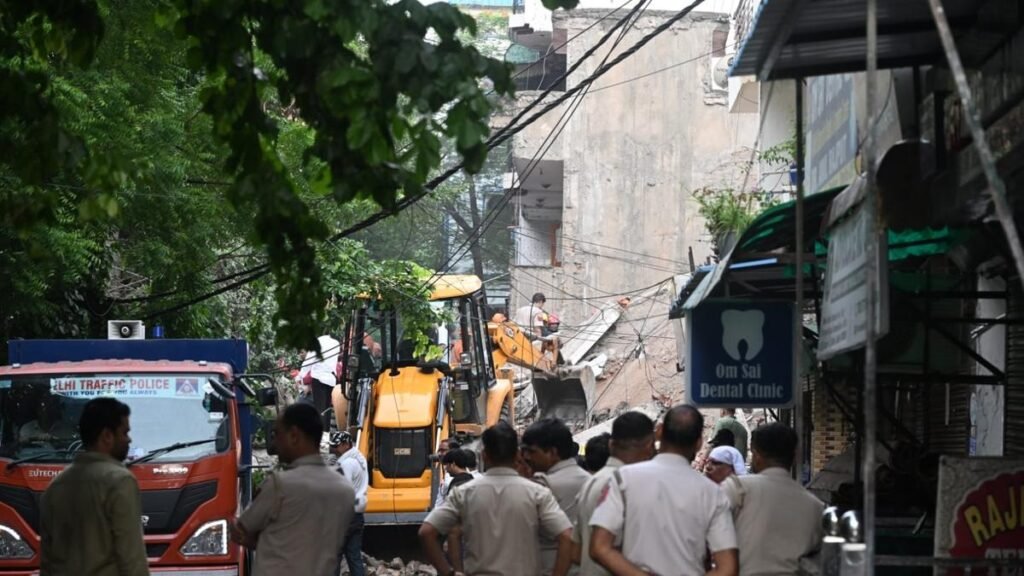
Soon after the findings became public, the BJP questioned the credibility of the Delhi survey.
Party leaders argued that it is difficult to believe that only 19 dangerous buildings exist in a city as old and densely populated as Delhi.
The BJP described the survey as inadequate and called for a much broader and more thorough inspection, particularly in old residential areas where buildings have aged significantly over several decades.
According to the party, several localities continue to have aging structures that require closer technical evaluation rather than only visual inspection.
The criticism has intensified because several densely populated neighborhoods have historically witnessed incidents involving weakened buildings during the monsoon season.
Concerns Over Visual Inspection
One of the major concerns raised during the debate surrounding the Delhi survey relates to the inspection methodology.
Municipal officials generally classify as dangerous based primarily on visible external deterioration.
Buildings showing cracked walls, leaning structures, damaged roofs, weakened foundations, or other obvious signs of structural failure are more likely to be declared unsafe.
Critics argue that many may suffer from internal structural weaknesses that cannot be detected through external observation alone.
Engineering experts have often noted that hidden deterioration inside columns, beams, foundations, and reinforced concrete can remain invisible until serious structural failure occurs.
Because of this, some experts believe detailed structural audits may be necessary for particularly old or heavily modified.
Delhi’s Growing Urban Challenges
Delhi’s rapid urbanization presents unique challenges for municipal authorities.
Many neighborhoods now have:
- Extremely high population density.
- Narrow access roads.
- Unauthorized construction.
- Additional floors added over time.
- Aging civic infrastructure.
These factors place additional stress on older buildings.
In several localities, originally designed for two or three floors now support four or five stories following unauthorized construction.
Such modifications can significantly affect structural stability, especially if they are carried out without engineering approval.
The Delhi survey therefore plays a critical role in identifying that may require further examination.
Karol Bagh Records the Highest Number of Unsafe Buildings
Among all municipal zones covered during the Delhi survey, Karol Bagh reported the highest number of dangerous.
According to official figures:
- Karol Bagh Zone: 7 dangerous buildings.
- City-SP Zone: 4 dangerous buildings.
- West Zone: 4 dangerous buildings.
- Najafgarh Zone: 2 dangerous buildings.
- South Zone: 1 dangerous building.
- Rohini Zone: 1 dangerous building.
The distribution indicates that unsafe are spread across different parts of the city rather than concentrated in a single locality.
Each municipal zone presents different construction patterns and urban development challenges, making localized inspections particularly important.
Shahdara North Raises Fresh Questions
Perhaps the most surprising finding of the Delhi survey concerns Shahdara North Zone.
The area is widely regarded as one of Delhi’s most densely populated regions and contains a significant number of unauthorized colonies.
Despite these conditions, the survey did not identify a single dangerous in the entire zone.
This finding has become one of the central points raised by BJP leaders, who argue that such results warrant closer examination.
Urban planners also note that high-density neighborhoods often require more frequent inspections because aging experience greater structural stress due to continuous occupancy and infrastructure pressure.
Importance of Monsoon Preparedness
Heavy rainfall presents multiple risks .
Water can penetrate cracks in walls and roofs, weaken foundations, corrode steel reinforcement inside concrete, and gradually reduce the strength of structural components.
Combined with poor maintenance, these factors can increase the likelihood of partial or complete collapse.
The Delhi survey therefore serves as an essential part of the city’s disaster preparedness strategy.
Early identification allows authorities to:
- Warn residents.
- Issue repair notices.
- Monitor vulnerable structures.
- Reduce public safety risks.
- Coordinate emergency preparedness before heavy rainfall begins.
Need for Public Cooperation
Municipal authorities have repeatedly emphasized that safety is also the responsibility of property owners.
Owners should regularly inspect their buildings for:
- Visible wall cracks.
- Water leakage.
- Foundation settlement.
- Corrosion.
- Roof damage.
- Structural deformation.
Ignoring these warning signs can increase repair costs while creating risks for occupants and neighboring properties.
Residents are encouraged to report visibly dangerous to municipal authorities rather than waiting until structural conditions worsen.
Role of Civic Officials
The Delhi survey involved thousands of officials working across multiple municipal zones over several months.
Their responsibility included identifying potentially dangerous , documenting structural conditions, issuing repair notices, and updating municipal records before the onset of the rainy season.
Such large-scale civic exercises require coordination between engineering teams, maintenance departments, municipal administrators, and local field staff.
Their work forms an important part of Delhi’s annual preparedness efforts, helping authorities monitor urban infrastructure and respond proactively to potential risks before severe weather conditions arrive.