
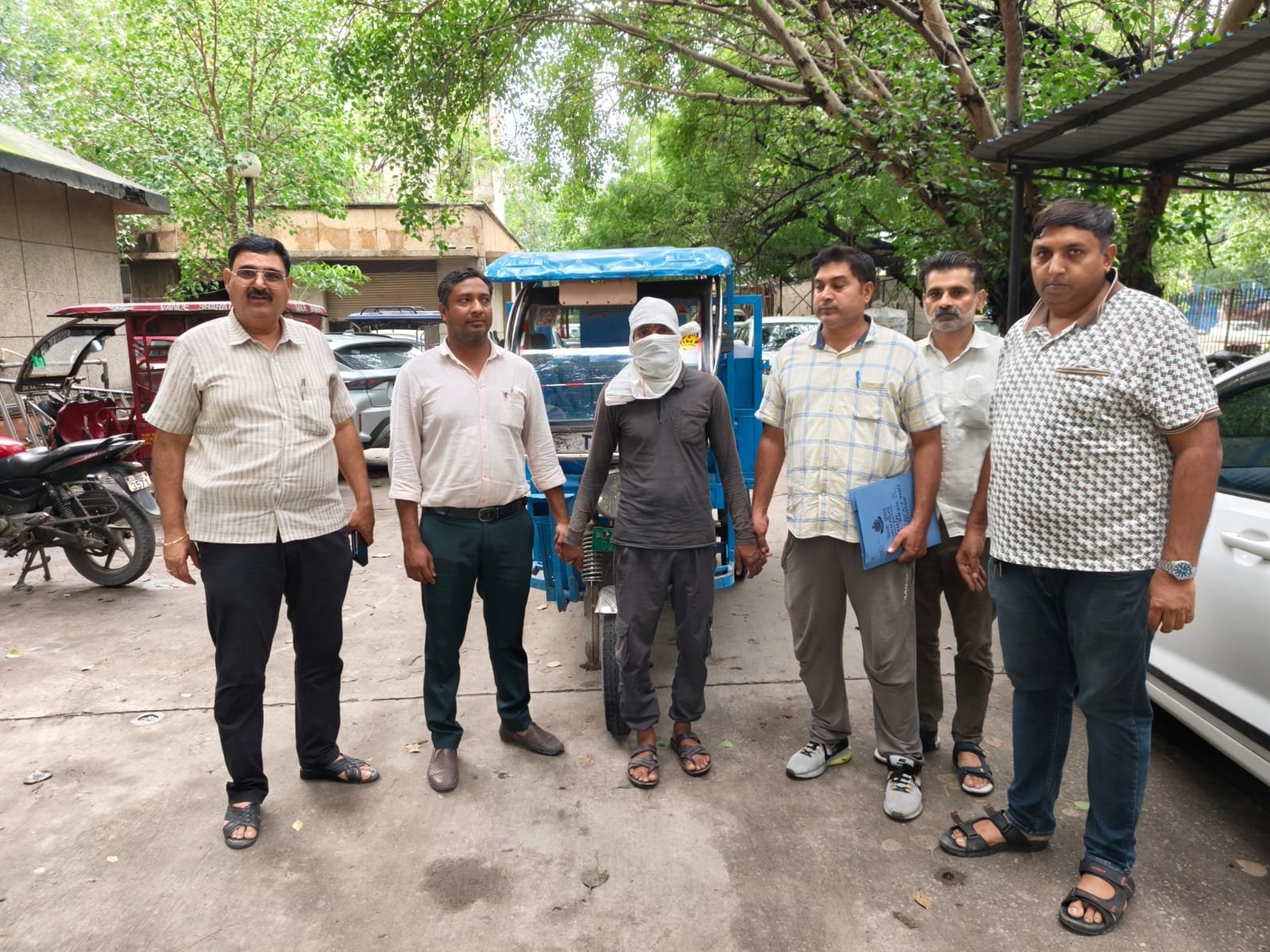
In another significant success against the illegal liquor trade in the national capital, Delhi Police has arrested a liquor supplier involved in the transportation of a large consignment of illicit alcohol in Rohini district. Acting on specific intelligence, the Anti-Robbery and Snatching Cell (ARSC) of Rohini District intercepted an e-rickshaw carrying 1,750 quarters of illicit liquor and arrested the accused on the spot. The operation not only prevented the illegal supply of liquor in the city but also dealt a substantial blow to the network of unlawful alcohol distribution operating in the area.
The successful operation reflects Delhi Police’s continued efforts to crack down on organized bootlegging activities that often flourish through illegal transportation networks. By seizing the entire consignment before it reached the market, the police prevented thousands of bottles of unauthorized liquor from entering local communities, where such products often pose serious risks to public health and law and order.
The swift action by the Anti-Robbery and Snatching Cell demonstrates how intelligence-based policing and coordinated field operations are proving effective in dismantling illegal supply chains across Delhi.
Table of Contents
Liquor Supplier Arrested During Targeted Intelligence Operation
According to Delhi Police, the operation was carried out as part of a continuous campaign against the illegal sale and transportation of liquor in Rohini district.
A dedicated team led by Inspector Naveen Kumar of the Anti-Robbery and Snatching Cell, under the supervision of ACP Operations Ajmer Singh, had been actively monitoring suspicious movements linked to illicit liquor distribution.
On July 9, 2026, the police received credible intelligence indicating that a liquor supplier would be transporting a large quantity of illegal liquor through Budh Vihar Phase-II.
Instead of conducting random vehicle checks, officers carefully verified the information before planning a targeted interception.
A trap was laid near Rithala Road in Budh Vihar Phase-II, where surveillance teams waited for the suspected vehicle.
Shortly afterward, the police intercepted an e-rickshaw matching the description provided by the informer.
The driver, later identified as 26-year-old Rampal, was immediately questioned and the vehicle was thoroughly searched.
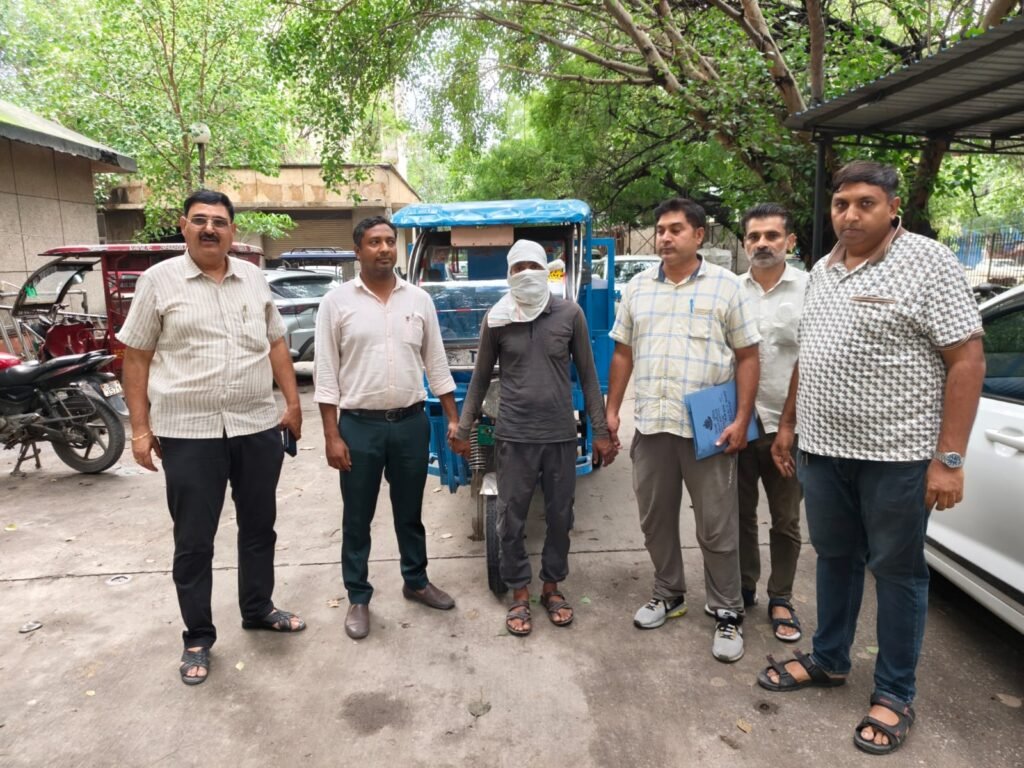
Massive Quantity of Illicit Liquor Recovered
The search of the e-rickshaw led to a significant recovery.
Police found 35 cartons containing a total of 1,750 quarters of illicit liquor concealed inside the vehicle.
The recovery confirmed that the liquor supplier was transporting the consignment for illegal distribution within Delhi.
Since the accused failed to produce valid documents or legal authorization for transporting the liquor, the police immediately seized both the illicit liquor and the e-rickshaw used in the operation.
Following the recovery, a case was registered under Sections 33, 38 and 58 of the Delhi Excise Act at Police Station Budh Vihar.
The liquor supplier was taken into custody and further investigation has been initiated to identify the larger network behind the illegal trade.
Intelligence-Based Policing Leads to Success
One of the most noteworthy aspects of this operation is the manner in which Delhi Police executed the arrest.
Rather than depending solely on routine patrolling or chance detection, the Anti-Robbery and Snatching Cell relied on actionable intelligence and careful planning.
After receiving specific information regarding the movement of the liquor supplier, officers deployed surveillance teams at the identified location while maintaining complete secrecy.
Such intelligence-driven policing has increasingly become an effective strategy against organized criminal activities because it allows police to intercept illegal consignments before they reach distributors or consumers.
The operation also demonstrates the importance of timely coordination among field officers who acted swiftly once the suspect arrived.
Their quick response ensured that the liquor supplier had no opportunity to escape or dispose of the evidence.
Illegal Liquor Trade Remains a Serious Challenge
The arrest highlights the continuing challenge posed by the illegal liquor trade in several parts of the country.
Bootlegging operations generally involve the manufacture, transportation and sale of liquor without proper licences or payment of government duties.
In many cases, illicit liquor is transported from neighbouring states or produced in unauthorized facilities before being distributed through local networks.
The illegal business causes multiple problems.
Firstly, it results in significant revenue losses for state governments because excise duties are not paid.
Secondly, illegally manufactured liquor may contain harmful substances that can lead to severe health complications, poisoning and even fatalities.
Thirdly, organized bootlegging networks are often associated with other criminal activities such as smuggling, document forgery, tax evasion and illegal transportation.
By arresting a liquor supplier before the consignment entered the market, Delhi Police prevented potential risks associated with unregulated alcohol distribution.
Why Illicit Liquor Poses Public Safety Risks
Experts have repeatedly warned about the dangers of consuming illicit liquor.
Unlike products manufactured by licensed distilleries, illegal liquor often bypasses mandatory quality testing and regulatory inspections.
Improper production methods, unsafe storage conditions and the use of unauthorized ingredients can significantly increase health risks.
Across India, several incidents over the years have resulted in deaths and serious illnesses after people consumed illegally manufactured alcohol containing toxic chemicals such as methanol.
Although the recovered consignment in this case is still under investigation, preventing such liquor from reaching consumers remains an important public safety objective.
Apart from health concerns, illegal liquor distribution also encourages black-market operations that undermine legitimate businesses and licensed retailers.
E-Rickshaws Increasingly Used for Illegal Transportation
The seizure of the e-rickshaw used in this operation also highlights an emerging trend in illegal transportation.
Small commercial vehicles such as e-rickshaws are increasingly being misused by criminal networks because they can move through narrow streets, residential colonies and congested urban areas with relatively less suspicion.
Their compact size allows traffickers to transport moderate quantities of illegal goods while blending into normal city traffic.
Law enforcement agencies across several metropolitan areas have therefore increased monitoring of vehicles frequently used in illegal transportation, including small commercial carriers.
The seizure of the vehicle ensures that it cannot be reused for similar criminal activities while also providing investigators with valuable evidence regarding the movement of the liquor supplier.
Delhi Police Continue Crackdown on Bootlegging Networks
The latest arrest forms part of a broader campaign by Delhi Police to dismantle illegal liquor supply chains operating across different districts.
Rather than targeting only individual transporters, police investigations increasingly focus on identifying manufacturers, warehouse operators, financiers and distributors involved in organized bootlegging.
Investigators are expected to question the arrested liquor supplier to determine the origin of the recovered liquor, its intended destination and the identities of other individuals connected to the network.
Such investigations often reveal larger criminal syndicates operating across district or even state boundaries.
Breaking these supply chains is considered far more effective than merely intercepting individual consignments because it disrupts the financial structure supporting illegal liquor operations.
Legal Action Under the Delhi Excise Act
The liquor supplier has been booked under relevant provisions of the Delhi Excise Act.
The Excise Act regulates the manufacture, possession, transport, sale and distribution of liquor within the National Capital Territory.
Violations involving unauthorized transportation, storage or sale of liquor attract strict legal action, including imprisonment, financial penalties and confiscation of vehicles used during the commission of offences.
These legal provisions are intended to discourage illegal liquor businesses while protecting consumers and ensuring that licensed trade operates within the regulatory framework established by the government.
Appreciation for Delhi Police’s Swift Action
The professionalism displayed by the Anti-Robbery and Snatching Cell deserves appreciation.
The operation reflects effective policing based on timely intelligence, careful planning and coordinated execution. Instead of allowing the liquor supplier to deliver the illicit consignment into the local market, officers intercepted the vehicle at the right moment and secured both the accused and the illegal cargo without any reported incident.
The leadership of Inspector Naveen Kumar, under the supervision of ACP Ajmer Singh, along with the dedicated efforts of ASI Arvind, Head Constables Amarjeet and Ashok, played an important role in ensuring the success of the operation.
Their prompt action prevented a substantial quantity of illicit liquor from reaching consumers and reinforced public confidence in law enforcement agencies working to maintain law and order.
Investigation Continues to Trace the Entire Network
While the arrest marks a significant achievement, investigators are now focused on uncovering the complete supply chain linked to the liquor supplier.
Police are expected to examine the source of the recovered liquor, Liquor Supplier identify storage locations, verify transportation routes and trace individuals responsible for financing or organizing the illegal operation.
Digital evidence, mobile phone records and other technical information may also be analysed to determine whether the arrested accused was acting independently or as part of a larger organized network.
As Delhi Police continues its campaign against bootlegging, Liquor Supplier intelligence-led operations like this serve as an important reminder that coordinated enforcement, proactive policing and timely intervention remain essential for disrupting illegal liquor trafficking and protecting communities from the risks associated with unauthorized alcohol distribution.