
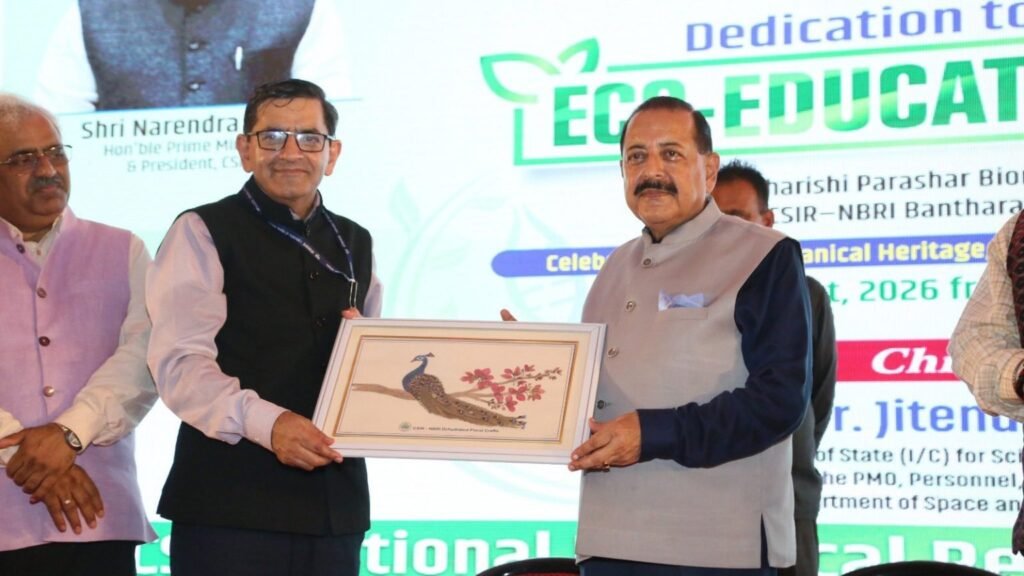
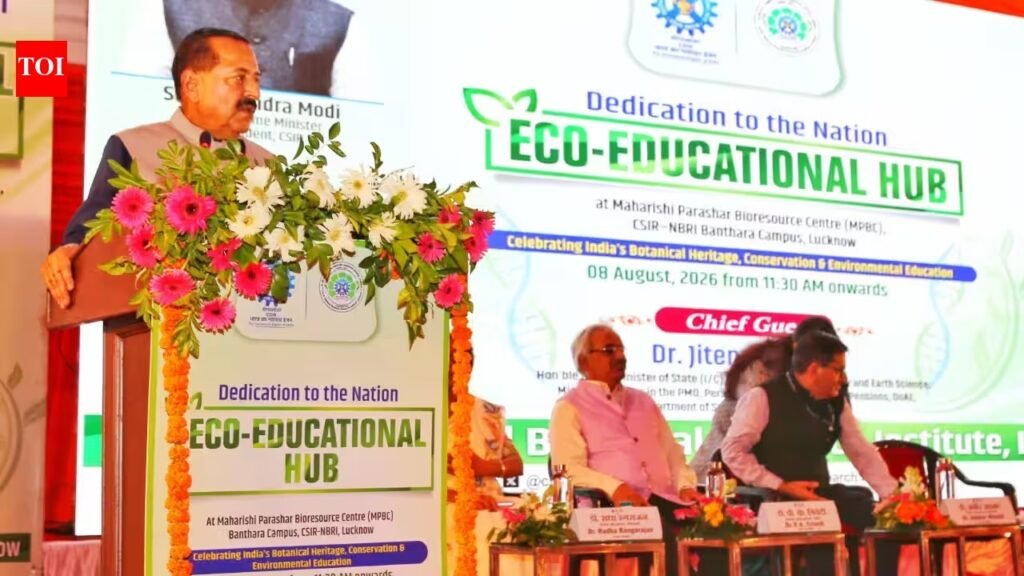
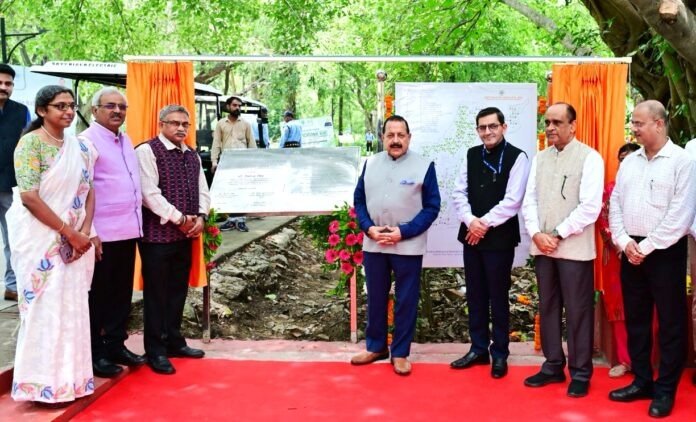
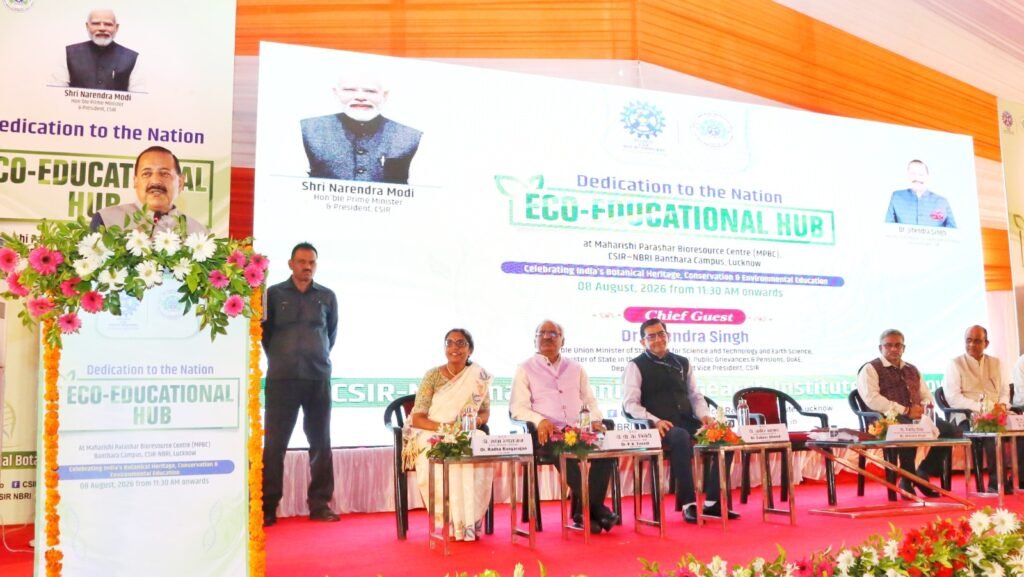
CSIR-NBRI, Union Minister of State for Science and Technology Dr Jitendra Singh on Saturday dedicated the ‘Prakriti Gyan Dham’ Eco-Educational Hub to the nation, marking a major initiative by the Council of Scientific and Industrial Research (CSIR) and its Lucknow-based National Botanical Research Institute (CSIR-NBRI) to connect scientific research with society, environmental education and sustainable livelihoods.
The first-of-its-kind facility has been developed at the Maharishi Parashar Bioresource Centre in Banthra, Lucknow. Designed as a living repository of India’s botanical and cultural heritage, the Eco-Educational Hub brings together biodiversity conservation, plant science, heritage, environmental awareness and experiential learning under one platform.
The initiative is intended to provide students, researchers, educators, farmers, entrepreneurs, nature enthusiasts and members of the public with an opportunity to experience plant diversity and understand how botanical science can contribute to environmental conservation and economic opportunities.
At the inauguration, Singh stressed the importance of taking scientific institutions beyond their laboratories and campuses so that their research, technologies and innovations can reach people who can use them to create livelihoods and solve real-world challenges.
Table of Contents
CSIR Focuses on Connecting Science With Society
Addressing the programme, Jitendra Singh called for scientific institutions to make their technologies, innovations and success stories more accessible to farmers, entrepreneurs, students, industry and the wider public.
He emphasised that scientific research can have a much larger social impact when its findings are effectively communicated and converted into practical applications.
The Minister also called for greater use of digital and social media platforms to showcase scientific technologies and initiatives that can generate livelihood opportunities.
According to the approach outlined at the event, scientific institutions should not remain confined to laboratories. Their work should be presented in ways that allow potential users, entrepreneurs and communities to identify technologies that could be adapted for practical applications.
Singh also stressed the importance of coordination between government departments, ministries and scientific institutions working on similar or complementary objectives. Greater coordination, he said, could help prevent duplication and maximise the social impact of publicly supported scientific research.
What Is Prakriti Gyan Dham?
The Prakriti Gyan Dham Eco-Educational Hub has been conceived as an immersive learning environment centred on India’s botanical diversity.
Rather than functioning solely as a conventional educational facility, the hub combines living plant collections, interpretive trails, heritage trees, digital information systems and specialised botanical sections.
Visitors can learn about different plant species, ecological regions, conservation challenges and the practical uses of plant science.
The facility is also designed to strengthen the connection between people and nature by allowing visitors to learn through direct observation and experience.
For students and educators, the hub could serve as an outdoor learning space where concepts related to biodiversity, ecology, conservation and plant science can be explored beyond textbooks and classrooms.
For researchers and nature enthusiasts, the living collections and specialised sections provide an additional platform for understanding India’s botanical wealth.
PAaVan Path Highlights Plant Diversity
One of the key attractions at Prakriti Gyan Dham is the PAaVan Path, or Plants and Associated Vegetations for Appreciating Nature.
The interpretive heritage trail features curated plant collections representing different ecological regions and vegetation types.
The trail is intended to help visitors understand the relationship between plants and the environments in which they occur.
By presenting plant collections within an interpretive framework, the facility can help explain ecological diversity in a more accessible manner.
The PAaVan Path also reflects the broader objective of the Eco-Educational Hub: combining scientific knowledge with public engagement.
Indian Heritage Garden Preserves Botanical History
Another major section of the facility is the Indian Heritage Garden, which houses trees propagated from historically significant locations across India.
The collection connects botanical heritage with important episodes and personalities from India’s history.
Among the trees represented in the garden is the Bawan Imli Tamarind Tree from Fatehpur, associated with the sacrifice of 52 freedom fighters.
The garden also features the Mother Dussehri Mango Tree from Lucknow, the Patalpuri Banyan of Prayagraj, and a mango tree planted by Mahatma Gandhi at Bhitiharwa in Champaran.
The collection further includes descendants of trees associated with the Dandi March route in Gujarat.
These heritage trees demonstrate how plants can carry historical and cultural significance in addition to their ecological value.
The garden therefore brings together two dimensions of heritage — India’s botanical diversity and the historical memories associated with specific trees and locations.
QR-Enabled Technology Makes Heritage Interactive
Technology has been integrated into the Indian Heritage Garden through QR-enabled audio systems.
Visitors can use smartphones to access information about the historical, cultural and botanical significance of the heritage trees.
The use of QR technology provides an interactive way of communicating information and allows visitors to explore the stories behind the trees while physically viewing them.
It also reflects the broader emphasis placed by Jitendra Singh on using digital platforms to make scientific and educational information more accessible to the public.
The combination of living collections and digital interpretation can make the facility particularly relevant to younger audiences accustomed to accessing information through smartphones.
Vibhav Enclave Highlights Threatened Plant Species
The Vibhav Enclave focuses on India’s threatened plants and showcases rare and endangered species.
The section is intended to raise public awareness about biodiversity loss and the challenges facing plant species across different ecosystems.
Among the issues highlighted through the initiative are habitat degradation, climate change and the conservation of plant genetic resources.
Plant biodiversity plays an important role in maintaining healthy ecosystems. The loss of species can affect ecological processes and reduce genetic resources that may have future scientific, agricultural or economic importance.
By placing threatened species within an educational setting, the hub aims to make biodiversity conservation more tangible for visitors.
The section can also help demonstrate why conservation is not limited to protecting forests or wildlife but also involves preserving the diversity of plant species and their genetic resources.
Bhairav Enclave Showcases State Plants
The Bhairav Enclave features officially designated State Plants of different states and Union Territories.
State plants can have ecological, cultural and symbolic importance within the regions they represent.
The collection provides visitors with an opportunity to understand how plant species are connected to local identities, traditions and ecosystems.
The inclusion of plants from different parts of the country also reinforces the broader objective of presenting India’s botanical diversity in one location.
Together with the heritage garden and threatened plant collection, the Bhairav Enclave adds another layer to the hub’s educational purpose.
Bamboosteum Showcases 43 Bamboo Species
Another distinctive feature of Prakriti Gyan Dham is its Bamboosteum, which contains 43 indigenous and exotic bamboo species.
The facility highlights bamboo as more than a traditional plant resource. Bamboo has potential applications in ecological restoration, carbon sequestration, soil conservation, traditional crafts and green infrastructure.
It can also support sustainable livelihood opportunities for communities involved in bamboo-based products and activities.
The Bamboosteum therefore demonstrates how botanical resources can connect environmental conservation with economic and social development.
The section also highlights the potential of renewable biological resources in addressing contemporary challenges related to sustainability and climate change.
CSIR Technologies Transferred to Industry and Women Entrepreneurs
The inauguration programme also showcased CSIR-NBRI’s efforts to move scientific research from laboratories into the marketplace and communities.
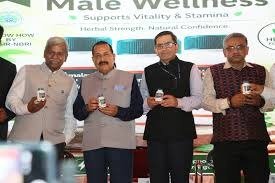
An herbal formulation for male reproductive health, developed in collaboration with Himalaya, was formally launched during the event.
In another major development, four plant-based technologies were transferred to the Kudumbashree State Poverty Eradication Mission in Kerala.
The technologies include:
- Herbal Anti-Dandruff Hair Care Oil
- Frotus: Lotus-inspired Perfume
- Frotus: Rudra Perfume
- Herbal Nano Serum
The transfer is aimed at supporting women-led entrepreneurship and livelihood generation through science-based products.
The initiative demonstrates how plant research can potentially be converted into marketable products while creating opportunities for entrepreneurship.
Low-Cost Photobioreactor Technology Transferred to Lucknow Firm
CSIR-NBRI also transferred its Design and Development of a Low-Cost Photobioreactor technology to Lucknow-based Witwake Solutions Pvt. Ltd.
The technology transfer strengthens the connection between scientific research and industrial applications.
Photobioreactors can be used in controlled systems for cultivating biological organisms and have applications in areas associated with biotechnology and bioresource utilisation.
The transfer reflects CSIR-NBRI’s broader objective of ensuring that research developed within scientific institutions can find practical applications outside the laboratory.
Jitendra Singh Calls for Wider Technology Adoption
Jitendra Singh said technology transfers should not remain limited to individual projects.
He called for such technologies to be systematically showcased so that potential users, entrepreneurs and other stakeholders can identify scientific solutions capable of contributing to livelihoods and economic opportunities.
The approach places greater emphasis on the final stage of scientific innovation — ensuring that research reaches people who can use it.
For publicly funded research institutions, effective technology transfer can help demonstrate the social and economic value of scientific research.
The Minister also reiterated the importance of integrating efforts across government departments, ministries and scientific institutions when their objectives overlap.
Traditional Knowledge and Modern Science
Singh also highlighted the importance of combining traditional knowledge with modern scientific technologies to address environmental and climate-related challenges.
India has a long history of using plants for food, medicine, agriculture, crafts and other purposes. Scientific research can help study these traditional practices systematically and explore opportunities for developing safe, sustainable and commercially viable applications.
The Eco-Educational Hub provides a platform where botanical heritage and modern science can be presented together.
This combination can help demonstrate that conservation and innovation are not necessarily separate objectives. Plant resources can be conserved while being studied for sustainable applications.
Documentary on India’s Heritage Gardens Released
During the programme, Jitendra Singh released a documentary on India’s Heritage Gardens.
The documentary highlights the country’s botanical wealth and the historical, cultural and ecological significance associated with plant diversity.
The initiative adds a communication dimension to the broader effort to make India’s botanical heritage more visible to the public.
Documentaries, digital platforms and interactive installations can complement traditional scientific communication by presenting complex subjects in accessible formats.
CSIR-NBRI Director Highlights Living Repository
CSIR-NBRI Director Dr Zabeer Ahmed said the Eco-Educational Hub had been conceived as a living repository of India’s botanical diversity.
According to him, the facility is intended to provide an immersive platform for students, researchers, educators, nature enthusiasts and the general public.
The hub combines living plant collections, heritage trails, digital interpretation and technology-oriented initiatives to create an experiential learning environment.
Its objective is not simply to display plants but to strengthen public engagement with science and nature.
A Platform for Education, Conservation and Livelihoods
The significance of Prakriti Gyan Dham extends beyond its role as a botanical attraction.
The facility brings together several themes that are increasingly important to India’s development agenda: biodiversity conservation, climate resilience, sustainable resources, scientific education, technology transfer and livelihood generation.
Its heritage garden connects plants with India’s history. CSIR The threatened plant section focuses attention on biodiversity conservation. The Bamboosteum demonstrates the potential of renewable bioresources. Digital systems make scientific and historical information more accessible.
At the same time, technology transfers demonstrate how plant science can contribute to entrepreneurship and industrial applications.
CSIR’s Push to Take Research Beyond Laboratories
The launch of Prakriti Gyan Dham reflects a wider message from the programme: scientific research can have greater impact when it reaches society.
CSIR institutions conduct research across a broad range of scientific and technological fields. Translating this research into products, services, educational programmes and livelihood opportunities can strengthen the connection between public investment in science and everyday benefits.
The CSIR initiatives highlighted at the event demonstrate different pathways for achieving this objective — from technology transfer to women entrepreneurs and industry, to environmental education and public engagement.
The CSIR emphasis on digital communication and inter-departmental coordination further underlines the need for scientific institutions to operate beyond traditional boundaries.
A New Destination for Experiential Science Learning
With its combination of botanical collections, heritage trees, threatened species, bamboo diversity, digital interpretation and technology-oriented initiatives, Prakriti Gyan Dham is expected to become a destination for experiential learning in Lucknow.
The facility can provide students with CSIR opportunities to learn about plants and ecosystems through direct observation, while researchers and educators can use it as a platform for engagement.
For the wider public, the hub offers a way to explore India’s botanical and cultural heritage in an accessible environment.
More importantly, CSIR the initiative seeks to demonstrate that scientific knowledge can be connected to conservation, entrepreneurship and sustainable development.
The inauguration by Jitendra Singh marks a new chapter in CSIR-NBRI’s efforts to take plant science beyond laboratory research and closer to society. CSIR By bringing together heritage, biodiversity, technology, education and livelihoods, Prakriti Gyan Dham represents an effort to make scientific knowledge more visible, practical and socially relevant.